


What if the very products you trust to heal your skin are the ones causing it to cry out? It's a quiet frustration. You apply a favorite cream, only to feel an unexpected sting. Your reflection shows persistent redness that refuses to fade. The radiance you once had is replaced by a dull, parchment-like tightness. These are the clear signs of a damaged skin barrier. Your living ecosystem is out of balance. It's struggling to protect itself from a world that feels increasingly harsh.
We understand the desire for calm. You want a complexion that feels resilient, not reactive. It's time to stop the cycle of aggressive treatments and listen to what your skin truly needs. We'll show you how to identify the subtle signals of a compromised barrier and restore your skin’s biological harmony. This guide reveals a minimalist ritual rooted in nature and science. You'll discover how adaptogenic ingredients like wild-harvested Chaga can rebuild your natural defenses. We'll preview a simple path to restoration through a refined, intentional routine. Let's return to a state of quiet, healthy confidence.
Key Takeaways
- Understand the stratum corneum as your skin's essential shield. This living ecosystem requires a precise balance of lipids to maintain health and resilience.
- Identify the unmistakable signs of a damaged skin barrier, such as persistent redness, rough texture, and a stinging sensation from once-trusted products.
- Uncover how environmental stressors and the modern epidemic of over-exfoliation disrupt your skin's natural biological rhythm.
- Adopt a minimalist restoration ritual. Simplify your routine to allow the skin’s microbiome to heal without the interference of harsh actives.
- Integrate adaptogenic antioxidants like wild-harvested Chaga. These potent elements help restore radiance and provide lasting protection against future damage.
What is the Skin Barrier? The Invisible Shield of Radiant Health
The skin barrier is your body's most vital guardian. Scientifically known as the stratum corneum, it represents the outermost layer of the skin's structure. It's more than just a surface. Think of it as a living shield. It works tirelessly to keep hydration in and environmental toxins out. When you notice the signs of a damaged skin barrier, it's a signal that this shield has been breached. Your skin is no longer able to defend itself effectively.
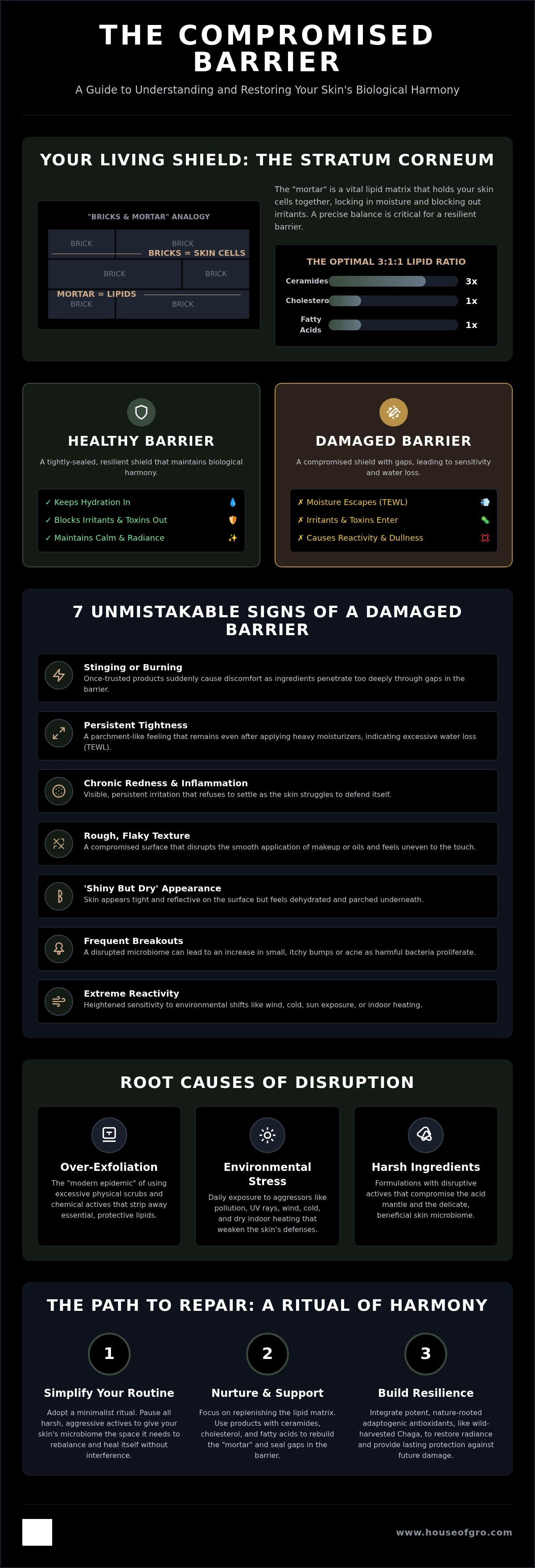
Dermatologists often use the bricks and mortar analogy to describe this layer. Your skin cells, or corneocytes, act as the bricks. They provide the physical structure. The mortar is a complex matrix of essential lipids. This matrix consists of ceramides, cholesterol, and fatty acids. In 2026, clinical standards emphasize the 3:1:1 lipid ratio as the benchmark for health. This specific balance is critical for maintaining a resilient surface. Without these lipids, the bricks become loose. Gaps appear. Irritants enter. Moisture escapes. The result is a complexion that feels vulnerable and reactive.
This barrier isn't a static wall. It's a dynamic ecosystem. It includes the acid mantle, a thin, slightly acidic film that sits on the surface. This film acts as a primary filter. It's supported by a complex network of biological partners that ensure your skin stays in a state of harmony. When these elements work together, your skin looks radiant and feels calm. It's a biological sanctuary that protects you from the noise of the outside world.
The Role of the Microbiome in Barrier Integrity
Your barrier doesn't work alone. It partners with the skin microbiome. This is a diverse community of beneficial bacteria living on your skin's surface. These microbes act as a biological layer of defense. A balanced microbiome prevents harmful pathogens from breaching the barrier. It's an invisible garden that requires careful cultivation. Choosing microbiome skincare ensures you're supporting this delicate harmony rather than stripping it away. When this ecosystem is healthy, the physical barrier remains strong. It becomes more difficult for external stressors to cause irritation or inflammation.
Transepidermal Water Loss (TEWL): The Silent Dehydrator
Hydration is the foundation of radiance. Transepidermal Water Loss, or TEWL, occurs when moisture evaporates from the skin into the air. This is a natural process. However, a compromised barrier leads to excessive TEWL. You might experience that tight feeling even after applying a heavy moisturizer. This is one of the classic signs of a damaged skin barrier. Lipids like ceramides are essential to seal the gaps and lock moisture within the deeper layers. A healthy barrier ensures your skin remains plump and resilient against the dry air of modern life. It keeps the hydration where it belongs.
7 Signs of a Damaged Skin Barrier You Should Not Ignore
Your skin speaks. It uses a language of sensation and texture to signal its needs. When the protective shield is compromised, these messages become urgent. Recognizing the signs of a damaged skin barrier is the first step toward reclaiming biological harmony. It's about listening before the damage deepens. A healthy barrier is silent. A damaged one is loud, reactive, and demanding of your attention.
The most common indicators include:
- Stinging or burning when applying products that were previously tolerated.
- Persistent tightness that remains even after applying heavy moisturizers.
- Chronic redness and visible inflammation that refuses to settle.
- Rough, flaky texture that disrupts the smooth application of makeup or oils.
- The 'shiny but dry' look, where skin appears tight and reflective but feels parched.
- Frequent breakouts or small, itchy bumps that signal a disrupted microbiome.
- Extreme reactivity to environmental shifts like wind, cold, or indoor heating.
Sensory Red Flags: Stinging and Discomfort
Discomfort is often the earliest warning. Products that once felt soothing may suddenly cause a sharp sting or a lingering burn. This happens because microscopic gaps in the barrier allow ingredients to penetrate too deeply. They reach nerve endings that should be protected. You might also feel a persistent tightness. It's a sensation that remains even after applying layers of cream. Itching is another subtle cue. It often indicates an inflammatory response within the deeper layers of the epidermis. Learning how to protect and restore your skin barrier requires pausing these aggressive habits and choosing calm.
Visual Indicators: From Redness to Dullness
The visual markers are equally telling. Persistent redness or a blotchy appearance suggests chronic inflammation. You might notice a rough, sand-like texture or visible flaking. A unique phenomenon is skin that looks shiny but dry. It appears tight and reflective on the surface but feels brittle underneath. This is a clear indicator of severe dehydration. Beyond texture, the skin loses its natural luminosity. Dehydration can create the appearance of fine lines that aren't related to aging. They are simply shadows cast by a thirsty surface. Discovering how to get radiant skin starts with repairing these foundations. To begin your journey back to balance, consider a minimalist wellness practice that prioritizes purity over complexity.
Root Causes: Why Your Skin's Ecosystem Becomes Compromised
Understanding the "why" is as essential as recognizing the symptoms. Your skin is a masterpiece of biological engineering. It is designed to adapt. However, the modern world presents challenges that can overwhelm even the most resilient shield. When you experience the signs of a damaged skin barrier, it is rarely the result of a single event. It is often a cumulative effect of modern habits and environmental pressures.
Harsh cleansers are a frequent culprit. Many traditional soaps use aggressive surfactants that strip away the skin's natural oils. This leaves the surface vulnerable. Without its lipid mortar, the skin cannot hold onto moisture. This disruption is often the starting point for chronic sensitivity and dryness. Reclaiming balance requires a shift toward gentler, more intentional cleansing practices.
The Danger of 'Active' Overload
We live in an era of high-percentage potency. The desire for fast results has led to an epidemic of over-exfoliation. Using too many acids, peels, and retinoids simultaneously disrupts the acid mantle. This thin, protective film cannot regenerate when it is constantly under attack. A minimalist approach is often the most profound act of care. Embracing a simpler routine allows the skin to find its natural rhythm again. When your barrier is sensitized, avoid these common irritants:
- High-concentration Alpha Hydroxy Acids (AHAs) and Beta Hydroxy Acids (BHAs).
- Denatured alcohols and harsh synthetic fragrances.
- Aggressive physical scrubs that cause micro-tears.
- Strong retinoids used without a gradual introduction.
Environmental and Lifestyle Stressors
External elements play a significant role in compromising your skin's armor. Pollution particles are microscopic. They settle on the surface and generate free radicals. These unstable molecules cause oxidative stress, which weakens the lipid matrix. UV radiation further accelerates this degradation. Even the water you use matters. Hard water, rich in minerals, can shift the skin’s pH levels, making it harder for the microbiome to thrive.
Your internal state is equally impactful. Chronic stress elevates cortisol levels. This hormone can thin the skin and slow the repair process. Poor sleep and nutritional gaps deprive the skin of the building blocks it needs for renewal. To counter these modern stressors, your skin requires potent, natural support. Wild-harvested Chaga mushrooms serve as a key antioxidant in this battle. They help neutralize free radicals and restore the calm your skin deserves. By addressing these root causes, you move closer to lasting biological harmony.
The Path to Repair: A Ritual of Biological Harmony
Restoration is an intentional act. It is a journey back to your skin's natural state of equilibrium. Once you recognize the signs of a damaged skin barrier, the focus must shift from correction to cultivation. This is not a time for aggressive intervention. It is a time for a minimalist ritual that respects the skin's biological needs. Healing requires patience. It requires a commitment to purity and simplicity.
The restoration ritual follows four essential steps:
- Step 1: Simplify. Silence the noise of complex routines. Strip back your regimen to only the most vital essentials. Remove all high-percentage actives, acids, and fragrances until the skin feels calm and resilient again.
- Step 2: Cleanse gently. Avoid the friction of foaming agents. Use a non-foaming, pH-balanced cleanser that respects the acid mantle. Your goal is to remove impurities without disturbing the delicate lipid mortar.
- Step 3: Hydrate and Seal. Layering is key. Apply humectants to damp skin to draw in moisture. Follow immediately with occlusive botanical oils. These oils mimic your skin's natural sebum, locking in hydration and providing a protective shield.
- Step 4: Protect. A compromised barrier is highly vulnerable to UV damage. Use a mineral-based SPF daily. Incorporate antioxidant shields to neutralize environmental stressors before they can breach the surface.
Nocturnal Renewal: The Science of Nighttime Repair
Your skin follows a natural circadian rhythm. While you sleep, the body’s repair mechanisms reach their peak. Blood flow to the skin increases. The barrier undergoes intensive cellular renewal to recover from the day's stressors. This restorative phase is the most critical time for nourishment. Using a nutrient-dense restorative night serum provides the building blocks your skin needs during this window. It supports the microbiome and reinforces the lipid matrix while you rest. It's a nightly practice of deep, unhurried healing.
Adaptogens: Nature's Solution for Resilient Skin
Nature offers potent tools for recovery. Adaptogens are unique botanicals that help the body manage stress. Chaga, often called the 'King of Mushrooms', stands at the center of this philosophy. It is a powerhouse of antioxidants. These compounds help the skin adapt to environmental pressures and oxidative damage. Understanding chaga benefits is essential for anyone looking to rebuild a fragile barrier. It provides the strength needed to face the world with quiet confidence. To begin your own journey toward balance, explore the restoration ritual and discover the power of adaptogenic care.
Restoring Radiance with House of GRŌ® Essentials
True restoration requires more than just moisture. It demands biological harmony. House of GRŌ® approaches skincare as a meaningful personal practice. We avoid synthetic shortcuts. Instead, we look to the wisdom of nature. Our formulas are microbiome-friendly. They are designed to support your skin's living ecosystem. When you face the signs of a damaged skin barrier, our essentials offer a path back to radiance. We combine sophisticated science with wild-harvested purity. It's a commitment to transparency and quality.
Our philosophy is rooted in the use of wild-harvested Chaga mushrooms from Northern Maine. This "King of Mushrooms" is a key antioxidant in our collection. It works to restore the skin's natural balance. By focusing on high-quality essentials, we help you simplify your life. We value substance over flashiness. This is modern wellness, refined and intentional. It is a digital sanctuary for your skin.
The After Dark Ritual: Overnight Ecosystem Support
Night is for deep healing. The AFTER DARK Restorative Night Serum is our essential barrier-repair ritual. It features wild-harvested Chaga to fight oxidative stress while you sleep. The serum deeply nourishes the epidermis. It does so without clogging pores. The application is unhurried. It's a moment of intentional self-care. The calming, natural scent prepares the mind for rest. We suggest pairing the serum with a gentle massage. Move in upward, outward strokes. This practice encourages lymphatic drainage. It supports the skin’s natural detoxification process. Your skin wakes up feeling calm. It feels resilient. It is ready for the day ahead.
The At Dawn Shield: Daytime Resilience
Daytime requires a different strategy. Protection is the priority. The AT DAWN Rejuvenating Daytime Oil acts as a breathable, protective shield. It guards the skin against modern environmental stressors. Pollution and UV radiation are constant threats to a fragile surface. Our formula uses a synergy of organic botanicals and adaptogenic mushrooms. This provides a protective daytime resilience. It prevents the recurrence of the signs of a damaged skin barrier. This oil doesn't just sit on the surface. It works with your skin's biology to maintain hydration. We believe in a minimalist approach. You don't need a dozen products. You need the right ones. Nature and science intersect here to create lasting health.
Embracing the Calm of Biological Harmony
Your journey back to radiance begins with a simple pause. Recognizing the signs of a damaged skin barrier is the first step toward a more intentional approach to wellness. It's about moving away from aggressive actives. Instead, move toward the restorative power of nature. True health isn't found in a crowded cabinet. It's found in high-quality essentials that respect your skin's living ecosystem. This is the essence of modern luxury. Purity meets performance.
By choosing microbiome-friendly innovation and wild-harvested Chaga mushrooms, you provide your skin with the tools it needs to adapt and thrive. This is more than a routine. It's a ritual of self-care. It's an invitation to a refined, better-balanced lifestyle. You deserve a complexion that feels as resilient as it looks. The science of nature is on your side. Trust the rhythm of renewal.
Begin your restoration ritual with the AFTER DARK Restorative Night Serum.
Let your skin return to its natural state of quiet confidence. The path to resilience is unhurried and deeply rooted in purity. Your skin is ready to heal. Embrace the restoration your skin deserves.
Frequently Asked Questions
How long does it take to repair a damaged skin barrier?
Repairing a compromised surface typically takes between two and four weeks. This timeline aligns with the natural skin cell turnover cycle, which averages about 28 days for most adults. Consistency is vital during this period. If the damage is severe, full restoration of the lipid matrix may take longer. You must remain patient and committed to a minimalist routine. Trusting the body's innate rhythm is the most effective path to lasting health.
Can I use Vitamin C or Retinol if my skin barrier is damaged?
You should temporarily pause the use of high-percentage Vitamin C and Retinol. These potent actives can exacerbate the signs of a damaged skin barrier by causing further inflammation. Their acidic nature or cell-stripping properties are too aggressive for a vulnerable surface. Once your skin feels resilient and calm, you can slowly reintroduce them. Start with a low frequency to ensure your microbiome remains balanced and protected. Harmony requires a gentle start.
Is a damaged skin barrier the same as sensitive skin?
Sensitive skin is often a genetic skin type, while a damaged barrier is a temporary condition. Anyone can experience a compromised shield regardless of their natural skin type. However, the symptoms often overlap, including redness and reactivity. A damaged barrier makes the skin behave as if it's sensitive because the protective lipids are missing. Identifying the root cause helps you choose the right restorative ritual to return to a state of biological harmony.
What are the best ingredients for barrier repair?
The most effective ingredients include a precise blend of ceramides, cholesterol, and fatty acids. These lipids mimic the skin's natural mortar. Adaptogens like wild-harvested Chaga are also essential for their high antioxidant capacity. They help the skin manage oxidative stress and environmental pressures. Look for microbiome-friendly formulas that prioritize purity. Squalane and botanical oils provide a breathable shield that locks in moisture without disrupting the skin's biological rhythm or its natural defense systems.
Does drinking water help fix a damaged skin barrier?
Hydration begins from within, but drinking water alone cannot fix a physical breach in your skin's shield. While adequate water intake supports overall cellular health, a damaged barrier allows moisture to evaporate rapidly through transepidermal water loss. You must apply topical lipids to seal the gaps and prevent this evaporation. Internal hydration works best when paired with a protective botanical oil that mimics your skin's natural defenses and meets its specific biological needs.
Can a damaged skin barrier cause acne or breakouts?
A compromised shield often leads to unexpected breakouts. When the barrier is weak, harmful bacteria can easily penetrate the surface and trigger inflammation. Additionally, a disrupted microbiome allows pathogens to thrive, which can result in acne or small, itchy bumps. This is one of the common signs of a damaged skin barrier that people often mistake for traditional oily-skin acne. Focus on repair rather than aggressive spot treatments to clear the complexion effectively.
How do I know if my skin barrier is healthy again?
You'll know your barrier is healthy when your skin feels comfortable and silent. The stinging sensation from products will disappear. Your texture will feel smooth rather than rough or flaky. Visually, the persistent redness will fade, replaced by a natural, healthy radiance. Your skin will also become more resilient to environmental shifts like wind or cold. It's a state of quiet confidence where your complexion feels balanced and deeply hydrated. Harmony is finally restored.