


For fine lines, the evidence in the bakuchiol vs chaga comparison favors bakuchiol. A randomized study compared bakuchiol cream with retinol cream over 12 weeks in 44 participants, while antioxidant activity alone doesn’t establish that chaga reduces wrinkles. Bakuchiol’s human evidence is still limited, so the comparison is promising, not conclusive.
It makes sense to look for plant-based ingredients that support smoother, brighter-looking skin. But an ingredient’s origin or antioxidant properties don’t tell the whole story: the kind and strength of clinical evidence matter, too.
Here, you’ll learn where bakuchiol comes from, what studies suggest about its effects on fine lines and photoaging, and how that evidence compares with chaga’s role in skincare. You’ll also see what the findings can and can’t tell you, so you can weigh each ingredient carefully.
Key Takeaways
- Learn where bakuchiol comes from and why its plant origin alone doesn’t establish how well it works on skin.
- See what a 12-week comparison involving 44 participants suggests about bakuchiol and retinol.
- Understand why early clinical findings are promising but still limited, and how that shapes comparisons with chaga.
- Explore what to consider when weighing ingredient claims, product quality, and skincare safety.
- Discover how AT DAWN Rejuvenating Daytime Oil may fit into a considered daytime skincare routine.
What bakuchiol is and where it comes from
Bakuchiol is a plant-derived skincare ingredient extracted from the seeds of Psoralea corylifolia, a plant grown in India. Its botanical origin distinguishes it from retinol, which belongs to the vitamin A family. That difference matters when comparing ingredients: similar skincare goals don’t mean identical sources, properties, or evidence.
Bakuchiol names an ingredient, not a complete formula. A cream or serum contains other ingredients alongside it, so findings for one finished product don’t automatically apply to every product containing bakuchiol. The formulation, concentration, and directions for use all shape what a particular product is designed to deliver.
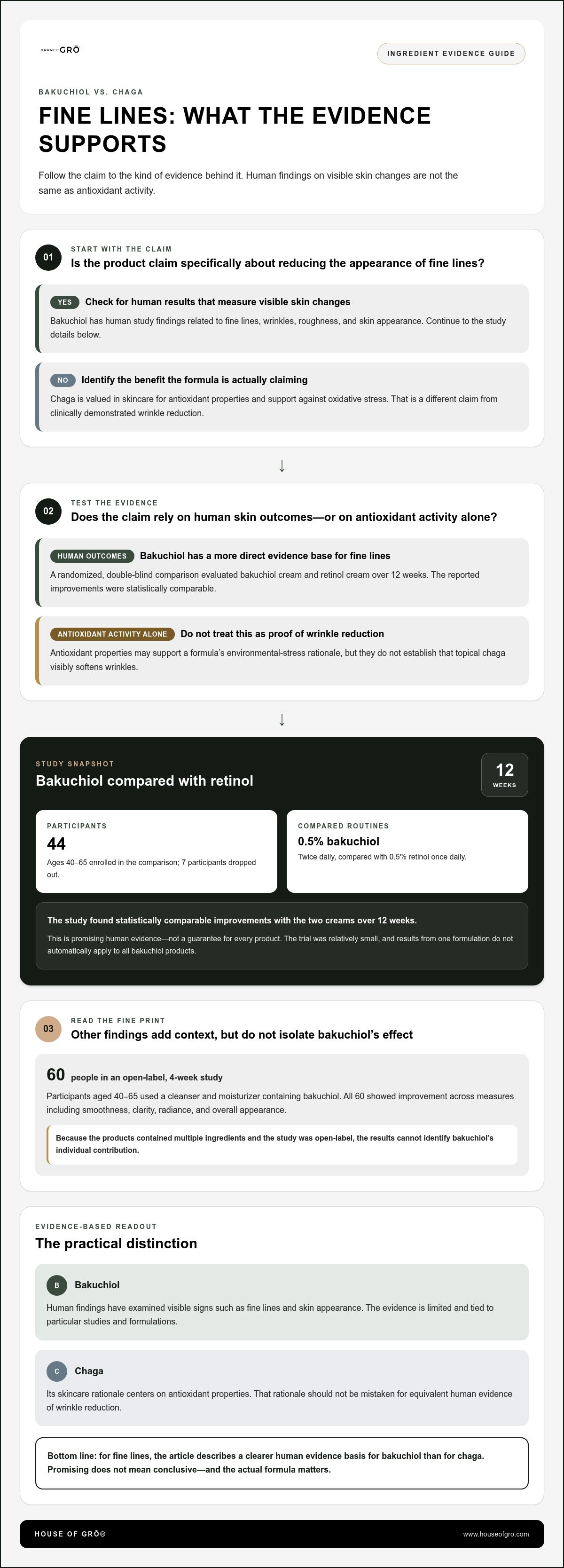
Human studies have examined bakuchiol for visible signs associated with aging skin. In a randomized, double-blind comparison, researchers evaluated bakuchiol cream against retinol cream over 12 weeks. The study enrolled 44 participants aged 40-65, and seven participants dropped out. This is useful context, but it remains a relatively small trial.
The comparison found statistically comparable improvements with 0.5% bakuchiol used twice daily and 0.5% retinol used once daily over 12 weeks. A separate 12-week comparative study reported reduced wrinkle depth and skin roughness, with the largest observed effect at week 12. These findings make fine lines a relevant focus, not proof that every bakuchiol product performs alike.
Other research has assessed specific combinations rather than bakuchiol alone. An open-label study tested a cleanser and moisturizer containing bakuchiol in 60 people aged 40-65 for four weeks. All 60 participants showed improvement across measures including smoothness, clarity, radiance, and overall appearance. Because the products combined multiple ingredients and the study was open-label, results cannot isolate bakuchiol’s contribution.
These details help frame the bakuchiol-versus-chaga question. Human skincare studies of bakuchiol have measured changes in wrinkles, roughness, and appearance. Study design and formulation still matter: results from one cream, cleanser, or multi-ingredient formula should be understood in context, not treated as a guarantee for every product.
Topical products containing bakuchiol and chaga can be used in the same skincare routine. Follow each product’s directions, and avoid layering them if the combination irritates your skin.
In short, Psoralea corylifolia seeds are bakuchiol’s source, while clinical comparisons offer early evidence for skin-smoothing effects. The 12-week findings provide a clearer basis for discussing fine lines than ingredient origin alone. Chaga and bakuchiol may appear in skincare for different reasons, so comparing them means weighing human evidence and the actual formula, not just the word “natural.”
What are bakuchiol and chaga, and what are their claimed benefits?
Bakuchiol and chaga come from different parts of the natural world. Bakuchiol is a botanical skincare ingredient associated with Psoralea corylifolia; chaga is a mushroom used in skincare for its antioxidant properties. Their origins shape each ingredient’s story, but don’t establish equal evidence for fine lines.
Bakuchiol’s central skincare claim is support for smoother-looking skin. It appears to stimulate collagen-producing receptors in the skin, a mechanism associated with firmness and the appearance of fine lines. A small human study reported improvements in fine lines and skin color comparable to retinol, with less peeling and burning. That finding is encouraging, but it describes a study outcome, not a promise for every formula.
Chaga’s skincare appeal is different. Its antioxidant properties are often highlighted in formulas intended to support skin exposed to environmental stress. Antioxidants can help address oxidative stress, but that general role doesn’t prove that a topical chaga product will visibly soften wrinkles. Antioxidant activity and measured changes in fine lines are different kinds of evidence.
That distinction matters when comparing the ingredients. Bakuchiol has human findings related to visible skin changes, while chaga’s commonly stated skincare benefit centers on antioxidant support. An ingredient’s reputation, traditional use, or natural origin can’t substitute for a clinical result measuring wrinkles, texture, or tone. Look at the specific claim on the label and consider what evidence would demonstrate it.
- Bakuchiol: associated with collagen-related activity and studied for visible signs such as fine lines and uneven skin color.
- Chaga: valued in skincare for antioxidant properties, a different claim from clinically demonstrated wrinkle reduction.
The finished product matters, too. A serum containing bakuchiol alongside vitamin C, for example, can’t show which ingredient produced a reported change unless the study design separates their effects. The same applies to a chaga blend. Formula, concentration, and directions help define what a product is designed to do; they don’t prove on their own that it works.
For fine lines, the evidence-based distinction is practical: bakuchiol has human findings tied to skin appearance, while chaga’s antioxidant rationale should not be mistaken for equivalent wrinkle evidence. If you’re exploring botanical skincare, consider the ingredient claim and the formula together. Explore ingredient-led skincare as you compare what each product is designed to support.
Chaga is valued for antioxidant support, which can help address oxidative stress. This section describes no clinically demonstrated benefit for reducing wrinkles or other visible skin changes.
Bakuchiol and chaga side effects, interactions, and safety risks
Skin tolerance depends on the whole formula, not just the ingredient name. A bakuchiol serum, chaga cream, and cleanser can each contain different supporting ingredients. Read each label, follow its directions, and don’t assume a topical product has the same risks as an ingestible supplement.
Bakuchiol can cause irritation in some users. In a study of bakuchiol cleanser and moisturizer, 10% of the eczema group reported minimal stinging that continued into week four. That finding concerns a particular product combination and group. It doesn’t describe every bakuchiol formula or every person with sensitive skin.
Retinoids have a clearer set of reported skin effects. Dryness, burning, stinging, peeling, and sun sensitivity can occur. Redness, peeling, dryness, and increased sun sensitivity commonly appear during the first 4-6 weeks of use. These effects matter when comparing bakuchiol with retinol, but they shouldn’t be treated as a full safety profile for either ingredient.
Sun care remains relevant to any routine. Use daily SPF whether your routine contains bakuchiol or another active ingredient. Bakuchiol can be used during the day because it doesn’t increase sun sensitivity. Retinoids can increase sun sensitivity, so keep sun protection consistent when using them.
Pregnancy and breastfeeding call for added care around retinoids. They aren’t recommended during pregnancy or breastfeeding because of concerns about vitamin A derivatives. During pregnancy, confirm the use of bakuchiol or another active ingredient with a doctor. A botanical source alone doesn’t establish suitability during pregnancy.
For chaga, distinguish topical skincare from an ingestible product. The route of use changes how a product is used and what its label directs. Don’t apply supplement instructions to a face cream, or use a topical product as an ingredient for eating or drinking. Check the complete ingredient list, especially if you already know you react to a listed ingredient.
- Before applying: follow the product label and introduce one new active formula at a time.
- If irritation develops: stop using that product rather than layering additional active ingredients over irritated skin.
- For a medication or pregnancy concern: discuss the specific ingredient and route of use with a doctor.
These distinctions keep a bakuchiol-versus-chaga comparison grounded in actual use. The 10% stinging report applies to a specific bakuchiol cleanser-and-moisturizer study, not chaga or every bakuchiol product. For both ingredients, the formula, directions, and your personal context shape sensible use. Daily SPF remains a steady part of skincare, especially with retinoids.
Who should avoid chaga, including people taking blood thinners or diabetes medication?
People taking blood thinners or diabetes medication should pause before using oral chaga supplements. Discuss the specific product and its ingredient list with a prescriber or pharmacist first. This is a careful step for medication decisions, not a claim that every chaga product interacts with every medicine.
Route matters. A chaga face cream is applied to the skin, while a chaga supplement is taken by mouth. These are different product types, with different directions and exposures. Don’t assume information about an ingestible supplement automatically applies to a topical formula, or vice versa.
For someone using a blood thinner, the practical issue is adding an ingestible supplement without reviewing it alongside the current medication plan. Bring the chaga product label, including its full ingredient list, to the discussion. Keep taking prescribed medication as directed; don’t adjust or stop it to accommodate a supplement.
People managing diabetes can take the same careful approach. Show the clinician or pharmacist the exact chaga supplement and the names of current diabetes medicines. A product’s plant or mushroom origin doesn’t establish how it fits with an individual treatment plan. Don’t make medication changes based on a supplement label or online claims.
Other details matter, too. A product may combine chaga with additional ingredients, so review the label as a whole. Check whether it’s a topical cosmetic or an oral supplement, identify every listed ingredient, and follow the directions for that specific product. “Chaga” alone doesn’t describe the complete formula.
- Taking a blood thinner: review an oral chaga supplement with a prescriber or pharmacist before starting it.
- Using diabetes medication: bring the product label and medication names to the conversation.
- Considering a topical product: follow its skin-use directions rather than supplement instructions.
If you know you’re sensitive to a listed ingredient, avoid products containing it. Stop applying a topical formula if it causes an unwanted skin reaction. Keep the package available so you can identify the ingredient list accurately.
The practical answer is cautious and specific: people using blood thinners or diabetes medication should get a professional review before taking oral chaga. That approach focuses on the actual supplement, its complete formula, and the person’s medication plan. It avoids treating all chaga products as interchangeable or making unsupported claims about a particular interaction.
Separate skincare evidence does not establish chaga effects. Open-label bakuchiol studies included a 4-week cleanser and moisturizer study in 60 people aged 40-65; a 56-day serum with Vanilla tahitensis extract in 43 participants aged 45-65; and a 12-week night serum with vitamin C and melatonin in participants aged 40-75. The article says texture and smoothness may improve within 2 weeks of twice-daily use and recommends alternating nights for retinol and bakuchiol.
Bakuchiol vs chaga product prices and how to choose quality products
Price alone can’t settle a bakuchiol-versus-chaga comparison. A face serum and a cleanser have different formats, ingredient blends, and directions for use. Compare products with similar purposes first. Then consider the formula, the amount of product, and the evidence behind its specific claims.
Bakuchiol products may differ in concentration and supporting ingredients. Clinical research has used 0.5% bakuchiol, but that figure doesn’t establish a universal standard or guarantee that a product with the same percentage will perform identically. Check whether the label states a concentration, and distinguish a disclosed amount from broad wording such as “with bakuchiol.”
Chaga products also vary in format and formula. A topical cream isn’t directly comparable with an oral supplement. For skincare, review the complete ingredient list and the product’s stated purpose. A chaga antioxidant claim describes a different benefit from a measured reduction in wrinkle depth.
Several practical details can shape a product’s price without proving its quality. Format, formulation, ingredient sourcing, concentration disclosures, and the amount supplied all affect what a product contains and how it’s used. Compare like with like: a serum against another serum, or a cream against another cream. A higher price isn’t evidence of stronger clinical support.
- Read the full label. Identify bakuchiol or chaga in the ingredient list, along with other active ingredients.
- Match the claim to the evidence. Look for human skin outcomes if the claim concerns fine lines, rather than relying only on antioxidant language.
- Compare the format. A leave-on serum and a cleanser have different contact with skin and directions.
- Review the directions. Use the product as its label instructs, rather than copying another formula’s routine.
For example, a serum containing bakuchiol and vitamin C makes a combination claim. Any observed change may involve the finished formula, not bakuchiol alone. A chaga product marketed for antioxidant support shouldn’t be judged as though it had demonstrated wrinkle reduction. Ingredient transparency helps you understand what the product is designed to do.
For a considered choice, weigh the product’s format, label clarity, stated purpose, and relevance of its evidence. These criteria are more useful than price in isolation. Explore ingredient-led skincare and compare formulas with your routine in mind.
Evidence also puts combination claims in perspective. A trial of a cream combining bakuchiol, melatonin, and a vitamin C derivative reported fewer wrinkles, increased skin firmness, and improved skin quality, but the effects couldn’t be attributed specifically to bakuchiol. When assessing a product, distinguish results reported for a finished formula from evidence about an individual ingredient. That makes it easier to judge what a product’s claims can, and can’t, tell you about its quality.
The article states that retinol, particularly at prescription strength, generally produces faster and more dramatic results for deep wrinkles and severe photoaging than bakuchiol. Retinoids can boost collagen production, even out skin tone, and fade age spots. These differences help clarify expectations when comparing formulas, but price isn’t a substitute for matching an ingredient and its claims to your priorities. Consider the concern you want to address and the relevant evidence, then weigh those against the product’s label and purpose. Realistic expectations and clear formulation details are more useful than assuming every product will produce the same outcome.
House of GRŌ®: AT DAWN Rejuvenating Daytime Oil
At Dawn Rejuvenating Daytime Oil offers a considered daytime step for a botanical skincare routine. House of GRŌ® brings wild-harvested Chaga from Northern Maine into its skincare approach, making the oil relevant to readers drawn to chaga-based formulas. It isn’t a substitute for the clinical evidence discussed above, but it connects ingredient curiosity with a daily self-care ritual.
Choose it when you want to build a simple daytime ritual around an oil. Keep the distinction clear: a product’s ingredients and purpose matter, while evidence for fine lines depends on the specific formula and the studies behind it.
Explore the oil and visit House of GRŌ® online to learn more.
Make your next skincare choice with intention
Use the bakuchiol vs chaga comparison to clarify your priorities, then choose a routine that feels clear and sustainable. Start with the skin concern you want to address and consider the role each product can realistically play. Keep the routine simple enough to follow consistently.
For a botanical skincare ritual, House of GRŌ® offers At Dawn Rejuvenating Daytime Oil and After Dark Restorative Night Serum. Touch Hydrating Body Serum offers a body-care option. As you weigh bakuchiol vs chaga, choose according to where and how you want to focus your care, rather than adding products without a purpose.
Thoughtful skincare leaves room for observation. Notice how your skin responds, keep daily care steady, and adjust your routine with care. If you’d like guidance as you explore these offerings, contact House of GRŌ® for skincare guidance. A considered routine can begin with one calm, well-chosen step.
Frequently Asked Questions
Does it work?
Bakuchiol has human research supporting potential improvements in visible signs of aging, especially fine lines and skin appearance. Chaga’s skincare appeal centers on antioxidant properties, which don’t by themselves demonstrate wrinkle reduction. In the bakuchiol vs chaga comparison, match each product’s claim to evidence measuring that outcome. A formula intended to support hydration, for example, shouldn’t be assessed as though it were clinically shown to reduce wrinkles.
How do their skincare benefits and evidence compare?
Bakuchiol has more directly relevant human skincare findings for fine lines than chaga’s antioxidant rationale. That distinction is useful if wrinkle appearance is your main concern. To apply the bakuchiol vs chaga comparison, examine whether a product is topical, what outcome it claims to support, and whether that outcome was measured in people. Evidence for one finished formula doesn’t establish results for every product containing the same ingredient.
Can bakuchiol reduce wrinkles, acne, or hyperpigmentation?
Bakuchiol has evidence related to fine lines and skin color, so those concerns align more closely with the studied outcomes. Don’t treat findings about wrinkles or pigmentation as proof of an acne benefit. For example, a product chosen to address uneven-looking tone makes a different claim from one intended for breakouts. Compare the label’s stated purpose with evidence for that specific skin concern, rather than assuming one active addresses all three.