


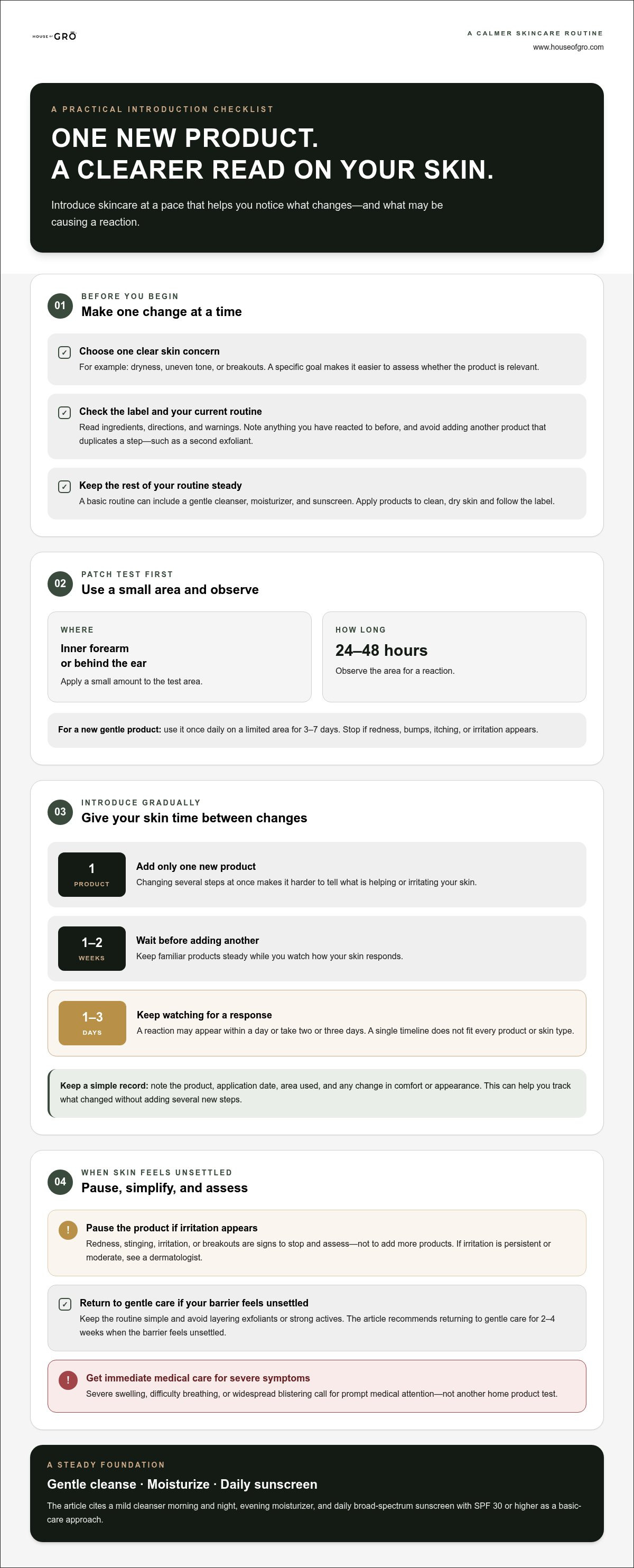
A calmer routine often begins with adding less, not more. Introduce one new skincare product at a time and wait 1-2 weeks before adding another; a reaction may appear within a day or take two or three days. The fear of trying new skincare products can ease with gradual exposure and a simple routine, often over 2-6 weeks.
It makes sense to feel cautious when a product might cause redness, stinging, or a breakout. Introducing products gradually gives you time to notice how your skin responds without changing several things at once.
Here, you’ll learn what an adjustment period can look like, how to choose products that suit your skin goals, and how to introduce active ingredients gradually. You’ll also find signs that mean it’s time to stop using a product or consult a dermatologist. Clear steps and a gentler pace can help you feel more confident in each choice.
Key Takeaways
- Introduce one new product at a time, then give your skin time to show how it responds before making another change.
- Choose skincare around a clear goal and your skin’s needs, rather than reacting to every blemish or trend.
- If you have sensitive skin, a skin condition, or a history of serious reactions, discuss new products with a dermatologist.
- Ease active ingredients into your routine gradually, starting with less frequent use and adjusting based on your skin’s response.
- For a considered daytime skincare step, AT DAWN Rejuvenating Daytime Oil offers a focused option to explore within a simple routine.
1. How Long Does it Take for Your Skin to Adjust to New Products?
There isn’t one adjustment period for every product or skin type. A reaction can appear within a day or take two or three days, while gradual introduction gives you time to notice changes. Introduce new products gradually, one at a time, so you can monitor how your skin responds. Mild redness, stinging, irritation, or breakouts are signs to pause and assess your routine, not to add more products.
How do you patch test a new skincare product safely, and how long should it take? Apply a small amount to the inner forearm or behind the ear and observe the area for 24-48 hours. For a new gentle product, use it once daily on a limited area for 3-7 days; stop if redness, bumps, itching, or irritation appears.
Your skin type can help guide the pace. If your skin is sensitive or already irritated, keep your routine simple and introduce changes gradually. Apply products to clean, dry skin, follow the label, and keep the rest of your routine steady. This makes it easier to identify which step may be causing a reaction. A cleanser, moisturizer, and sunscreen can provide a basic routine while you observe your skin.
Seasonal shifts can change how your skin feels. For example, cold, dry weather may leave it feeling tight, while heat can make a familiar product feel heavier. Don’t introduce an active ingredient during a period of visible irritation or change several steps alongside the season. If the barrier feels unsettled, return to gentle care for two to four weeks. Cleveland Clinic aesthetician Ashlyn Yanke recommends a mild cleanser morning and night, evening moisturizer, and daily broad-spectrum sunscreen with SPF 30 or higher.
Choose a product for one clear concern, such as dryness, uneven tone, or breakouts, rather than trying to address every visible change. A blemish or dry patch can prompt sudden routine changes, but adding several treatments makes it harder to tell what helps. Avoid relying on AI tools or social media influencers to create a personal regimen. Their suggestions can’t account for your skin’s history, sensitivities, or current products.
Prioritize supporting your skin barrier before pursuing several goals at once. If a product causes persistent irritation, simplify your routine and observe your skin rather than layering exfoliants or strong actives. Cleveland Clinic’s basic-care approach offers a practical foundation: gentle cleansing, moisturizer, and sunscreen. Once your skin feels settled, reassess your main concern and introduce only the next relevant step.
Choosing a new skincare product based on your goals
Start with one specific skin goal, then choose a product designed to address it. For example, someone concerned about dullness might consider vitamin C, while someone seeking smoother-looking skin might explore an exfoliating ingredient. A product chosen for a clear purpose is easier to assess than several additions for different concerns. Write down your goal before shopping, such as “reduce the look of dark spots” or “ease dryness.”
Anxiety about skincare products is a recognizable concern, but “skinxiety” isn’t currently a clinical diagnosis. A blemish or dry patch can prompt worry and sudden routine changes. If you’re uneasy about a possible allergic reaction, focus on practical choices: identify your main concern, read the product directions, and introduce one relevant product at a time.
Match the ingredient to the concern. Niacinamide is a skincare ingredient that may be considered when choosing a product for a specific skin concern. Glycolic acid exfoliates dead skin and can help reveal smoother, brighter skin. Vitamin C serum may suit a daytime routine for the face and neck, or spot treatment for hyperpigmentation. These ingredients have different roles, so adding them all at once makes it harder to judge what suits your goal.
Next, consider what your current routine already does. If it includes an exfoliant, adding another exfoliating product may increase irritation. Choose one new step that fills a genuine gap. For example, if dryness is your concern, prioritize a moisturizer rather than adding an exfoliating acid. Keep familiar products steady as you observe the new addition. Let your skin’s response, not a trend, guide your next choice.
Read the label with your goal in mind. Check the ingredient list, directions, and warnings, then note any ingredients you’ve reacted to before. “For sensitive skin” isn’t a substitute for reviewing the formula or introducing a new product cautiously. If you have a known skin condition or a history of a serious reaction, ask a dermatologist about suitable options before experimenting. Their advice can narrow your choices and help avoid unnecessary trial and error.
Keep a simple record. Note the product, application date, area used, and any change in comfort or appearance. A short log can help distinguish a reaction from unrelated changes, such as a weather shift or another routine adjustment. Revisit your original goal after using the product as directed. For a quieter, intentional approach, explore botanical skincare options and choose only a step that fits your routine.
Consulting a dermatologist before trying products
See a dermatologist if a skincare reaction is moderate or persists after you stop using the product. Seek immediate medical care for severe swelling, difficulty breathing, or widespread blistering. These symptoms call for prompt attention, not another home product test.
A dermatologist’s input can also help before you begin. If you have sensitive skin, a skin condition, or a history of serious reactions, discuss new products and patch-testing options first. After a serious reaction, a dermatologist or allergist can help identify possible triggers and consider alternatives. Bring the product or its ingredient list so you can discuss the formula you’re considering.
Preparation can make your appointment more useful. Write down the product name, when you first applied it, where you used it, and when symptoms appeared. Include other products used around the same time, such as cleanser, moisturizer, makeup, or an exfoliant. If redness or bumps are visible, photographs can help show how the reaction changed. Keep the packaging, since an ingredient list can be more informative than the product’s front label.
Describe the reaction clearly. Note whether your skin felt itchy, tight, stinging, or painful, and whether the affected area spread. Explain what happened after you stopped using the product. A reaction that continues, returns, or appears alongside other symptoms gives the dermatologist useful context. Avoid restarting the product just to see whether the same response happens again.
Before using a new formula, show it to your dermatologist, especially if past reactions make choosing difficult. Ask which ingredients may require caution, whether an alternative could suit your concern, and how to introduce the product within your existing routine. A clinician can consider your skin history, current symptoms, and product ingredients. This is more relevant than advice based only on a social media post or general online recommendation.
Fear can become a concern of its own. If anxiety prevents you from trying products or causes severe distress, professional support may help. Exposure therapy or cognitive behavioral therapy techniques can support gradual, structured steps. A dermatologist can help you understand how skincare-related anxiety has escalated, while a mental health professional can address its broader effects. You don’t need to force yourself through repeated tests alone.
Until you receive guidance, keep your routine simple and avoid adding several unfamiliar products together. If a reaction is mild, stop using the suspected product and note any changes rather than layering another active ingredient over irritated skin. For severe swelling, difficulty breathing, or widespread blistering, seek immediate medical care. Clear notes and timely support can help you make a more informed skincare decision.
4. Gradually introducing active ingredients and retinol
Retinol and exfoliating acids can cause irritation, especially when introduced too often or layered together. Fragranced products can also irritate. Cleveland Clinic aesthetician Ashlyn Yanke advises avoiding harsh skincare products that contain fragrances. Sensitivity to a particular ingredient varies, so a dermatologist can help assess suspected allergic contact dermatitis.
Choose one targeted active for your main concern. Dr Anjali Mahto recommends one targeted active at night within a simplified routine. This limits changes and makes it easier to notice how your skin responds. Adding retinol, glycolic acid, and salicylic acid together can make it difficult to identify the cause of irritation.
Concentration and frequency both matter. The provided starting ranges are 0.5-2% for retinol and 5-10% for glycolic or salicylic acid. These are starting ranges, not a reason to choose the strongest formula. Follow the product label and avoid increasing strength and frequency at the same time.
Build a measured introduction:
- Choose one active suited to your goal, then check its directions and concentration.
- Use it once or twice a week at first, as recommended in the guidance, and observe your skin between applications.
- If your skin remains comfortable, gradually increase how often you use it. Keep other routine steps unchanged while assessing the response.
Retinol is often introduced at night, while exfoliating acids also need a measured pace. Don’t apply multiple new actives on the same evening. A gentle cleanser and moisturizer can support a simpler routine, while daily broad-spectrum sunscreen with SPF 30 or higher protects skin, according to Cleveland Clinic aesthetician Ashlyn Yanke.
Notice the difference between a brief sensation and continuing irritation. Persistent redness, stinging, itching, or swelling means you should stop using the new active rather than push through. Mild irritation, redness, stinging, and breakouts can occur with skincare products. Reactions may appear within a day or take two or three days. If symptoms persist or feel moderate, consult a dermatologist.
Give each new active space in your routine. Wait before introducing another product, and note the application date, area, and any change in comfort. If a previous serious reaction makes testing feel uncertain, consult a dermatologist or allergist about patch testing and alternatives. A gradual plan lets you pursue a skin goal without turning every evening into a new experiment.
What causes anxiety or fear around trying new skincare products?
The fear of trying new skincare products can stem from uncertainty about how a formula might affect your skin. A past reaction, visible redness, or an unexpected breakout can make the next product feel risky. Even a blemish or dry patch may trigger panic and drastic routine changes. That response can make it harder to identify the original concern or choose a measured next step.
Online advice can add pressure. Social feeds often show polished skin and complicated routines without revealing how a particular formula affects each person. An influencer’s or AI tool’s recommendation can’t account for your skin history, existing products, or sensitivities. Tanya Vasunia suggests unfollowing accounts that trigger skin anxiety and choosing ones that encourage a calmer mindset. Curate your feed as deliberately as your skincare shelf.
Product overload is another source of worry. Seeing several active ingredients promoted for similar concerns can make every choice feel consequential. A simpler way forward is to name one goal, such as supporting skin comfort, then consider one relevant product. Dr Anjali Mahto advises supporting skin function rather than trying to fix flaws. That shift replaces constant correction with a clearer, kinder purpose.
Uncertainty can also come from trying to interpret every sensation. A reaction may appear within a day or take two or three days, so an immediate look in the mirror won’t always tell the full story. Note when you used a product and what you noticed. A brief record can help distinguish a product response from a spontaneous blemish or a change elsewhere in your routine.
Make the process feel more contained. Choose one product for one goal, follow its directions, and keep other routine steps steady while you observe. If fear makes testing difficult, gradual exposure and a simple routine may help anxiety decrease within 2-6 weeks. One example describes feeling less anxious after two weeks without a reaction. These experiences aren’t a deadline; they show how repeated, manageable steps can build familiarity.
If anxiety prevents product testing or causes severe distress, professional support, including exposure therapy or cognitive behavioral therapy techniques, can help. Tanya Vasunia also recommends discussing escalating skincare anxiety with a dermatologist to understand what may be driving it. Start with the concern that feels most pressing, rather than forcing yourself to try several products. For a calmer approach to daily care, explore an intentional skincare routine built around fewer, considered steps.
House of GRŌ®: AT DAWN Rejuvenating Daytime Oil
At Dawn Rejuvenating Daytime Oil is a considered daytime step when you’re ready to explore one new product. Its purpose is clear: a rejuvenating oil for daytime care, suited to a routine built around one specific goal rather than several simultaneous changes. Introduce it gradually, follow the product directions, and observe how your skin responds before adding anything else.
House of GRŌ® creates skincare with adaptogenic mushrooms and organic botanicals, including wild-harvested Chaga as an antioxidant ingredient. If an oil fits your daytime routine, At Dawn Rejuvenating Daytime Oil is a focused option to consider. Keep your other steps familiar as you assess whether it suits your skin and goals.
Explore At Dawn Rejuvenating Daytime Oil and visit House of GRŌ® online to learn more.
Make your next skincare step intentional
Your routine doesn’t need to change all at once. Let your next choice reflect what you want from your daily care, then make time to notice how that step feels. The fear of trying new skincare products can feel easier to manage when each choice has a clear purpose and your routine remains considered.
If you’re exploring a daytime oil, At Dawn Rejuvenating Daytime Oil is one option. For an evening serum or body care, consider After Dark Restorative Night Serum or Touch Hydrating Body Serum. Choose the product that fits the kind of care you’re seeking rather than adding several steps at once.
House of GRŌ® can be a place to explore these skincare options as you shape a routine that feels intentional. Contact House of GRŌ® for skincare support and take your next step with care. A thoughtful routine begins with one choice that feels right for you.
Frequently Asked Questions
How Long Does it Take for Your Skin to Adjust to New Products?
There’s no single adjustment time for every product; reactions may show within a day or take two or three days. Track the application date and any changes, since that can help distinguish a product reaction from an unrelated blemish. For a new gentle product, use it once daily on a limited area for 3-7 days. If irritation appears, stop using it rather than waiting for your skin to “get used to it.”
Why Does My Skin Get Worse When I Use New Skin Care?
Your skin may worsen because a product irritates it or because several routine changes make the trigger hard to identify. Breakouts that continue for weeks may mean your skin doesn’t tolerate the product or that it interacts poorly with another step. An initial acne purge should not last more than two or three weeks. If symptoms persist, stop using the suspected product and discuss the reaction with a dermatologist.
How to tell if a skincare product may irritate or cause an allergic reaction?
Redness, stinging, itching, bumps, or a rash after applying a product can signal a reaction. It may appear within a day or take two or three days, so note when you applied the product and when symptoms began. Stop using it if a test area becomes red, bumpy, or itchy. Severe swelling, difficulty breathing, or widespread blistering calls for immediate medical care.
How to introduce new skincare products gradually into a routine?
Choose one new product for a specific purpose, then keep the rest of your routine unchanged. Start a new active once or twice a week and increase use gradually if your skin remains comfortable. Wait 1-2 weeks before adding another product. For example, don’t start a retinol and an exfoliating acid together; if irritation appears, you’ll have a clearer idea which step may be responsible.
How to choose skincare products for sensitive or allergy-prone skin?
Choose soothing, fragrance-free products and avoid harsh formulas that contain fragrance. Read the full ingredient list, especially if you’ve reacted to a product before, and introduce only one new formula at a time. If you have sensitive skin, a skin condition, or a history of serious reactions, consult a dermatologist about options and patch testing. A dermatologist can consider your skin history alongside the ingredients you’re considering.
What should you do if a new skincare product causes a rash or irritation?
Stop using the suspected product and keep its packaging or ingredient list. Note when you applied it, where the rash appeared, and how it changed; this can help a dermatologist assess the reaction. Seek immediate medical care for severe swelling, difficulty breathing, or widespread blistering. For a moderate reaction or symptoms that persist after stopping the product, consult a dermatologist rather than adding another active to your routine.