


The ultimate simple skincare routine has three essentials: a gentle cleanser, moisturizer, and sunscreen. Apply products from lightest to heaviest: cleanse first, layer serums before moisturizer, and finish your morning routine with sunscreen. At night, cleanse again, then use any chosen treatment and moisturizer.
Product order can feel like one more thing to get right. Keep it simple: start with clean skin, apply lighter formulas before richer ones, and leave facial oil until last. A few thoughtful steps can bring more ease to your morning and evening routine.
Here, you’ll learn which steps to keep, when to cleanse, how to layer products, and where daily sunscreen fits. You’ll also find a straightforward way to introduce new products without overwhelming your routine. Less layering for its own sake, more intentional care.
Key Takeaways
- Make sunscreen the final step in your morning routine, and reapply every two hours, especially after sweating or swimming, as dermatologist Debbie Palmer advises.
- Choose a gentle morning cleanse that leaves skin comfortable; if you cleanse only once a day, make it part of your evening routine.
- Keep your routine focused on essentials, then add treatments only when they serve a clear purpose for your skin.
- Layer lighter textures before richer ones, introduce new products one at a time, and leave facial oil until last.
- For a final daytime oil step, House of GRŌ® AT DAWN Rejuvenating Daytime Oil can fit into a considered morning routine before sunscreen.
Daily sunscreen
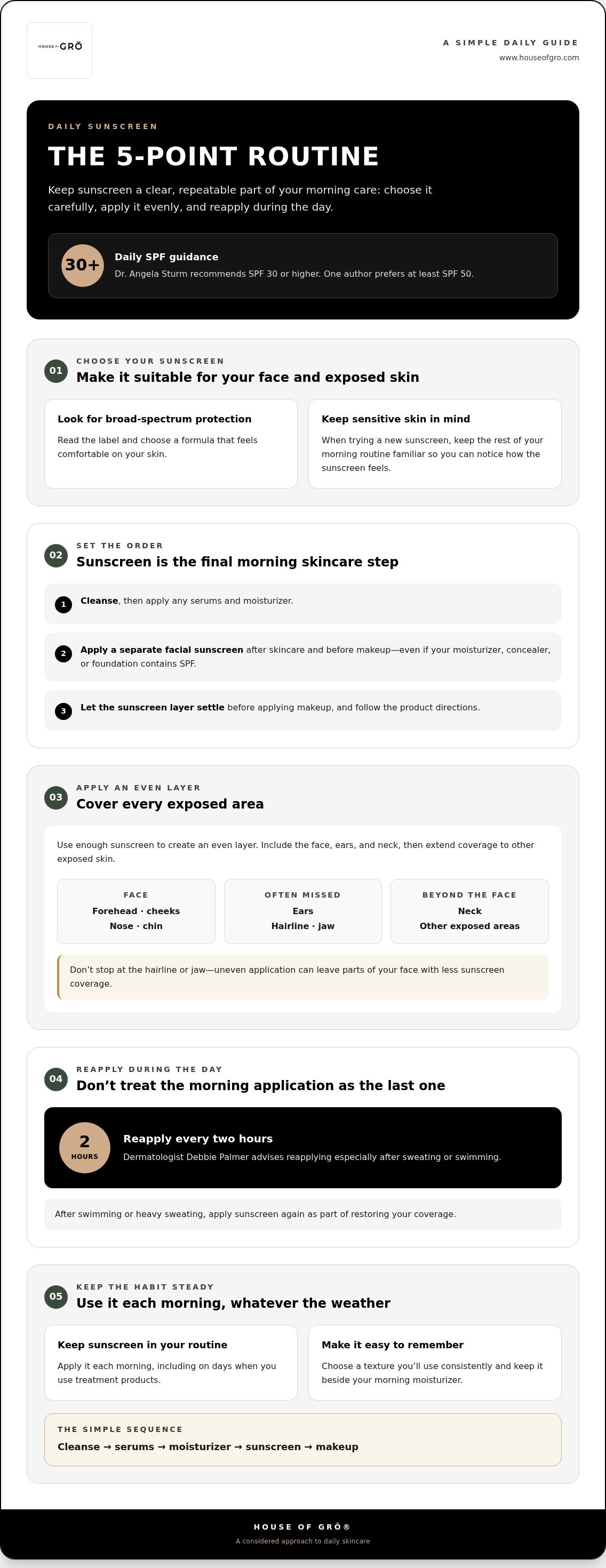
Dr. Angela Sturm recommends sunscreen with an SPF of at least 30 for daily use. One author prefers at least 50 SPF. Apply enough to create an even layer across every exposed area, including the face, ears, and neck.
- Make sunscreen your final morning skincare step. Apply it after cleansing, serums, and moisturizer, before makeup. Use a separate facial sunscreen even if your moisturizer, concealer, or foundation contains SPF. That keeps sunscreen a distinct step in your daily routine instead of relying on another product for coverage.
- Choose a broad-spectrum sunscreen for your face and exposed skin. Read the label before applying, and choose a formula that feels comfortable on your skin. If your skin is sensitive, keep the rest of your morning routine familiar while introducing a new sunscreen. This makes it easier to tell whether the sunscreen itself feels irritating.
- Apply a consistent, even layer. Cover your forehead, cheeks, nose, chin, ears, and neck, then extend coverage to other exposed areas. Don’t stop at the hairline or jaw. Uneven application can leave parts of your face with less sunscreen coverage. Follow the product directions and let the layer settle before applying makeup.
- Reapply during the day. Dermatologist Debbie Palmer advises reapplying sunscreen every two hours, especially after sweating or swimming. If you spend time outdoors, make reapplication part of your routine rather than treating the morning application as the final step. After swimming or heavy sweating, apply sunscreen again as part of restoring your coverage.
- Keep sunscreen in your routine as the weather changes. Apply it each morning, including on days when you use treatment products. A sunny commute, outdoor lunch, or time near a window can make sunscreen relevant to your plans. Choose a texture you’ll use consistently and keep it beside your morning moisturizer.
A clear sequence helps sunscreen fit into your morning care. A gentle, nonmedicated cleanser is recommended for morning face washing, as it cleans without leaving skin too dry. Simple recommends cleansing each morning and evening to remove dirt and pollution. After washing, follow your usual routine and keep sunscreen as the final skincare step before makeup. If you adjust your routine, make one change at a time so it stays easy to follow and you can tell which products feel comfortable. Aim for a repeatable routine, not a complicated one.
Sunscreen also sits alongside other parts of daily self-care, rather than replacing them. One answer recommends strength training 4-5 times a week as part of its lifestyle advice. Keep that advice distinct from your face-care steps: strength training does not change the order for cleansing and applying sunscreen. On days when your plans differ, use the same basic morning sequence and consider when you will be able to reapply. A simple routine can make it easier to remember both the products you use and the directions that apply to them, without adding extra steps to the sunscreen application itself.
Morning cleansing
Choose a gentle cleanser and moisturizer based on how your skin feels after washing. If your face feels tight, try gentler cleansing and a more nourishing moisturizer. If it feels oily, choose lighter textures.
- Start with a gentle morning cleanse. A mild, nonmedicated cleanser can lift overnight residue without leaving skin feeling overly dry. Use lukewarm water, apply the cleanser with clean fingertips, and rinse thoroughly. Avoid vigorous scrubbing and rough washcloths. If your skin feels comfortable after rinsing, the cleanser is less likely to be stripping away moisture your next steps need.
- Adjust your morning wash to your skin’s needs. A gentle cleanser works well in a simple daily routine. If you have acne-prone skin, a face wash containing salicylic acid or benzoyl peroxide may be beneficial. These active ingredients aren’t necessary for everyone. Choose a cleanser with a clear purpose, and avoid adding several treatment products at once.
- Consider fragrance-free care for sensitive skin. Check the ingredient list for fragrance or parfum, and choose a fragrance-free cleanser if scented products tend to bother your skin. Keep the rest of your routine familiar while trying it. When comparing options, notice how your face feels after each wash, such as comfortable or tight, rather than choosing based on scent or foam.
- Make evening cleansing your essential makeup-removal step. Use your cleanser before bed to remove makeup, sunscreen, and the day’s buildup. Massage gently around the nose, hairline, and jaw, where residue can remain. If makeup is still visible after rinsing, repeat the cleanse gently instead of scrubbing. People with oily skin may start with an oil-based cleanser, then use a water-based cleanser.
- Follow cleansing with moisturizer while your skin is damp. Apply it after rinsing to help your skin feel comfortable. Choose a lighter texture if richer creams feel heavy, or a more nourishing one if your skin feels dry. Keep the ingredient list simple while you learn what suits you. If you’re tracking ingredients such as niacinamide, introduce one new care product at a time.
A simple baseline is to cleanse in the morning and evening. If washing twice daily leaves your skin uncomfortable, cleanse once at night and use moisturizer after your morning rinse. This keeps the evening wash focused on removing makeup and daily buildup.
As you refine your routine, explore thoughtfully chosen skincare essentials that fit your daily care ritual.
What is the optimal simplified skin-care routine?
Choose lighter textures for oily skin and prioritize a richer moisturizer for dry skin. Sensitive skin may benefit from a gentle, familiar routine, while combination skin can use lighter care on oily areas and richer moisture on dry patches.
- Keep your routine focused on essentials. Dermatologist Dr. Dhaval Bhanusali advises beginners to use no more than five skincare products. A simple morning sequence can include cleanser, serum, moisturizer, and sunscreen. At night, cleanse and moisturize, adding a treatment only when it serves a clear purpose. Fewer layers make it easier to notice which ingredients suit your skin.
- Use a serum before moisturizer. Apply serum to clean skin, then follow with moisturizer to add moisture and support the skin barrier. Simple recommends applying 2-3 drops of serum. If you use vitamin E serum in the morning, it can help skin retain moisture and protect it from damage. Keep daytime sunscreen as a separate final step.
- Choose nighttime treatment thoughtfully. A vitamin A-based cream containing tretinoin, retinol, bakuchiol, or adapalene can help build new collagen and rehydrate skin. Introduce one treatment at a time and follow its product directions. If the cream dries out your skin, apply a moisturizer containing ceramide or hyaluronic acid on top. That extra layer can support overnight comfort.
- Seal in moisture with the right final layer. Apply moisturizer after cleansing, preferably while your skin is damp. If you use a facial oil, apply it after lighter products as the final step in your skincare routine. This can create a more comfortable finish on dry areas. If your skin feels oily or congested, keep layers light and don’t add an oil automatically.
- Give nighttime care a calm, consistent place. After cleansing, apply treatment, then moisturizer, following the lightest-to-heaviest texture rule. One recommendation is to complete skincare 30 minutes before going to sleep. This gives products time to settle before your face rests against a pillow. If a retinoid irritates or dries your skin, simplify the routine and support it with moisturizer.
Order of skincare product application
Apply products in order: cleanser, lightweight serum, moisturizer, then sunscreen in the morning. At night, cleanse first, apply treatment, and finish with moisturizer or facial oil. Ingredients in beauty products can irritate or dry sensitive skin, so introduce products one at a time.
- Cleanse before layering anything else. In the morning, a gentle cleanser removes residue before serum or moisturizer. At night, cleanse away makeup and daily buildup. If you use two cleansers, an oil-based cleanser can come first, followed by a water-based one. This evening double cleanse may suit oily skin, especially when one wash doesn’t remove makeup comfortably.
- Apply treatment products before heavier creams. After cleansing, smooth on a serum or treatment, then let it settle before applying moisturizer. Lighter textures generally go before richer formulas. For example, apply a serum before a cream containing hyaluronic acid. Moisturizer can then support hydration and provide a comforting layer if a vitamin A-based cream feels drying.
- Finish your morning layers with sunscreen. Apply moisturizer after cleanser and serum, then make sunscreen the final skincare step before makeup. A moisturizer or foundation with SPF doesn’t replace a separate facial sunscreen. At night, omit sunscreen and finish with moisturizer, or facial oil after lighter products. This order keeps richer textures from sitting beneath thinner layers.
- Introduce new ingredients gradually. Add one new care product at a time so you can notice how your skin responds. For a sensitivity test, apply a pea-sized amount behind your ear and along your jawline. Wait a day or two before applying it across your face. If you’re sensitive, this slower approach can help identify which product may be causing irritation.
- Choose multitasking products with a clear role. A moisturizer that supports hydration and provides a comfortable final layer can simplify your routine. A serum can deliver treatment before the cream. Avoid stacking products with overlapping active ingredients just to add more steps. When considering a new combination, keep the rest of your routine steady while assessing how your skin feels.
Speak with a dermatologist about persistent skincare concerns, painful breakouts, or a reaction that doesn’t settle after you stop using the suspected product. A dermatologist can help distinguish irritation from a skin condition and guide treatment choices.
Core steps for a simple skincare routine
The cost of a basic skincare routine in the United States depends on the products you choose, their formulas, and how often you replace them. Build the ultimate simple skincare routine around essentials first, then add serums or treatments only when they meet a clear need.
Wash your face once or twice a day, and moisturize after cleansing. Dermatologist Marisa Garshick advises cleansing once or twice daily; if you cleanse once, make it the evening wash.
- Build around three essentials. Dr. Angela Sturm recommends at least three: a gentle cleanser, moisturizer, and sunscreen. Use cleanser to wash away residue, moisturizer to keep skin comfortable, and sunscreen as the final morning step. These distinct roles create a practical foundation before you consider facial serums or other care products.
- Match the formula to your skin type. If your face feels dry after cleansing, choose a moisturizer that leaves it comfortable rather than tight. If richer creams feel heavy, try a lighter texture. For combination skin, apply moisturizer where it’s needed most. Keep the rest of your routine steady while you assess whether the formula suits your skin.
- Make consistency more important than product count. Use cleanser and moisturizer in a repeatable morning or evening sequence. If cleansing twice daily feels drying, save cleanser for nighttime, when it can remove makeup and daily buildup. In the morning, follow your skin’s needs, then use moisturizer and sunscreen as planned.
- Add a treatment only for a specific goal. A serum may suit a targeted step, but it doesn’t replace moisturizer or morning sunscreen. Introduce one new product at a time and notice changes in comfort or dryness. For the ultimate simple skincare routine, keep your cleanser and moisturizer unchanged while testing a serum. This makes it easier to identify how your skin responds.
- Keep exfoliation measured. Simple recommends gently exfoliating the face 2-3 times a week to help remove dead skin cells. Another recommendation is exfoliating twice a week. Begin gently and pay attention to how your skin feels afterward. Avoid making exfoliation a daily step if it leaves your face feeling dry or irritated.
- Review your routine when your skin changes. Weather, new makeup, or changes in how your face feels can affect which moisturizer texture works well. Adjust one product at a time instead of replacing every formula at once. A simple note of what changed and when can help connect a reaction or improvement to a specific step.
For a considered addition to your body care routine, explore skincare essentials for daily care.
House of GRŌ®: AT DAWN Rejuvenating Daytime Oil
AT DAWN Rejuvenating Daytime Oil by House of GRŌ® can be a considered addition to your morning care ritual if you want to include a facial oil. Apply it after lighter serums and moisturizer, then finish with sunscreen. This places the oil in your routine without replacing the essentials. For a dedicated evening step, AFTER DARK Restorative Night Serum offers another option. Choose what fits your existing steps and feels comfortable on your skin. Keep your routine simple and add products with intention.
Visit House of GRŌ® online to explore its skincare offerings.
Make Your Next Skincare Step Intentional
A lasting care ritual doesn’t need constant reinvention. Let your skin’s comfort guide what you keep, and add a product only when it has a clear place in your day. This simple approach gives the ultimate simple skincare routine room to evolve without turning self-care into another task.
House of GRŌ® offers AT DAWN Rejuvenating Daytime Oil, AFTER DARK Restorative Night Serum, and TOUCH Hydrating Body Serum. Each suits a different part of your routine, from daytime facial care to nighttime and body care. Choose the step that feels most relevant to the ritual you want to build.
For a calm next step, contact House of GRŌ® for skincare support. Keep your routine thoughtful, personal, and easy to return to.
Frequently Asked Questions
Should I apply skin care products in a certain order?
Yes. Apply products from lighter to richer textures, with sunscreen last in the morning. A useful way to shape the ultimate simple skincare routine is to let each layer settle before adding the next. For example, after applying a serum, let it absorb before moisturizer. At night, sunscreen isn’t needed, so finish with moisturizer or facial oil according to your routine.
Should your skincare routine differ for day and night?
Yes. Daytime care should include sunscreen, while evening care can focus on removing makeup and daily buildup. A treatment such as a retinoid may fit better at night, followed by moisturizer. You can keep cleanser and moisturizer consistent across both routines, then reserve products with a specific purpose for the time that best suits their use.
What is the correct order of skincare for beginners?
For a beginner, start with cleanser, moisturizer, and sunscreen in the morning. In the evening, cleanse and moisturize; add a treatment only if you have a specific reason. Keep products you already tolerate steady while learning the sequence. For example, if you add a serum, don’t change your cleanser and moisturizer at the same time. That makes your routine easier to assess.
What skincare products do you truly need?
Dr. Angela Sturm recommends three essentials: a gentle cleanser, moisturizer, and sunscreen. For the ultimate simple skincare routine, start with those roles rather than shopping for a long list of extras. Choose formulas that feel comfortable for your skin type. Once the basics feel settled, consider whether a serum or another product addresses a specific concern.
Why not a 12-step routine?
A 12-step routine isn’t necessary for everyone, and more layers can make it harder to tell which product suits you. Introducing products one at a time can help you notice irritation or dryness. Start with essentials, then add a step only when it addresses a specific concern. If several products perform similar roles, keep the formula that best fits your skin and daily habits.
What are the essential steps in a simple daily skincare routine?
Build your day around cleansing, moisturizing, and sunscreen, as Dr. Angela Sturm recommends. In the evening, cleanse to remove the day’s buildup and apply moisturizer. Adapt textures to your skin: a lighter moisturizer may feel more comfortable on oily areas, while dry patches may prefer a richer cream. Keep each product’s role clear so the routine remains easy to follow.
Are serums, toners, and exfoliants necessary in a basic skincare routine?
No. Serums, toners, and exfoliants are optional additions, not requirements for a basic routine. A serum can target a particular concern, while exfoliation may help remove dead skin cells. Toners can strip natural oils and contribute to dryness or irritation, so they may suit oilier skin better. Add one product at a time, and keep it only if it serves a clear purpose.