


What if the stinging heat and sudden flushing you feel aren't signs of fragile skin, but an urgent call for a new kind of protection? The world is louder than your biology was designed to handle. We understand the exhaustion of a complexion that reacts to every shift in the wind or rise in city pollution. It's overwhelming to face a shelf full of synthetic products that often worsen the very irritation they claim to heal. You deserve a predictable, quiet glow. Learning how to protect skin from environmental damage doesn't require more products. It requires better ones.
This guide reveals how to shield your complexion through the power of wild-harvested Chaga and intentional, minimalist care. We'll move past the noise of traditional skincare to embrace a ritual of resilience. You'll discover how adaptogenic ingredients, like those found in AT DAWN, work in harmony with your microbiome to restore balance. It's time to replace the chaos of reactive skin with a simplified, high-performance practice. We'll show you how to build deep biological strength against the stressors of modern life by returning to the essentials.
Key Takeaways
- Distinguish between temporary reactivity and genetic sensitivity. Clarity brings calm to a frustrated complexion.
- Learn how to protect skin from environmental damage by supporting the microbiome. A living shield for the modern world.
- Identify invisible stressors. Audit your routine for synthetic irritants that disrupt your skin’s natural harmony.
- Adopt a minimalist ritual. Focus on "less but better" to strengthen the epidermis without stripping its essence.
- Harness wild-harvested Chaga. Use nature’s most potent adaptogen to build biological resilience against daily environmental shifts.
Recognizing Environmental Damage: More Than Just Sensitivity
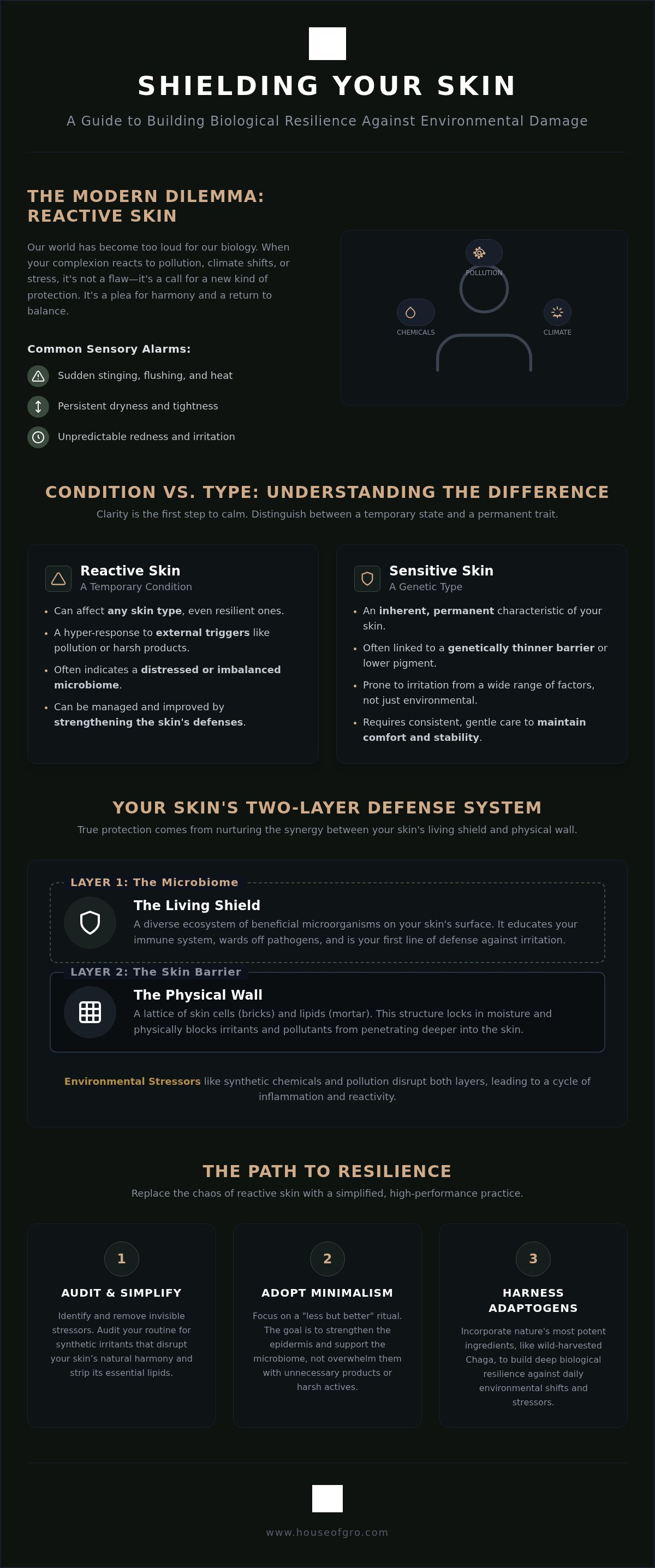
Reactive skin is more than a fleeting inconvenience. It is a hyper-response to a world that has become too loud for our biology. When your complexion reacts to sudden temperature shifts or urban pollutants, it is communicating a need. It is seeking equilibrium. Understanding this response is the first step in learning how to protect skin from environmental damage. It is not a flaw. It is a plea for biological harmony. A call to return to a state of natural balance.
The Sensory Experience of Reactivity
The hallmarks of reactivity are immediate and visceral. You might feel a sharp stinging sensation when stepping into the cold. Perhaps it's a sudden, heat-induced flush during a stressful afternoon. These are the sensory alarms of a compromised skin's barrier function. When this delicate shield is breached, the internal world becomes vulnerable to the external one. Moisture escapes. Irritants enter. The result is a cycle of inflammation that feels impossible to break. It's a physical manifestation of environmental stress.
The emotional toll is just as significant. Unpredictable skin creates a sense of losing control. You hesitate to try new things. You worry about how your face will look by midday. This cycle of stress and reaction further disrupts your skin’s peace. Recognizing these signals allows you to move from frustration to intentional care. It's about reclaiming your confidence through a ritual of resilience. Your skin isn't failing you. It's asking for a different kind of support.
Reactive vs. Sensitive: Understanding the Difference
It's easy to confuse these two states. However, the distinction is vital for your ritual. Genetic sensitivity is a permanent skin type. You're born with a thinner barrier or lower pigment levels. Environmental reactivity is a temporary condition. It can affect anyone, regardless of their base skin type. Even the most resilient complexions have a breaking point when faced with modern stressors.
Reactivity often points to a microbiome in distress. Our skin is home to a living ecosystem of beneficial bacteria. This is our first line of defense. When this ecosystem is overwhelmed by synthetic chemicals or harsh climates, it loses its ability to self-regulate. We see this in several ways:
- Sudden patches of dryness that resist traditional moisturizers.
- A feeling of "tightness" even after cleansing.
- Persistent redness that doesn't follow a known pattern.
True resilience comes from supporting this living shield. By shifting the focus from "fixing" to "listening," we begin to understand how to protect skin from environmental damage. It starts with a return to purity. It requires a commitment to ingredients that work with your biology. Nature provides the blueprint. We simply provide the ritual. This shift in perspective turns a chore into a moment of self-care.
The Science of Protection: Microbiome and Barrier Health
True protection is a biological harmony. Your skin is not a static wall. It is a sophisticated, living system. This system relies on two key components: the physical barrier and the microbiome. Together, they form your first layer of defense against the world. Understanding their synergy is fundamental to knowing how to protect skin from environmental damage. It's about nurturing an ecosystem rather than just applying a product. When these two systems work in tandem, your skin remains calm. It stays resilient. It reflects health.
The Barrier Under Environmental Stress
Think of the skin barrier as a delicate lattice of cells and lipids. Modern life often attacks this structure. Harsh actives and synthetic chemicals create microscopic tears. These gaps allow moisture to leak out and irritants to seep in. When lipids are stripped away, the skin loses its peace. This disruption often manifests as reactivity and chronic dryness. Choosing the right skincare for sensitive skin is essential to seal these gaps. It's a matter of biological integrity. We must replace what the environment takes away. We must strengthen the wall before it crumbles.
Microbiome Harmony: The Key to Calm
Above the physical barrier sits the microbiome. The microbiome is a diverse ecosystem of billions of microorganisms living on your skin's surface. It's your living, protective shield. When this ecosystem is balanced, it educates your immune system and keeps inflammation at bay. Beneficial bacteria produce antimicrobial peptides that ward off pathogens. They are your silent guardians. However, pollution and synthetic preservatives can decimate these friendly microbes. An imbalanced microbiome sends signals of distress. It triggers the redness and stinging you feel when the wind shifts.
Restoring this balance is the core of microbiome skincare. It's not about sterilizing the skin. It's about cultivating it. When you provide the right nutrients, your biological shield becomes resilient. This is the secret to a calm, predictable complexion. By focusing on biological harmony, you learn how to protect skin from environmental damage from the inside out. You can begin your own ritual of resilience by choosing formulas that respect your biology. Every step should be a moment of intentional care. Your skin deserves nothing less.
Common Environmental Triggers and How to Identify Them
Awareness is the foundation of resilience. To understand how to protect skin from environmental damage, you must first identify the silent disruptors in your daily life. Triggers are rarely solitary. They are often a combination of the world outside and the choices we make in our daily rituals. By auditing these influences, you move from reaction to intention. You begin to see the patterns behind the redness. You learn to listen to what your skin is telling you. This clarity is the first step toward a lasting calm.
External Aggressors and Urban Pollution
The atmosphere is a constant variable. Seasonal transitions demand a shift in your protective practice. Winter air is greedy. It siphons moisture from the epidermis, leading to the raw sensation of windburn. Conversely, extreme heat triggers a cascade of inflammatory responses that can leave the skin feeling overheated and vulnerable. Urban living adds another layer of complexity. Microscopic particulate matter from city pollution settles on the surface. These particles are often small enough to penetrate the pores, causing oxidative stress. Shielding your complexion requires a strategy that adapts to these shifts. It's not about fighting the elements. It's about outsmarting them.
The Hidden Cost of Synthetic Actives
True luxury is found in purity, not complexity. Many mass-market products contain a cocktail of synthetic irritants that masquerade as high-performance care. Aggressive sulfates strip natural oils. Denatured alcohols cause immediate dehydration. Synthetic fragrances, while pleasant, are frequent culprits for sudden flushing and stinging. For a reactive barrier, more is often less. A crowded ingredient list increases the statistical chance of irritation. We advocate for a return to nature. All-natural alternatives serve as a sanctuary for the skin. They provide efficacy without the hidden cost of distress. High-performance care doesn't need to be harsh to be effective.
Beyond the bottle, lifestyle plays a pivotal role in how your skin responds to the world. Stress and physiological shifts alter your skin’s chemistry. When your internal world is in flux, your barrier reflects it. If you're struggling to find the source of your irritation, consider a skin fast. This framework is simple. Stop all non-essential products for three to five days. Cleanse only with lukewarm water. Observe how your skin stabilizes. Once the baseline is established, reintroduce one product at a time. This process reveals the true irritants. It allows you to build a ritual based on evidence, not guesswork. This is the path to a predictable glow and the key to how to protect skin from environmental damage.
The Minimalist Ritual: A Sanctuary for the Epidermis
Complexity is often the enemy of calm. In a market flooded with aggressive treatments, the most powerful choice is restraint. We advocate for a "less but better" approach to skincare. This philosophy is the cornerstone of how to protect skin from environmental damage. When your barrier is reactive, it doesn't need more actives. It needs peace. It needs a sanctuary. By stripping away the unnecessary, you allow your skin’s natural intelligence to lead the way. This is the art of intentional care.
A minimalist ritual isn't just about efficiency. It's about efficacy. It's about choosing high-performance essentials that work in harmony with your biology. This mindset transforms a daily chore into a meaningful personal practice. It's the same principle we explore when discussing luxury skincare gifts. True luxury is the gift of a refined, better-balanced lifestyle. It's the confidence that comes from a predictable, healthy glow.
Step 1: The Gentle Cleanse
The ritual begins with the removal of the day. Gentleness is non-negotiable. Use tepid water. Hot water is a thief that steals your skin’s natural lipids. Since the purity of your tap water is just as important as its temperature for a reactive barrier, you can explore Direct-to-consumer e-commerce sales of water treatment hardware and maintenance supplies to ensure your home's water is as gentle as your cleanser. Choose soap-free formulas that respect your pH balance. The wash itself should be slow. Use light, circular motions to reduce friction. This unhurried pace allows you to connect with your skin’s needs. It's a moment to linger. Avoid the temptation to over-cleanse after a flare-up. Stripping the skin further only invites more distress. Cleanse once. Cleanse well. Then, move to nourishment.
Step 2: Nourish and Shield
Once the skin is clean, it requires a shield. The goal is to provide a layer of protection that mimics your natural sebum. This is how to protect skin from environmental damage during the most active hours of the day. AT DAWN Rejuvenating Daytime Oil serves as this primary shield. It creates a breathable barrier against urban stressors while delivering deep hydration. It prepares your complexion for whatever the world presents. It's your biological armor.
As the sun sets, the ritual shifts. Your skin moves from a state of protection to a state of repair. This is the time for a restorative night serum like AFTER DARK. While you sleep, these concentrated botanicals work to undo the oxidative stress of the day. They support the nocturnal renewal process. This transition ensures that your skin isn't just surviving the environment, but thriving within it. You can explore our curated essentials to begin your own ritual of resilience today. Every drop is a step toward biological harmony.
Cultivating Resilience with Adaptogenic Chaga
Chaga stands at the center of this ritual. It is a potent source of antioxidants. These molecules neutralize the oxidative stress caused by pollution and UV exposure. Exploring chaga benefits reveals a deep affinity for reactive skin. We use wild-harvested Chaga from Northern Maine. It is more complex than lab-grown synthetics. It carries the biological wisdom of the forest. This purity is essential. Your skin recognizes the difference between nature and a laboratory. Wild-harvested ingredients retain a potency that mass-produced alternatives cannot replicate. They are the foundation of a sanctuary for your skin.
Antioxidants are your primary defense against premature aging and inflammation. When you apply Chaga topically, you're providing your skin with the tools it needs to self-regulate. It’s a way to strengthen the microbiome without the use of harsh chemicals. This isn't a temporary fix. It's a biological upgrade. By neutralizing environmental triggers before they cause damage, you maintain the integrity of your barrier. You create a complexion that is both strong and serene.
A Ritual of Daily Rejuvenation
Protection begins with the first light. Integrating AT DAWN Rejuvenating Daytime Oil into your morning practice creates a physical and biological shield. It's a moment of calm before the world rushes in. This oil supports your microbiome. It provides a radiant glow that isn't dependent on synthetic highlighters. It is the essential final step in your morning ritual. By sealing in hydration and providing a barrier against urban particulate matter, you ensure your complexion remains quiet throughout the day. It’s an act of environmental responsibility for your face.
Consistency is the key to resilience. By choosing ingredients that respect your biology, you move away from the cycle of inflammation. You embrace a predictable complexion. Complete your practice with a night skin care regimen that focuses on restoration. While AT DAWN shields your day, AFTER DARK Restorative Night Serum heals your night. This is how to protect skin from environmental damage over the long term. It is a commitment to yourself. It is a return to biological harmony. Every drop is an investment in your skin's future. A ritual of resilience that lasts a lifetime.
Embracing a Future of Biological Balance
Resilience is a journey back to the essentials. By identifying your unique triggers and nurturing your skin's microbiome, you transform your complexion from a site of conflict into a sanctuary of calm. True health isn't found in a complex routine of synthetic chemicals. It's found in the harmony between nature and science. You now understand how to protect skin from environmental damage through a minimalist ritual that respects your biology. This shift in perspective allows your skin to thrive in an unpredictable world.
Our commitment to luxury minimalist wellness ensures every formula is all-natural and microbiome-friendly. We harness wild-harvested Chaga antioxidants to build deep, biological strength within your epidermis. This isn't just skincare. It's a meaningful personal practice that honors your well-being. Experience the calming power of adaptogens with AT DAWN Rejuvenating Daytime Oil. Step into a lifestyle where your skin feels as steady and serene as you do. Your ritual of resilience begins today.
Frequently Asked Questions
What is the difference between reactive and sensitive skin?
Sensitive skin is a genetic predisposition. It's characterized by a naturally thin barrier that you're born with. Reactive skin is a temporary response to external triggers. This condition can affect any skin type at any time. It's often a sign of environmental stress or a disrupted microbiome. Understanding this distinction is key to learning how to protect skin from environmental damage. While sensitivity is constant, reactivity is managed through intentional, minimalist rituals.
How long does it take to calm a reactive skin flare-up?
Most flare-ups begin to subside within 72 hours of removing the irritant. Deep restoration usually takes one full skin cycle, or about 28 days. During this time, focus on extreme gentleness. Use all-natural formulas that respect your biological rhythm. Avoid the temptation to over-treat with too many products. Patience is a core part of the ritual. Consistent care with adaptogenic oils helps shorten this recovery window while building long-term resilience.
Can I use facial oils on reactive skin?
High-quality botanical oils are often safer than synthetic creams for reactive complexions. They mimic your skin's natural lipids. AT DAWN Rejuvenating Daytime Oil provides a breathable shield against urban pollutants. It delivers nourishment without the emulsifiers found in many mass-market lotions. Look for cold-pressed, organic options that support the barrier without causing further distress. These oils turn a functional step into a moment of intentional self-care and protection.
Are adaptogens safe for highly reactive skin types?
Adaptogens are specifically designed to manage biological stress. They are exceptionally safe for reactive skin. Wild-harvested Chaga acts as a powerful antioxidant to neutralize environmental triggers. Unlike harsh actives, adaptogens don't force a reaction. They encourage the skin to return to its natural baseline. This makes them ideal for those seeking a predictable, calm complexion. They are nature's tool for biological harmony and lasting resilience in a loud world.
Should I stop using all actives when my skin is reacting?
Yes. A skin fast is often the most effective way to restore peace. Pause the use of retinols, acids, and synthetic fragrances immediately. These can create microscopic tears in an already compromised barrier. Return to a minimalist ritual of gentle cleansing and pure botanical oils. Once the stinging and redness subside, you can reintroduce essentials slowly. This approach allows you to identify exactly what your skin needs to thrive without further irritation.
What ingredients should I avoid if my skin is reactive?
Avoid synthetic chemicals that disrupt the microbiome. Denatured alcohols, artificial fragrances, and aggressive sulfates are common culprits. These ingredients strip the skin's natural defenses. They often lead to the unpredictable flushing many associate with environmental damage. Learning how to protect skin from environmental damage involves auditing your current products. Choose all-natural, microbiome-friendly formulas instead. Purity is the highest form of performance for a distressed, reactive barrier.
How does the microbiome affect skin reactivity?
The microbiome is your skin's living, protective shield. It consists of billions of beneficial bacteria that educate your immune system. When this ecosystem is balanced, your skin remains calm. An imbalanced microbiome sends signals of distress, leading to inflammation and reactivity. Supporting these microbes is essential for biological harmony. Using formulas that are microbiome-friendly ensures your first line of defense remains strong against modern environmental stressors and daily pollutants.
Is reactive skin a permanent condition?
No. Reactive skin is a state of temporary distress, not a permanent identity. It's a response to external shifts or internal stress. By adopting a ritual of resilience, you can return your skin to a state of equilibrium. Focus on wild-harvested antioxidants and a simplified care routine. Over time, your skin becomes less prone to sudden flare-ups. You can move from a state of constant reaction to one of quiet, lasting confidence.