


What if the redness on your cheeks isn't a flaw, but a conversation? Your skin is a sophisticated biological feedback system. It speaks through subtle, often uncomfortable shifts. A sudden flush. A persistent sting from a product you once trusted. These sensitive skin symptoms are more than just daily inconveniences. They're vital signals from your microbiome that your internal harmony has been disrupted. You've likely spent hours scanning complex ingredient lists. The result is often more confusion, not less.
We understand the desire for simplicity. You want a complexion that feels as calm as it looks. In this guide, we'll decode the specific messages your skin is sending. We'll explore how to identify your unique triggers and replace reactive habits with meaningful, microbiome-conscious rituals. By leaning into the science of wild-harvested botanicals and Chaga mushrooms, you can restore your skin's natural barrier. We'll preview a path to a radiant, better-balanced lifestyle. Your skincare should be a moment of intentional self-care, not a functional chore.
Key Takeaways
- Decode common sensitive skin symptoms like persistent stinging and environmental flushing to understand your skin's unique biological language.
- Understand how microbiome disruption and barrier fatigue lead to transepidermal water loss and the physical sensation of tightness.
- Learn to distinguish between visible redness and invisible heat to identify a compromised barrier before irritation peaks.
- Simplify your daily routine with a minimalist philosophy that prioritizes microbiome-conscious rituals over aggressive treatments.
- Restore lasting harmony by integrating adaptogenic botanicals and restorative oils into your daytime protection and nocturnal healing practices.
Recognizing the Primary Symptoms of Sensitive Skin
Your skin is a living interface. It communicates through sensations that often feel like a betrayal. When you experience sensitive skin symptoms, it's rarely a random occurrence. It's a deliberate signal. Your barrier is asking for a pause. This dialogue often begins with a persistent sting or a sharp burn immediately after applying a serum. It's an immediate rejection of an ingredient. Other times, it's the quiet heat of a flush after a brief walk in the cold. These aren't just aesthetic concerns. They are biological warnings.
Many individuals find that their sensitive skin reacts most aggressively during the simplest moments of the day. You might notice localized patches of dryness that feel rough or look flaky, even after moisturizing. Perhaps your face feels uncomfortably tight specifically after cleansing or showering. This tightness isn't a sign of cleanliness. It's a sign your natural oils have been stripped away. It's the sound of a barrier under stress.
Sensory Responses: The Invisible Symptoms
Sensitivity isn't always something you can see in the mirror. Subjective sensitivity occurs when the nerves in your skin are hyper-reactive, yet no visible rash appears. You might feel a prickling sensation in response to a light breeze or a change in room temperature. It's a ghostly discomfort. Identifying this tenderness is essential. It often occurs without any external injury or obvious blemish. It's your microbiome's way of telling you that the protective shield is thinning. Listen to the heat before it turns to red.
Visible Indicators: When the Barrier Breaks
When the internal distress becomes external, the signs are unmistakable. You may notice mild swelling or edema in reactive areas like the cheeks or around the eyes. Small red bumps might surface. They aren't traditional acne. They are inflammatory responses. Chronic flushing is another common indicator. It suggests vascular sensitivity, where blood vessels expand too easily in response to stress or environment. These visible markers are the final stage of the skin's biological plea for harmony. They demand a shift from aggressive correction to restorative ritual.
The Hidden Cause: Microbiome Disruption and Barrier Fatigue
The skin barrier acts as the primary gatekeeper of dermal health. It's your first line of defense. Beneath this physical wall lies a living shield. This is your microbiome. A thriving ecosystem of beneficial bacteria. When this ecosystem is healthy, your skin is resilient. When it's disrupted, it fails to protect. This disruption often manifests as the sensitive skin symptoms discussed previously. A compromised microbiome is the root of reactivity. It's a plea for balance.
Transepidermal Water Loss, or TEWL, is a critical factor in barrier fatigue. It occurs when moisture evaporates through a weakened surface. This is what creates that uncomfortable "tight" feeling after a shower. It's not just dryness. It's a leak. To maintain a calm, non-reactive surface, your skin requires a precise pH balance. A healthy skin pH is slightly acidic, usually around 5.5. When products push this number higher, the barrier begins to crumble. Beneficial bacteria die off. Opportunistic pathogens take over. This shift is a primary driver of the chronic inflammation people often mistake for simple dryness. A balanced pH keeps the surface quiet and strong.
The Microbiome-Sensitivity Connection
An imbalanced microbiome does more than just look dull. It sends direct alarm signals to your nervous system. These signals translate into the stinging or itching you feel. Harsh surfactants found in many commercial products act like sandpaper on this delicate ecosystem. They dissolve the lipids that hold your cells together. To truly address sensitive skin symptoms, you must move beyond surface hydration. You must embrace microbiome skincare. This approach treats the skin as a living garden. By understanding the Primary Symptoms of Sensitive Skin, we can see that most reactions are just cries for biological harmony.
Adaptogens: Nature’s Response to Dermal Stress
Modern science is finally catching up to ancient wisdom. Adaptogens are the answer to environmental stress. Chaga mushrooms are a central pillar of this philosophy. Wild-harvested from Northern Maine, these mushrooms are potent antioxidants. They don't just sit on the skin. They help it adapt. They coach your cells to remain calm under pressure. Whether it's pollution or extreme cold, adaptogens mitigate the inflammatory response. Chaga is often called the "King of Mushrooms" for a reason. Its enzymatic properties offer protection that synthetic alternatives cannot match. Wild-harvested botanicals provide a sophisticated way to soothe the skin without synthetic interference. It's about high-performance purity. You can explore these botanical rituals to begin your journey toward lasting dermal peace.
Subjective vs. Objective Symptoms: Decoding Your Skin
Decoding your skin requires a shift. A new perspective. You must learn to distinguish between what is visible and what is felt. Redness is an objective symptom. It's a clear, visual marker of inflammation. Heat, however, is subjective. It's a private sensation that others cannot see. These sensitive skin symptoms often exist in isolation. You might feel a deep, pulsing warmth without a single patch of red. This "invisible" sensitivity is the early warning system. It's the first sign of a compromised barrier.
Ignoring these felt signals leads to "sensory syndrome." This is a state of chronic discomfort. It carries a heavy psychological weight. When your skin feels constantly under attack, your nervous system remains on high alert. This creates a destructive feedback loop. Stress hormones like cortisol further weaken the microbiome. To break this cycle, begin tracking your skin over a 24-hour period. Observe the shifts. Look for patterns in the discomfort.
- Morning: Does your skin feel uncomfortably tight after your first rinse?
- Midday: Is there a prickling sensation when moving from cold air to a heated room?
- Evening: Does your face feel hot or tender after a day of environmental exposure?
Invisible Triggers: When the Environment Speaks
External factors often act as silent irritants. Temperature fluctuations are a major culprit. Moving from biting winter air into a dry, heated office causes rapid moisture evaporation. Hard water is another hidden factor. Mineral buildup from high calcium or magnesium levels leaves a residue. This residue disrupts your natural pH. Even internal stress manifests physically. When you're overwhelmed, your skin becomes more reactive. It mirrors your internal state. It's a biological reflection of your daily load.
Visible Flares: Identifying External Irritants
Eventually, the invisible becomes visible. It's important to distinguish between general sensitivity and contact dermatitis. General sensitivity is a broad, ongoing reactivity. Contact dermatitis is a specific reaction to a particular substance. The "fragrance trap" is a frequent trigger here. Even natural essential oils can cause a flare in a weakened barrier. For those navigating these complexities, a dedicated guide to skincare for sensitive skin can help simplify the management of these sensitive skin symptoms. It's about moving from constant reaction to a meaningful, calming ritual.
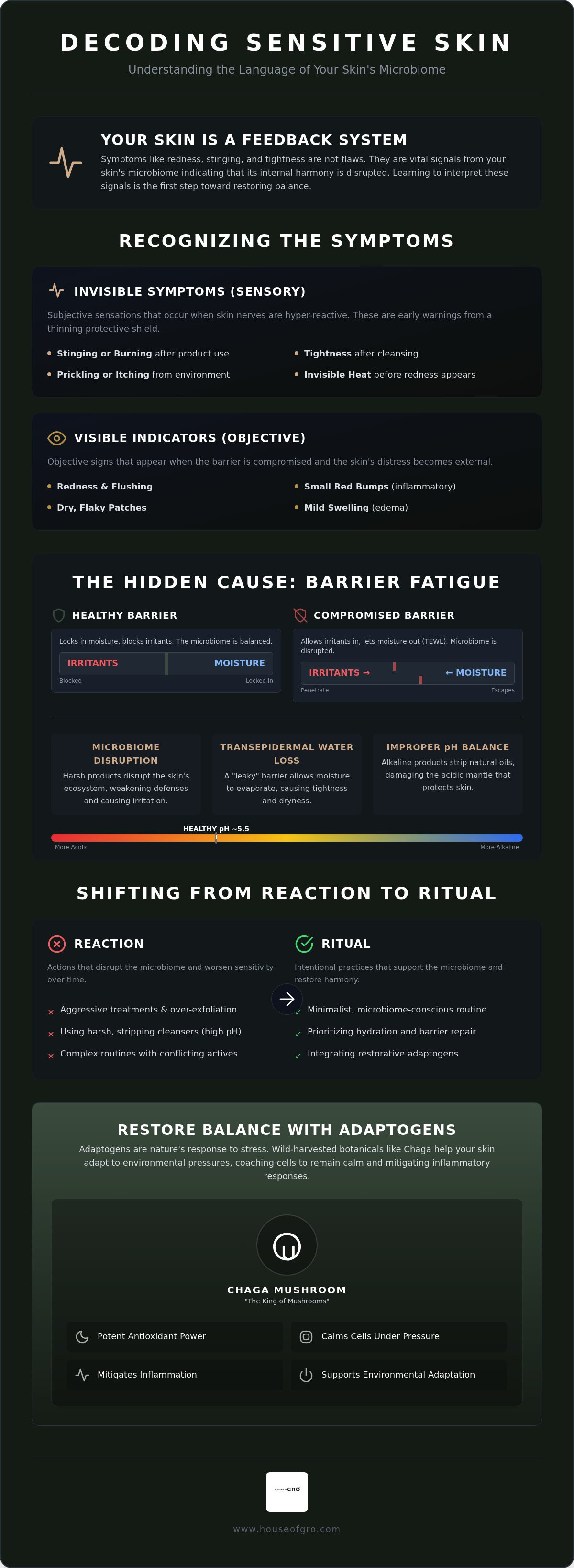
Transitioning from Reaction to Ritual: Managing Symptoms
Managing sensitive skin symptoms requires a departure from the "more is better" mindset. It's a return to simplicity. A minimalist ritual reduces the burden on your barrier. Start with the basics. Lukewarm water is essential. Hot water strips the delicate lipid layer. Cold water fails to lift environmental residue. Find the middle ground. It's about respecting the skin's natural state.
How you touch your skin matters. Avoid rubbing with heavy towels. This creates micro-tears. Instead, use a soft cloth and gently pat the skin dry. This preserves the moisture you've just applied. Skincare is a restorative practice, not a chore. It is a moment of intentional silence in a loud world. By slowing down the process, you allow your nervous system to settle. This reduces the systemic stress that often fuels reactivity.
The Nighttime Renewal Ritual
Your skin is most active while you sleep. It is also more permeable. This means it absorbs ingredients more deeply, but it also loses moisture faster. Nighttime is for repair. Use high-performance serums that support the nocturnal cycle. This is when the microbiome recalibrates. By choosing a night skin care regimen designed for recovery, you turn sleep into a healing event. Focus on ingredients that mimic the skin’s natural composition. Rest is the ultimate restoration.
Intentional Daytime Protection
Daytime is about defense. You face urban pollutants, UV rays, and wind. These environmental stressors trigger sensitive skin symptoms if the barrier is left exposed. Create a protective seal. Lightweight oils are ideal for this. They mimic your natural sebum without suffocating the microbiome. Layering should be strategic. Start with the lightest textures. End with a protective oil to lock in hydration. This approach ensures your skin breathes while staying shielded. It's a sophisticated way to navigate the modern world without compromise.
Experience the difference of microbiome-friendly wellness today.
Restoring Balance with Adaptogenic Botanicals
Traditional solutions for reactive skin often rely on heavy, synthetic occlusives. Petrolatum and glycerin-based creams sit on the surface. They create a temporary seal but do little to support the underlying ecosystem. To truly address sensitive skin symptoms, your care must be more sophisticated. It must be microbiome-friendly. Adaptogenic botanicals offer a high-performance alternative. These ingredients don't just mask discomfort. They speak the skin's biological language. AT DAWN Rejuvenating Daytime Oil serves as your primary environmental shield. It provides a lightweight, breathable barrier. It mimics your natural lipids while defending against the daily stressors that trigger reactivity.
When the sun sets, the focus shifts from protection to restoration. AFTER DARK Restorative Night Serum is formulated for this deep nocturnal healing. It works in tandem with your body’s natural repair cycle. While you sleep, your skin is more permeable. It's more receptive to the nutrient-dense botanicals that rebuild the barrier. This is the path to achieving radiant skin. It's a process of biological harmony. You aren't forcing the skin to change. You are providing the tools it needs to find its own balance.
The Chaga Advantage
Chaga mushrooms are the cornerstone of this restorative philosophy. We wild-harvest our Chaga from the pristine forests of Northern Maine. This cold-weather environment produces a mushroom with exceptional potency. Chaga provides superior antioxidant support. It's specifically beneficial for those managing sensitive skin symptoms. It neutralizes the free radicals that cause oxidative stress and inflammation. This "King of Mushrooms" offers a level of protection that synthetic alternatives simply cannot match. By integrating these specific chaga benefits into your routine, you strengthen the skin’s innate resilience. It becomes a shield of quiet confidence.
Building a Minimalist High-Performance Routine
A minimalist routine is an act of self-respect. It strips away the unnecessary. Start your morning by pressing a few drops of AT DAWN into damp skin. In the evening, allow AFTER DARK to facilitate deep repair. For the most delicate facial areas, use EYE DETOX. This brightening oil is designed for the thin, reactive skin around the eyes. It delivers high-performance results without the risk of irritation. This step-by-step integration creates a steady rhythm of care. It’s a transition from reactive management to a lifetime of intentional wellness. Every application is a moment of calm. Every drop is a commitment to quality. Your skin is no longer a problem to be solved. It's a ritual to be honored.
Embracing the Wisdom of Biological Harmony
Your journey to resilience begins with listening. By decoding sensitive skin symptoms, you move from frustration to profound understanding. You've learned that your microbiome is a living shield. It requires protection, not aggression. Restoring this balance isn't a functional chore. It's an invitation to an intentional lifestyle. True radiance exists at the intersection of nature and sophisticated science.
House of GRŌ® is a family-owned brand rooted in purity. Our dermatologist-tested formulas are featured in luxury wellness publications for their efficacy. We prioritize your skin's delicate ecosystem through wild-harvested botanicals. It's time to simplify your routine into a meaningful practice. Elevate your ritual with our microbiome-friendly oils. You deserve a complexion that feels as calm as it looks. Trust in the quiet power of nature. Your skin is finding its way home.
Frequently Asked Questions
How can I tell if my skin is sensitive or just irritated by a product?
Irritation is usually a localized, one-time reaction to a specific ingredient. Sensitivity is a chronic state of the skin barrier. If your skin reacts to various environmental factors and multiple products over time, it's sensitivity. Irritation fades quickly once the offending product is removed. Sensitivity requires a long-term shift in your daily ritual to restore microbiome harmony. It's a deeper conversation with your skin's health.
What are the most common triggers for a sensitive skin flare-up?
Environmental shifts are the most frequent culprits. Extreme cold, dry indoor heating, and high pollution levels disrupt the barrier. Harsh surfactants and synthetic fragrances in household products also play a major role. Even internal factors like heightened cortisol levels can trigger sensitive skin symptoms. Identifying these triggers allows you to move from constant reaction to intentional protection. It's about recognizing the subtle signals before they become a visible flare.
Can you suddenly develop sensitive skin later in life?
Yes, skin sensitivity can emerge at any age. Hormonal shifts, cumulative environmental damage, and a naturally thinning barrier as we age all contribute. Your microbiome also changes over time. What worked in your twenties may overwhelm your skin in your fifties. It's a biological signal that your current routine no longer serves your skin's evolving needs. Embracing a more restorative, minimalist approach helps manage these late-onset shifts effectively.
Is sensitive skin the same as an allergic reaction?
No, they are distinct biological processes. An allergic reaction is an immune system response to a specific allergen. It often involves hives or intense swelling. Sensitivity is a barrier issue. It's characterized by a hyper-reactive nervous system and a compromised microbiome. While both cause discomfort, sensitivity is a broader, more persistent condition. It reflects the overall health and resilience of the skin's protective shield rather than a specific allergy.
What ingredients should I avoid if I have sensitive skin symptoms?
Stay away from aggressive synthetic chemicals. Avoid sulfates, parabens, and artificial dyes. Synthetic fragrances are a primary cause of sensitive skin symptoms and should be eliminated from your ritual. Alcohol-based toners strip the lipid layer. Instead, look for all-natural, microbiome-friendly alternatives. Focus on ingredients that nourish rather than those that merely strip away the skin's natural defenses. Purity is the foundation of effective, high-end care for reactive types.
How does the skin microbiome affect sensitivity levels?
Your microbiome is your skin's living protector. When beneficial bacteria thrive, they keep inflammation in check. When this ecosystem is out of balance, the skin becomes vulnerable to every external stressor. A diverse microbiome strengthens the barrier and lowers the threshold for reactivity. Maintaining this delicate harmony is the most effective way to manage long-term sensitivity and ensure your skin remains calm. It is the secret to a resilient complexion.
Can adaptogens like Chaga help reduce skin redness?
Adaptogens are exceptionally effective at calming visible redness. Chaga mushrooms, specifically those wild-harvested from Northern Maine, are rich in antioxidants. They help the skin "adapt" to stress. By neutralizing free radicals, they reduce the inflammatory response that leads to flushing. This provides a high-performance, natural way to achieve a serene and balanced complexion. It's about working with your biology rather than against it to restore natural peace.
What is the best way to calm stinging skin immediately?
Stop all active treatments immediately. Rinse with lukewarm water to remove any lingering irritants. Don't rub. Apply a simple, all-natural oil to create a protective seal. Avoid heavy, synthetic creams that might trap heat and increase discomfort. The goal is to settle the nervous system and provide a breathable barrier. Consistency in this minimalist approach will allow the skin to return to its natural state of calm. Patience is part of the ritual.