


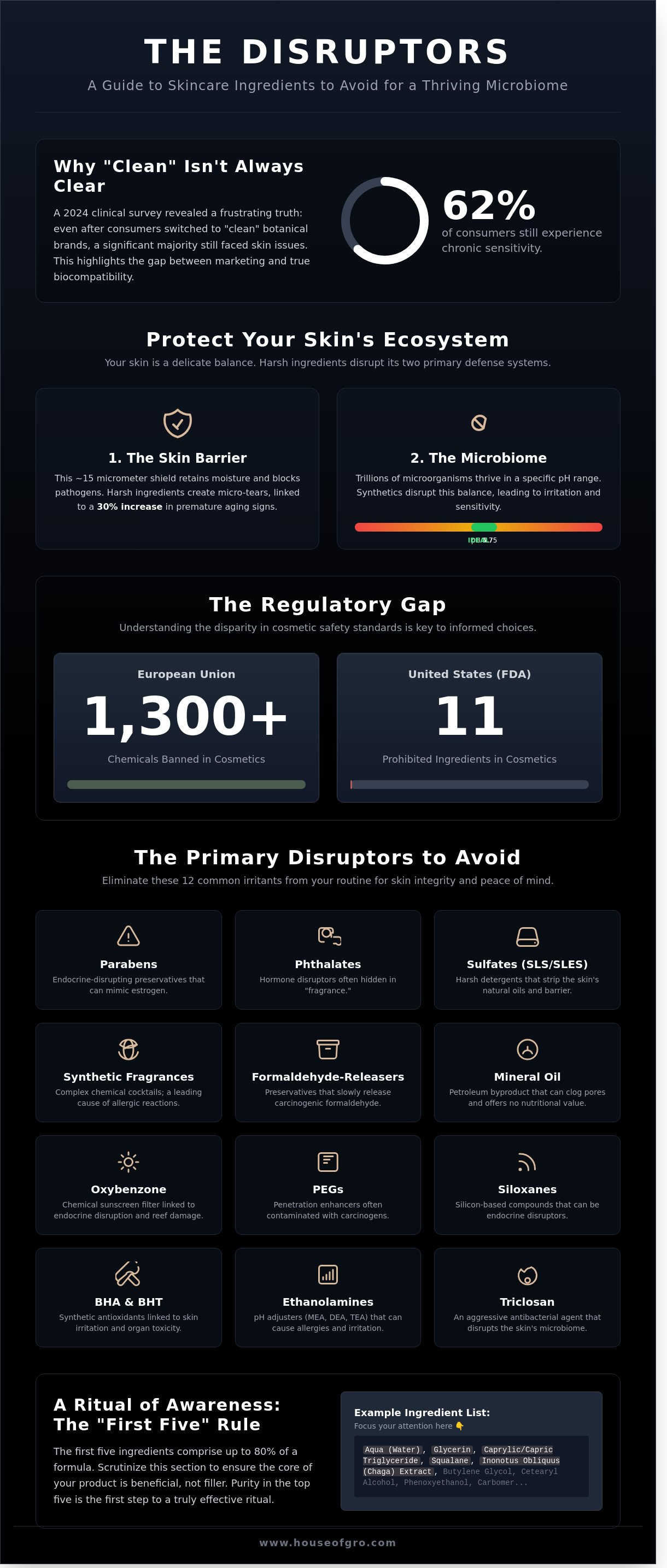
What if your carefully curated "clean" routine is the source of your skin’s unrest? A 2024 clinical survey found that 62% of consumers still experience chronic sensitivity even after switching to botanical brands. The labels are confusing. The chemical names are dense. Identifying the specific skincare ingredients to avoid shouldn't feel like a burden on your time or your health.
You've likely felt the sting of a product that promised purity but delivered irritation. It's frustrating to seek wellness and find only complexity. We believe in a different path. You deserve a ritual that respects your body's natural boundaries. We'll help you curate a routine that prioritizes your microbiome and eliminates anxiety about long-term synthetic exposure. True luxury is found in transparency and peace of mind.
This guide provides a definitive list of the 12 primary disruptors to remove from your vanity today. We'll show you how to streamline your self-care into a high-quality, essential practice that honors your skin's ecosystem. Discover the confidence that comes with a truly mindful beauty ritual. Let's restore your balance for 2026.
Key Takeaways
- Protect your skin’s delicate ecosystem. Learn why the philosophy of subtraction is essential for a thriving microbiome.
- Identify the primary skincare ingredients to avoid. Uncover the disruptors that compromise your skin’s integrity and natural balance.
- Master the ritual of awareness. Use the "first five" rule to decode labels and prioritize purity in every bottle.
- Distinguish between synthetic fragrances and botanical essences. Choose ingredients that align with your skin’s biological rhythm.
- Elevate your daily practice. Discover the power of Chaga mushrooms and the transformative potential of circadian-aligned skincare.
The Philosophy of Subtraction: Why Your Skin Microbiome Demands Purity
Your skin is a living landscape. It is not a static surface to be scrubbed or bleached. It hosts trillions of microorganisms. This is your microbiome. It is a delicate, breathing ecosystem that requires protection. In 2026, we understand that true beauty stems from biological harmony. Microbiome-friendly skincare has moved beyond a trend. It is now a $2.9 billion industry standard rooted in health. Traditional marketing relies on noise. It sells aggression through high-percentage acids and harsh actives. We choose quiet luxury. We value the calm. The core thesis of modern wellness is simple. Subtraction is the highest form of skin nourishment. By removing the unnecessary, we allow the essential to thrive.
A 2019 study published in the Journal of the European Academy of Dermatology and Venereology found that 71% of adults self-identify as having sensitive skin. This is a global shift. It reflects a growing intolerance for synthetic complexity. When we clutter our routines, we suffocate our skin. We disrupt the natural pH balance, which ideally sits between 4.7 and 5.75. Identifying specific skincare ingredients to avoid is the first step toward restoration. It is an act of intentionality. It is about choosing purity over performance at any cost. We believe that less is not just more. Less is everything.
The Skin Barrier as a Sacred Shield
The stratum corneum is your first line of defense. It is roughly 15 micrometers thick. This thin layer serves as a sacred shield. It retains vital moisture. It blocks environmental pathogens. Harsh ingredients act like microscopic abrasives. They create micro-tears in this invisible ritual of protection. These fractures are small but devastating. They allow irritants to penetrate deep into the dermis. A 2023 clinical review linked chronic barrier disruption to a 30% increase in visible signs of premature aging. When the shield breaks, the skin loses its ability to heal. We don't need more products to fix the damage. We need fewer ingredients to prevent it. Protection is a quiet, daily commitment to your biological integrity.
Modern Wellness vs. Synthetic Fillers
High-end skincare often masks a cheap reality. Elegant glass bottles and heavy caps frequently hide petroleum-based fillers. These synthetics offer zero biological value. They are used to create texture or extend shelf life at the expense of your health. The 2026 wellness shift demands total transparency. Consumers now scrutinize every label with clinical precision. You can consult a comprehensive list of cosmetic ingredients to see the sheer volume of fillers used in conventional formulas. Intentional self-care rejects these additives. We prioritize botanical integrity and holistic efficacy. The minimalist skincare ritual is the 2026 wellness standard for a balanced, high-vibrational life.
True luxury is knowing exactly what touches your body. It is the confidence that comes from a curated routine. We avoid the loud promises of the mass market. Instead, we focus on the quiet power of essential nutrients. When you remove the toxins, your skin remembers how to breathe. This is the art of subtraction. It is the foundation of a refined lifestyle. We are here to guide you through this process of decluttering. Your skin deserves the clarity of a minimalist approach. It deserves the truth. By knowing which skincare ingredients to avoid, you reclaim the health of your skin's natural ecosystem.
The Disruptors: Common Skincare Ingredients to Avoid
Your skin is a living, breathing ecosystem. It's the body's largest organ. It absorbs up to 60 percent of what you apply. For those with sensitive skin, identifying the primary skincare ingredients to avoid becomes an act of self-preservation. Modern beauty often masks toxicity with elegant packaging. The "clean" label lacks a universal standard. It's a marketing term; not a safety guarantee. A product can be labeled clean yet still contain irritants that trigger a 24-hour inflammatory response. True safety is found in the science of the microbiome. It's found in the rejection of disruptors that compromise your skin's innate integrity. We focus on two main categories: endocrine disruptors and microbiome-stripping agents. The European Union has banned over 1,300 chemicals in cosmetics, whereas the United States maintains a shorter list of 11 FDA Prohibited Ingredients. Understanding these legal baselines is essential. It's the foundation of a sophisticated, health-conscious lifestyle.
Parabens and Phthalates: The Silent Hormone Disruptors
Parabens mimic estrogen. They interfere with your endocrine system's natural balance. These synthetic preservatives are found in 75 percent of traditional skincare products. Phthalates often hide within the "fragrance" loophole. They're linked to reproductive health risks. House of GRŌ® rejects these disruptors. We utilize wild-harvested Chaga mushroom. This provides a 12-month shelf life through botanical wisdom. It's preservation without compromise.
Sulfates and Harsh Surfactants
Sodium Lauryl Sulfate (SLS) creates foam. It also destroys the skin's 0.5-millimeter acid mantle. Your skin needs a pH of 5.5. Sulfates can spike this to 9.0. This alkalinity strips essential lipids. It leaves the microbiome vulnerable. High-foam cleansers are a task; not a ritual. They're too aggressive for a refined lifestyle. Choose nourishment over suds to maintain a radiant, healthy glow.
Transitioning to a minimalist ritual requires a discerning eye. Audit your vanity. Look for transparency in every bottle. A sophisticated routine prioritizes the skin's 1,000 species of beneficial bacteria. It values the microbiome. Understanding these skincare ingredients to avoid allows you to curate a safer, more intentional routine. Every choice is an opportunity for restoration. It's a dialogue between nature and your biology.
- Choose oil-based or non-foaming cleansers to protect the acid mantle.
- Select products that list specific botanical extracts instead of generic "fragrance."
- Prioritize wild-harvested ingredients that offer 100 percent purity.
- Look for "paraben-free" labels to avoid estrogen-mimicking risks.
- Check for third-party lab results to ensure ingredient efficacy.
Embrace a holistic approach to skin health that honors your body’s natural rhythm. This is the path to a better-balanced lifestyle. It's where purity meets efficacy. Your daily ritual should be a sanctuary. It shouldn't be a source of chemical stress. By removing these disruptors, you allow your skin to breathe. You allow it to heal. This is quiet luxury in its truest form.
Hidden Irritants: Beyond the Toxic Twelve
Clean beauty labels often mask a complex reality. An ingredient can be non-toxic yet deeply disruptive to a delicate ecosystem. For those with reactive complexions, the search for safety goes beyond avoiding banned substances. It requires a study of subtle triggers. Identifying specific skincare ingredients to avoid is the first step toward a calm, resilient complexion. True wellness isn't just about what is removed. It's about what remains. Many luxury formulations prioritize a "vanishing" texture over long term health. They use volatile compounds to create a weightless feel. This immediate gratification often comes at a high cost to the skin barrier. Your skin doesn't need a quick fix. It needs a sustained ritual of care.
The Fragrance Fallacy
Sensory experiences define our daily rituals. However, the word "parfum" is a legal loophole. Since the Fair Packaging and Labeling Act of 1973, trade secret laws have allowed brands to hide thousands of chemicals under this single term. The International Fragrance Association (IFRA) currently lists over 3,000 potential ingredients used in these secret blends. Synthetic perfumes are the primary triggers for contact dermatitis in 10 percent of the population. Even essential oils, though botanical, contain volatile compounds like limonene and linalool. These can cause chronic, low-grade inflammation. This silent stress breaks down collagen over time. Choosing fragrance-free products transforms a task into a healing ritual. It allows the skin to rest. No hidden scents. No unnecessary reactions. Just purity.
Drying Alcohols vs. Fatty Alcohols
Not all alcohols deserve a ban. Discernment is necessary for a sophisticated routine. Simple alcohols evaporate quickly. They provide a cooling sensation and help products penetrate deeper. They also strip the vital lipid barrier. You should avoid these specific names:
- Alcohol Denat (Denatured Alcohol)
- Isopropyl Alcohol
- SD Alcohol 40-B
Modern trends favor aggressive intervention. The "glass skin" ideal has pushed exfoliation to extremes. In 2021, Google Trends reported a 100 percent increase in searches for "skin barrier repair." This surge followed a period of over-using high-percentage acids popularized on social media. Many skincare ingredients to avoid are actually beneficial in small doses but harmful in excess. Daily use of 10 percent glycolic acid or 2 percent salicylic acid can thin the stratum corneum. This leaves the nerves exposed and the skin vulnerable. Your skin doesn't need a reset every day. It needs support. It needs balance. A holistic approach values the barrier as much as the glow. Less friction. More nourishment. This is the path to lasting beauty.
Deciphering the Label: A Ritual of Awareness
Truth lives on the back of the bottle. It's a quiet dialogue between the brand and your skin. Learning to read an INCI (International Nomenclature Cosmetic Ingredient) list is a fundamental ritual of self-care. It's about moving past the aesthetic of the packaging. It's about understanding the chemistry of your own health. This list is a global standard. It demands honesty from manufacturers. For those identifying skincare ingredients to avoid, this list is the only map that matters.
The "first five" rule is your most reliable filter. Ingredient order determines potency. In almost every formulation, the first five components account for 80% to 90% of the product's total volume. If a high-performance oil is listed tenth, it's likely present at a concentration of less than 1%. This is often a marketing tactic used to justify a premium price point without offering the actual benefit. Focus your attention on the top of the list. That's where the real work happens.
Sourcing has evolved. In 2026, the standard is wild-harvesting. This practice involves gathering plants from their natural habitats rather than traditional farms. Plants grown in the wild face environmental stressors. They produce more secondary metabolites to survive. A 2025 analysis revealed that wild-harvested botanicals contain up to 35% more bioactive compounds than cultivated versions. This isn't just a trend. It's a commitment to the highest possible efficacy and environmental respect.
Understanding Ingredient Concentration
Many serums use Aqua as their primary filler. It often makes up 70% of the bottle. While water is a solvent, look for brands that replace it with nutrient-dense hydrosols or aloe juice. Identifying skincare ingredients to avoid helps you bypass fillers that provide no nutritional value. Be wary of label dressing. This occurs when a brand highlights a rare botanical on the front but hides it at the very bottom of the INCI list. True luxury is found in high-concentration formulas that respect your skin's needs.
Recognizing Botanical Purity
Look for Latin. Authenticity is found in names like Inonotus Obliquus for Chaga or Cannabis Sativa for hemp seed oil. These specific identifiers ensure you're getting the true botanical extract. Seek out organic certifications and cruelty-free symbols. These are markers of ethical integrity. Premium labels often feature adaptogenic mushrooms like Chaga. They help the skin manage external stressors through a holistic, biological response. Purity is a choice made at the laboratory level.
Slow down. Buying a new product shouldn't be an impulse. It should be a mindful decision. Introduce one formula at a time. Observe how your barrier reacts over a 28-day cycle. This is the natural rhythm of skin cell turnover. By being intentional, you reduce the risk of reaction and ensure your routine remains a source of calm. To begin your journey toward intentional beauty, you can explore our botanical rituals for a more balanced and nourished complexion.
The Botanical Alternative: Elevating Your Ritual with House of GRŌ®
Identifying a list of skincare ingredients to avoid is only the first step toward skin health. True transformation requires a shift from elimination to intentional infusion. House of GRŌ® provides this sanctuary. We replace harsh, disruptive synthetics with wild-harvested wisdom. It's a transition from reactive care to proactive nourishment. We don't just fix problems; we cultivate resilience. This is the essence of modern wellness.
Sensitive skin often reacts to the "noise" of modern formulations. Fragrances, sulfates, and parabens create a state of constant inflammation. By removing these stressors, you allow your skin to breathe. Our approach focuses on high-performance botanicals that honor your biology. We believe in the power of less, but better. Every drop is purposeful. Every ingredient is chosen for its ability to soothe and strengthen simultaneously.
The Power of Wild-Harvested Chaga
Wild-harvested Chaga mushrooms serve as our foundational antioxidant powerhouse. Sourced from the pristine, frozen forests of Northern Maine, these fungi endure extreme environmental stress. This survivalist energy translates into potent skin benefits. Chaga contains a Superoxide Dismutase (SOD) level that is significantly higher than most known botanicals. Research indicates Chaga's antioxidant capacity is 46 times higher than that of wild blueberries. It offers the brightening and protective benefits of synthetic Vitamin C without the risk of acidity or oxidation. This concentration supports a resilient skin microbiome, which acts as a living shield against the very triggers found in the common skincare ingredients to avoid.
Curating a Minimalist, High-Performance Routine
Complexity is often the enemy of sensitive skin. A cluttered routine increases the likelihood of cross-reactions and barrier damage. We advocate for a streamlined, high-performance approach that follows the body's natural 24-hour clock. Your skin has different needs at sunrise than it does at sunset. Our products are formulated to support these distinct phases of protection and repair.
- Morning Protection: Begin your day with AT DAWN Rejuvenating Daytime Oil. This blend provides weightless hydration. It creates a breathable barrier against urban pollutants and blue light.
- Evening Recovery: As the sun sets, your skin shifts into repair mode. Apply AFTER DARK Restorative Night Serum to facilitate deep barrier repair. It utilizes adaptogens to calm the day's inflammation while you sleep.
- Adaptogenic Balance: Unlike aggressive synthetics that force a reaction, adaptogens work with your skin's internal chemistry. They provide the results of retinols or acids without the peeling or redness.
Stop viewing your skincare as a functional task. It isn't a chore to be completed. It's a meaningful ritual. By slowing down, you transform a mundane habit into a moment of intentional self-care. This psychological shift is just as important as the topical application. It lowers cortisol, which in turn reduces skin sensitivity. In a world of over-processing and loud marketing, purity is the ultimate luxury in 2026. Choose ingredients that respect your skin's intelligence. Focus on quality over quantity. Your skin deserves the quiet confidence of botanical excellence.
Embracing the Ritual of Mindful Selection
True beauty in 2026 is defined by the philosophy of subtraction. Protecting your skin's delicate microbiome is a biological necessity. By identifying the specific skincare ingredients to avoid, you reclaim your skin's natural balance. The MyMicrobiome standard confirms that common synthetic preservatives can disrupt up to 90% of beneficial skin flora. Awareness is your most powerful tool. Read every label with intention. Choose simplicity over chemical complexity.
House of GRO offers a refined path back to nature. We prioritize 100% all-natural efficacy over synthetic disruptors. Our rituals feature wild-harvested Chaga, hand-picked from the forests of Northern Maine. Every formula is cruelty-free and carries the Microbiome-friendly seal of approval. This isn't just a task; it's a commitment to your long-term wellness. Elevate your daily routine with a sense of quiet luxury. You've the power to nourish your skin without compromise.
Experience the purity of our Chaga-infused rituals
Your skin deserves this moment of clarity and calm.
Frequently Asked Questions
Are all preservatives bad for my skin?
No, preservatives are essential for preventing the growth of harmful bacteria and mold. ISO 29621 standards state that any product containing water must have a preservative system to remain safe for use. Without them, a water-based serum can spoil within 14 days. We choose clean alternatives like sodium benzoate or potassium sorbate instead of harsh parabens. It's about safety and stability. A quiet confidence in every drop.
Can 'natural' ingredients still cause skin irritation?
Yes, many natural ingredients are known allergens that can trigger significant inflammation. The EU Cosmetics Regulation identifies 26 specific fragrance allergens often found in essential oils like bergamot, cinnamon, and ylang-ylang. These botanical extracts are powerful. They require careful handling. Natural doesn't always mean gentle. We prioritize purity and efficacy over simple labels.
What is the difference between clean beauty and microbiome-friendly skincare?
Clean beauty focuses on the exclusion of toxic ingredients while microbiome-friendly skincare protects the 1,000 species of bacteria living on your skin. The MyMicrobiome Standard 18.10 certifies products that maintain a healthy skin pH between 4.5 and 5.5. It's a holistic approach to wellness. One avoids the bad; the other nurtures the good. Your skin is a living ecosystem.
How do I know if an ingredient is an endocrine disruptor?
You can identify these substances by cross-referencing your labels with the TEDX List or the European Commission’s priority list of endocrine disruptors. Look for specific chemicals like phthalates or UV filters such as oxybenzone. The 2023 updates to the EU REACH regulations provide a clear framework for these concerns. Knowledge is the first step toward a refined ritual. Stay informed. Stay balanced.
Why should I avoid synthetic fragrances in my night ritual?
Synthetic fragrances often contain phthalates that can disrupt your skin's natural repair cycle during sleep. Data shows that 35% of individuals with sensitive skin experience adverse reactions to artificial scents. Your night ritual should be a sanctuary of calm. These hidden chemicals cause unnecessary stress to the skin barrier. Choose fragrance-free for true evening restoration. Simplicity is the ultimate luxury.
Is phenoxyethanol safe to use in 2026?
Phenoxyethanol is safe for topical use when the concentration remains below 1% as regulated by the Scientific Committee on Consumer Safety (SCCS). Most high-quality formulations utilize it at a 0.5% level to ensure product integrity. It's a reliable guardian against contamination. We value science that respects your biology. It's a modern standard for a clean routine.
What are the first three ingredients I should look for on a label?
The first three ingredients usually account for 60% to 80% of the entire formula. Look for nourishing bases like aloe barbadensis leaf juice, glycerin, or botanical oils. Checking the top of the list helps you identify skincare ingredients to avoid such as denatured alcohol or aggressive sulfates. The label is a map of quality. Read it with intention. Every ingredient should have a purpose.
How long does it take for my skin to recover after stopping harsh chemicals?
It typically takes 28 days for your skin barrier to reset after you eliminate skincare ingredients to avoid. This timeframe aligns with the natural turnover cycle of the stratum corneum. You'll likely see a 40% reduction in redness within the first 14 days. Patience is a vital part of the healing ritual. Give your skin the space it needs to breathe. Let it return to its natural state of grace.