


What if the shadow on your face isn't fatigue, but a biological rhythm out of sync? You prioritize rest. You stay hydrated. Yet, the mirror reflects a persistent, muted quality that wasn't there a few years ago. It's common to feel a disconnect between your internal energy and a complexion that appears perpetually tired. Understanding the specific causes of dull skin in 30s is the first step toward reclaiming your natural luminosity.
In this decade, your skin's ecosystem undergoes a quiet transformation. Cell turnover slows. The delicate microbiome faces new environmental stressors. We agree that a superficial glow is fleeting; true radiance requires biological harmony. This article explores why these changes occur and how to counter them with intentional, high-performance rituals. You'll discover how to support your skin's natural defenses and restore a vibrant, healthy complexion through the intersection of nature and sophisticated science. Let's begin the journey toward a more refined, balanced version of self-care.
Key Takeaways
- Understand how slowing cell turnover creates surface irregularities. These prevent light from reflecting off the skin.
- Identify the primary causes of dull skin in 30s. We analyze the impact of oxidative stress and modern environmental toxins.
- Recognize your skin microbiome as a living shield. Its balance is the hidden key to a resilient, glowing complexion.
- Transition from functional chores to intentional rituals. A dual-phase approach of daytime protection and nighttime restoration fosters biological harmony.
- Explore the efficacy of wild-harvested Chaga. This adaptogen helps your skin resist stress-induced dullness naturally.
The 30s Physiological Shift: Why Radiance Begins to Fade
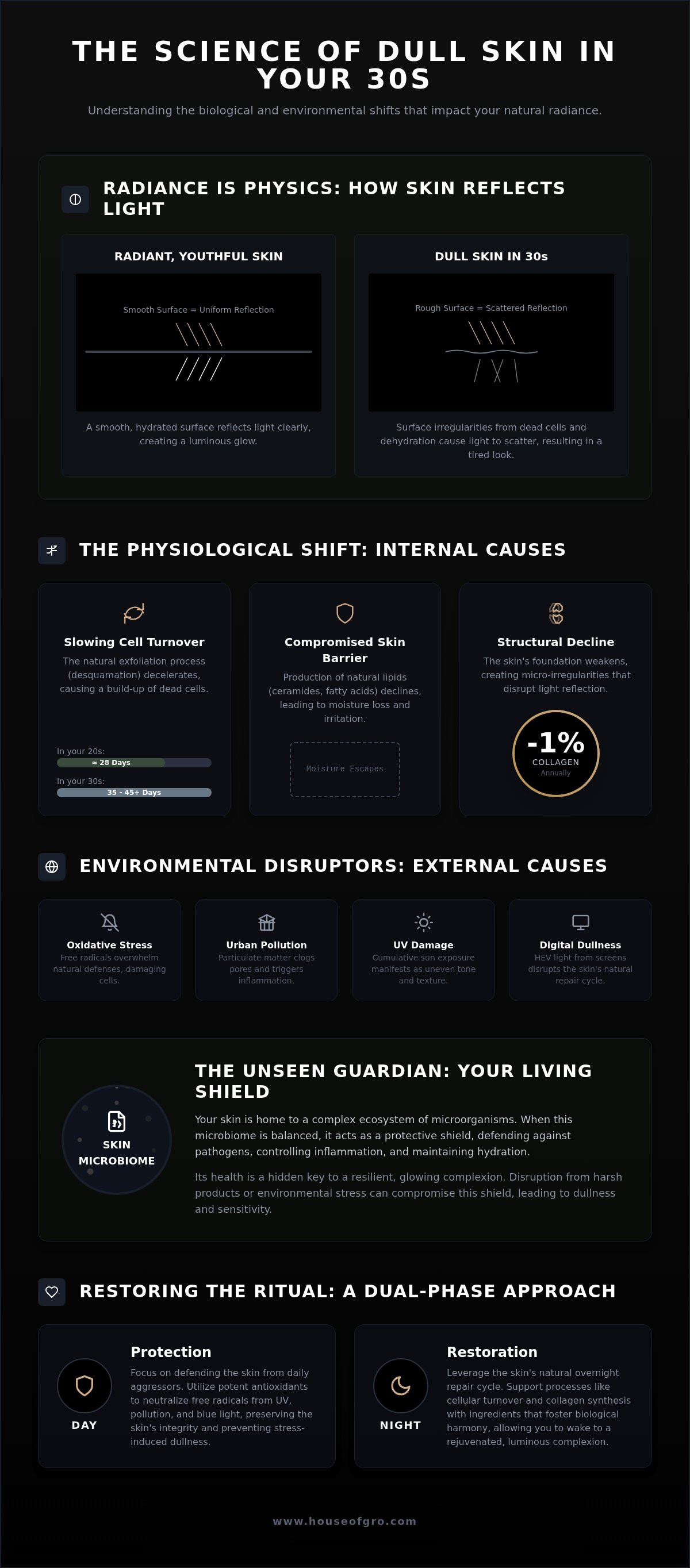
Dull skin is not merely a lack of color. It is a matter of physics. True radiance is the skin's ability to reflect light. When the surface is smooth and hydrated, light bounces off with clarity. When the surface is rough or uneven, light scatters. This creates the appearance of fatigue. In your 30s, the skin enters a phase of biological exhaustion. It is a subtle but profound transition. The skin's internal machinery begins to slow down. Natural lipid production, specifically ceramides and essential fatty acids, starts to decline. This compromises the skin barrier. Moisture leaks out. Environmental irritants seep in. Understanding the causes of dull skin in 30s starts with acknowledging this shift from effortless vitality to a state that requires more intentional support.
This decade is also defined by the interplay between intrinsic and extrinsic ageing. Your internal clock moves forward. Meanwhile, years of sun exposure and pollution begin to manifest. The skin's ability to repair itself after a long day is no longer instantaneous. It takes longer to recover from a night of poor sleep or a day in a dry office. The glow isn't gone. It is simply buried under the weight of these physiological changes. Every ritual you perform now is an investment in your skin's long-term resilience.
The Slowdown of Cellular Renewal
Desquamation is the skin's natural exfoliation process. In your 20s, cells move from the base layer to the surface in about 28 days. By age 30, this cycle decelerates significantly. It often takes 35 to 45 days for a new cell to reach the surface. This creates a traffic jam of dead, dehydrated cells. They cling to the surface. They create a matte finish that obscures your natural luminosity. Blood flow to the epidermis also begins to diminish as we age. This means fewer nutrients and less oxygen reach the upper layers. The result is a loss of that healthy, flushed appearance. The skin appears sallow. It looks tired even when you are well-rested.
Collagen and Elastin: The Structural Foundation
The structural integrity of your skin determines how it interacts with light. Collagen production drops by approximately 1% annually starting in the late 20s. This loss of density is one of the key causes of dull skin in 30s. Without a firm foundation, the skin develops micro-irregularities. These are not yet deep wrinkles, but they are enough to disrupt light reflection. Think of a silk sheet versus a linen one. The silk is smooth and reflects light easily. The linen has a texture that absorbs it. Hydration plays a critical role here as well. When skin is plump with moisture, the surface is taut. It acts like a mirror. When hydration levels fall, the skin sags slightly. The plump glow disappears, replaced by a flat, uneven texture.
Environmental and Lifestyle Disruptors of the 30s
Your skin doesn't exist in a vacuum. It interacts with the world every second. In your 30s, the cumulative effect of these interactions becomes visible. Oxidative stress acts as the primary driver of premature dullness. It occurs when unstable molecules, known as free radicals, overwhelm your skin's natural defenses. These molecules are triggered by various environmental influences on skin aging, including UV radiation and urban pollution. By 2026, the density of microscopic particulate matter in urban centers has become a significant concern for skin clarity. These tiny particles penetrate the pores. They trigger inflammatory responses. This leads to a grey or "ashy" tone that masks your natural warmth.
We also face "Digital Dullness." Prolonged exposure to high-energy visible (HEV) light from screens generates oxidative stress deep within the dermis. For a 30-something professional, this exposure is often constant. It disrupts the skin's circadian rhythm. It tricks the cells into thinking it's daytime even when they should be in repair mode. This constant state of alert is one of the often-overlooked causes of dull skin in 30s. It prevents the skin from finding its natural equilibrium.
Oxidative Stress and Free Radical Damage
Free radicals are relentless. They break down the lipids that keep your barrier strong. In your 30s, your natural antioxidant reservoir begins to deplete. This makes you more vulnerable to cumulative sun damage. The sun exposure you had in your teens and 20s starts to surface now. It manifests as uneven pigmentation and a loss of translucency. Protecting your skin with potent antioxidants is no longer optional. It's a necessary act of preservation. Without this protection, the skin loses its ability to bounce back from daily environmental insults.
The Modern Lifestyle Tax
Chronic stress is a silent disruptor. High cortisol levels weaken the skin barrier. This leads to transepidermal water loss. When skin loses water, it loses its ability to reflect light. Sleep deprivation compounds this. The nocturnal repair cycle is when your skin does its best work. Missing this window prevents the removal of metabolic waste. Dietary inflammation from processed foods also plays a role. It creates a lackluster complexion from the inside out. Embracing microbiome skincare helps defend against these external stressors. By supporting the living shield on your surface, you provide a first line of defense. It's a simple way to restore balance to a busy life. You can find more ways to support your skin's ecosystem at House of GRŌ®.
The Microbiome Connection: The Hidden Key to Glow
The skin is a living ecosystem. Beyond the structural changes of your 30s lies an invisible landscape. This is the microbiome. It is a complex community of bacteria, fungi, and viruses. It acts as a living shield. When this community is diverse, your skin thrives. When it is disrupted, the results are visible. A lack of microbial diversity is one of the foundational causes of dull skin in 30s. Recent research into the skin microbiome and aging suggests that our microbial composition changes as we mature. This shift can trigger low-grade inflammation. It creates a "cloudy" appearance. The clarity you remember from your 20s depends on this bacterial balance.
Many people in their 30s suffer from "Invisible Irritation." This is the result of using products that are too aggressive. We often try to scrub away the dullness. We use harsh cleansers. We over-exfoliate. This strips the microbiome. It leaves the skin vulnerable. Instead of a glow, you get redness and a rough texture. The goal is not to sanitize the skin. The goal is to cultivate it. By respecting the delicate balance of your surface, you allow your natural radiance to emerge from within.
Microbiome Harmony and Light Reflection
A healthy microbiome maintains an acidic pH. This is known as the acid mantle. A balanced pH keeps the skin surface smooth. It allows for optimal light reflection. Beneficial bacteria also produce Natural Moisturizing Factors (NMF). These are the skin's internal hydrators. They keep the surface plump. Without them, the skin becomes parched and flat. Over-sanitizing in your 30s backfires. It destroys the very organisms that create natural luminosity. You are left with a complexion that lacks depth and vitality.
Restoring Biological Balance
True rejuvenation requires a shift in perspective. Stop stripping. Start nourishing. We must view skincare as a way to feed the ecosystem. This is especially true for those seeking skincare for sensitive skin. A calm microbiome is a radiant one. When the ecosystem is balanced, the skin becomes resilient. It can better resist the other causes of dull skin in 30s, like pollution and oxidative stress. Resilience is the ultimate goal. It is the difference between a temporary shine and a deep, lasting radiance. Every application should be a moment of intentional care. It is a ritual of biological harmony.
Restoring the Ritual: Actionable Steps to Rejuvenate
Reclaiming your natural luminosity requires a shift from reactive care to intentional practice. We have identified the primary causes of dull skin in 30s as a combination of physiological slowdown and external stressors. To counter these shifts, you must establish a dual-phase ritual. This approach creates a clear distinction between daytime protection and nocturnal restoration. It honors your skin's biological clock. By aligning your habits with these natural rhythms, you provide the environment necessary for your complexion to find its balance again.
Begin by assisting the skin's natural desquamation process. Use gentle, non-stripping exfoliation once or twice a week. This clears the surface of accumulated debris without disrupting the delicate microbiome we discussed earlier. Beyond surface renewal, prioritize deep hydration. Traditional moisturizers often sit on the surface. High-performance oils and serums penetrate deeper to nourish the barrier. Incorporating facial massage into your daily routine further amplifies these results. Use slow, rhythmic strokes to boost circulation and encourage lymphatic drainage. This simple act brings fresh oxygen to the tissue. It provides an immediate, natural lift that revives a tired appearance.
The Daytime Protection Ritual
The morning is for fortification. Your skin needs a shield against the urban toxins and blue light that contribute to causes of dull skin in 30s. Antioxidants are essential here. They neutralize free radicals before they can damage your structural foundations. A potent face oil like AT DAWN Rejuvenating Daytime Oil locks in moisture and creates a light-reflective surface. Choosing a luxury skincare gift for your own collection is an act of self-respect. It encourages the consistency required for long-term transformation. It turns a mundane task into a moment of calm before the world demands your attention.
The Nocturnal Renewal Phase
Your skin performs its most vital repair work while you rest. The peak window for cellular renewal occurs between 10 PM and 2 AM. During this time, the skin's permeability increases, allowing for deeper absorption of active ingredients. Utilizing a restorative night serum like AFTER DARK provides the concentrated nutrients needed for this repair cycle. This is a critical step in reversing the effects of daily oxidative stress. A structured night skin care regimen also serves a psychological purpose. It signals to your nervous system that it is time to transition into a state of rest. When your body is at peace, your skin can focus entirely on its own rejuvenation.
Explore the path to biological harmony and lasting radiance at House of GRŌ®.
Adaptogenic Solutions: A Modern Path to Radiance
Science meets the wild. We've explored how the 30s shift your skin's biology. We identified the stressors that cloud your complexion. Now, we look to nature for the remedy. Adaptogens represent a modern path to skin health. These potent botanicals help your skin 'adapt' to its environment. They provide the resilience needed to resist the primary causes of dull skin in 30s. This isn't about masking a problem. It's about restoring the skin's innate ability to thrive. At House of GRŌ®, we believe in biological harmony. Our philosophy is rooted in minimalism. We combine wild-harvested purity with high-performance science. This creates a ritual that feels both ancient and advanced.
Wild-harvested botanicals offer a level of potency that cultivated plants cannot match. They grow in harsh conditions. They develop powerful defense mechanisms. These plants share that strength with your skin. It's a sophisticated approach to wellness. It respects the complexity of your skin's ecosystem. By focusing on quality over quantity, we simplify your routine. We provide only what's essential for a radiant, healthy life. Every drop is a testament to our commitment to transparency and efficacy.
The Power of Chaga Mushroom
Chaga is the 'King of Medicinal Mushrooms.' It is the heart of our formulations. This fungus grows on birch trees in Northern Maine. It's a concentrated source of antioxidants. These compounds are vital for neutralizing the free radicals that lead to a tired appearance. You can learn more about chaga benefits and its role in skin rejuvenation. Chaga also supports natural melanin production. This helps regulate skin tone and prevents the sallowness often associated with aging. Chaga possesses an antioxidant concentration significantly higher than that of acai berries or blueberries, making it a superior ally for skin vitality.
Intentional Wellness Practices
Embracing a Future of Luminous Balance
True radiance is a reflection of internal harmony. We have explored how shifting cellular rhythms and modern environmental stressors act as the primary causes of dull skin in 30s. You now understand that a glowing complexion is not a result of aggressive correction, but of supporting your skin's living ecosystem. By prioritizing microbiome health and incorporating adaptogenic support, you move from a state of biological exhaustion to one of lasting resilience. It's a transition from functional maintenance to an intentional wellness practice.
House of GRŌ® offers a refined approach to this transition. Our rituals are microbiome-friendly certified, cruelty-free, and crafted from all-natural ingredients. Featured in Vogue and Forbes, our formulas bridge the gap between wild-harvested purity and sophisticated science. We invite you to simplify your routine and focus on high-quality essentials that honor your skin's natural intelligence. Begin your journey to radiance with our Chaga-infused rituals.
Your skin possesses an innate ability to shine. Trust the process of restoration. You are exactly where you need to be.
Frequently Asked Questions
Why did my skin suddenly become dull when I turned 30?
Your skin's natural renewal process begins to decelerate at age 30. Cell turnover shifts from a 28 day cycle to one that lasts 35 to 45 days. This accumulation of older cells is one of the leading causes of dull skin in 30s. It creates an uneven surface that absorbs light rather than reflecting it. The result is a loss of that effortless, youthful translucency.
Can dehydration alone cause my skin to look grey or lackluster?
Dehydration is a primary reason for a grey or lackluster appearance. When the epidermis lacks water, cells lose their plumpness and structural integrity. This creates micro irregularities on the surface. These irregularities scatter light in different directions. Proper hydration ensures a smooth, taut surface that acts like a mirror for natural light. It is the difference between a withered leaf and a fresh one.
How often should I exfoliate in my 30s to avoid dullness?
Limit exfoliation to once or twice per week. Your skin's microbiome is a delicate ecosystem that requires balance. Excessive scrubbing can lead to chronic inflammation and further dullness. Focus on gentle methods that support the slower desquamation process. This approach respects your skin's biological rhythm while clearing the path for fresh, radiant cells to emerge. It is about support, not force.
What is the difference between dry skin and dull skin?
Dry skin lacks essential lipids, while dull skin lacks the ability to reflect light. Dryness is often a permanent skin type. Dull skin is a state caused by factors like pollution, stress, or poor turnover. You can have oily skin that appears dull due to a buildup of surface debris. Addressing the root causes of dull skin in 30s requires focusing on texture and clarity rather than just oil content.
Do adaptogens like Chaga mushroom really help with skin radiance?
Adaptogens work by helping your skin respond to external stressors more efficiently. Chaga mushroom is particularly effective due to its high antioxidant concentration. It neutralizes the free radicals that break down collagen and cloud the complexion. By supporting the skin's natural defenses, adaptogens foster a resilient and consistently radiant tone. It is a sophisticated way to achieve modern wellness through nature's own intelligence.
How long does it take to see results when treating dull skin?
Visible results typically emerge within four to six weeks of consistent care. This duration reflects the time needed for a full cycle of cellular renewal in your 30s. While some oils provide an immediate glow, true biological change happens over time. Patience is a vital part of any intentional self care ritual. Sustained radiance is the reward for respecting your skin's natural pace and needs.
Is blue light from my phone actually making my skin look tired?
High energy visible light from screens generates oxidative stress deep within the dermis. This exposure can compromise your skin's structural proteins. It also interferes with the signals that trigger overnight repair. Protecting your skin with antioxidant rich formulas helps mitigate this digital dullness. It ensures your complexion remains vibrant even in a world of constant connectivity. Modern life requires modern protection.
Can a face oil replace my moisturizer if I have dull skin?
A nutrient dense face oil can effectively replace a traditional moisturizer. Oils like AT DAWN provide essential fatty acids that strengthen the skin barrier. They seal in hydration more effectively than many water based creams. This creates a smooth, luminous finish that reflects light beautifully. It is a minimalist approach that prioritizes high performance purity over unnecessary fillers. Simplicity often leads to the best results.