


A face oil can feel like a complete final step, but it usually can’t replace night cream on its own. Whether face oil can replace night cream depends on what your skin needs: oil can help seal in moisture, while a moisturizer can add water and help the skin hold onto it. The order matters, too.
If you’re wondering whether oil or moisturizer goes first, the answer depends on what each product does. Facial oil contains no water. A moisturizer may contain humectants, such as glycerin or hyaluronic acid, that draw water to the skin, while oil can help reduce moisture loss.
This guide explains when face oil may replace night cream, when it works best as an extra layer, and how to use both together. Skin type and the feel of your routine can help you choose an evening ritual that leaves skin comfortable, not weighed down.
Key Takeaways
- Understand why moisturizer and face oil support skin in different ways, and why one may not do the other’s job.
- Learn how face oil can help seal in moisture as part of an evening routine.
- Choose an application order based on the products you use and how they feel on your skin.
- See when using oil alone may suit your routine, and when a moisturizer can offer something it can’t.
- Explore a night serum as another option for a calm, considered nighttime ritual.
Face oil or moisturizer first?
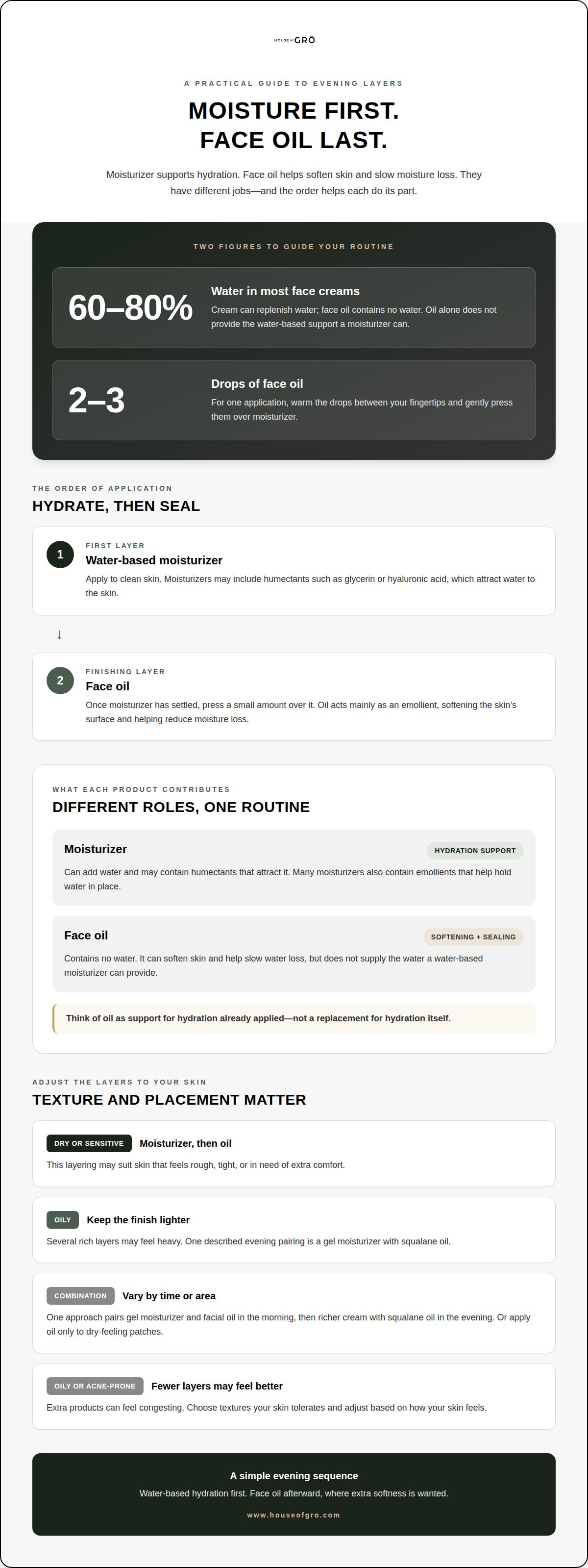
When using both, apply a water-based moisturizer first, then smooth face oil over it. This lets the moisturizer add hydration before the oil helps slow moisture loss. Choose based on what each formula contains, not simply whether it feels light or rich.
Facial oils contain no water. They mainly act as emollients, softening the skin’s surface and helping reduce transepidermal water loss, the movement of water from skin into the surrounding air. This can leave skin feeling smoother, especially when dryness makes its texture feel rough. Oil alone, however, doesn’t supply the water a water-based moisturizer can provide.
Moisturizers may contain humectants such as glycerin or hyaluronic acid. These ingredients attract water to the skin’s moisture barrier. Many moisturizers also contain emollients that help hold water in place. Most face creams contain 60-80% water, so their role differs from an oil’s: they can replenish water while supporting the skin’s ability to retain it.
Serums and oils also play different roles. A serum is a product category, not another name for facial oil. Some serums are formulated with ingredients such as hyaluronic acid, while face oils primarily provide emollient support. For example, a water-based serum can go beneath moisturizer, with oil added afterward when your routine needs a richer finishing layer.
Face oils can help skin feel comfortable and nourished, but they don’t automatically replace hydration. If dry skin feels tight after cleansing, moisturizer can provide water-attracting ingredients, and oil can then help limit moisture loss. For oily skin, several rich layers may feel heavy. One evening pairing described for this skin type is a gel moisturizer with squalane oil.
Skin type can guide the texture and number of layers. Dry or sensitive skin may benefit from moisturizer followed by facial oil in the evening. For combination skin, another approach is a gel moisturizer paired with facial oil in the morning, and a richer cream with squalane oil in the evening. Oily or acne-prone skin may feel better with fewer layers, as extra products can feel congesting. Start with textures your skin tolerates and adjust, rather than assuming every oil suits every face.
The practical distinction is simple: moisturizer supports hydration, while oil helps soften and seal. If you use both, apply the water-based moisturizer first and finish with a small amount of oil. This gives each product a distinct role without expecting face oil to replace the water-based support a cream can provide.
Face oil as an occlusive layer that helps seal in moisture
Think of face oil as the finishing layer in a two-product routine. Applied after a water-based moisturizer, it can help slow water loss from the skin’s surface. This is what “sealing in moisture” means: oil supports the hydration already applied rather than supplying water itself. For example, moisturizer followed by a thin layer of oil can leave dry-feeling skin more supple.
Order matters because each product has a different role. Apply moisturizer first so its water and humectants reach the skin before oil forms a surface layer. Then press a small amount of facial oil over the moisturizer instead of blending them in your palm. Applying them separately keeps the routine simple and lets each texture settle in turn.
This sequence also clarifies why oil alone may not address every concern. If skin feels tight after cleansing, moisturizer can deliver water and ingredients that attract it. Face oil can then help reduce moisture loss. A nourishing oil may soften rough areas, while moisturizer provides a different kind of support. Neither product has to do both jobs.
Skin types respond differently to layered skincare. Dry skin may welcome moisturizer beneath oil, especially when the surface feels rough or looks dull. On oily skin, a rich cream and oil together can feel too heavy. A gel moisturizer paired with squalane oil is one lighter evening combination described for oily skin. The useful test is how your skin feels afterward: comfortable and supple, not greasy or coated.
You can also adjust layering by area. Apply moisturizer across your face, then use a little oil on dry-feeling patches, such as your cheeks. This avoids adding the same richness everywhere. If your routine includes a serum, follow its formula and directions. A water-based serum generally goes before moisturizer, while oil works as a finishing layer.
Ingredient lists offer another practical distinction. A vitamin named on an oil’s label, for example, describes an ingredient in that formula, not the oil’s ability to replace moisturizer. Consider the product’s intended role and texture rather than assuming all facial oils work the same way. A light oil may sit comfortably over cream; a richer one may leave a heavier finish.
For a calm evening routine, apply moisturizer, allow it to settle, then smooth on oil where extra comfort is wanted. If you’re shaping a more intentional skincare ritual, keep the layers purposeful: hydration first, oil as the final seal.
When should you apply face oil?
In an evening routine, apply facial oil after moisturizer when you want it to help seal in moisture. The right amount and order depend on the formulas and your skin type.
Applying Cream and Oil in Order
Layering cream and oil means applying them separately, with moisturizer first and oil afterward. This order matters because a final oil layer can help reduce moisture loss from skin. Smooth moisturizer over clean skin, then press face oil on top once the cream has settled. Some routines use a light oil before cream, but it won’t provide the same final sealing layer.
Use two to three drops of face oil for one application. Warm them between your fingertips, then gently press the oil over your face rather than rubbing briskly. If your cheeks feel dry but your forehead feels oily, apply oil only where you want extra softness. This keeps the overall texture lighter and avoids unnecessary layers on areas that already feel comfortable.
Evening is a practical time to use face oil, particularly after cleansing and applying moisturizer. If your skin feels tight at night, for example, moisturizer can provide hydration before oil finishes the routine. How often to apply oil depends on comfort: use it when your skin benefits from the added emollient feel, rather than treating it as essential for every skin type.
Nighttime Oil Use and Ingredients
A nighttime oil step is the final layer in a routine that may include moisturizer. It matters because choosing ingredients by their role helps you avoid expecting oil to provide everything a cream does. For night cream, look for humectants such as glycerin or hyaluronic acid. For face oil, consider whether its emollient feel suits your skin and the finish you want.
For a simple nighttime routine, cleanse, apply a water-based serum if you use one, smooth on moisturizer, then press two to three drops of oil over your skin. If you use oil alone, apply it to damp skin. This may suit a routine focused on softness, but oil still contains no water and doesn’t replace every moisturizing ingredient.
Labels may mention ingredients associated with brightening or elasticity, including a vitamin, but the ingredient name alone doesn’t establish what the finished formula will do. Check the product’s intended role and texture. A richer cream may suit dry-feeling skin, while oily skin may prefer fewer layers, such as a gel moisturizer and a light oil. Adjust the final step based on how your skin feels in the morning.
Whether face oil can replace moisturizer
Usually, face oil can’t fully replace moisturizer because the two support skin differently. The deciding factor is whether your routine needs water-based hydration, an oil layer, or both.
Face Oil and Night Cream Hydration
Face oil can soften skin and help limit moisture loss, but it doesn’t provide the water found in many creams. This distinction matters if your skin feels tight after cleansing: oil may soften the surface without supplying water-attracting ingredients.
For example, a moisturizer containing glycerin or hyaluronic acid can attract water to the skin, while facial oil can help hold moisture in. Many face creams contain 60-80% water. Oil contains zero water, so using it alone won’t deliver the same hydration as a water-based cream.
Whether face oil can replace night cream depends on what you expect from the final step. If your skin feels comfortable with oil applied to damp skin, a simpler routine may suit you. If it still feels tight or dry, moisturizer can address a different need. Oil may support a supple appearance, but it isn’t an instant substitute for every ingredient in a cream.
Night Cream Ingredients and Face Oil
Night cream and facial oil differ in the ingredients they can contain and the roles those ingredients play. Choosing by texture alone can leave a gap in your routine. A cream may combine water, humectants, and emollients; an oil mainly provides emollient support.
Consider the product label and your skin’s response. Glycerin or hyaluronic acid in moisturizer can attract water, while oil may help soften the surface and reduce moisture loss. Neither ingredient list guarantees a formula will suit every skin type. A rich cream may feel comforting on dry skin but heavy on oily skin.
For oily or acne-prone skin, skip layering facial oil and moisturizer if the extra layers feel congesting, as additional product can clog pores. If irritation appears after adding a product, simplify your routine and remove the newest layer. For dry skin, moisturizer followed by oil can provide both water-based hydration and a final emollient layer.
Radiance alone isn’t a reliable measure of hydration. A smooth, glossy finish may come from surface oil, while comfortable skin depends on whether your routine meets its needs. Use moisturizer when water-based hydration matters, and reserve face oil for the added softness or moisture support it provides.
Does face oil provide the hydration and ingredients of night cream?
Face oil can support a nighttime routine, but its formula doesn’t automatically provide everything found in night cream. The useful distinction is what each product contributes and whether your skin feels comfortable with the layers you choose.
Read the ingredient list by function. A cream may combine water with humectants and emollients, while facial oil is primarily an oil-based emollient step. For example, if your skin feels tight after cleansing, oil can soften the surface, but it doesn’t replace the water-based part of a routine.
That difference matters when deciding whether to use oil alone. Applying facial oil to damp skin can make it part of a simpler routine. But applying it to damp skin doesn’t turn oil into a water-based cream or add ingredients it doesn’t contain. If you want both products’ benefits, keep moisturizer in your routine and use oil as an extra layer.
Ingredient names need context, too. Glycerin or hyaluronic acid in a cream can attract water, while an oil formula provides emollient support. A label may mention a vitamin or botanical, but that alone doesn’t show the oil provides the same blend of ingredients as night cream. Compare the formula’s intended role, not just its featured ingredient.
Notice how your skin feels after each step. If oil alone leaves it comfortable, you may prefer that pared-back approach. If tightness remains, moisturizer addresses a different need. For dry skin, moisturizer followed by oil can combine water-based hydration with a finishing layer. For oily or acne-prone skin, avoid adding layers if the combination feels congesting.
Oil can change your skin’s appearance by adding a smooth, glossy finish. That visible radiance doesn’t prove your skin has received the same hydration it would from a cream. For a practical comparison, use moisturizer alone one evening, then add oil over it another evening. Notice differences in comfort and texture rather than treating shine as the only measure.
The simplest decision is to match the product to the role you need: cream for water-based hydration and its included ingredients, oil for emollient support. A face oil can complement night cream, but it doesn’t inherently reproduce its formulation. Explore a thoughtful nighttime skincare ritual that gives each layer a clear purpose.
House of GRŌ®: AFTER DARK Restorative Night Serum
AFTER DARK Restorative Night Serum offers a nighttime serum option for a considered skincare routine. If you’re choosing between face oil and night cream, first consider the role you want your final step to play. A serum may suit a routine that favors a focused, lightweight layer over another rich cream or oil.
House of GRŌ® also offers AT DAWN Rejuvenating Daytime Oil for daytime use. Choose products according to your routine and how their textures feel on your skin. You don’t need every layer; a simple evening ritual may be enough.
For questions about choosing a nighttime skincare step, contact House of GRŌ®.
Make Your Evening Routine Feel Intentional
Your next step can be a quiet experiment: notice what your skin needs, then choose layers with purpose. Whether face oil can replace night cream comes down to your routine and the role each formula plays. Let comfort, not a glossy finish alone, guide your choice.
House of GRŌ® offers AFTER DARK Restorative Night Serum for nighttime skincare, AT DAWN Rejuvenating Daytime Oil for daytime, and TOUCH Hydrating Body Serum for body care. Each has a distinct place in a considered ritual.
If you’d like guidance as you refine your skincare routine, contact House of GRŌ® for skincare advice. Small, thoughtful choices can make your evening care feel more balanced and personal.
Frequently Asked Questions
Can a facial oil alone hydrate your skin?
Facial oil alone can make skin feel softer, but it doesn’t add water to the skin. If you choose an oil-only routine, apply it to damp skin, which can help the oil sit over existing moisture. For example, after rinsing your face, gently pat it until damp, then apply the oil. If tightness continues, consider whether your routine needs a water-based moisturizer.
Do oils cause breakouts?
Some people with oily or acne-prone skin may find that layering oil with moisturizer feels congesting, and extra product layers can clog pores. Oils don’t affect every complexion in the same way, so notice how your skin responds rather than assuming all facial oils behave alike. If a new layer coincides with breakouts or discomfort, simplify your routine and remove the product you added most recently.
Facial Oil vs Face Cream: Which Should You Use?
Choose a face cream when you want a water-based product in your routine, and consider facial oil when you want an oil-based finishing layer. For example, skin that feels tight after washing may need moisturizer, while rough-feeling areas may benefit from a little oil over it. Your choice can also depend on how rich each formula feels and whether your skin is comfortable afterward.
Oil vs Cream: What's the Difference?
The simplest difference is the formula: oil is oil-based, while cream commonly combines water with other ingredients. This affects their textures and roles. A cream may spread as a water-rich layer, while oil leaves a more emollient finish. Check the ingredient list for the specific product, since products in either category can vary in texture and ingredients.
What are Face Oils?
Face oils are oil-based skincare products designed for facial skin. Their textures range from light to rich, depending on the formula. For example, a lightweight oil may feel different from a thicker one layered over cream. Oils can be used as a finishing layer or, in some routines, on damp skin alone. Follow the product’s directions and use an amount that feels comfortable.
Can face oil replace night cream for different skin types?
It depends on your skin’s needs and the routine it tolerates. Someone with dry-feeling skin may prefer cream beneath oil, while someone with oily or acne-prone skin may find multiple layers too heavy. Combination skin can respond differently across the face, so using a lighter approach on oilier areas and richer care on dry patches may feel more balanced.
What does face oil do compared with night cream?
Face oil mainly adds an emollient layer, while night cream may combine water and ingredients that support hydration. For example, oil can soften a dry-feeling patch, while cream may suit an evening routine that needs a water-based layer. Check the product label to see what a particular formula contains, since “oil” and “cream” describe broad product types, not identical ingredient lists.
Should face oil be applied before or after moisturizer?
When using both, apply moisturizer first and face oil afterward as the finishing layer. For example, smooth cream over your face, then press a small amount of oil onto dry-feeling areas. If you use a serum, follow its directions and consider its texture before applying cream or oil. Keep your routine simple enough that every layer feels comfortable on your skin.