


Skin support can start with the barrier, rather than another aggressive active. A mushroom complex for skin brings together extracts with different qualities: some are used for hydration and soothing, while others offer antioxidant support against environmental stress. The blend matters. The formula, not the word “mushroom” alone, shapes what a product is intended to do.
It makes sense to look for skincare that feels gentle while supporting a healthy-looking complexion. Mushroom extracts are used in serums and moisturizers to help maintain hydration and support the skin barrier. Their role is supportive, not a promise of overnight change.
Here, you’ll learn how mushroom ingredients work on skin, which extracts may be relevant for sensitivity and environmental stress, and what to look for when choosing a formula. We’ll also consider how to make mushroom skincare part of a simple routine, with attention to your skin’s needs and the other ingredients in the product. A clearer way to choose. A more considered step in daily care.
Key Takeaways
- Learn why Tremella is used in hydrating skincare and how its role differs from other mushroom extracts.
- See how gentle formulas may support skin that feels sensitive, and why the complete formula matters.
- Understand what research on different mushroom extracts suggests, and where the findings are still limited.
- Use ingredient labels to assess whether a product’s focus fits your skin’s needs and routine.
- Explore how daytime oils and night serums can complement a considered skincare ritual.
What does mushroom complex do for the skin?
A topical mushroom complex combines extracts in a skincare formula. Tremella is often associated with hydration, while the complete blend shapes how a product is intended to support moisture and the skin barrier. Understanding each extract’s role helps you assess what a mushroom complex for skin may add to your routine.
Tremella and Skin Hydration
Tremella is a mushroom extract valued in skincare for its water-binding potential. That matters because well-hydrated skin can feel more comfortable and look less dry.
Tremella is described as holding up to 500 times its weight in water. That figure describes the ingredient’s water-holding capacity, not a guaranteed change in skin hydration. In a serum or moisturizer, the surrounding formula also matters: humectants attract water, while emollients can help soften skin and reduce moisture loss.
Hyaluronic acid is another familiar hydrating ingredient. A formula containing Tremella may combine it with other ingredients, but the ingredient list alone cannot tell you exactly how the finished product feels or performs. Texture, concentration, and the rest of the formula all play a role.
Hydration, Redness, and Moisture Retention
Hydration refers to water in the outer skin; moisture retention describes how well the skin barrier helps keep it there. Both matter when skin feels tight or looks flaky.
Visible redness can have different causes, so hydration alone won’t explain every flush or irritated patch. A gentle moisturizer can support comfort when dryness contributes to a stressed-feeling barrier. A hydrating formula may feel soothing on dry areas, but redness can have other causes.
The skin microbiome is the community of microorganisms living on the skin’s surface. A microbiome-friendly formula is designed to support a balanced skin environment, but that phrase alone doesn’t prove a product will reduce redness. A mushroom complex for skin may be one part of a moisturizer; the full ingredient combination shapes the product.
Supplement Ingredients and Skin Claims
A mushroom complex supplement is taken orally and contains one or more mushroom ingredients, such as Tremella, reishi, or Chaga. Formulas vary, so read the label to identify the species and other ingredients. Topical extracts and oral supplements are different forms; findings about a skincare ingredient don’t establish that a supplement improves skin.
In the United States, dietary supplements aren’t approved by the FDA for safety and effectiveness before marketing in the same way as drugs. Labels may make structure/function claims, but shouldn’t claim to diagnose, treat, cure, or prevent disease. Read skin-related claims carefully.
There’s no single typical dosage for mushroom supplements for skin. The amount depends on the species, extract, and product directions, so follow the label rather than transferring a dose between formulas. Clinical evidence that oral mushroom supplements improve skin appearance is limited.
Risks depend on the mushroom species and the person using it. Allergic reactions and digestive symptoms are possible, and ingredients may interact with medications. People with mushroom allergies, autoimmune conditions, or regular prescriptions should discuss supplement use with a qualified healthcare professional.
Inflammation and skin sensitivity
Sensitivity describes skin that reacts easily with stinging, tightness, or visible redness. Inflammation is a biological response, not a diagnosis you can make from redness alone. A mushroom complex can be part of a hydrating skincare formula, but it isn’t a remedy for every cause of irritation. Focus on comfort and supporting the skin barrier.
Dryness can leave skin feeling tight and make rough patches more noticeable. Hydrating ingredients help address water loss, while the rest of the formula affects how a product feels on skin. Mushroom extracts are used in skincare to help hydrate and soothe. That is different from claiming an ingredient treats a skin condition or reliably changes skin tone.
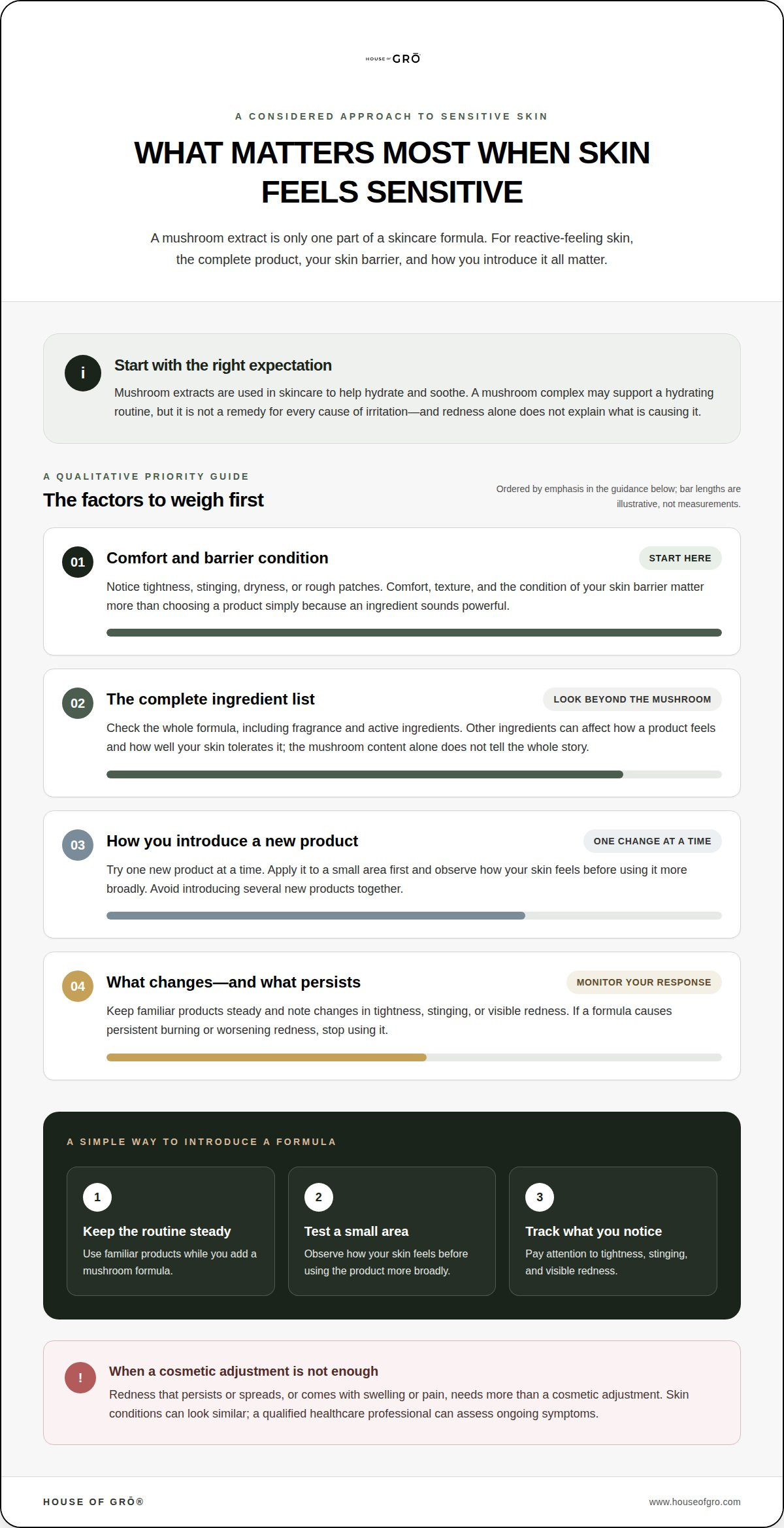
Daily use depends on how your skin responds to the complete product. Mushroom skincare may be used every day to help hydrate and soothe, but other ingredients in a formula can affect tolerance. Introduce one new product at a time. Apply it to a small area first and observe how your skin feels before using it more broadly. Avoid layering several new products together.
For reactive skin, a simple routine makes it easier to trace reactions. Check the ingredient list, including fragrance and active ingredients, rather than judging a product by its mushroom content alone. If a formula causes persistent burning or worsening redness, stop using it. A powerful ingredient isn’t automatically a better fit; comfort, texture, and the condition of your skin barrier matter more.
Consider the rest of your routine, too. Frequent exfoliation combined with a new serum, for example, can make it harder to identify what is irritating your skin. Keep familiar products steady while introducing a mushroom formula. Use gentle cleansing and moisturizer, and note any changes in tightness, stinging, or visible redness. A brief routine log can help connect a reaction to a specific step.
Redness that persists, spreads, or comes with swelling or pain needs more than a cosmetic adjustment. Skin conditions can look similar, and a skincare ingredient cannot identify the cause. A qualified healthcare professional can assess ongoing symptoms. Meanwhile, avoid adding multiple new formulas to visibly irritated areas, since each addition makes the source of discomfort harder to pinpoint.
For a calmer routine, choose products around your skin’s current needs, then introduce each one deliberately. Explore considered skincare rituals as one way to keep daily care simple and intentional.
Mushroom extracts and skin benefits
Mushrooms aren’t interchangeable skincare ingredients. Their extracts have different proposed roles, and the finished formula shapes how they feel on skin.
Restorative Skin Complex Benefits
“Restorative skin complex” describes a blend of ingredients intended to support skin, rather than a single mushroom with one defined effect. This distinction helps set realistic expectations: benefits depend on the extracts included and how the formula is designed.
One study found that maitake, reishi, and lion’s mane extracts reduced transepidermal water loss in shower gel formulations. The finding concerns those extracts in that product format. It doesn’t establish that every mushroom blend, serum, or moisturizer will have the same effect.
For skincare, extract form and surrounding ingredients matter. A water-based extract in a cleanser may behave differently from an oil-based formula left on overnight. A gentle moisturizer, for example, can pair humectants with ingredients that soften skin. The mushroom name alone doesn’t reveal how the complete product supports hydration or the skin barrier.
Research on pigmentation also needs careful interpretation. An animal study found that two edible mushroom species inhibited melanin synthesis and showed depigmenting activity. The species aren’t identified here, and an animal finding doesn’t show that a topical product changes human skin tone. It points to a research area, not a promise for everyday skincare.
Tremella and Chaga Skincare Benefits
Tremella, also called snow mushroom, is used in skincare for its association with hydration. Chaga is valued as an antioxidant ingredient. These distinct roles help explain why a formula might combine mushroom extracts, rather than assuming every mushroom offers the same benefit.
Chaga’s antioxidant role relates to helping address oxidative stress, while Tremella is more often included for moisture support. A blend may bring these ingredient profiles together, but the result depends on the full formula and how the product is used. Mushroom extracts don’t replace a gentle routine or establish treatment for a skin condition.
Consider the product format alongside its claims. A rinse-off cleanser has less contact time than a leave-on serum, and a formula with several active ingredients may feel different from a simple moisturizer. For a practical comparison, note the mushroom species, its position on the ingredient list, and whether the product is designed to cleanse or remain on skin.
A mushroom formula should fit comfortably into your existing routine. Start with one product, keep other steps familiar, and observe how your skin responds. An “all-natural” description doesn’t guarantee compatibility or prove a specific benefit. Choose a product whose ingredients and intended role match your skincare priorities.
The Restorative Eye Treatment study is described as lasting 12 weeks, while the article claims tremella has 400 times more hydration power than hyaluronic acid. Finished formulas may still differ in use.
Mushroom-infused skincare product recommendations
Choose a mushroom product by its format and intended use, not its name alone. Topical Tremella skincare is applied to skin, while mushroom supplements are taken orally. They differ in ingredients, use, and relevant evidence, so they aren’t interchangeable.
For topical care, match the product format to your routine. A Tremella serum may suit someone seeking a lightweight hydration step; a moisturizer may suit skin that needs a richer finish. Chaga may appear in formulas positioned around antioxidant support. These examples describe ingredient roles, not guaranteed changes to redness or irritation.
Read the full ingredient list, not just the front label. Look for mushroom species such as Tremella or Chaga, and note the other ingredients in the formula. Fragrance, exfoliating acids, or other active ingredients may affect how a product feels. If your skin is reactive, introduce one new formula at a time.
Product prices vary with factors such as format, formula, and container size. A serum and a cream may use different ingredient combinations, while a supplement label may list different mushroom species and serving directions. Compare the stated purpose and ingredients first; a higher price alone doesn’t establish a better fit for your skin.
Topical products and supplements call for different label checks. With a serum or moisturizer, consider whether it is leave-on or rinse-off and whether its ingredients fit your existing routine. With a supplement, check the named mushroom species, serving instructions, and additional ingredients. Don’t assume a topical extract’s properties apply to an oral product.
For supplements, a clear label helps you understand what you’re taking. Identify each mushroom ingredient and its stated amount per serving, then follow the product directions. Consider the other listed ingredients, especially if you have known allergies. If you take medication or have an autoimmune condition, discuss supplement use with a healthcare professional.
Keep your skin’s response central. If a new Tremella product causes stinging or increases visible redness, for example, stop applying it and simplify your routine. A soothing description doesn’t guarantee that every formula suits sensitive skin. Texture, the combination of ingredients, and your skin’s current condition all affect comfort.
Choose one product for one clear purpose, such as hydration or a comfortable night routine. Keep the rest of your skincare steady while you assess the new step. That makes it easier to notice irritation and decide whether the formula belongs in your routine.
Antioxidant and environmental protection
Chaga is used in skincare as an antioxidant ingredient, connecting mushroom extracts with discussions of environmental stress. That role isn’t a promise to prevent damage or change visible signs. A product’s formula, texture, and intended use all shape its place in a routine.
Antioxidants are discussed in skincare because environmental exposure can contribute to oxidative stress. Chaga’s antioxidant profile explains its presence in some cosmetic formulas, but it doesn’t make a product a protective shield. A moisturizer containing Chaga, for example, remains a moisturizer. Its ingredient story alone doesn’t establish sun protection or replace products specifically intended for that purpose.
Look closely at a product’s actual claims. “Antioxidant” describes an ingredient property or formula focus; it doesn’t guarantee a visible result. Chaga extract can sit alongside oils, humectants, or other cosmetic ingredients. The combination influences the product’s feel and purpose. A light serum, for instance, may layer differently from a richer cream, even when both include the same mushroom.
Environmental stress isn’t one single exposure. A daily routine may involve time outdoors, dry indoor air, or contact with urban pollution. These examples don’t mean everyone’s skin responds the same way. They do show why a mushroom extract is best viewed as one part of routine care, not a complete answer to every environmental concern.
Texture matters in practice. If a formula feels comfortable under your usual moisturizer, it may be easier to use consistently. If it pills or feels heavy, the issue could involve the product’s base or how it combines with another step. Introduce one new Chaga-containing product while keeping familiar products steady. This makes changes in comfort or visible appearance easier to notice.
Keep expectations specific. Chaga’s antioxidant role doesn’t establish that it reduces redness, prevents aging, or treats a skin condition. For visible concerns, consider the complete cosmetic formula and how it fits with the rest of your routine. A clear ingredient list and a product purpose that matches your needs are more useful guides than broad “environmental defense” language.
For a measured approach to daily care, explore antioxidant-focused skincare and consider how it fits your existing routine.
House of GRŌ®
House of GRŌ® offers mushroom-powered skincare with organic botanicals for people making thoughtful choices about their daily routine. Its formulas feature Chaga as an antioxidant ingredient. The range includes At Dawn Rejuvenating Daytime Oil, After Dark Restorative Night Serum, Touch Hydrating Body Serum, and Eye Detox Brightening Oil.
These are topical skincare options, not mushroom supplements. Choose based on the kind of care you want to add, such as a daytime oil or a hydrating body serum. Explore House of GRŌ®’s mushroom-powered skincare to find a product that fits your routine.
Make Your Next Skincare Step Intentional
Your next step is to decide what you want your routine to feel like. If you’re considering a mushroom complex for skin, start with one clear priority, such as a more comfortable daily ritual or a lighter evening routine. That intention can help you assess whether a product fits, without adding several new steps at once.
Give a new formula space in your routine. Keep familiar products consistent as you notice how your skin feels and looks. Texture, ease of use, and comfort can matter as much as an ingredient’s name. A thoughtful choice is one you understand and use with care.
If you’d like guidance as you consider your next skincare step, contact House of GRŌ® for skincare advice. Let your routine evolve with intention, one considered choice at a time.
Frequently Asked Questions
How Does It Work in Skin?
Topical mushroom extracts work as part of a skincare formula applied to the skin’s surface. Their role depends on the extract and the ingredients around it. A leave-on product, for example, remains on skin, while a cleanser is rinsed away. Consider format and purpose together; an ingredient name alone doesn’t explain how the full formula will feel or perform.
How Does Turkey Tail Brighten Skin?
Don’t assume Turkey Tail brightens skin based on the available findings. An animal study reported depigmenting activity from two edible mushroom species, but it doesn’t establish that Turkey Tail was one of them or that a topical product changes human skin tone. If brightening is your goal, distinguish an ingredient’s proposed activity from evidence about a finished product and its effects on people.
What Is Tremella Mushroom Used For?
Tremella, also called snow mushroom, is used in topical skincare for hydration. It may appear in a serum or moisturizer, where the full formula affects texture and use. Tremella in skincare and a Tremella supplement are different forms; information about applying an extract doesn’t establish what an oral supplement does. Check the product type and intended use before comparing claims.
Which Medicinal Mushrooms Are Used for Skin Benefits, Such as Reishi, Tremella, and Cordyceps?
Skincare discussions include reishi, Tremella, Chaga, maitake, and lion’s mane. Findings depend on the species and product format: one study examined maitake, reishi, and lion’s mane in shower gel formulations. Cordyceps shouldn’t be grouped with these findings without evidence for that mushroom and use. When comparing products, note the species and whether the formula is topical or oral.
What Are the Proposed Skin Benefits of Mushroom Complex Supplements, Including Hydration, Collagen, and Inflammation?
Supplement claims may refer to hydration, collagen, or inflammation, but a mushroom blend’s name alone doesn’t establish these proposed benefits. Oral supplements differ from skincare applied to the surface, so topical ingredient findings don’t demonstrate supplement effects. A study of an extract in a shower gel, for example, cannot establish that taking that mushroom improves skin hydration or collagen.