


Adding more products may not help when skin turns red or reactive. If you’re searching for how to calm down angry skin, simplify your routine: pause products that sting or irritate, cleanse gently, and focus on hydration. In spring, allergens and skincare products can both trigger redness or itching, so a quieter routine can reduce potential irritants while your skin settles.
It may feel natural to reach for a stronger treatment when your complexion looks unsettled, but harsh exfoliants and active ingredients can add to irritation. Gentle moisture, a cool compress for temporary comfort, and patience offer a calmer place to start. A face oil may help seal in hydration after moisturizer, but it isn’t right for every situation, including after a chemical peel. This guide explains why spring can leave skin feeling sensitive, how to pare back your routine, and what to consider when choosing an oil for reactive skin. The aim is care that feels considered, not complicated.
Key Takeaways
- When spring irritation appears, simplify care and stop using products that sting or seem to trigger redness.
- Choose gentle hydration, such as a moisturizer or serum with moisture-supporting ingredients, rather than an exfoliating toner.
- Pause strong actives and physical scrubs while skin is irritated; reintroduce products gradually once it settles.
- When considering a face oil, look for a simple formula and apply it after moisturizer to help seal in hydration.
- Use a cool compress for short-term soothing, and seek medical advice if irritation persists or worsens.
1. Why is my skin more irritated in spring?
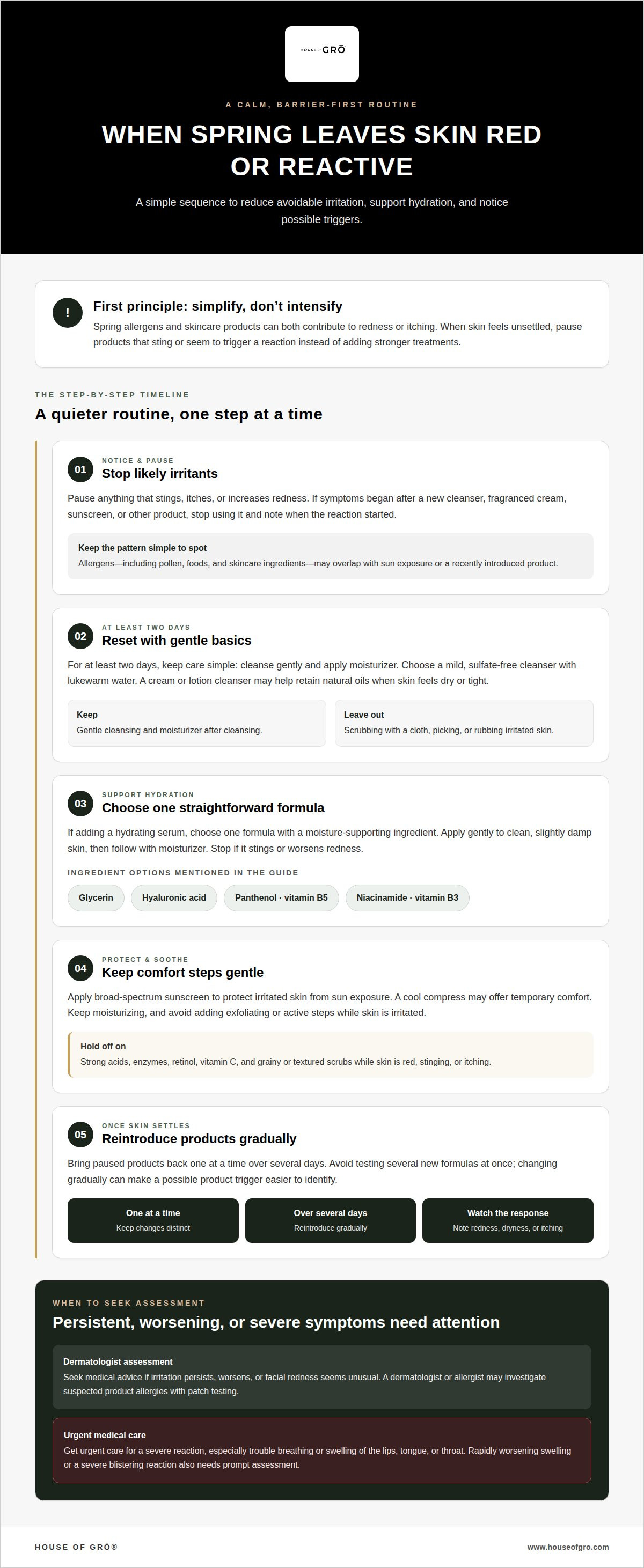
Spring can bring exposure to allergens, including pollen, foods, and skincare ingredients. An allergic reaction may cause redness and itching. Contact dermatitis can also develop when skin reacts to something applied topically. If symptoms appear after using a new cleanser, fragranced cream, or sunscreen, pause that product and note when the reaction began. Keeping a brief record can help you spot a possible pattern.
If you’re wondering how to calm down angry skin, begin with a barrier-first routine. For at least two days, keep care simple: cleanse gently and apply moisturizer. Choose a mild, sulfate-free cleanser and lukewarm water, and avoid scrubbing with a cloth. A cream or lotion cleanser may help retain natural oils when your face feels dry or tight. The first step is reducing avoidable irritation, not adding stronger treatments.
Keep daily care predictable while your skin is irritated. Moisturize after cleansing, avoid picking or rubbing, and apply broad-spectrum sunscreen to protect irritated skin from sun exposure. Stop using products that sting, itch, or increase redness. Don’t test several new formulas at once. If discomfort follows a new product, you’ll have a clearer idea of what may have triggered it.
When your skin settles, reintroduce paused products one at a time over several days. This gradual approach can help identify a possible product trigger. If you also receive routine aesthetic care, wellness clinics like Body 'N' Balance emphasize allowing reactive skin to fully calm down before scheduling treatments around the face. Facial redness can also have causes beyond skincare, including eczema, rosacea, and other conditions. Rosacea may involve redness and pimples, so a sudden change in appearance doesn’t automatically mean acne. Avoid diagnosing the cause from a mirror alone.
See a dermatologist if irritation persists, worsens, or facial redness seems unusual. A dermatologist or allergist may investigate suspected product allergies with patch testing. Seek urgent medical care for a severe reaction, especially if it includes trouble breathing or swelling of the lips, tongue, or throat. Rapidly worsening swelling or a severe blistering reaction also needs prompt assessment.
Spring symptoms can have more than one trigger. Allergens, sun exposure, and a recently introduced skincare product may overlap. Note new products and when symptoms appear, then share that pattern with a dermatologist if irritation continues. A simple routine can reduce product exposure while you observe changes, but persistent redness or itching deserves closer assessment.
2. Hydrating serums and redness relief
A hydrating serum can add moisture without turning a simple routine into a crowded one. For irritated skin, look for humectants such as glycerin or hyaluronic acid, which help replenish moisture. Panthenol, also called vitamin B5, hydrates and supports skin repair. Niacinamide, or vitamin B3, may help reduce redness and support skin resilience. These ingredients offer different roles, so choose one straightforward formula rather than layering several new products.
Apply serum gently to clean, slightly damp skin, then follow with moisturizer. This sequence keeps hydration in your routine without relying on a serum alone. If a product stings or worsens redness, stop using it. Sensitive skin can react to ingredients that feel comfortable for someone else, so introduce a new formula cautiously and avoid changing several products at once.
A toner mist can make hydration easy to refresh during the day. Choose an alcohol-free, hydrating formula rather than an exfoliating acid toner. A few light sprays may feel comfortable after time in dry indoor air, but mist isn’t a substitute for moisturizer. If your face feels tight after it dries, apply moisturizer to help retain the added water. Avoid rubbing the mist into reactive skin.
Drinking water supports normal hydration, but extra water is not a targeted treatment for facial redness or inflammation. Drink according to your needs, and use topical hydration to address dry-feeling skin. A simple evening sequence can be serum followed by moisturizer, without exfoliating acids or extra active steps while your skin is irritated. Consistency makes it easier to notice whether a product feels comfortable.
Overnight hydration works best as a calm, repeatable ritual, not a chance to layer every product. Apply a hydrating serum and moisturizer before bed, then leave out anything that tends to sting. For a night-serum step, AFTER DARK Restorative Night Serum can be considered within a pared-back evening routine. Keep the rest of the routine familiar so you can observe how your skin responds.
- Choose one hydrating serum with glycerin, hyaluronic acid, panthenol, or niacinamide.
- Layer moisturizer after serum, especially when skin feels dry or tight.
- Use an alcohol-free hydrating mist for a light refresh, not as your only moisturizer.
- Keep evening care simple and pause any step that increases discomfort.
Hydration can support comfort, but it cannot explain every flare. Persistent or worsening redness may have causes such as rosacea, eczema, or contact dermatitis. If symptoms continue despite a gentle routine, seek medical guidance rather than adding stronger skincare.
3. Pausing active ingredients and physical scrubs
When skin is red, stinging, or itching, pause exfoliation instead of trying to speed up recovery. Over-exfoliation can weaken the skin barrier and inflame the surface. Physical face scrubs add friction, while strong acids and enzymes increase exfoliation. Together, these steps can intensify discomfort instead of providing the smooth feel you want.
Temporarily set aside vitamin C, retinol, exfoliating acids, enzymes, and grainy or textured scrubs. Avoid combining them with other potentially irritating products while your skin is irritated. Keep cleansing and moisturizing simple, and watch for changes in redness, dryness, or itching. If a product consistently stings, stop using it rather than pushing through.
Pausing active ingredients doesn’t mean abandoning skincare. It means choosing fewer steps while your skin barrier feels unsettled. A gentle cleanser and moisturizer can provide a steady base without the extra stimulation of exfoliants. For those looking to source professional, gentle formulas suitable for sensitive skin, specialty platforms like Alfa Omega Shop offer curated skincare options that prioritize barrier health. Check labels for fragrance if scented products seem to trigger discomfort. A short ingredient list can make it easier to identify which product may be affecting your skin.
Some soothing ingredients used in skincare include chamomile, cucumber, licorice root, caffeine, and sulfur. Their presence alone doesn’t guarantee that a formula will suit sensitive skin. The whole product matters, including its other ingredients and how your skin responds. Introduce one new soothing product at a time, and stop if redness, burning, or itching increases.
Once irritation has settled, bring paused products back gradually rather than restarting everything together. Reintroduce one product at a time over several days, so if discomfort returns, it’s easier to spot a possible connection. When you resume exfoliation, introduce it slowly, starting once a week. Don’t exfoliate while your skin remains red or irritated, since friction or active ingredients may worsen the flare.
- Pause retinol, vitamin C, acids, enzymes, and physical scrubs during active irritation.
- Use gentle cleansing and moisturizer as your pared-back routine.
- Consider soothing ingredients such as chamomile or cucumber, while introducing only one formula at a time.
- Restart products gradually, and wait until irritation settles before exfoliating again.
Persistent itching, worsening redness, or a rash that continues despite simplified care deserves medical attention. A dermatologist can assess whether symptoms relate to an allergy, contact dermatitis, or another skin condition. Avoid treating ongoing inflammation by adding more active ingredients. Identifying the cause matters more than adopting a stronger routine.
4. Choosing a face oil for reactive skin
A face oil can complement moisturizer by helping seal in hydration. It isn’t a treatment for every cause of redness, and it may not suit every reactive complexion. Fragrance, synthetic dyes, and harsh ingredients can irritate or dry the skin. For sensitive skin, look for a simple formula and a clear ingredient list rather than assuming a botanical label guarantees gentleness.
Rosehip, jojoba, and avocado oils are examples of facial oils rich in essential fatty acids. They’re ingredients to consider when comparing products, not a promise that one oil will calm every flare. Skin responses vary. If fragrance or a particular ingredient has triggered discomfort before, avoid formulas containing it. Introduce one new product at a time so changes in redness, itching, or dryness are easier to notice.
Keep the rest of your routine familiar when testing an oil. Cleanse gently, apply moisturizer, then smooth on 1-2 drops of facial oil after moisturizer to help seal in hydration. Use a light touch instead of rubbing vigorously. If the oil leaves skin feeling uncomfortable or makes redness worse, stop applying it. Adding several new products together makes it harder to identify which one may be responsible.
Consider why your skin feels reactive, too. Eczema can involve very dry, red, itchy, or scaling skin. Rosacea can also cause persistent facial redness and pimples. A face oil may be part of a moisturizing routine, but it doesn’t establish the cause of these symptoms or replace medical care. Ongoing or worsening irritation deserves a dermatologist’s assessment, especially when redness keeps returning.
Introduce a new oil carefully instead of applying it across your whole face right away. Try a small amount on a limited area and observe how your skin responds. Keep your cleanser, moisturizer, and other skincare steps unchanged during this trial. Don’t test the oil at the same time as a new exfoliant or fragranced product. This approach makes it easier to notice a reaction.
- Look for rosehip, jojoba, or avocado oil if you want a source of essential fatty acids.
- Review the ingredient list for fragrance, synthetic dyes, or ingredients you know irritate your skin.
- Apply 1-2 drops after moisturizer, using a gentle touch.
- Stop using the oil if discomfort or redness increases, and seek medical advice for persistent symptoms.
Choose for comfort and simplicity, not the promise of an instant fix. If eczema, rosacea, or another condition may be behind persistent irritation, a skincare change alone may not address the underlying cause.
5. Should you use a cool compress or moisturizer for inflamed skin?
A cool compress and moisturizer serve different purposes. Cooling can offer temporary relief from warmth and visible redness. Moisturizer addresses dryness and supports everyday hydration. If your face feels hot and looks flushed, begin with a clean, cool, damp cloth. If it feels tight or flaky, use a gentle moisturizer. Some skin needs both, applied separately.
For anyone learning how to calm down angry skin, a cool cloth can be a simple first step for temporary comfort. Place it lightly over the affected area. Don’t rub, press hard, or use a rough towel on inflamed skin. Cooling may soothe discomfort and temporarily reduce redness. Avoid applying ice directly, as it can feel harsh on sensitive skin.
After cooling, consider whether dryness remains. A gentle, fragrance-free moisturizer can help replenish moisture without adding exfoliating acids or scrubbing. Apply it with clean hands and smooth it over the skin rather than massaging vigorously. If a familiar moisturizer stings or increases redness, stop using it. Choose a simpler product you already tolerate instead of layering several new formulas.
Think of the compress as short-term comfort and moisturizer as routine care. A cool cloth won’t replace hydration, while moisturizer won’t provide the same immediate cooling sensation. For example, a flushed cheek may feel better after a cool compress, while dry patches around the nose may need moisturizer. Knowing how to calm down angry skin means matching care to what you feel, rather than applying every step at once.
- Use a clean, cool, damp cloth for temporary relief from heat and redness.
- Choose a gentle moisturizer when tightness, dryness, or flaking needs attention.
- Apply products with clean hands and avoid rubbing inflamed areas.
- Stop using a product if it increases stinging, itching, or redness.
Keep the rest of your skincare routine simple while skin is inflamed. Skip physical scrubs and strong exfoliating products, which can add irritation. Avoid repeatedly switching between compresses and unfamiliar creams. If redness or irritation persists or worsens, consult a dermatologist, since several skin conditions can look alike.
For a calmer daily approach, explore gentle skincare essentials that can complement a simple hydration routine.
House of GRŌ®
House of GRŌ® offers skincare options for adding an oil or serum to a considered routine. If your skin feels dry after simplifying care, explore At Dawn Rejuvenating Daytime Oil, After Dark Restorative Night Serum, or Touch Hydrating Body Serum. Eye Detox Brightening Oil is another option. Choose a product based on the step you want to add, and introduce it thoughtfully rather than changing several parts of your routine at once. Skincare can support a daily hydration practice, but persistent or worsening irritation deserves a dermatologist’s advice.
For help with your next skincare step, contact House of GRŌ®.
Make your next skincare step a thoughtful one
Learning how to calm down angry skin starts with noticing what changes your skin’s comfort. Adjust your routine carefully rather than trying to solve the problem by adding more products. Give each change time to show how your skin responds, and seek medical advice if irritation persists or worsens.
For a considered next step in your skincare routine, choose care that fits your needs and feels comfortable to use. House of GRŌ® offers options for daily skincare and hydration, while a dermatologist can assess ongoing irritation or possible skin conditions. The right path depends on what your skin is telling you.
Contact House of GRŌ® for skincare advice and take your next step with calm intention.
Frequently Asked Questions
Why is my face suddenly red and irritated?
Sudden facial redness can follow a skincare reaction, an allergy, sun exposure, exercise, or a skin condition. A new cleanser or fragranced cream is one possible trigger, especially if itching or stinging begins after use. Note what changed and when symptoms appeared. Rosacea, eczema, and contact dermatitis can also cause redness, so a sudden flare doesn’t identify its cause on its own.
How do you reduce redness on your face?
Reduce possible triggers first: stop using products that seem to cause stinging or itching, and avoid rubbing your face. A cool, clean compress may offer temporary comfort, while a gentle moisturizer can address dryness. Keep sun exposure in mind, since it can irritate skin further. If redness persists, worsens, or seems unusual, consult a dermatologist to assess possible causes rather than adding stronger products.
So, How Long Until My Skin Feels Normal Again?
Mild irritation may begin improving within a few days when care stays gentle and consistent. Persistent sensitivity can take one to two weeks to improve. The cause matters: continued exposure to a trigger may prolong discomfort, while an underlying condition may need medical assessment. If your skin keeps worsening or doesn’t begin settling, consult a dermatologist instead of repeatedly changing products.
Why is my skin more irritated in spring?
Spring can increase exposure to allergens, including pollen, foods, and skincare ingredients that trigger reactions. A product allergy or over-exfoliation may also contribute to redness and itching. Consider recent changes, such as a new cream or more frequent exfoliation. Simplifying care can reduce product exposure while you observe symptoms. Persistent irritation may have another cause, so seek medical advice if it continues.
What causes irritated, inflamed, or angry-looking skin?
Several different issues can look similar on the face. Allergic reactions and contact dermatitis may follow exposure to a substance; eczema, rosacea, and psoriasis can also cause ongoing redness or irritation. Pimples, sun damage, and other conditions may affect appearance, too. Because redness alone doesn’t reveal the cause, note its pattern and associated symptoms, then seek a dermatologist’s opinion if it persists or seems unusual.
How can you calm irritated skin quickly at home?
For immediate comfort, gently place a clean, cool, damp cloth over the irritated area. Avoid scratching, picking, or rubbing, which can add friction. If dryness is present, use a familiar moisturizer and leave out products that sting. Don’t apply ice directly or test several new products during a flare. Seek urgent medical care if a reaction includes trouble breathing or swelling of the lips, tongue, or throat.
What skincare ingredients soothe irritated skin, such as ceramides, colloidal oatmeal, and aloe?
Aloe vera, allantoin, and niacinamide are ingredients that may help calm skin or reduce redness. Panthenol, also called vitamin B5, hydrates and supports skin repair. Ceramides and colloidal oatmeal are often considered for soothing care, but a product’s overall formula still matters. Introduce one new product at a time, and stop using it if burning, itching, or redness increases.
What products and ingredients should you avoid when skin is irritated?
Pause physical scrubs, exfoliating acids, enzymes, retinol, and vitamin C while your skin is red or irritated. Fragrance, synthetic dyes, or other ingredients that have caused discomfort may also be worth avoiding. Don’t layer multiple new products to address a flare, as that makes it harder to identify a trigger. Resume paused products gradually only after irritation settles, and seek medical advice for persistent symptoms.