


What if the word “clean” on a serum label tells you less than the formula itself? When claims overlap and ingredient lists feel opaque, finding effective clean beauty serums can seem like guesswork. The label alone won’t tell you whether a formula suits your skin, how to use it, or what results to expect.
It makes sense to look for ingredients that feel considered and products that align with your values. But “clean beauty” has no single FDA definition, so brands may use the phrase differently. Effectiveness comes down to a clearer combination: a specific skin goal, a thoughtfully formulated product, and consistent use.
This guide explains how to read ingredient and product claims, compare textures, and set realistic expectations. You’ll also find practical ways to build a routine that feels simple rather than crowded. House of GRŌ® botanical, adaptogen-informed approach offers one example, with AT DAWN Rejuvenating Daytime Oil and AFTER DARK Restorative Night Serum taking distinct places in a day-to-night ritual.
Key Takeaways
- Choose effective clean beauty serums by matching a clear skin goal with a formula you can use consistently, not by relying on a label alone.
- Look beyond a featured ingredient: review the full ingredient list, intended use, texture, and directions to understand how a formula may fit your routine.
- Compare water-based serums and facial oils by texture and routine role, rather than assuming one type is better for every skin need.
- Build a simple routine by defining your goal, choosing a comfortable texture, following product instructions, and observing how your skin responds.
- Explore how House of GRŌ® brings adaptogenic mushrooms, organic botanicals, and wild-harvested Northern Maine Chaga into a day-to-night skincare ritual.
What Makes a Clean Beauty Serum Effective for Your Skin?
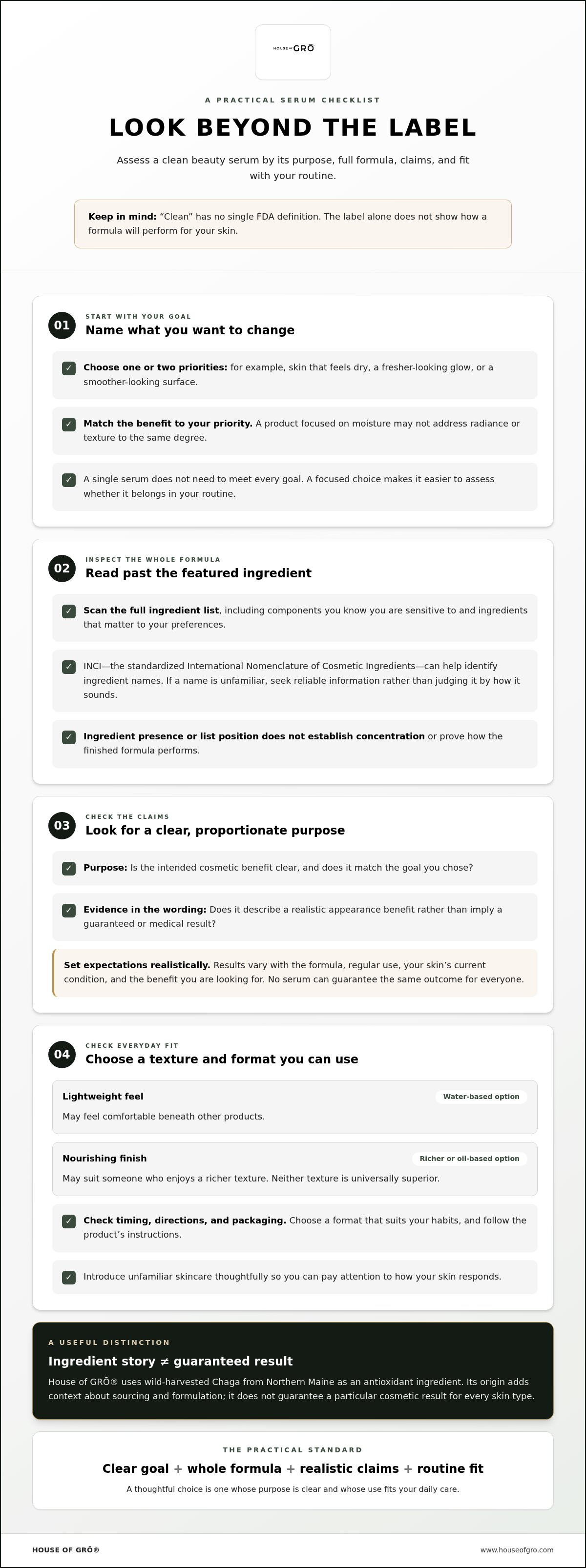
An effective serum supports a specific skin goal with a formula you can use consistently, and with results you can assess realistically. “Clean” describes a product’s positioning or ingredient approach. On its own, it doesn’t show how the formula will perform for your skin.
Effectiveness is personal and practical. Depending on the formula, a serum may help skin look more hydrated or radiant, or improve the appearance of uneven texture. These are cosmetic appearance benefits, not promises to treat a medical condition. Results can vary with the formula, regular use, your skin’s current condition, and the benefit you’re looking for. No serum can guarantee the same outcome for everyone.
Which skin goals can a serum support?
Before comparing products, name what you’d like to see change. Does your skin feel dry? Are you looking for a fresher-looking glow or a smoother-looking surface? Choose one or two priorities first. A product designed around moisture may not address radiance or texture to the same degree, and a single serum doesn’t need to meet every goal. A focused choice makes it easier to assess whether a formula belongs in your routine.
Does a clean label mean a serum is effective?
Not by itself. Brands and retailers may use different standards for “clean,” so the phrase doesn’t tell you exactly what a product contains or what it can do. Look for a full ingredient list, a clear intended use, and claims about visible cosmetic benefits that don’t promise dramatic or medical results. Ingredient names may be easier to identify using the standardized International Nomenclature of Cosmetic Ingredients (INCI) system. Still, an ingredient’s presence alone doesn’t reveal its concentration or prove how the finished formula performs.
When evaluating effective clean beauty serums, weigh fit as carefully as ingredient preferences. Does the stated benefit match your priority? Do the texture and directions work with your habits? Can you use the formula regularly? These checks turn a broad promise into a practical standard: a product is worth considering when its purpose is clear, its claims feel proportionate, and its use fits your daily care.
How to Assess Clean Serum Ingredients, Formulation, and Claims
A serum is more than its most recognizable ingredient. The full formula, intended use, texture, and directions all shape how it fits into your routine. A botanical’s history or origin may make its sourcing meaningful, but that alone doesn’t prove a specific cosmetic benefit. For example, House of GRŌ® uses wild-harvested Chaga from Northern Maine as an antioxidant ingredient. This offers useful context about the formulation, not a guarantee of a particular result for every skin type.
Ingredient lists disclose a product’s components, but they don’t tell the whole story. An ingredient’s presence or position on the list isn’t enough to establish its concentration or how the finished formula will perform. Consider the product as a whole, and look for claims that connect its ingredients to a clear, realistic purpose. Harvard Health Publishing offers a helpful overview of how to choose and use a skin serum.
How should shoppers read a serum ingredient list?
Scan the full list, not just the featured ingredients on the front label. Look for components you know you’re sensitive to, and consider your personal ingredient preferences. If a name is unfamiliar, seek reliable information rather than assuming it’s beneficial or harmful because it sounds natural or technical. Follow the product’s directions, and introduce unfamiliar skincare thoughtfully so you can pay attention to how your skin responds.
What makes a serum feel usable every day?
Texture is personal. A lightweight formula may feel comfortable beneath other products, while someone who enjoys a nourishing finish may prefer a richer or oil-based formula. Neither texture is universally superior. Packaging can also affect convenience: a dispenser that feels easy to use may make a product simpler to reach for consistently. Choose a texture and format that suit your preferences, schedule, and the product’s directions.
A practical claim-check:
- Purpose: Is the intended cosmetic benefit clear?
- Formula: Are the ingredients disclosed, and do the claims address the whole product?
- Evidence: Does the language describe a realistic appearance benefit rather than imply a guaranteed or medical result?
- Fit: Do the texture and directions work for your routine and ingredient preferences?
Use these checks to assess effective clean beauty serums: look for transparency and thoughtful formulation, while keeping claims in proportion. To see how botanical ingredients and day-to-night use come together, explore House of GRŌ® skincare.
How to Compare Clean Beauty Serums Without Overpromising Results
Similar promises can make two formulas seem interchangeable. Compare them against the same criteria: your skin goal, ingredient preferences, texture, timing, and claims. This keeps the decision grounded in your needs instead of letting a featured ingredient or polished label make it for you.
| What to compare | Questions to consider |
|---|---|
| Skin goal | Does the stated cosmetic benefit match the concern you want to address? |
| Texture | Would you enjoy a light, water-based feel, or prefer a richer, oil-based finish? |
| Routine timing | Does the product’s intended use fit comfortably into your day or evening care? |
| Ingredient preferences | Does the full ingredient list align with your preferences and known sensitivities? |
| Claim clarity | Are the benefits described specifically and realistically, without promising a transformation? |
Serum or facial oil: how do they differ in a routine?
Water-based serums and facial oils can feel and apply differently, but neither is automatically the better choice. A lighter texture may suit someone who prefers a less rich finish; an oil may feel more emollient. Let your comfort and the product’s directions guide how you use it or layer it with other skincare. AT DAWN Rejuvenating Daytime Oil is House of GRŌ®’s daytime oil, an example of a product with a stated place in a routine, not a format that suits everyone.
Texture is only one part of the decision. A good candidate matches your skin goal and feels manageable enough to use consistently. Ingredient appeal matters, but it can’t replace a clear purpose, a comfortable fit, and realistic expectations.
How should you interpret performance claims and reviews?
Look for claims tied to visible cosmetic outcomes, such as skin appearing more hydrated or radiant. Broad promises of total transformation are harder to assess. Reviews and awards can offer context about other people’s impressions or a product’s ease of use, but they can’t predict your individual response. Skin needs and routines differ, so treat third-party praise as one reference point, not evidence of how a product will work for you.
For another perspective on skin-balance language, explore the microbiome skincare guide. The same approach applies when comparing effective clean beauty serums: assess the whole experience, not just the ingredient spotlight, then choose a formula whose purpose and daily use make sense for you.
How to Choose and Use a Clean Serum in a Simple Routine
A thoughtful routine doesn’t need many steps. It needs a clear purpose and a formula that fits your habits. Use this process to narrow your options, then pay attention to whether the choice feels right for your skin.
- Define one goal. Choose the skin concern you want to focus on, such as dryness or the look of uneven texture.
- Review the formula. Read the ingredient list, intended use, and claims. Consider known sensitivities and whether the product’s purpose fits your goal.
- Choose a comfortable texture. Pick a formula that suits your preferences and works with the rest of your routine.
- Follow the directions. Use the product as its label instructs. Application order can vary by formula, so no single sequence suits every serum.
- Observe the fit. Pay attention to how your skin responds over time. Results vary, so don’t expect a fixed outcome by a set date.
How do you add a serum without overcomplicating skincare?
Introduce one new product at a time while keeping the rest of your routine consistent. That makes it easier to notice how your skin responds without guessing which change may be responsible. If irritation occurs, stop using the product. Seek qualified advice if you’re concerned or symptoms persist. For additional routine considerations, read this sensitive skin skincare guide.
Should a serum be used in the morning or at night?
Follow the product’s directions. Timing can depend on its intended use, texture, and how it fits alongside your other skincare. House of GRŌ® offers a simple day-and-night distinction: AT DAWN Rejuvenating Daytime Oil and AFTER DARK Restorative Night Serum. Their names indicate different routine timings, not guaranteed results. Explore more about nighttime care in this restorative night serum guide.
The most effective clean beauty serums align with your priorities and feel manageable to use as directed. Keep your ritual simple. Explore House of GRŌ® skincare to find formulas for a considered day-to-night routine.
House of GRŌ® Clean Beauty Serums and Oils: A Day-to-Night Ritual
House of GRŌ® brings a personal sense of heritage to modern skincare. Founded by siblings Irina Gottesman and Sam Kandhorov, the luxury skincare brand draws on family wellness traditions alongside a contemporary approach to formulation. Its products offer a way to make daily care feel intentional: a considered moment in the morning, followed by a quieter evening ritual.
What informs House of GRŌ® formulations?
Adaptogenic mushrooms and organic botanicals are part of the brand’s formulation approach. One distinctive ingredient is wild-harvested Chaga from Northern Maine, included as a key antioxidant ingredient. House of GRŌ® also describes its formulas as microbiome-friendly. These details explain the brand’s ingredient philosophy; they don’t promise a particular result for every person or skin type.
That distinction matters when comparing effective clean beauty serums and oils. Ingredient origin and brand values can help you decide what aligns with your preferences, while a product’s stated role and directions help you understand how it may fit your routine. A botanical ingredient can be meaningful within a formula without guaranteeing a specific visible outcome.
How do AT DAWN and AFTER DARK fit a daily ritual?
House of GRŌ® gives its skincare routine a simple day-to-night structure. AT DAWN Rejuvenating Daytime Oil is the brand’s daytime offering. AFTER DARK Restorative Night Serum is its night offering. Their names distinguish the products by intended routine timing, helping you consider when each may suit your daily care.
Follow each product’s directions instead of assuming every oil or serum belongs in the same step. Keep the rest of your routine comfortable and manageable, and notice how a formula feels in use. The ritual is personal, shaped by your preferences, your schedule, and the product’s guidance.
Explore the product details and find a considered starting point for your own day-to-night routine. Explore House of GRŌ® skincare.
Choose a Serum That Fits Your Skin and Your Day
To choose effective clean beauty serums, look beyond the label. Start with a skin goal, assess the full formula and its claims, and consider whether the texture and directions fit your routine. A thoughtful choice is one you can use consistently, with realistic expectations and attention to how your skin responds.
House of GRŌ® brings this considered approach to skincare through adaptogenic mushrooms, organic botanicals, and wild-harvested Chaga from Northern Maine. Founded by siblings Irina Gottesman and Sam Kandhorov, the brand offers a clear day-to-night distinction: AT DAWN Rejuvenating Daytime Oil and AFTER DARK Restorative Night Serum. Their roles can help give a daily ritual a rhythm, while each product’s directions guide its use.
Let skincare be an intentional practice, not a search for instant perfection. Choose with care, keep your routine comfortable, and notice what feels right. Explore House of GRŌ® skincare to find a thoughtful next step for your daily ritual.
Frequently Asked Questions
Are clean beauty serums effective?
They can be effective when their formula supports a relevant skin goal and suits your routine. A “clean” label alone doesn’t predict performance, and brands may use the term differently. Look for a clear cosmetic purpose, full ingredient disclosure, a usable texture, and realistic claims. Results depend on the product, regular use, and your skin, so no serum can promise the same outcome for everyone.
How do I choose an effective clean beauty serum for my skin?
Start with one skin goal, such as hydration or the look of uneven texture. Then review the full ingredient list, intended use, product directions, and claims. Consider known sensitivities and whether the texture fits your routine. Effective clean beauty serums aren’t defined by a single featured ingredient. Choose a formula with a clear purpose that you can use as directed and assess realistically.
Can a clean serum help with dry or dull-looking skin?
A serum may support the appearance of dry or dull-looking skin if its formula and stated purpose suit that concern. For example, a product positioned for hydration may help skin look more moisturized, while another may be intended to support fresher-looking radiance. Check the directions and claims, and keep expectations measured. A cosmetic serum isn’t a medical treatment, and individual results vary.
What should I look for in a clean beauty serum ingredient list?
Read the full ingredient list rather than relying only on front-label highlights. Check for ingredients you know you’re sensitive to, and consider whether the formula aligns with your preferences. An ingredient’s presence or position on the list doesn’t establish its concentration or prove how the complete formula performs. Review the product’s intended use and directions, too, and be cautious of broad claims without a clear cosmetic purpose.
Can I use a facial oil and a serum in the same routine?
You may be able to use both, but the right approach depends on the specific formulas, their directions, and how they feel on your skin. There isn’t one layering order that works for every product. Introduce unfamiliar skincare thoughtfully, and pay attention to your skin’s response. If irritation occurs, stop using the product. A comfortable routine you can follow consistently is more useful than adding steps without a clear reason.
Should I use a serum in the morning or at night?
Follow the product’s directions. Timing can depend on its intended use, texture, and how it fits with the rest of your routine. House of GRŌ® offers AT DAWN Rejuvenating Daytime Oil and AFTER DARK Restorative Night Serum as day and night options. Their stated roles help distinguish when they’re intended for use, but don’t guarantee a particular result. Keep your routine simple and use each formula as directed.
How long does it take to see results from a serum?
There’s no single timeline that applies to every serum or skin concern. How quickly a visible change may appear depends on the formula, regular use, your skin’s condition, and the benefit you’re assessing. Follow the directions and observe your skin over time without expecting a guaranteed result by a set date. If a product causes irritation or a skin concern persists, stop use and seek qualified advice.