


What if achieving a healthy skin glow is less about finding a miracle product and more about caring for your skin steadily? It can be hard to choose a routine when advice conflicts and every new ingredient promises quick results. Dullness or sensitivity can add to the doubt, but neither automatically means your routine has failed.
A naturally healthy-looking glow is supported by everyday choices, not perfection. This guide focuses on habits you can put into practice: gentle, consistent skincare, daily sun protection, and products chosen to suit your skin. It also covers how wider wellness habits may influence your skin’s appearance, how to keep a routine comfortable, and when persistent concerns are worth discussing with a skincare professional. The aim is a calmer approach, with fewer quick fixes and more attention to how your skin responds.
Key Takeaways
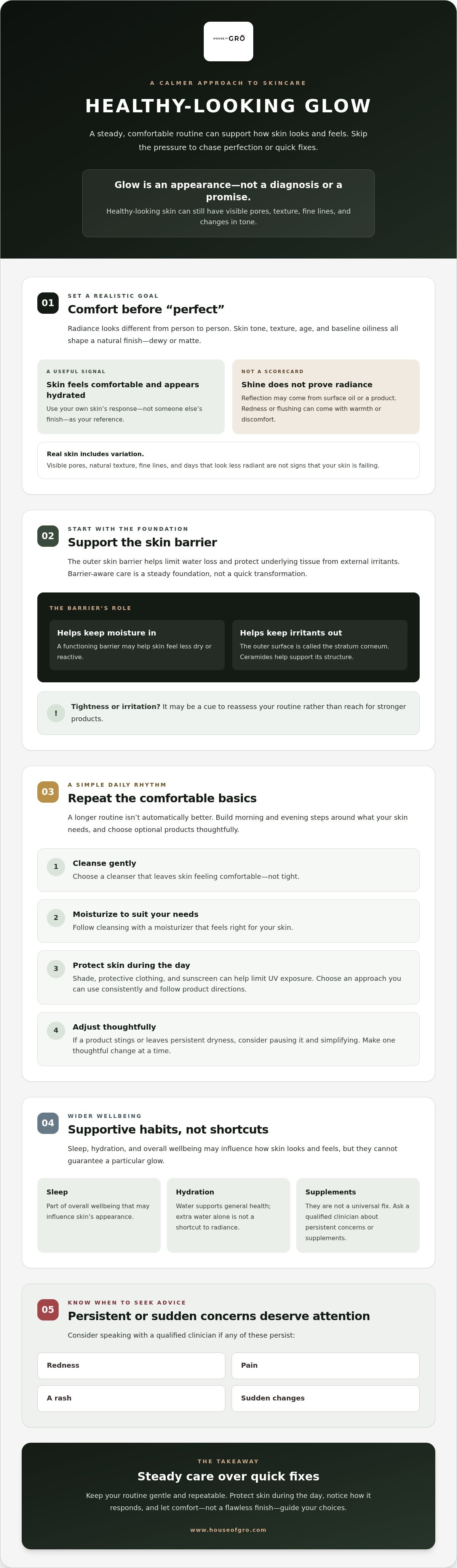
- Think of glow as an appearance, not a diagnosis or a promise of perfect skin.
- Notice how cleansing, moisturizing, and sun exposure affect your skin’s comfort and moisture.
- For achieving a healthy skin glow, focus on a routine you can repeat rather than adding products for quick results.
- Build morning and evening steps around your skin’s needs, with optional products chosen thoughtfully.
- Seek advice from a qualified clinician if redness, pain, a rash, or sudden changes persist.
What Does Achieving a Healthy Skin Glow Really Mean?
Glow describes how skin appears. It isn’t a medical diagnosis, a measure of health, or an outcome any routine can guarantee. Healthy-looking radiance may suggest skin looks comfortable and hydrated, but it doesn’t require a particular complexion, a smooth finish, or an absence of pores.
That distinction matters when you’re deciding whether a product or routine is working. Oily shine can reflect light, but it isn’t the same as radiance. Redness or temporary flushing can make skin look brighter, yet may also come with warmth or discomfort. Natural texture, visible pores, fine lines, and variation in tone are all part of real skin. They don’t mean your skin is failing to glow.
Skincare habits can support the way skin looks and feels, but results differ from person to person and usually call for patience. A useful skin care routine is about everyday practices, not a promise of a specific finish. Let comfort and your skin’s response guide your expectations.
How can you tell healthy-looking radiance from oily shine?
Radiance is an impression, not a clinical measure. Skin may look softly luminous when it feels comfortable and appears hydrated. Oiliness and radiance can overlap, especially in certain lighting, but one doesn’t prove the other. A very reflective finish may simply be excess surface oil or product. To assess what you’re seeing, consider whether the shine is limited to oilier areas, whether it appears after applying a product, and whether your skin otherwise feels comfortable. There’s no need to chase shine as a sign of success.
Why does skin glow look different from person to person?
There’s no single standard. Skin tone, texture, age, and baseline oiliness all shape what radiance looks like. One person’s natural finish may be dewy; another’s may be more matte. Neither is inherently healthier. Edited images and carefully controlled lighting can make pores and texture seem absent, setting an unrealistic reference point. A more useful goal is supporting your own skin’s comfort and natural appearance, not matching someone else’s image.
Think of glow as a personal impression, not a pass-or-fail result. A gentle routine may help skin feel more balanced over time, but sudden changes or ongoing discomfort are different from ordinary variation and deserve attention. Healthy-looking skin can still have texture, visible pores, and days when it looks less radiant. That’s normal, not a reason to keep adding products or pursuing a flawless finish.
What Influences a Healthy Skin Glow? Start With the Skin Barrier
Comfort often begins with the skin barrier, the outermost layer of skin. It helps limit water loss and protect underlying tissue from external irritants. When this layer is functioning well, skin may feel less dry or reactive. That doesn’t mean a skincare product can address every concern, or that visible radiance is a measure of barrier health.
What does the skin barrier do?
The barrier’s outer surface is called the stratum corneum. Think of it as a protective layer that helps keep moisture in and irritants out. Ceramides are lipids found in the skin barrier that help support its structure. Cleansers, weather, and other factors can affect how skin feels. Tightness or irritation may be a cue to reassess your routine rather than add stronger products.
How can daily habits affect skin’s appearance?
Small, steady habits can help support skin comfort. Choose a gentle cleanser that leaves your skin feeling comfortable, not tight, and follow with a moisturizer suited to your needs. If a product stings or leaves persistent dryness, consider pausing it and simplifying your routine. Skin varies, so use your own response to guide adjustments.
Daytime sun protection matters, too. Shade, protective clothing, and sunscreen can help limit UV exposure, which contributes to visible skin changes over time. Mayo Clinic’s 5 tips for healthy skin also highlights practical care habits, including sun protection. Choose an approach you can use consistently and follow the product directions.
Sleep, hydration, and overall wellbeing may also influence how skin looks and feels, though they can’t guarantee a particular glow. Drinking water supports general health, but extra water alone isn’t a shortcut to radiant skin. Supplements aren’t a universal fix, either. If you have a persistent concern or are considering supplements, seek advice from a qualified clinician.
For achieving a healthy skin glow, think of barrier-aware care as a steady foundation, not a quick transformation. Keep your routine comfortable, protect skin during the day, and make one thoughtful change at a time. If you’re exploring a botanical approach to daily care, learn more about botanical skincare from House of GRŌ®.
Do You Need More Products to Achieve a Healthy Skin Glow?
A longer routine isn’t automatically a better one. A trending ingredient or a single new product can’t guarantee a more radiant appearance. Adding several products at once can make it harder to tell what suits your skin, especially if discomfort develops. A simple routine that feels manageable is easier to maintain and assess over time.
Consistency matters more than complexity: a comfortable routine you can repeat is more useful than a crowded shelf you keep changing.
Can a simple skincare routine support a healthy-looking glow?
Start with a few practical steps rather than building a routine around every new recommendation. A useful framework is:
- Morning: cleanse if your skin needs it, moisturize, and use sun protection.
- Evening: cleanse to remove daily buildup, then moisturize.
Adjust these steps to your skin’s comfort, the products you already use, and any clinician advice. If you want to try something new, introduce one product at a time and follow its directions. This makes it easier to notice how your skin responds. Stop using a product if it causes concerning irritation.
Why can quick fixes and over-exfoliation backfire?
Scrubbing harder or layering several active products may seem like a way to speed up results, but it can leave skin feeling dry, sensitive, or uncomfortable. Reactions depend on the person, the products, and how they’re used, so there isn’t one rule that suits every combination. If your skin is persistently irritated, pause and reassess instead of adding another product to cover the discomfort.
Frequent switching can also make it difficult to understand what’s helping and what may be bothering your skin. Give a routine time to feel familiar, and make changes thoughtfully rather than responding to every new trend. For more ideas on creating a gentler routine, explore this guide to skincare for sensitive skin.
Achieving a healthy skin glow doesn’t require chasing every new formula. Keep the essentials steady, notice how your skin feels, and let comfort guide what you add or remove.
How to Build a Gentle Daily Routine for a Healthy Skin Glow
A useful routine is one you can adapt and repeat. Your skin type, sensitivities, current products, and clinician’s advice all matter. Start with the basics, then add an optional step only if it fits your preferences. You don’t need every product category to support comfortable-looking skin.
What is a simple morning routine for radiant-looking skin?
Keep the morning sequence uncomplicated. Cleanse gently if your skin needs it, apply a moisturizer that feels comfortable, then use sun protection as directed. If you prefer an oil, treat it as an optional step rather than an essential one. Choose one that suits your skin and fits comfortably into your routine.
AT DAWN Rejuvenating Daytime Oil is one option from House of GRŌ to explore as part of considered daytime care. It isn’t a necessary step or a promise of a particular result. For related education, read this microbiome skincare guidance.
What belongs in a simple evening routine?
In the evening, gently remove makeup and the day’s residue, then moisturize according to what your skin needs. Avoid scrubbing or adding treatment products just to make the routine feel more complete. If you already use products recommended by a clinician, follow their guidance. When introducing something new, add one product at a time and follow its directions so you can notice how your skin responds.
For a deeper look at an evening routine, explore a restorative night skincare ritual. Keep any advice aligned with your own skin and existing care.
There’s no fixed timeline for a glow, and your skin’s appearance can vary from day to day. Instead of judging the routine by a single morning, notice whether your skin feels comfortable and how its appearance changes over time. If irritation or another persistent concern develops, pause and seek qualified advice rather than layering on more products.
If a daytime oil feels like a suitable optional step, explore House of GRŌ skincare and consider what fits your routine.
Make Skin Glow a Sustainable Ritual, Not a Quick-Fix Goal
A skin routine works best when it feels comfortable enough to return to. There’s no need to chase a new product each time your complexion looks different. Repeat the steps that suit you, then adjust thoughtfully when your skin’s needs or circumstances change. Achieving a healthy skin glow is a gradual practice, not a daily test of whether your skin looks flawless.
How can you make skincare feel consistent and intentional?
Attach skincare to something you already do. Apply your morning products after brushing your teeth, or make evening cleansing part of getting ready for bed. A familiar cue can help the routine feel like a small pause in the day, not another task to complete.
Keep observations simple. Note which products you’ve added or paused, and whether your skin feels comfortable, dry, or irritated. You don’t need to scrutinize every daily change in appearance. Skin can look different from one day to the next. If it feels uncomfortable, simplify your routine or pause a new product rather than pushing through.
For broader ideas on everyday radiance, explore a holistic guide to radiant skin. Treat any routine as flexible, and keep clinician guidance in view if you’re managing an ongoing concern.
When should a skin concern be assessed professionally?
Seek advice from a qualified clinician if redness, pain, a rash, or another skin change is persistent, worsening, sudden, or unexplained. A clinician can assess concerns that a cosmetic routine can’t diagnose. Don’t rely on skincare oils or other cosmetic products to treat a medical problem, and don’t delay care if symptoms are troubling.
Botanical skincare can be one optional part of a personal routine. It isn’t a substitute for medical care, and no product can promise the same result for everyone. Let comfort, thoughtful choices, and professional advice when needed guide your approach. For a botanical skincare option to explore, visit House of GRŌ®.
Let Your Skin Routine Grow With You
Achieving a healthy skin glow isn’t about a flawless finish or a single standout product. It’s supported by comfortable habits you can repeat: gentle cleansing, suitable moisture, and daytime sun protection. Keep your routine simple, notice how your skin responds, and adjust with care rather than chasing every new trend.
Healthy-looking skin can still have pores, texture, and changing days. If redness, pain, a rash, or another concern persists or worsens, seek guidance from a qualified clinician. Skincare can be a thoughtful part of daily wellbeing, not a substitute for medical advice.
For those drawn to botanical skincare, House of GRŌ® is a family-owned brand founded by siblings Irina Gottesman and Sam Kandhorov. Its primary offering, AT DAWN Rejuvenating Daytime Oil, features wild-harvested Chaga mushrooms from Northern Maine. It may be an optional addition to a considered routine, not a guaranteed route to radiance.
Explore House of GRŌ® and consider whether AT DAWN Rejuvenating Daytime Oil fits your daytime routine. Small, steady steps are enough to begin.
Frequently Asked Questions
Is achieving a healthy skin glow possible without a long skincare routine?
Yes, a simple routine can be a reasonable starting point for achieving a healthy skin glow. Use a gentle cleanser when needed, a moisturizer that feels comfortable, and daytime sun protection. You don’t need extra steps just to pursue a particular finish. Keep the routine steady enough to notice how your skin responds, and make changes one at a time. Persistent irritation or other concerns deserve guidance from a qualified clinician.
How long does it take to achieve a healthy skin glow?
There’s no reliable timeline that applies to everyone. Skin’s appearance can vary with sleep, environment, daily care, and individual needs, so a fixed before-and-after date isn’t realistic. Focus on whether your routine feels comfortable and manageable over time. If a new product causes persistent irritation, stop using it and seek advice if needed. Ask a qualified clinician about skin concerns that persist or worsen rather than waiting for a glow to appear.
Can drinking more water make your skin glow?
Drinking enough water supports general wellbeing, but extra water isn’t a guaranteed way to make skin glow. Appearance can reflect individual characteristics, environmental exposure, and daily care. If your skin feels dry, don’t rely on water intake alone to resolve it; consider whether your routine feels comfortable and suitable. Ongoing dryness or another persistent concern is a good reason to seek advice from a qualified clinician.
What is the best morning routine for a healthy-looking glow?
There isn’t one morning routine that’s best for everyone. A practical starting sequence is gentle cleansing if needed, a moisturizer that suits your skin, and daytime sun protection used according to its directions. An optional facial oil may fit your preferences, but it isn’t essential. Introduce new products gradually so you can observe your skin’s response. Stop using a product if concerning irritation develops, and seek professional advice if symptoms persist.
Can facial oils help support a healthy skin glow?
A facial oil can be an optional step if you enjoy how it feels and it suits your routine. It isn’t a universal need or a treatment for skin conditions. Check the ingredient list and directions, especially if your skin is reactive, and introduce it cautiously. House of GRŌ® offers AT DAWN Rejuvenating Daytime Oil as one option for daytime care. Its use doesn’t guarantee a particular result or finish.
When should I see a dermatologist about dull or irritated skin?
Consider seeking medical advice for skin concerns that are persistent, painful, worsening, unexplained, or affecting daily life. A dermatologist can assess symptoms and discuss appropriate care; a cosmetic routine can’t diagnose their cause. Seek prompt advice for sudden or severe changes. If irritation continues, don’t assume another skincare product is the answer. Pause products that seem to trigger discomfort and ask a qualified clinician what to do next.
Does a healthy skin glow mean skin has to look poreless?
No. Pores, fine lines, and natural texture are normal features of skin. A healthy-looking glow doesn’t require a flawless or filtered finish, and no single complexion should define what healthy skin looks like. Focus instead on comfort and habits you can maintain. Skin can look different from day to day, so normal variation isn’t a reason to keep adding products or trying to erase every visible feature.