


What if the benefits of botanical extracts for skin depend less on whether an ingredient is natural and more on how it’s formulated? Plant extracts can play useful cosmetic roles, but “botanical” alone doesn’t promise a result. The extract, the finished formula, and your skin’s needs all matter.
It can be hard to separate skincare claims from evidence. Natural ingredients may sound reassuring, yet they can still irritate sensitive skin. And research on one extract doesn’t prove that every product containing it will work the same way. A thoughtful approach starts with clear expectations and a closer look at the product itself.
Here, you’ll learn what botanical extracts are, how they may support different skin goals, and what the evidence can and can’t tell you. You’ll also find practical ways to assess ingredient claims, choose a formula, and introduce it gradually. The aim is a considered routine, not a search for a miracle ingredient.
Key Takeaways
- The benefits of botanical extracts for skin depend on the extract, the finished formula, and your individual skin needs.
- Ingredient research can suggest a possible role, but it doesn’t always show that a finished product delivers a specific result.
- Compare botanical ingredients by their intended cosmetic role, the limits of available evidence, and possible sensitivity concerns.
- Review the ingredient list, patch test as directed, and introduce botanical skincare gradually.
- “Natural” doesn’t guarantee safety or results. Consider how the full formula fits your routine and how your skin responds.
What Are Botanical Extracts for Skin, and Why Are They Used?
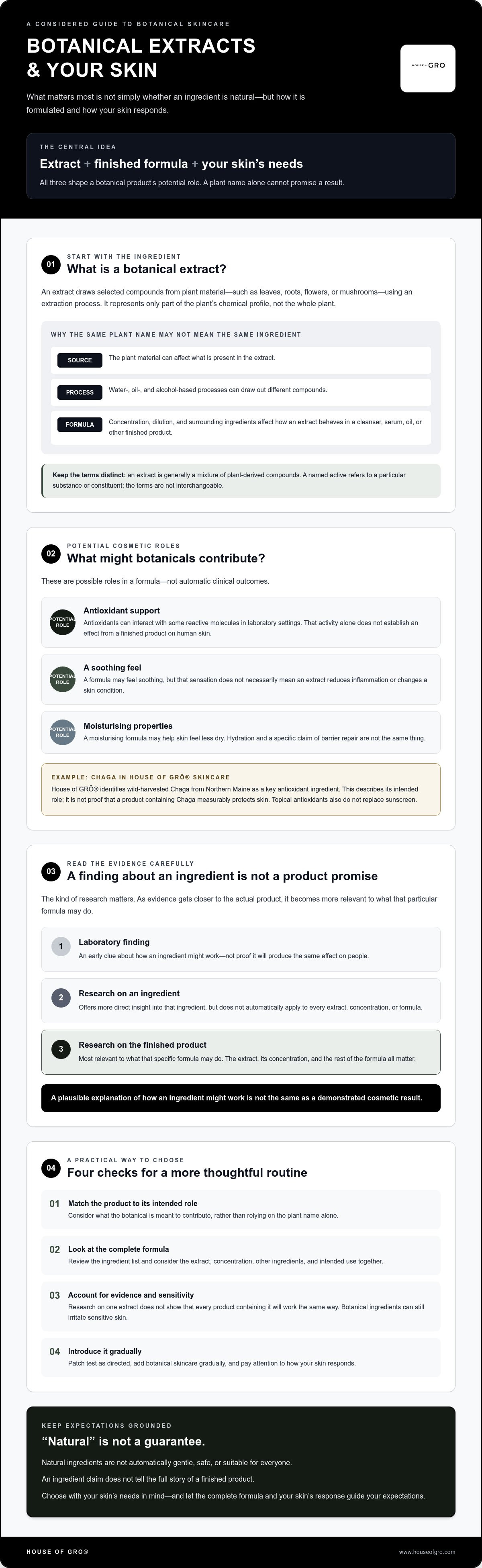
The benefits of botanical extracts for skin depend on more than a plant’s reputation. A botanical extract is made by drawing selected compounds from plant material, such as leaves, roots, flowers, or mushrooms, using a particular extraction process. Unlike the whole plant, it contains only some of its constituents. Its composition can vary with the source material and processing, while its concentration and surrounding ingredients affect how it behaves in a finished formula.
It also helps to distinguish an extract from a named active ingredient. An extract is generally a mixture of plant-derived compounds; a named active refers to a particular substance or constituent discussed for a specific function. An extract may contain a substance of interest, but the terms aren’t interchangeable. The broader Natural skin care overview describes the use of plant-derived ingredients in skincare, though a general overview can’t establish how a particular formula will perform.
How Is a Botanical Extract Different from a Whole Plant?
An extract represents a selected part of a plant’s chemical profile, not the plant in its entirety. Water, oil, and alcohol-based processes, for example, can draw out different compounds. The resulting ingredient may then be diluted, blended, or incorporated into a cleanser, serum, or oil. Each step helps shape the product that reaches your skin.
That’s why the same plant name doesn’t guarantee identical extracts. Source material and processing can affect what’s present, while concentration and the other ingredients influence how the extract behaves in a formula. A label naming a botanical tells you something about an ingredient, but not the full story of the product.
Why Do Skincare Formulas Include Plant-Derived Ingredients?
Formulators may include botanical ingredients for potential antioxidant support, a soothing feel, or moisturising properties. These are possible cosmetic roles, not automatic clinical outcomes. For example, a laboratory finding about an isolated compound doesn’t by itself show that a finished skincare product will have the same effect on skin.
Assess the whole formula and its intended use. The extract’s concentration, the other ingredients, and the product’s overall design all matter. A botanical formula can also irritate or trigger sensitivity. Plant-derived doesn’t automatically mean gentle or suitable for everyone, and “natural” isn’t proof of safety or effectiveness. Choose based on your skin’s needs and the complete product, rather than relying on an ingredient name alone.
How Botanical Extracts May Benefit Skin: Mechanisms and Evidence
Botanical ingredients may contribute to a skincare formula in several ways, but the strength of a claim depends on the evidence behind it. A result in a laboratory dish is an early clue, not proof that an ingredient will produce the same effect on people. Ingredient-level studies offer more direct insight, while research on the finished product is most relevant to what that particular formula may do.
This distinction matters when weighing the benefits of botanical extracts for skin. The ingredient, its concentration, and the rest of the formula all shape its potential role. An appealing explanation of how an ingredient might work is not the same as a demonstrated cosmetic result.
Antioxidant and Environmental-Stress Support
Everyday environmental exposure can contribute to oxidative stress, a process in which reactive molecules may affect skin components. Antioxidants can interact with some of these molecules in laboratory settings, which is why topical antioxidant support is a common skincare aim. But lab activity alone doesn’t show how well an extract works in a finished formula or on human skin.
House of GRŌ® identifies wild-harvested Chaga from Northern Maine as a key antioxidant ingredient. This describes the ingredient’s intended role, not proof that a product containing Chaga measurably protects skin. Without verified human evidence on the specific extract and finished formula, any skin benefit should be considered a possibility, not a promise. Topical antioxidants also don’t replace sunscreen or establish protection from skin disease.
Soothing, Hydration, and the Skin Barrier
Some botanical ingredients may help a formula feel soothing or contribute to a moisturising effect. Yet a comfortable feel doesn’t necessarily mean that an extract reduces inflammation or changes a skin condition. Human studies on a particular ingredient may offer useful clues, but their findings don’t automatically apply to every extract, concentration, or product.
Hydration and barrier support are related, but they aren’t interchangeable. A moisturising formula may help skin feel less dry by reducing water loss or adding humectant ingredients. A claim of barrier repair is more specific and needs evidence that the finished product supports barrier function. If a product contains botanical extracts alongside other moisturisers, any observed effect may reflect the formula as a whole rather than one plant ingredient.
When reviewing a claim, look for evidence on the same extract and, ideally, the finished product. For a closer look at how a botanical-led approach is presented, explore House of GRŌ® skincare. Let the formula’s purpose guide your expectations, then consider how your own skin responds.
Which Botanical Extracts Suit Different Skin Goals?
The benefits of botanical extracts for skin are best considered by goal, not by popularity. A botanical may be included for a cosmetic role, but its presence alone doesn’t establish that a product will deliver a particular result. Dryness, dullness, and sensitivity can also overlap, and an ingredient that suits one person may not suit another.
Choosing Ingredients by Skin Concern
Use these examples as starting points, not prescriptions. Evidence can differ between an isolated compound, an extract, and a finished formula. The table outlines common ingredient roles alongside the limits of what a label or general claim can tell you.
| Skin goal | Ingredient example | Evidence caveat | Sensitivity consideration |
|---|---|---|---|
| Dry or tight-feeling skin | Oat-derived ingredients | Often used in moisturising formulas; results depend on the ingredient type and full formula. | Check the label and patch test, especially if you know you react to oat products. |
| Visible dullness | Green tea extract | Antioxidant activity is discussed in research, but lab findings don’t establish a visible brightening effect from every product. | Assess the whole formula, since other ingredients may be the source of irritation. |
| Skin that feels easily unsettled | Centella asiatica extract | Studied for topical use, but evidence varies by preparation and doesn’t prove all formulas soothe skin. | Plant-derived doesn’t mean allergy-free; introduce it cautiously. |
Chaga is another botanical used in skincare. House of GRŌ® identifies wild-harvested Chaga from Northern Maine as a key antioxidant ingredient, but that brand description isn’t evidence that every Chaga extract or finished product has a proven skin effect. For more ingredient context, see this Chaga benefits guide.
What Ingredient Lists Can and Cannot Tell You
An INCI list can help you identify ingredients, but it usually won’t tell you an extract’s meaningful concentration, preparation, or performance. An ingredient’s position on the list, by itself, doesn’t establish whether the formula suits your concern. Consider the full ingredient list, the directions, and the evidence supporting the product’s claims.
Look for substantiation tied to the actual ingredient or finished product, rather than relying on broad promises. If a formula makes microbiome-related claims, consider what the brand explains about its formulation and intended use. These microbiome skincare principles offer further context. A considered choice starts with your skin’s needs, then leaves room to assess your own response.
How to Use Botanical Skincare Thoughtfully and Reduce Irritation
Introducing a product carefully makes it easier to judge how it fits your routine. Botanical formulas can still cause irritation or an allergic reaction. “Natural” doesn’t guarantee that an ingredient will suit your skin, especially if you’re sensitive or have reacted to similar ingredients before.
A Simple Patch-Test and Introduction Routine
Take a measured approach, and follow the product directions first. Patch-test guidance can vary by formula, so use the instructions provided for the product you’re considering.
- Review the product. Read the full ingredient list and directions. If you know you’re sensitive to a particular ingredient, check whether it’s included.
- Patch test as directed. Follow the product’s specific instructions and observe the test area for any response. A patch test can offer useful information, but it can’t guarantee irritation won’t occur later or with regular use.
- Introduce one new product at a time. Keep the rest of your routine steady so it’s easier to notice a possible reaction. Avoid adding several unfamiliar products at once.
- Use the product as directed. Follow the label rather than applying it more often or in larger amounts in search of faster results.
- Pay attention to your skin. If a significant reaction develops, stop using the product and seek appropriate advice. For persistent reactions or concerns, consult a qualified clinician.
If your skin is easily unsettled, take extra care with products that contain multiple unfamiliar ingredients. This sensitive-skin skincare guide offers related guidance to consider as you build a routine.
How to Evaluate Natural Skincare Claims
Look for clear ingredient information and a specific explanation of what a product is intended to do. Claims are more useful when supported by relevant evidence about the same ingredient, formula, or intended cosmetic effect. A general claim about a plant doesn’t confirm how a particular product will perform.
Words such as “natural,” “organic,” and “clean” describe a product or brand’s positioning. On their own, they don’t prove effectiveness, safety, or suitability for your skin. Consider the full ingredient list, usage directions, and any evidence the brand provides. If your skin tolerates the product, use it as directed and assess your experience. Patience can help you notice how a formula fits your routine, but no botanical product can guarantee a visible result.
Choose with care, and let your skin’s response guide your routine. Explore botanical skincare formulas to see how plant-derived ingredients are presented in finished products.
A Botanical Skincare Ritual, Informed by Formula and Intention
A botanical product earns a place in a routine through fit, not promise. Its ingredients may have a thoughtful role, but your skin’s needs, the full formula, and your experience matter just as much. The potential benefits of botanical extracts for skin aren’t a reason to layer on more products. A simple routine can make it easier to notice what feels comfortable and what doesn’t.
Where Botanical Formulas Fit in a Daily Routine
Start with the routine you already use. Consider whether a new product’s format and intended use make sense alongside your current skincare, then follow its directions. Introduce one product at a time and give yourself space to assess comfort and compatibility before making another change. Personal preference matters, too. A formula you enjoy using may be a better fit than one chosen only for a trending ingredient.
Keep expectations measured. A botanical ingredient doesn’t guarantee visible radiance, and adding more products doesn’t necessarily improve a routine. Look at the whole formula and how your skin responds over time. For broader ideas on building a considered routine, explore this radiant skin guidance.
A Brand Example: House of GRŌ®
House of GRŌ® is a New York-founded skincare brand whose approach centers on adaptogenic mushrooms and organic botanicals. This offers an example of how plant-derived ingredients can shape a brand’s formulation philosophy. It isn’t independent evidence that a formula will produce a particular result or suit every person.
AT DAWN Rejuvenating Daytime Oil is one product in the brand’s range. Before considering it, review its current ingredient list and product directions on the brand’s product page. Don’t assume a specific botanical is included, or infer a proven skin effect from a brand’s ingredient philosophy alone. An extract’s role depends on the finished formula, and your own response is personal.
A considered ritual is less about chasing every possible benefit and more about choosing with care. Let evidence shape your expectations and comfort guide your choices. Explore House of GRŌ® to learn more about the brand’s botanical skincare approach.
Choose Your Next Skincare Step with Care
The benefits of botanical extracts for skin depend on the ingredient, the finished formula, and how your skin responds. A plant-derived ingredient may have a useful cosmetic role, but its name alone can’t guarantee visible results or prove a product is right for everyone. Look for clear information, keep expectations grounded, and introduce new formulas thoughtfully.
That measured approach can make skincare feel less like a search for a miracle ingredient and more like a steady, personal practice. House of GRŌ® describes its formulas as microbiome-friendly and cruelty-free, and highlights wild-harvested Chaga from Northern Maine in its brand story. These are brand descriptions, not independent proof of a particular skin outcome. Review current product details and choose according to your own needs.
Explore House of GRŌ® botanical skincare to learn more about the brand’s approach and product range. Take your time, listen to your skin, and let informed choices shape a routine that feels like yours.
Frequently Asked Questions
What are botanical extracts in skincare?
Botanical extracts are ingredients made by drawing selected compounds from plant material, such as leaves, roots, flowers, or mushrooms. They differ from whole plants because an extract contains only some of the plant’s constituents, depending on how it was prepared. The same plant can yield extracts with different compositions. In skincare, the extraction process, concentration, and surrounding ingredients all influence how the final formula behaves.
What are the benefits of botanical extracts for skin?
The benefits of botanical extracts for skin may include cosmetic roles such as antioxidant support, a soothing feel, or moisturising effects. These possibilities depend on the extract and the finished formula. Evidence from laboratory research or studies of an isolated ingredient doesn’t automatically show that a skincare product will deliver the same effect. Look for claims supported by evidence relevant to the particular ingredient or product, and keep expectations measured.
Are botanical extracts good for sensitive skin?
Some people with sensitive skin may tolerate botanical formulas, while others may react to particular plant-derived ingredients or other parts of the formula. “Natural” doesn’t mean irritation-free. Review the ingredient list, follow the product’s patch-test directions, and introduce one new product at a time. A patch test can offer useful information, but it can’t guarantee that a reaction won’t happen with continued use or across a larger area.
Can botanical extracts cause an allergic reaction?
Yes. Botanical extracts can cause an allergic reaction in some people, just as other skincare ingredients can. A product’s plant-based origin doesn’t ensure that it will suit every skin type. Follow the product’s directions and stop using it if a reaction develops. If the reaction is significant, persistent, or concerning, seek advice from a qualified clinician. Checking the ingredient list may help you identify ingredients you already know you react to.
Do botanical extracts help the skin barrier?
Some botanical ingredients may contribute to a formula intended to moisturise or support skin comfort, but that doesn’t by itself prove barrier repair. Hydration describes skin’s moisture state, while a barrier-repair claim suggests a more specific effect on barrier function. Evidence for a particular extract may not apply to every preparation or finished product. Look for substantiation tied to the formula and avoid treating a botanical name as proof of barrier benefit.
How do I choose a botanical skincare product?
Choose by considering the full formula, the product’s intended use, and your own skin needs. Review ingredient information and directions, and look for claims supported by relevant evidence about the ingredient or finished product. Introduce one new product at a time and patch test as directed. A product’s botanical focus alone can’t confirm its performance or suitability, so pay attention to how your skin responds with use.
Are natural skincare ingredients safer than synthetic ingredients?
No ingredient’s safety or effectiveness can be established by origin alone. Natural and synthetic ingredients can each have different properties, uses, and potential to cause irritation or allergy. The finished formula, ingredient characteristics, and how a product is used all matter. Treat terms such as “natural” as descriptions, not proof that a product is gentle, effective, or suitable for everyone. Review ingredient information and choose according to your needs and tolerance.