


What if the quickest way to calm an inflamed complexion isn't reaching for another rescue cream, but doing almost nothing at all? When even a splash of pure water stings and blotchy redness makes you want to hide, the frustration is overwhelming. You're left wondering which active ingredient sparked the fire. If you need to know how to soothe red irritated skin right now, the first step is absolute simplicity. Your skin isn't asking for an aggressive fix. It asks for quiet, biological respect and steady lipid replenishment.
You deserve immediate relief from the heat, tightness, and sudden barrier fatigue. In this guide, you will discover how to calm acute redness, halt recurring flare-ups, and repair your natural moisture barrier with intention. We'll walk through the exact active ingredients to pause today, the essentials of stratum corneum lipid recovery, and a gentle daily ritual that brings your skin back to effortless, serene balance.
Key Takeaways
- Cool acute heat immediately using tepid rinses while pressing pause on all exfoliating acids, retinoids, and mechanical friction.
- Understanding how to soothe red irritated skin requires halting trans-epidermal water loss by replenishing essential stratum corneum lipids.
- True recovery nurtures the cutaneous microbiome, supporting beneficial microflora rather than stripping them with harsh astringents.
- A minimalist, botanical daily ritual shields fragile tissue against environmental stressors and restores calm overnight.
- Eliminating everyday irritants like synthetic fragrances and abrasive washcloths prevents micro-tears and breaks the cycle of recurring flare-ups.
Immediate Steps: How to Calm Red, Reactive Skin Right Now
Skin in crisis needs immediate sanctuary. When your face is hot, tight, and stinging, conventional advice often misleads. Mass-market astringents and multi-step clarifying toners only aggravate broken epidermal defenses. Discovering how to soothe red irritated skin begins with subtracting disruption, not adding friction. Calm requires immediate physiological respect.
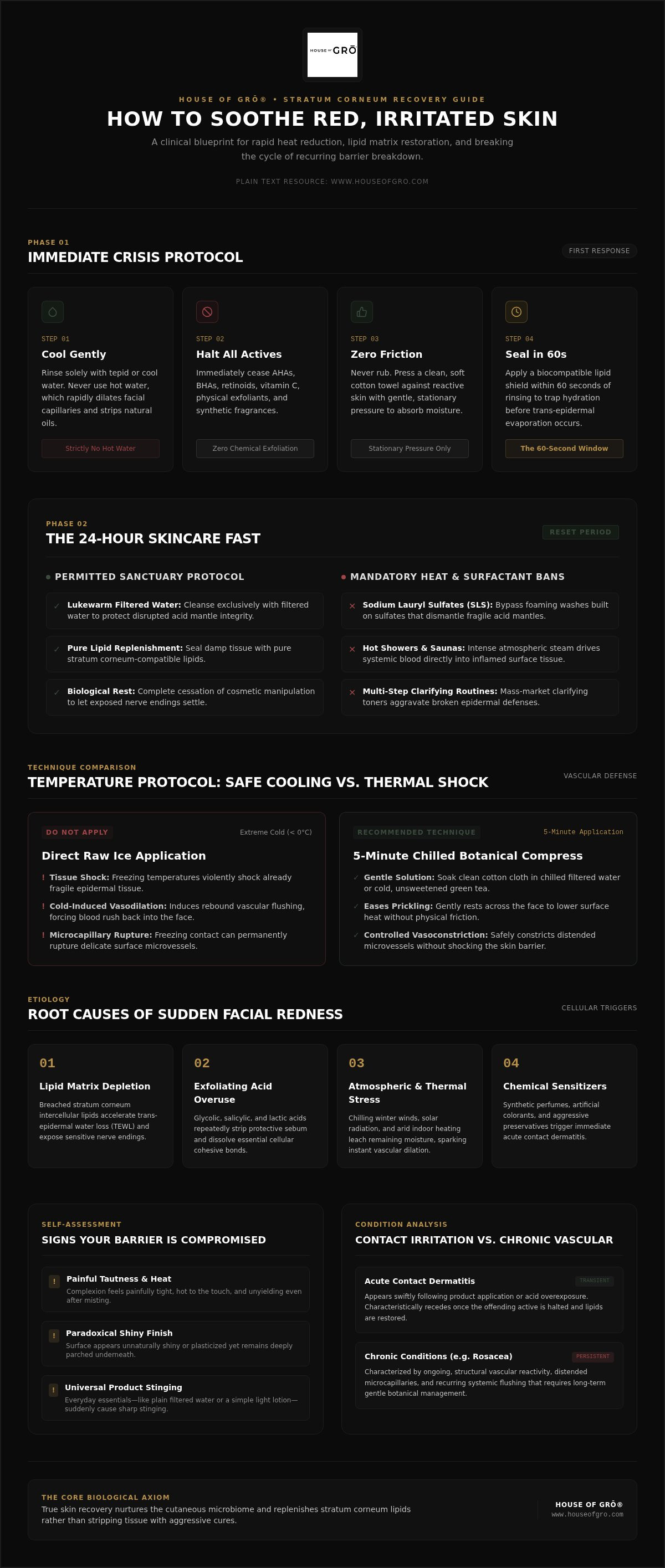
Follow these baseline rescue measures the moment irritation flares:
- Cool the surface gently: Rinse your face with tepid or cool water. Never use hot water, which rapidly dilates facial capillaries and strips essential natural oils.
- Cease all active treatments: Halt exfoliating alpha-hydroxy acids, beta-hydroxy acids, retinoids, vitamin C, physical scrubs, and synthetic perfumes immediately.
- Eliminate friction: Never rub. Press a clean, soft cotton towel against your skin with gentle, stationary pressure to absorb excess water.
- Seal damp skin: Within sixty seconds of rinsing, apply a biocompatible lipid shield to lock in hydration and prevent rapid evaporation before it triggers further sensitivity.
When the delicate stratum corneum lipid matrix is breached, exposed nerve endings react to air, ambient humidity changes, and chemical additives. Sealing this fragile surface while it remains slightly damp preserves baseline hydration, stopping trans-epidermal moisture loss before irritation deepens.
The 24-Hour Skincare Fast
Give your complexion time to rest. For the next twenty-four hours, abandon elaborate routines entirely. Cleanse solely with lukewarm filtered water, bypassing foaming washes built on sodium lauryl sulfates that dismantle the acid mantle. Avoid steamy environments. Skip hot showers, saunas, and steam rooms, as intense atmospheric heat drives blood directly into inflamed surface tissue.
Cooling Compresses vs. Direct Ice Application
Extreme cold shocks fragile tissue. Never apply raw ice cubes directly to reactive skin; freezing temperatures induce cold-induced vasodilation and can rupture surface microcapillaries. Instead, soak a clean cotton cloth in chilled filtered water or cold, unsweetened green tea. Gently rest the damp cloth across your face for five minutes. This approach cools elevated skin temperatures, eases prickling sensations, and constricts distended microvessels without shocking the skin barrier.
Identifying the Root Causes of Sudden Facial Redness
Sudden facial flushing rarely happens without warning. In most cases, it traces back to microscopic disruptions within the lipid matrix. When essential intercellular lipids deplete, trans-epidermal water loss (TEWL) accelerates. Vital hydration evaporates into the air. Outside irritants easily penetrate the surface.
Modern skincare routines often accelerate this breakdown. Overusing exfoliating actives like glycolic, salicylic, or lactic acids strips protective sebum, leaving cells vulnerable. External elements amplify the damage. Chilling winter winds, intense solar radiation, and arid indoor heating draw out remaining moisture, triggering instant vascular dilation. Synthetic chemical preservatives, artificial colorants, and fragrance compounds can prompt acute contact dermatitis. Understanding how to soothe red irritated skin starts with identifying what compromised those initial defenses.
- Lipid depletion: Compromised stratum corneum lipids allow moisture to escape and environmental allergens to enter.
- Acid overuse: Repeated chemical exfoliation dissolves sebum and weakens cellular bonds.
- Atmospheric stress: Extreme temperature shifts, wind chill, and dry heat trigger rapid facial flushing.
- Chemical sensitizers: Synthetic perfumes and harsh preservatives inflame reactive skin receptors.
Signs Your Moisture Barrier Is Compromised
Your complexion signals distress clearly. The skin often feels painfully taut, looks unnaturally shiny, yet remains parched beneath. Everyday basics like a plain cleanser or light lotion suddenly cause stinging. These sensations reveal compromised defenses. Explore our complete guide to skincare for sensitive skin to learn how gentle care restores balance. Turning to mindful botanical barrier support allows your skin to rest without synthetic interference.
Contact Irritation vs. Chronic Inflammatory Conditions
Distinguishing transient irritation from chronic vascular conditions is vital. Acute contact dermatitis typically appears swiftly after product use and recedes once you remove the culprit. Chronic conditions like rosacea behave differently. They feature persistent flushing across the central cheeks and nose, often paired with visible broken capillaries. As highlighted in this dermatologist guide to facial redness, assessing how long symptoms linger helps guide your response. If intense burning or swelling lasts beyond several days of quiet rest, consult a board-certified dermatologist.
The Science of Barrier Repair: Restoring Microbiome and Lipids
Lasting relief requires biological harmony, not aggressive astringent suppression. When exploring clinical guidance for identifying causes of facial redness, one truth remains clear: you cannot force skin into submission. Healing occurs when you replenish the stratum corneum with biocompatible lipids that mirror its natural architecture. Ceramides, cholesterol, and essential fatty acids form the mortar between cellular bricks. Without them, moisture escapes freely and raw nerve endings remain unprotected.
True recovery operates on two interconnected planes:
- Lipid reconstruction: Supplying nutrient-dense botanical oils creates a breathable, biocompatible shield without suffocating compromised pores.
- Microbial defense: Protecting friendly bacteria ensures opportunistic pathogens cannot colonize depleted tissue and spark secondary flares.
- Oxidative buffering: Neutralizing free radicals halts the cellular stress cascades that manifest as heat and erythema.
Understanding how to soothe red irritated skin means moving away from sterile, harsh formulas. Your skin is a living ecosystem that thrives under gentle, intentional nourishment.
Nourishing the Cutaneous Microbiome
Trillions of invisible, beneficial microflora inhabit healthy skin. They maintain an acidic pH, synthesize antimicrobials, and calm underlying immune cells. Harsh antibacterial washes and synthetic cleansers decimate this delicate community. Once friendly microbes vanish, inflammatory bacteria take hold, triggering stubborn blotchiness and burning sensations. Embracing dedicated microbiome skincare protects these micro-allies, preserving your skin's built-in shield against environmental aggression.
Harnessing Chaga and Botanical Adaptogens
Modern skin faces constant oxidative pressure. To rebuild resilience, botanical adaptogens offer unmatched cellular defense. Wild-harvested Chaga mushrooms from Northern Maine contain extraordinary concentrations of superoxide dismutase, an antioxidant enzyme that dismantles free radicals before they ignite dermal inflammation. Exploring the profound chaga benefits reveals how adaptogenic botanicals support tissue regeneration naturally. Paired with cold-pressed botanical lipids, adaptogens restore quiet equilibrium to stressed, reactive skin.
A Daily Restorative Ritual: Step-by-Step Calming Protocol
Facial redness often carries an emotional toll. The visible heat, social self-consciousness, and constant physical stinging can feel overwhelming. True healing requires steady, intentional rituals instead of anxious product switching. Knowing how to soothe red irritated skin is about respecting your skin's circadian rhythm. Daytime demands gentle defense against external elements. Nighttime calls for deep, undisturbed cellular restoration.
Keep your daily practice simple and unhurried:
- Cleanse with grace: Avoid abrasive cotton pads and mechanical scrubbing. Use your clean fingertips with light, circular contact.
- Apply on damp skin: Press botanical lipids into freshly rinsed tissue to trap vital hydration instantly.
- Embrace derm-minimalism: Limit your daily lineup to two or three biocompatible essentials so your barrier can breathe.
Morning Protection: Lightweight Daytime Nourishment
Begin your day with restraint. Cleanse using only cool or lukewarm filtered water to safeguard the delicate lipid mantle developed overnight. While your face is still dewy, dispense two to three drops of AT DAWN Rejuvenating Daytime Oil into clean palms. Press the oil gently across your face, neck, and décolletage. Rather than sitting heavily over pores, this botanical lipid layer forms an invisible, breathable shield against urban pollution and oxidative stress. Conclude the morning ritual with a physical, non-nano zinc oxide sunscreen. Zinc shields sensitive skin from ultraviolet heat while calming surface irritation.
Evening Restoration: Nocturnal Cellular Recovery
Evening is when epidermal repair reaches its height. As cellular mitosis peaks, your skin enters its natural cycle of renewal. Melt away the day by massaging an oil-based, non-stripping cleanser across dry skin, rinsing gently with lukewarm water. Next, smooth three drops of AFTER DARK Restorative Night Serum into skin before resting. To understand how adaptogenic lipids align with your biological clock, explore our guide on the restorative night serum ritual.
As you apply your serum, take slow, deep breaths. Lowering systemic cortisol reduces microvascular dilation, preventing nocturnal flushing before it starts. Ready to transform reactive flare-ups into lasting balance? Visit House of GRŌ® to discover pure, adaptogenic barrier care designed for sensitive complexions.
What to Avoid: Ingredients and Habits That Fuel Redness
Recovery is as much about elimination as application. While gentle lipids restore damaged cellular matrices, hidden irritants in everyday routines continually reignite inflammation. Truly knowing how to soothe red irritated skin requires spotting the subtle chemical and mechanical triggers that undermine barrier repair.
Simple daily habits often perpetuate sensitivity beneath the surface:
- Mechanical friction: Rough terrycloth washcloths and oscillating cleansing brushes create microscopic abrasions across vulnerable tissue.
- Dietary triggers: Capsaicin in spicy dishes, piping hot beverages, and alcohol stimulate facial nerves, inducing sudden flushing episodes.
- High systemic stress: Elevated cortisol disrupts nocturnal epidermal repair, impairing barrier synthesis while you sleep.
- Stripping ingredients: Drying denatured alcohols and synthetic fragrances dissolve essential protective sebum.
Inflamed skin requires absolute gentleness. Swapping harsh mechanical exfoliation for soft, hands-only washing eliminates friction, allowing fragile capillaries time to rest and recover.
Toxic Skincare Culprits: Read Your Labels
Scan your product labels with care. Watch out for denatured alcohol, synthetic fragrances, sodium lauryl sulfates, and harsh parabens. Marketing claims can also mislead. Unscented products frequently rely on masking fragrances to neutralize chemical aromas, which can still provoke allergic contact dermatitis. Even natural botanical essential oils like peppermint or eucalyptus can sensitize delicate barriers. Choosing formulas crafted without synthetic chemical irritants ensures your skin rebuilds resilience without unnecessary disruptions.
Elevating Your Daily Sanctuary and Next Steps
Your external environment plays a direct role in cutaneous recovery. Dry indoor heating leaches moisture straight from the stratum corneum. Running a cool-mist humidifier in your bedroom replenishes ambient air moisture, shielding vulnerable skin from overnight trans-epidermal dehydration. Reframe your skincare from a rushed chore into a quiet, restorative ritual. Pair intentional calm with pure, adaptogenic botanicals from House of GRŌ® to nourish your skin back to enduring health.
Reclaim Your Skin's Natural Serenity
Calm is never created through force. Understanding how to soothe red irritated skin is an intentional practice of gentle subtraction and biological respect. When you pause aggressive actives, eliminate mechanical friction, and replenish depleted barrier lipids, persistent heat softens. Your skin finally receives the space it needs to repair itself from within.
True recovery happens when daily habits become restorative rituals. Instead of fighting acute redness with complex regimens, lean into botanical purity. House of GRŌ® crafts luxury, all-natural, cruelty-free formulas designed to preserve and nourish your delicate cutaneous microbiome without synthetic fillers or harsh chemicals. Rich in wild-harvested Maine Chaga mushroom extracts, each blend delivers potent antioxidant protection against everyday environmental stress.
You don't have to navigate chronic flare-ups alone. Restore serene balance to your complexion with House of GRŌ® adaptogenic skincare. Quiet confidence starts here. Give your skin the peaceful sanctuary it deserves.
Frequently Asked Questions
How quickly can a damaged skin barrier heal from severe irritation?
A compromised moisture barrier typically takes two to four weeks to recover with consistent, gentle care. Acute stinging and heat often subside within forty-eight to seventy-two hours once you eliminate active irritants. Full stratum corneum cellular turnover requires roughly twenty-eight days. Sticking to a stripped-down routine without introducing new products gives your lipids and microbiome adequate time to rebuild lasting resilience.
Can I still use face oils if my irritated skin is acne-prone?
Yes, you can use face oils on acne-prone skin, provided they contain lightweight, biocompatible plant lipids rather than heavy, pore-clogging waxes. Stripping acne-prone skin causes rebound oil production and worsens inflammation. When learning how to soothe red irritated skin without causing breakouts, choose non-comedogenic botanical oils. They cushion fragile tissue, reinforce the barrier, and balance natural sebum production without suffocating congested pores.
What should I do if my skin burns when applying plain water?
Severe stinging from plain water signals critical barrier depletion and exposed nerve endings. Switch to tepid thermal spring water or distilled water rinses immediately, bypassing hard tap water rich in disruptive mineral salts. Pat dry gently without rubbing. Immediately apply a minimalist botanical oil or serum to damp skin to prevent rapid evaporation, sealing exposed nerves under a protective lipid blanket until the stratum corneum recloses.
Is facial redness always caused by rosacea or can it be cured?
Facial redness is not always rosacea; it often stems from temporary contact dermatitis or barrier disruption that resolves completely. Rosacea is a chronic vascular condition characterized by persistent central erythema and visible capillaries, which can be managed effectively but not permanently cured. In contrast, redness sparked by harsh skincare or weather exposure heals fully once you restore depleted lipids and rebalance cutaneous microflora.
Should I stop wearing sunscreen while my skin is red and peeling?
Never skip sun defense entirely, but switch immediately away from chemical UV filters. Chemical sunscreens absorb ultraviolet light and convert it into heat, which worsens inflamed facial erythema. Instead, shield peeling skin using a gentle, fragrance-free physical sunscreen with 100% non-nano zinc oxide. Zinc oxide acts as an anti-inflammatory skin protectant, guarding vulnerable cells from UV radiation while naturally soothing surface heat.
How do adaptogenic mushrooms like Chaga help calm red skin?
Wild-harvested Chaga mushrooms calm red skin by neutralizing oxidative stress before it triggers inflammatory cascades. Chaga contains exceptional levels of superoxide dismutase, a potent antioxidant enzyme that intercepts free radicals. By reducing cellular stress and supporting microbiome harmony, adaptogenic Chaga fortifies delicate tissue against environmental shifts. This botanical defense helps vulnerable skin maintain peaceful equilibrium and resist sudden flare-ups naturally.
Why does stress make facial redness and irritation worse?
Psychological stress prompts your adrenal glands to flood the bloodstream with cortisol and inflammatory neuropeptides. These neurochemicals dilate facial blood vessels and weaken the synthesis of epidermal barrier lipids. When stress remains chronic, nocturnal tissue repair slows down and trans-epidermal water loss increases. Practicing slow breathing alongside your skincare ritual is essential to discover how to soothe red irritated skin from the inside out.