


What if the face oil you reach for each morning is sealing in dryness rather than soothing it? The instinct to simplify is natural. A quiet, clutter-free ritual brings peace to the start of your day, making the thought of using face oil instead of moisturizer deeply appealing. Pure botanical lipids. Fewer steps. Less noise. Yet, for many, the result is unexpected. Skin often remains tight and flaky beneath a deceptive surface sheen, leaving you wondering where the ritual fell short.
It's exhausting to balance the fear of heavy, pore-clogging formulas with the quiet frustration of persistent dehydration. Skincare should feel like an intentional act of restoration, never an overwhelming chore. Discover whether face oil can replace your daily moisturizer and how to layer both for radiant skin that breathes freely. Ahead, you'll explore the distinct biological roles of water versus oil, pinpoint the ideal balance for your specific skin type, and master a streamlined routine that delivers a healthy, luminous glow.
Key Takeaways
- Understand the vital biological distinction between aqueous hydration (water) and lipid barrier nourishment (oil).
- Learn why using face oil instead of moisturizer requires priming with humectants to avoid trapping dry skin underneath.
- Master the precise application sequence that seals in lasting dewiness without pore congestion or heavy residue.
- Identify the ideal botanical fatty acid profile tailored specifically to your unique skin ecosystem.
- Transform functional morning and evening steps into a grounded, intentional ritual for enduring skin resilience.
Face Oil vs. Moisturizer: Understanding the Biological Differences
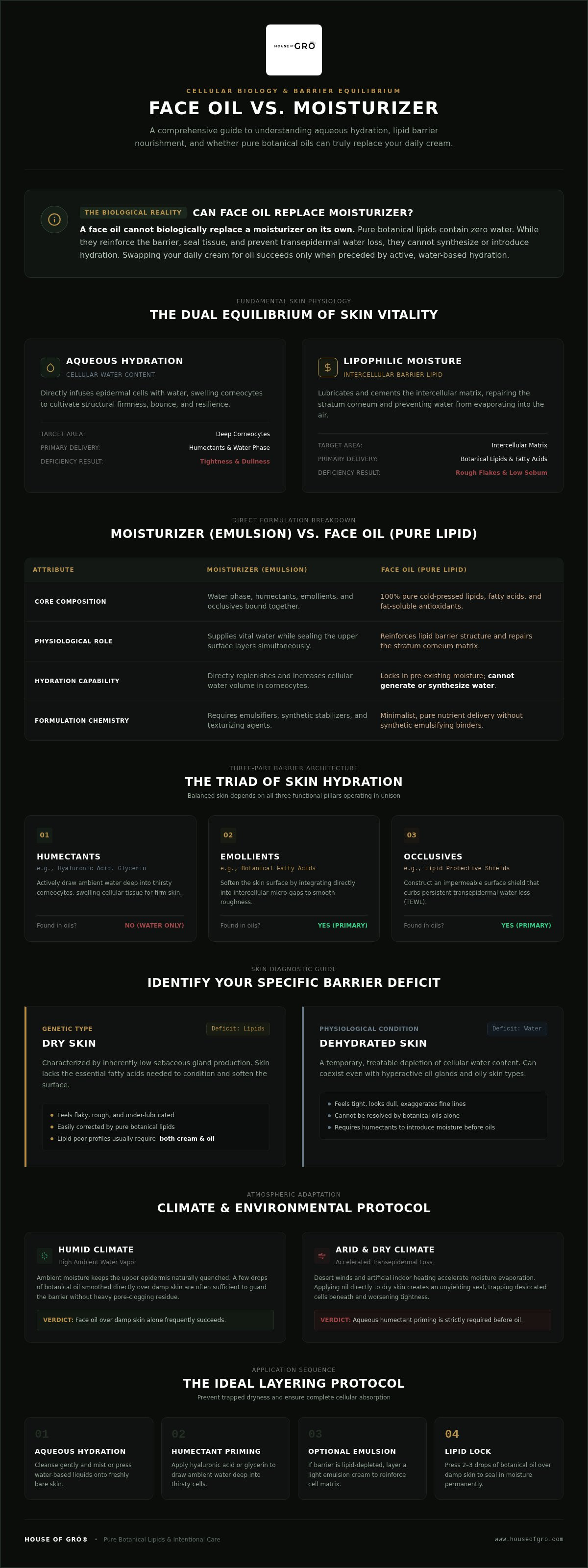
True skin vitality rests on a delicate cellular equilibrium. Your skin requires two distinct elements to thrive: aqueous hydration and lipophilic moisture. Hydration infuses epidermal cells with water, swelling them to create firmness and resilience. Lipids lubricate the intercellular matrix, preventing that water from evaporating into the air. When considering using face oil instead of moisturizer, understanding this balance is essential. One cannot simply replace the biological function of the other.
| Attribute | Moisturizer (Emulsion) | Face Oil (Pure Lipid) |
|---|---|---|
| Core Composition | Water phase, humectants, emollients, occlusives | Pure lipids, fatty acids, fat-soluble antioxidants |
| Physiological Role | Supplies water while sealing the upper layers | Reinforces lipid barrier and repairs stratum corneum |
| Hydration Capability | Directly replenishes cellular water content | Locks in existing moisture; cannot generate water |
The Triad of Skin Hydration: Humectants, Emollients, and Occlusives
Balanced skin relies on a precise three-part architecture. Humectants like hyaluronic acid and glycerin draw ambient water deep into thirsty corneocytes. Emollients then soften the skin surface. By understanding emollients and how they integrate into cellular spaces, it becomes clear how lipids smooth micro-roughness across dry tissue. Finally, occlusives build a protective shield, curbing persistent transepidermal water loss. Most creams package all three together, whereas botanical oils focus solely on emollient and occlusive functions.
Emulsion Chemistry vs. Pure Botanical Lipids
Creams rely on emulsion chemistry. They bind water and oil together using synthetic stabilizers, texturizers, and emulsifying agents. While this delivers an instant surface quench, emulsifiers can sometimes disrupt delicate barrier flora. Pure cold-pressed botanicals take a more minimalist approach. They deliver concentrated nutrients and vital lipids directly to the skin without unnecessary synthetic binders. Even so, lipids cannot synthesize water. Simply using face oil instead of moisturizer leaves out the essential humectant step, leaving parched cells unattended unless liquid hydration precedes your oil ritual.
Can You Truly Replace Your Moisturizer with a Face Oil?
The Core Answer: A face oil cannot biologically replace a moisturizer on its own. While oils nourish and condition, they introduce zero water into the skin. Swapping your cream for pure botanical oil succeeds only when you pair it with active, water-based hydration underneath.
Replacing a daily cream with botanical lipids is entirely possible, but context matters. If smoothed over dry, unprepped tissue, oil creates an impenetrable seal over parched cells. Water stays out. Tightness lingers. Exploring the chemistry of moisturizers shows that balanced barrier maintenance demands humectants to hold water alongside lipids to seal it. When you skip aqueous hydration, using face oil instead of moisturizer merely locks in dehydration.
The Critical Difference Between Dry and Dehydrated Skin
Pinpointing your skin's exact deficit dictates whether an oil-only ritual will work for you:
- Dry skin is a genetic type characterized by low sebum production. It lacks lipids. It needs rich fatty acids to restore softness.
- Dehydrated skin is a physiological condition characterized by a lack of water. It feels tight, looks dull, and shows exaggerated fine lines.
Pure lipids correct alipoid dryness with ease. They cannot replenish water depletion. Complexions with active sebaceous glands often thrive by using face oil instead of moisturizer, provided water precedes the oil. Depleted, lipid-poor skin profiles usually require both.
Assessing Your Barrier Resilience Across Changing Climates
Your surrounding environment dictates your skin's daily needs. In humid air, high ambient water vapor keeps the upper epidermis naturally quenched. A few drops of botanical oil over damp skin are often enough to protect the barrier without pore-clogging weight.
Dry climates present a different challenge. Desert winds and artificial indoor heating accelerate transepidermal moisture loss. Applying only oil in arid conditions risks trapping parched cells beneath an unyielding lipid shield. Choosing intentional skincare for sensitive skin helps shield delicate barriers against harsh temperature swings. Elevating your routine with restorative botanical skincare rituals grounds your complexion in resilient, lasting comfort.
How to Layer Face Oil and Hydration: A Step-by-Step Ritual
Application technique dictates your results. When executed with precision, botanical lipids melt into the epidermis, leaving zero greasy film or suffocating weight. Simply smearing lipids over parched skin invites congestion and persistent flaking. Mastering an intentional, water-first sequence ensures total cellular absorption. The secret lies in treating application not as a functional chore, but as an unhurried daily ritual.
The Golden Rule: Saturate with Aqueous Botanicals First
Never apply botanical oil to a dry canvas. Lipid molecules naturally repel dry surfaces, sitting atop the skin rather than integrating with the stratum corneum. Saturate the face with nutrient-dense floral waters or humectants before a single drop of oil touches your palms. This liquid veil gives the lipids an aqueous channel to bind with. Understanding the chemistry behind how moisturizers work underscores why pairing pure water with sealing lipids creates true cellular dewiness. Discover foundational practices for cultivating this luminous vitality in our guide on how to get radiant skin.
The Harmonizing Application Sequence
Transform your daily routine into a streamlined, high-efficacy practice with this four-step method:
- Purify: Cleanse with a mild, non-stripping botanical formula. Protect your natural acid mantle.
- Drench: Mist generously with a botanical toner or floral essence until the face is thoroughly damp.
- Hydrate: Smooth a water-based serum containing glycerin or hyaluronic acid over the face to draw water deep inward.
- Seal: Warm three to four drops of face oil between clean palms. Press gently into facial contours, neck, and décolletage. Never rub aggressively.
Daytime Precision vs. Nocturnal Restoration
Your skin's biological needs fluctuate between sunrise and nightfall. Morning rituals favor featherlight, fast-absorbing botanical oils rich in protective antioxidants. When using face oil instead of moisturizer before heading outdoors, select lightweight formulas that sink in immediately beneath mineral sunscreen without destabilizing UV filters.
Night demands deep repair. As cellular renewal peaks during sleep, reach for nutrient-dense botanical complexes loaded with restorative fatty acids. If your barrier is recovering from environmental stress, using face oil instead of moisturizer at night can be enhanced by layering a targeted restorative night serum underneath, locking in transformative overnight hydration.
Choosing the Ideal Face Oil for Your Skin Ecosystem
Every complexion is an intricate biological landscape. To select the right botanical blend, you need to look beyond marketing claims and examine fatty acid chemistry. Plant oils are not interchangeable. Matching specific botanical lipids to your individual skin barrier ensures optimal absorption, radiant clarity, and deep cellular comfort without congesting delicate pores.
Fatty Acid Profiles: Balancing Oleic and Linoleic Acids
Plant lipids fall along a spectrum between linoleic and oleic fatty acids:
- Linoleic Acid (Omega-6): A lightweight polyunsaturated lipid. Blemish-prone skin often lacks linoleic acid in its natural sebum, leading to sticky pores and micro-comedones. Botanical oils rich in linoleic acid absorb instantly, rebalancing sebum consistency without clogging pores.
- Oleic Acid (Omega-9): A richer, monounsaturated fatty acid. It cushions chronically dry, mature, or compromised barriers with sustained lipid replenishment.
When considering using face oil instead of moisturizer, oily or reactive skin types should prioritize high-linoleic botanicals. Parched or mature barriers require a harmonious balance of both to reinforce intercellular lipids.
Microbiome Harmony and Adaptogenic Antioxidants
Modern skin wellness views the epidermis as a living ecosystem. Synthetic additives and harsh emulsifiers can disturb beneficial surface flora, while clean, unrefined lipids nourish protective microbes. Integrating modern microbiome skincare principles helps preserve this natural shield against urban pollutants and chronic inflammation.
Wild botanicals take this protection a step further. Adaptogenic fungi, for instance, contain concentrated concentrations of polyphenols and enzymatic compounds. Harnessing wild Maine chaga benefits infuses the barrier with potent antioxidant defense, neutralizing free radicals before they degrade collagen or trigger sensitivity.
Comedogenic Scale and Texture Considerations
Texture matters just as much as purity. Avoid heavy mineral oils and synthetic silicones that trap debris beneath an occlusive film. Cold-pressed, unrefined botanical seeds retain vital trace minerals and phytonutrients without suffocating your skin. When using face oil instead of moisturizer, non-comedogenic botanical oils offer clean, breathable nourishment that melts into damp tissue.
Restore biological harmony to your daily ritual by exploring House of GRŌ®'s luxury botanical face oils, crafted to elevate skin resilience and natural luminosity.
Elevating Your Daily Routine with Intentional Botanical Care
Skincare is rarely just about application. It is an intentional pause. A sensory threshold between waking and entering the rush of the outside world. When you strip away unnecessary clutter from your vanity, your morning regimen transforms from a hurried chore into a grounding ritual of restoration. Choosing fewer, higher-potency essentials creates breathing room for both your skin and your mind.
The Art of AT DAWN Rejuvenating Daytime Oil
Finding the right formula is the key to successfully using face oil instead of moisturizer. Heavy, greasy concoctions sit inertly on the skin, but AT DAWN Rejuvenating Daytime Oil is engineered for immediate harmony with the epidermis. It delivers pure, breathable nourishment that absorbs on contact, imparting a radiant, velvety finish that primes the skin effortlessly for the day ahead.
Formulated with wild-harvested Northern Maine Chaga mushrooms, this lightweight elixir supplies deep antioxidant defense. It neutralizes daily environmental stress, supporting your natural microbiome without the synthetic emulsifiers, thickeners, or silicones found in conventional creams. Skin feels awake. Supple. Protected.
A Minimalist Philosophy for Elevated Well-Being
More is not always better. Layering dozens of complex products often overburdens the skin barrier, triggering low-grade sensitivity and chronic inflammation. A disciplined routine centered on biological resonance offers a cleaner path forward:
- Reduced Chemical Exposure: Removing synthetic binders and artificial fragrances frees your microbiome to thrive naturally.
- Enhanced Bioavailability: High-potency, cold-pressed botanicals deliver concentrated micronutrients directly to cellular receptors.
- Mindful Simplicity: Fewer steps encourage deeper presence, making each application an act of care rather than compliance.
Adopting this streamlined approach means trusting the innate intelligence of your skin. When paired with aqueous hydration, using face oil instead of moisturizer honors your natural lipid matrix while cutting out unnecessary excess. Step into a refined rhythm of daily self-care with House of GRŌ®, where mindful botanicals meet biological balance for an enduring, healthy glow.
Embracing a Simpler Path to Radiant Skin
Achieving a luminous, resilient complexion doesn't require an endless shelf of complex creams. When you understand your barrier's innate biology, using face oil instead of moisturizer becomes a transformative step toward intentional simplicity. The secret remains unhurried and precise: quench thirsty cells with pure aqueous hydration first, then seal that moisture with targeted botanical lipids.
Honor your skin with formulas that respect its delicate living ecosystem. Powered by wild-harvested Maine Chaga mushrooms for superior antioxidant defense, House of GRŌ® creates microbiome-friendly, cruelty-free botanical care crafted cleanly in New York. Experience featherlight lipid absorption engineered to deliver lasting luminosity without synthetic weight or pore-clogging residue. Listen to your barrier. Simplify your vanity. Elevate your daily ritual with House of GRŌ® and discover the serene confidence of naturally balanced skin.
Frequently Asked Questions
Can face oil cause breakouts if I have oily or acne-prone skin?
No, provided you select non-comedogenic, linoleic acid-rich botanical oils. Blemish-prone skin often suffers from an imbalance of oleic to linoleic acid in its natural sebum, which leads to sticky pores. Lightweight plant lipids help regulate excess sebum production and dissolve hardened debris. They nourish the microbiome rather than congesting pores, making mindful botanical application both safe and balancing.
Is it better to apply face oil before or after daily moisturizer?
Apply face oil after your daily moisturizer. Moisturizers deliver water-based humectants that need uninhibited contact with the epidermis. Face oils act as lipid seals. Applying oil first blocks aqueous hydration from penetrating deep into the skin. Pressing a few drops over your cream creates an intentional shield that locks in essential moisture for hours.
Can face oil replace moisturizer during cold, dry winter months?
Rarely. Winter air severely depletes environmental humidity, making using face oil instead of moisturizer risky on its own. Cold winds and indoor heating strip cellular water rapidly. Without humectants drawing moisture into the skin, pure oil simply seals dry, parched tissue. During winter, layering a water-rich serum beneath your botanical oil is vital to prevent flaking and barrier fatigue.
What happens if you apply face oil directly to dry skin?
Applying face oil to completely dry skin traps dehydration beneath an occlusive lipid layer. Plant oils contain zero water molecules. When applied over dry skin cells, they sit atop the stratum corneum without quenching the tissue underneath. Your complexion may look radiant on the surface yet feel uncomfortably tight underneath. Always mist or apply water serums first.
How many drops of face oil should I use for optimal results?
Three to four drops provide optimal coverage and complete absorption. Pure botanical oils are concentrated and potent. Dispense three drops into your palms, warm them gently between your hands, and press evenly over damp skin. Using more than four drops can overload the barrier, leaving excess surface residue that delays absorption and dulls your natural glow.
Does using face oil interfere with the application of daily sunscreen?
It won't interfere if you allow the oil to absorb fully before applying sunscreen. Heavy surface oils can dilute or break down UV filters, compromising your sun protection. When using face oil instead of moisturizer in the morning, choose a fast-absorbing formula like AT DAWN Rejuvenating Daytime Oil. Wait three minutes until the skin feels soft and velvety before smoothing on mineral SPF.
Can face oil provide anti-aging benefits compared to traditional night creams?
Yes, botanical face oils offer exceptional skin longevity benefits by delivering concentrated antioxidants directly to the barrier. Conventional night creams often dilute active lipids with synthetic fillers and texturizers. Unrefined plant oils, especially formulas infused with adaptogens like wild-harvested Maine Chaga, neutralize oxidative stress and fortify intercellular lipids. Paired with nightly hydration, they foster deep cellular repair and supple skin.