


What if a calmer nighttime routine matters more than the most powerful serum? If your skin still feels tight after evening care, it’s understandable to want more hydration and to worry that a new product could cause discomfort or visible irritation. Choosing a night serum for dry sensitive skin isn’t about chasing the strongest promise. It’s about finding a product that suits your preferences and fits the way you want to care for your skin.
Small choices can make a routine easier to manage: read the ingredient list, follow the product directions, and introduce one new step at a time. Start with comfort, pay attention to how your skin responds, and avoid changing several things at once.
This guide explains how to assess a serum, build a gentle evening routine, and decide whether AFTER DARK Restorative Night Serum fits your skincare preferences. The aim is a more considered approach to nighttime care, without the guesswork.
Key Takeaways
- Learn what to look for in a night serum for dry sensitive skin, including clear directions and ingredient information you can review.
- Compare a serum, moisturizer, and your current routine by their roles and layering instructions, not by promises of guaranteed results.
- Use a simple evening sequence, following the serum’s own directions for how and when to apply it.
- Consider whether AFTER DARK Restorative Night Serum aligns with your routine goals and skincare preferences.
What dry, sensitive skin needs from a night serum
A comfortable evening routine starts with noticing what your skin is asking for, rather than assuming every dry or reactive feeling has the same cause. Dryness can show up as tightness or flaking. Sensitivity describes a tendency to react to products or other influences; it isn’t a diagnosis. The two can overlap, but one doesn’t automatically explain the other.
A night serum is a cosmetic step in an evening routine, used according to its directions. It isn’t a guaranteed treatment for dryness, sensitivity, or a skin condition.
At a glance: what to seek in a night serum
- Comfort: Choose a product whose stated purpose and directions suit your needs and preferences.
- Hydration: Look for clear information about the product’s intended cosmetic role.
- Routine compatibility: Consider how it fits with the steps you already use, and introduce it thoughtfully.
How dryness and sensitivity can shape your evening routine
Tightness after cleansing, occasional flaking, or discomfort after applying a product may be reasons to simplify and observe your routine. These experiences can have different causes, so they don’t identify a particular skin condition on their own. Sensitivity describes how skin may respond; it isn’t a single diagnosis, and a product labeled “gentle” won’t necessarily suit everyone.
Keep the rest of your routine familiar while you assess a new serum. Avoid starting several unfamiliar products at once so it’s easier to notice how your skin responds to each change. If discomfort persists or concerns you, a qualified healthcare professional can help assess it.
What a night serum can, and cannot, do
A serum is often used after cleansing and before other skincare steps, but the product’s own directions should guide where it fits. Some routines follow it with moisturizer; others may differ depending on the products. Read the label and consider your full routine rather than layering by habit.
For a night serum for dry sensitive skin, assess the product’s stated cosmetic purpose and how it fits your preferences. Cosmetic goals such as hydration and a comfortable skin feel are different from treating a medical condition. No general description can predict every individual response. If you’re reviewing the label, this guide to cosmetic ingredients can help make ingredient terminology more familiar. The product’s own ingredient list and directions are still central to your decision.
Choose for routine fit, not the boldest overnight promise. A considered addition should feel manageable alongside the care you already trust.
How to evaluate a night serum for dry sensitive skin
Start with the product information, not a trend or a dramatic overnight promise. When choosing a night serum for dry sensitive skin, look for details that explain its purpose and how it may fit into the routine you already know.
Which product details are worth checking?
Read the product description and directions before deciding. Look for its stated purpose, when and how to apply it, and any texture description that helps you picture how it might layer with your usual moisturizer. Review the ingredient information. Harvard Health Publishing offers context on what to look for in a night serum, including serum ingredients and why sensitive skin can react.
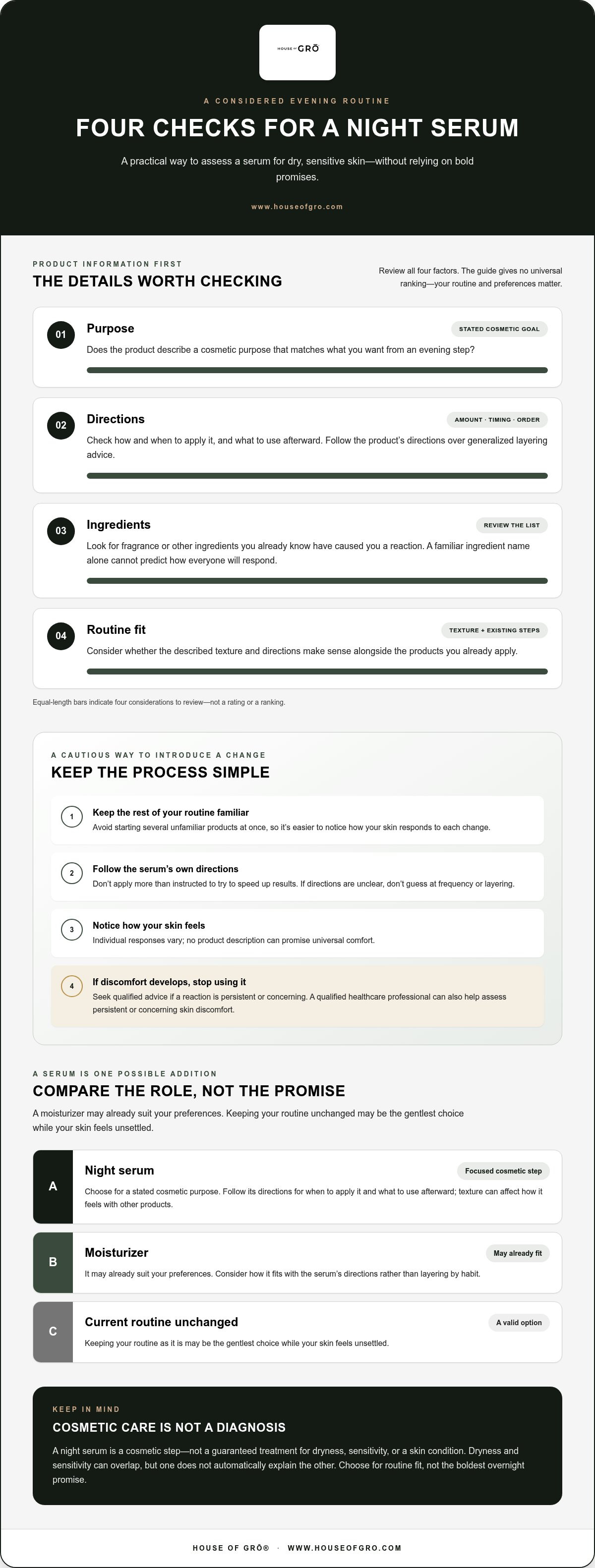
- Purpose: Does the product describe a cosmetic goal that matches what you want from an evening step?
- Directions: Are the amount, timing, and order of use clear? Follow these instructions over generalized layering advice.
- Ingredients: Check the ingredient list for fragrance or other ingredients you already know have caused you a reaction. A familiar ingredient name doesn’t, by itself, prove a product will suit or bother everyone.
- Routine fit: Consider whether the described texture and directions make sense alongside the products you already apply.
Terms such as “natural” or “botanical” describe a product’s positioning, not how your individual skin will respond. A popular ingredient isn’t automatically right or wrong for everyone, either. Focus on clear product information and your own experience instead of assuming one label or ingredient settles the question.
How to approach a new serum cautiously
Introduce a new product without changing the rest of your routine. Follow the serum’s directions, and don’t apply more than instructed in the hope of speeding up results. If the directions are unclear, don’t guess at frequency or layering.
Notice how your skin feels after use. If discomfort develops, stop using the serum. Seek qualified advice if a reaction is persistent or concerning. Individual responses vary, and no product description can promise universal comfort.
That considered approach can also guide a closer look at House of GRŌ®’s evening skincare: compare the product information with your preferences and routine, then make your decision without rushing.
Night serum compared with other options for dry, sensitive skin
A serum is one possible addition, not an automatic upgrade to an evening routine. A moisturizer may already suit your preferences, or keeping your routine unchanged may be the gentlest choice while your skin feels unsettled. Compare each option by the role you want it to play and how comfortably it fits your existing steps.
| Option | Intended routine role | Layering considerations | May suit you if… |
|---|---|---|---|
| Night serum | A focused step chosen for a stated cosmetic purpose. | Follow its directions for when to apply it and what to use afterward. Texture can affect how it feels with other products. | You want to add one specific step and are comfortable introducing a new product gradually. |
| Moisturizer | A familiar step in many routines, selected for its intended moisturizing role. | Use according to its directions. Whether it goes before or after another product depends on the products’ instructions and textures. | Your current routine feels incomplete without this step, or you prefer not to add a serum. |
| Keep your routine unchanged | Preserve the steps you already know while you observe your skin. | No new layering decisions. Continue using existing products as directed. | Your skin feels unsettled, or you’d rather avoid changing several things at once. |
Serum or moisturizer: how are they different?
Serums and moisturizers are different product formats, each with its own stated purpose and directions. A serum doesn’t automatically replace a moisturizer, and a moisturizer doesn’t have to be paired with a serum. Texture affects how products feel together, but no general layering rule overrides product directions. Check the information for each item, especially if you plan to use them together.
When choosing a night serum for dry sensitive skin, decide what role you want the product to serve. Don’t assume that “serum” means more effective or that another format is less useful. Product-specific benefits, texture, and directions should come from the product’s own information.
When a simpler routine may be the better fit
If your skin feels uncomfortable, keeping familiar steps in place can make it easier to notice changes without adding several new variables. Consider what you already use, which products have felt comfortable before, and whether you genuinely want another evening step. A new serum is optional. Maintaining a steady routine can be a considered choice, not a missed opportunity.
This is cosmetic shopping guidance, not a way to assess persistent symptoms. If discomfort continues or concerns you, seek advice from a qualified healthcare professional.
Adding Night Serum to a Gentle Evening Routine
A calm routine is easier to follow when each step has a clear place. If you’re introducing a night serum for dry sensitive skin, keep the rest of your evening familiar. Add one new product at a time and let its directions guide how you use it.
Where a night serum fits in your routine
Many evening routines follow a simple order: cleanse, apply serum as directed, then continue with compatible steps. This is only a general guide, since products differ. If the serum’s label gives different instructions, follow those instead. Avoid introducing a new cleanser, serum, and moisturizer all at once. Changing one step makes it easier to notice what feels comfortable.
- Cleanse gently. Use the cleanser you already know and follow its directions.
- Apply the serum as directed. Use the specified amount and timing. Don’t add extra product or use it more often than instructed.
- Continue with compatible steps. Follow with familiar products according to their directions and how they fit with the serum.
Keep the routine manageable as you make it part of your evening. For broader context, “Skincare for Sensitive Skin: A Guide to Calming Your Microbiome” and “The Restorative Night Skin Care Regimen: A Ritual for Nocturnal Renewal” can complement these simple steps.
What to observe as you introduce a new product
Notice how your skin feels during and after use. Does it feel comfortable, or do you notice more dryness or visible changes? There’s no single timeline that predicts how an individual will respond. Avoid judging a product by an assumed schedule or changing other steps to chase a particular result.
If an unwanted reaction develops, pause use and follow any relevant product guidance. Persistent, severe, or concerning symptoms call for qualified medical advice. Product directions guide cosmetic use, but they aren’t a substitute for care from a healthcare professional.
For a considered next step, explore House of GRŌ®’s nighttime skincare and review the product directions as part of your routine decision.
Is AFTER DARK the right restorative night serum for you?
AFTER DARK Restorative Night Serum is House of GRŌ®’s restorative night serum. It may be worth considering if you’re looking for a focused evening step. Whether it suits your skin and routine is a personal decision, guided by the product information and your preferences.
What to consider before choosing AFTER DARK
Before adding it, review the product details as you would for any new serum. Check its stated purpose, ingredient information, texture description, and directions. These details can help you decide whether the product fits your routine and how you prefer to layer skincare. Follow its instructions rather than assuming all night serums are used the same way.
House of GRŌ® describes its formulas broadly as microbiome-friendly and all-natural. The brand’s wider skincare philosophy draws on organic botanicals and adaptogenic mushrooms, including wild-harvested Chaga mushrooms from Northern Maine as a key antioxidant ingredient. These brand-level descriptions aren’t a substitute for checking AFTER DARK’s own ingredient information, and they can’t establish how any individual will respond. Don’t assume a product is hypoallergenic, universally suitable, or clinically proven without evidence supporting that specific claim.
Consider your routine goals, too. Are you looking for one considered nighttime step, or would you rather keep your existing routine unchanged? Your answers can help you decide whether to explore a serum or stay with the products you already use. Assess a night serum for dry sensitive skin by its product information and routine fit, not by the strength of its name or a promise of overnight transformation.
A considered next step for your nighttime ritual
Keep the essentials in view: a clear cosmetic purpose, directions that make sense for your routine, ingredient information you can review, and expectations that allow for individual differences. If those details align with what you’re seeking, AFTER DARK is an option to consider. Introduce any new product thoughtfully, follow its directions, and observe how your skin responds.
For more perspective, explore the related article, “Restorative Night Serum: The Science and Ritual of Overnight Skin Repair.” To learn more about the brand and its approach to skincare, explore House of GRŌ®. Informed choices can help make a nighttime ritual feel more your own.
Make Your Evening Routine a More Considered One
Choosing a night serum for dry sensitive skin starts with fit, not the boldest promise. Review the product’s purpose, ingredient information, and directions. Consider how it will sit alongside the steps you already use.
A serum is an optional addition, not an automatic replacement for moisturizer or a familiar routine. Introduce one new product at a time, follow its directions, and notice how your skin responds. If your current routine feels comfortable, there’s no need to change it just to add another step.
House of GRŌ® is a family-owned skincare brand founded by siblings Irina Gottesman and Sam Kandhorov. Its range includes AFTER DARK Restorative Night Serum, alongside formulas the brand describes as microbiome-friendly, all-natural, and cruelty-free. These broader brand values don’t replace reviewing the serum’s own product information.
Take your time choosing what fits your routine. Explore House of GRŌ® and discover a thoughtful approach to nighttime skincare.
Frequently Asked Questions
Is a night serum good for dry sensitive skin?
A night serum may suit a routine for dry, sensitive skin if its stated purpose and directions align with your preferences. Serums vary, and no product can be assumed to feel comfortable for everyone. Review the ingredient information, introduce it without changing several other steps, and observe your skin’s response. A serum is an optional cosmetic step, not a substitute for medical care or a guaranteed solution for persistent dryness.
What should I look for in a night serum for dry sensitive skin?
Look for a clear product purpose, accessible ingredient information, and directions that fit your routine. Consider the texture and how the serum may layer with products you already use. If fragrance or another ingredient has bothered your skin before, check for it on the ingredient list. Terms such as “natural” or “gentle” don’t guarantee personal tolerability, so let your own experience guide your choice.
Can I use a night serum without moisturizer?
You may choose to use a serum without moisturizer if that suits your routine, but a serum doesn’t automatically replace one. Product roles and textures vary. Read the serum’s directions and consider whether your current routine feels comfortable. If you want to use a moisturizer too, follow both products’ instructions and introduce changes thoughtfully rather than assuming every serum needs the same layering sequence.
How often should I use a night serum on sensitive skin?
Follow the serum’s own directions for frequency rather than relying on a universal schedule. Products differ, and sensitive skin may respond differently from one person to another. If the directions allow flexibility, introduce the serum cautiously and keep the rest of your routine steady so you can observe your skin. Don’t apply it more often or use more than directed to try to accelerate results.
Should I patch test a night serum before using it?
A patch test can be a cautious way to observe how a product feels on a small area before adding it to your routine. Follow any testing instructions on the product label, and remember that a patch test can’t guarantee how your skin will respond with regular use. Stop using the serum if an unwanted reaction develops. Seek qualified medical advice for persistent, severe, or concerning symptoms.
How do I layer a night serum with other skincare products?
A simple general sequence is gentle cleansing, serum application as directed, then compatible routine steps such as moisturizer if you use one. Product instructions take priority over broad layering advice because directions and textures differ. When introducing a serum, keep other steps familiar instead of adding several new products together. This makes it easier to notice changes in comfort or visible skin condition.
Is AFTER DARK Restorative Night Serum a night serum for dry sensitive skin?
AFTER DARK Restorative Night Serum is House of GRŌ’s restorative night serum, but individual suitability for dry, sensitive skin can’t be guaranteed. Review its product description, ingredient information, and directions to see whether they fit your routine and preferences. House of GRŌ describes its formulas broadly as microbiome-friendly, all-natural, and cruelty-free; those brand-wide descriptions aren’t a substitute for checking product-specific details.