


Under-eye bags don’t always have one cause, so there isn’t one fix that works for everyone. Learning how to get rid of under-eye bags starts with noticing what may be behind the puffiness: fluid retention, poor sleep, allergies, or age-related changes in skin and tissue. Cool compresses and small adjustments to daily habits may help reduce temporary swelling.
Dark circles can have different causes, including inherited traits, sun exposure, fatigue, and shadows cast by puffiness or facial structure. Bags and circles can look similar but respond to different approaches. Start with a calm, targeted routine based on what you’re seeing.
This guide explains what under-eye bags are and how sleep, salt, alcohol, head elevation, and allergies may affect puffiness. You’ll also learn which simple measures may help, when persistent or uncomfortable swelling needs medical attention, and how skincare can support the delicate under-eye area.
Key Takeaways
- Under-eye puffiness and dark circles can have different causes, so identifying what you’re noticing can help guide your next steps.
- Salt, alcohol, and other dietary factors may contribute to fluid retention and puffiness; small routine changes can help you see what affects you.
- Consistent sleep and elevating your head during sleep may help limit fluid from collecting around the eyes.
- Allergies can contribute to swelling, and rubbing the delicate eyelid area may aggravate it. Painful, itchy, red, or persistent swelling warrants medical attention.
- Age, inherited traits, sun exposure, and facial shadows can affect the appearance of bags and dark circles, even when lifestyle habits are balanced.
What Causes Bags and Dark Circles Under Eyes?
Under-eye puffiness and dark circles can have different causes, from fluid collecting beneath the eyes to inherited pigmentation. Recognizing the difference helps you choose an approach suited to the change you notice.
Causes and Appearance of Under-Eye Bags
Under-eye bags are mild swelling or puffiness beneath the lower eyelids. They create a raised area that catches light differently, while nearby shadows may make the eyes look darker. This distinction matters: swelling, skin changes, and facial shadows don’t necessarily respond to the same approach.
Age is a common cause. As skin loses elasticity, tissues can weaken and fat may shift or fluid may collect beneath the eyes. Fluid pooling in weakened tissue causes swelling, also called edema. Salt-related water retention, lack of sleep, dehydration, alcohol, smoking, allergies, and inherited traits can also affect puffiness. For example, morning swelling may look more pronounced after a salty evening meal.
In the United States, under-eye treatment costs depend on the approach, such as skincare, filler, or surgery; there’s no single cost for every case. See a doctor about swelling that’s painful, itchy, red, or persistent, especially if it changes or concerns you.
For persistent bags, medical options include blepharoplasty, which removes or repositions fat and may tighten sagging skin. Depending on the cause, clinicians may also consider fillers for hollowness or resurfacing treatments for skin texture. These approaches address different features: puffiness from fluid is not the same concern as a bulging fat pad.
Fillers may camouflage mild under-eye hollowness, but they can worsen puffiness when used for fat herniation rather than volume loss. They can also cause a bluish hue called the Tyndall effect. The distinction matters: a hollow tear trough and a true under-eye bag may look similar but call for different considerations.
Causes of Dark Circles
Dark circles are darker-looking areas beneath the eyes, caused by pigmentation, visible shadows, or both. Identifying their source matters because a shadow from puffiness won’t respond like inherited pigmentation or sun-related color change.
Inherited dark circles are called periorbital hyperpigmentation. Sun exposure can increase melanin and deepen pigmentation, while fatigue, excess dietary salt, alcohol, tobacco, and family history may also contribute. Older adults and people with darker skin tones or a family history are more likely to develop dark circles. Shadows from puffy eyelids, the nose, or brow can deepen their appearance. The delicate skin around the eyes is approximately 0.5 mm thick, so changes in color and contour can be noticeable.
Foods and drinks that may contribute to puffiness
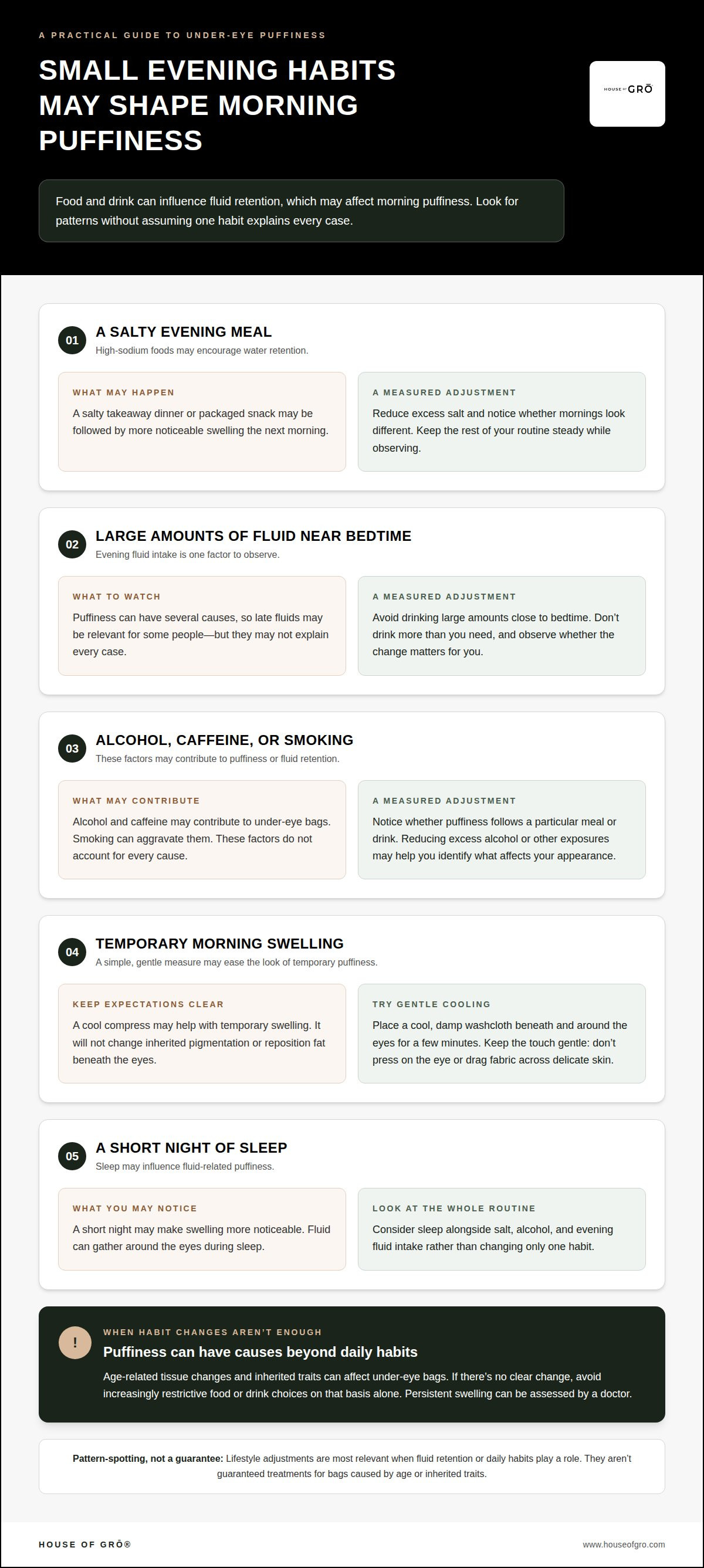
What you eat and drink can influence fluid retention, which may affect morning puffiness. High-sodium foods, caffeine, and alcohol may contribute to under-eye bags. Salt encourages the body to retain water, so a salty takeaway dinner or packaged snack may be followed by more noticeable swelling. These factors don’t explain every case, but they can help you spot patterns.
A measured change can make those patterns easier to see. Reduce excess salt and avoid drinking large amounts of fluid close to bedtime. If puffiness seems to follow a particular meal or drink, note the timing and whether it changes the next morning. Limiting excess sugar may also help lessen the appearance of dark circles. These adjustments support a broader wellness routine; they aren’t guaranteed treatments for bags caused by age or inherited traits.
Alcohol may contribute to puffiness, while smoking can aggravate under-eye bags. Reducing these exposures supports a steadier routine and may help you identify what affects your appearance. Keep expectations realistic: lifestyle changes are most relevant when fluid retention or daily habits play a role. Persistent lower eyelid bags may have another cause, and a cosmetic concern isn’t automatically caused by diet.
For temporary swelling, place a cool, damp washcloth beneath and around the eyes for a few minutes. A cold compress may help reduce puffiness. Keep the touch gentle: don’t press on the eye or drag fabric across delicate skin. This simple measure can ease the look of temporary swelling, but it won’t change inherited pigmentation or reposition fat beneath the eyes.
Sleep also affects fluid-related puffiness. A short night may make swelling more noticeable, so consider sleep alongside salt, alcohol, and evening fluid intake rather than changing only one habit. The next section explains how sleep and head elevation may affect fluid collecting around the eyes.
When bags remain despite adjustments, the cause matters more than another dietary restriction. A doctor can assess persistent swelling and discuss suitable next steps. Blepharoplasty is a medical option for some under-eye bags, but it addresses tissue and fat rather than food-related fluid retention. A clinic’s assessment can help distinguish these concerns and guide a patient toward an appropriate treatment approach.
If you want to explore whether these habits matter for you, make a manageable adjustment and take time to observe the result. Choose meals with less added salt and avoid drinking more than you need close to bedtime, while keeping your usual routine otherwise as steady as possible. Notice whether your under-eye area looks different after mornings that follow different evening habits. This observation can help you decide whether reducing salt or late fluids is worth continuing, without assuming either is the sole cause of puffiness. If there’s no clear change, avoid making increasingly restrictive food or drink choices on that basis alone.
Sleep and head elevation
Sleep affects how much fluid gathers around the eyes overnight. Adults are advised to get seven to nine hours each night, depending on age. The Centers for Disease Control and Prevention recommends that adults get seven hours or more per night. A short night can make swelling more noticeable, especially alongside fluid retention or dehydration.
Can sleep, salt intake, allergies, or dehydration make under-eye bags worse? Yes. Too little sleep, excess salt, dehydration, and allergic reactions can each contribute to puffiness, though the cause differs from person to person.
Head position can also influence morning puffiness. Mayo Clinic says elevating the entire head of the bed a few inches may help prevent fluid from collecting around the eyes during sleep. Raising the whole head of the bed differs from stacking pillows only beneath the neck. If you try elevation, keep your head and upper body comfortably supported.
Allergies can interrupt sleep and affect the skin around the eyes. Feather pillows, pets sleeping on the bed, and skincare products used before sleep may trigger an allergic response. Notice whether symptoms follow a particular pillow, pet exposure, or evening product. If swelling seems allergy-related, ask a healthcare provider about prescription allergy medications. Avoid rubbing itchy eyelids, since friction can further irritate delicate skin.
A steady evening routine can support both sleep and skin comfort. Keep the sleeping area free from likely allergy triggers, and use skincare that doesn’t irritate the eye area. Hydration matters, too: dehydration may contribute to under-eye shadows or puffiness. Balance fluids through the day rather than making large changes at bedtime, when fluid intake may affect overnight retention.
Daytime sun protection supports the delicate skin around the eyes. Use sunscreen, a hat, and sunglasses to help reduce sun damage. Broad-spectrum SPF 30 or higher can be the final step in a morning skincare routine. Some moisturizers may improve skin texture as the area loses moisture and elasticity with age. These steps support skin appearance, but they don’t address every cause of under-eye swelling.
Consistent habits matter more than a single late night or morning remedy. For example, compare how your eyes look after a regular sleep schedule with mornings following disrupted sleep. If swelling stays painful, itchy, red, or persistent, seek medical advice. A procedure or surgery isn’t the first response to every puffy morning; identifying sleep, allergy, or fluid-related contributors helps clarify what may be relevant.
Allergies and eyelid rubbing
Allergies can cause swelling around the eyes, while rubbing an itchy eyelid can add irritation. The eye area is delicate, so repeated friction may make redness and puffiness more noticeable. Notice when symptoms appear: after sleeping beside a pet, using a new skincare product, or changing bedding. That timing can help identify possible triggers.
Lower eyelid surgery, or blepharoplasty, has risks that include dry or watery eyes, pain, swelling, bruising, and blurred vision. Rare complications include visual loss, bleeding, infection, eye-muscle injury, corneal abrasion, or a drooping eyelid. Swelling and bruising usually decrease significantly in about 10 to 14 days, though complete recovery can take a few months.
Reduce contact with likely allergens where practical. Feather pillows, pets sleeping on the bed, and pre-sleep skincare products can trigger allergic responses. Try changing one factor at a time, such as keeping a pet out of the bedroom or pausing a new nighttime product. This makes it easier to notice whether reduced exposure coincides with less irritation.
Sinus symptoms may occur alongside eye-area discomfort. If you notice nasal or sinus symptoms with eyelid swelling, mention both when speaking with a healthcare provider. Painful, itchy, red, or persistent swelling around the eyes is a reason to see an ophthalmologist. The pattern and accompanying symptoms help distinguish temporary irritation from a concern that needs assessment.
If an allergy may be causing swelling, Mayo Clinic advises asking a healthcare provider about prescription allergy medication. Medication choices depend on symptoms and personal health circumstances. Avoid rubbing while the eye area feels itchy; a cool, damp cloth can soothe the skin without friction. Don’t put skincare products close to the waterline or directly into the eyes.
Cosmetic cover can soften the appearance of dark circles, but concealer won’t address an allergy trigger or reduce swelling itself. Likewise, products mentioning collagen don’t remove the source of an allergic response. Keep care gentle: avoid dragging applicators across the eyelid, and stop using a product that appears to worsen irritation.
A simple response is to note the trigger, limit exposure, and observe whether symptoms settle. For example, if irritation follows a new evening cream, pause it and avoid rubbing the area. Persistent swelling still deserves medical attention. Eyelid surgery treats certain structural bags, not an active allergy, so the cause should guide the next step.
Managing allergies is an essential step when learning how to get rid of under eye bags caused by seasonal or environmental triggers. Upper eyelid surgery addresses excess skin and fat on the upper eyelid, while lower eyelid surgery addresses under-eye bags. Cosmetic eyelid surgery performed solely to improve appearance is not covered by medical insurance.
What under-eye bags are
Under-eye bags are mild swelling or puffiness beneath the eyes. They can form when tissues weaken and fat shifts forward, or when fluid gathers in the area. The result is a raised contour, not simply a darker patch of skin. Bags are usually a cosmetic concern and don’t require medical treatment.
Excess tissue and fluid can create similar-looking fullness, but they are different changes. For example, morning puffiness may vary as fluid shifts, while a persistent bulge may reflect changes in supporting tissue. Knowing how to get rid of under eye bags starts with distinguishing temporary swelling from a lasting change in contour.
How do you distinguish under-eye bags from dark circles or hollows? Bags create a raised or puffy contour; hollows look sunken, while dark circles appear as darker color beneath the eyes. Shadows from the brow or nose can deepen the appearance, so observe the area in even light before deciding what you’re seeing.
Dark circles can come from inherited pigmentation, sun-related melanin, or shadows cast by facial contours. A hollow tear trough creates a dip between the lower eyelid and cheek. These features can appear together: a raised bag may sit above a hollow, with a shadow making both more noticeable. Color and contour offer different clues.
The useful takeaway is to identify the main feature before choosing a treatment. Compare the area in soft, even lighting, then notice whether the concern is swelling, a bulge, a hollow, or darker pigmentation. Understanding how to get rid of under eye bags means matching your next step to the feature you want to address, rather than assuming every change comes from poor sleep or fluid retention. Painful, itchy, red, or persistent swelling calls for medical attention.
Skincare may support the surface appearance of the eye area, while fillers and surgery address different structural concerns. Fillers may camouflage mild volume loss, but can worsen puffiness when used for true fat herniation. Blepharoplasty may be considered for certain persistent bags. The right approach depends on whether the concern is fluid, pigmentation, hollowing, or excess tissue.
A simple daily practice can focus on gentle care and sun protection, rather than aggressive rubbing or expecting one product to correct every feature. If you’re refining that routine, explore a considered skincare practice. Keep medical concerns separate from cosmetic goals, and seek an eye-care professional’s assessment when swelling or other symptoms persist.
House of GRŌ®
House of GRŌ® offers skincare for a considered daily routine around the delicate eye area. If puffiness is temporary or dark circles affect your skin’s appearance, gentle topical care may complement habits such as sleep and sun protection. Skincare won’t correct fluid retention, allergies, inherited pigmentation, or structural bags, so persistent or uncomfortable swelling calls for medical advice.
Eye Detox Brightening Oil is the product most closely suited to an eye-area routine. The wider range includes At Dawn Rejuvenating Daytime Oil and After Dark Restorative Night Serum. House of GRŌ® formulas feature adaptogenic mushrooms and organic botanicals, including wild-harvested Chaga from Northern Maine. Choose skincare as a supportive practice, not a substitute for treatment when symptoms need attention.
For questions about House of GRŌ® skincare, contact House of GRŌ®.
Choose a Routine That Feels Right
Understanding how to get rid of under-eye bags begins with patience, not a race toward the strongest treatment. Let your next step reflect what matters most: a calm daily ritual, a clearer sense of your skin’s needs, or medical guidance for a concern that persists.
A routine should feel sustainable within the life you already lead. Choose care with intention, and make room for habits that support your wellbeing. Skincare is personal care, not a demand for perfection. The aim is a thoughtful relationship with your skin, not an unrealistic standard.
If you’d like to explore a considered approach to daily skincare, contact House of GRŌ®. The brand’s skincare offerings can help you shape a ritual that feels simple and personal, while medical concerns remain best addressed through appropriate care.
Progress can begin with one gentle choice. Keep your routine grounded, give yourself time to find its rhythm, and let self-care feel like support rather than pressure.
Frequently Asked Questions
What can you do for eye bags?
Start by matching your response to what you notice. For temporary morning puffiness, apply a cool, damp cloth for a few minutes. If swelling follows a certain evening routine, note possible triggers such as salty food, a new skincare product, or sleeping near a pet. Persistent swelling, or swelling with pain, redness, or itching, needs medical attention rather than cosmetic cover.
What are some home remedies for bags under eyes?
A cool, damp washcloth is a simple option for temporary puffiness. Try keeping your head slightly elevated during sleep, and follow a regular sleep schedule. If you suspect an environmental trigger, change one thing at a time, such as moving a pet out of the bedroom. This makes it easier to notice whether the change coincides with calmer-looking skin.
What causes under-eye bags and puffiness?
Under-eye bags can reflect fluid collecting beneath the eyes, changes in supportive tissue, or fat shifting forward with age. Salt-related fluid retention, allergies, smoking, alcohol, and lack of sleep can also contribute. For instance, a temporary change after a late, salty meal differs from a persistent contour linked to tissue changes. That distinction helps guide a sensible next step.
How can you reduce under-eye bags at home?
Use a cool compress for temporary swelling, keep sleep consistent, and consider whether evening habits affect how your eyes look the next morning. Reducing excess salt and limiting fluids close to bedtime may help with fluid retention. For dark circles, protect the eye area from sun exposure with sunscreen, sunglasses, and a hat. These steps support appearance, but don’t reshape persistent bags.
Do cold compresses or caffeine eye creams reduce puffiness?
A cold compress may temporarily reduce puffiness. Caffeine eye creams are topical skincare, so treat them as cosmetic care rather than a way to change a bulging fat pad or facial hollow. Keep any eye product away from the waterline and out of the eyes. If a product irritates your skin, stop using it; persistent or painful swelling calls for medical advice.