


Face oil can support aging skin, but it isn’t a standalone source of hydration. The best antioxidant face oil is one that suits your skin and complements a routine with hydrating serums or moisturizers. Applied after those lighter layers, it can help seal in moisture.
It makes sense to look to oils for comfort and a softer, more supple feel, but an ingredient list alone doesn’t tell the whole story. Skin type, fragrance, patch testing, and the potential to clog pores all matter when deciding whether an oil belongs in your routine.
This guide explains how face oils may support aging skin and what to look for when comparing antioxidant ingredients. You’ll also learn how to assess formulas for different skin types, test a new oil carefully, and consider fragrance and pore-clogging potential without relying on a one-size-fits-all “best” pick.
A considered choice starts with how your skin responds. Keep the routine simple: supportive hydration, a thoughtfully chosen oil, and time to see what feels balanced.
Key Takeaways
- See how antioxidant ingredients can support an aging-skin routine, and why an oil’s role depends on the rest of your skincare.
- Choose a formula with your skin type and texture preferences in mind; if you’re acne-prone, begin with 1 or 2 drops and observe how your skin responds.
- Use a small-area patch test before applying a new face oil across your face.
- Learn why fragrance and “non-comedogenic” claims are worth weighing separately when comparing formulas.
- Compare face oils by their ingredients and intended use to narrow down what may suit your routine.
1. Is face oil good for aging skin?
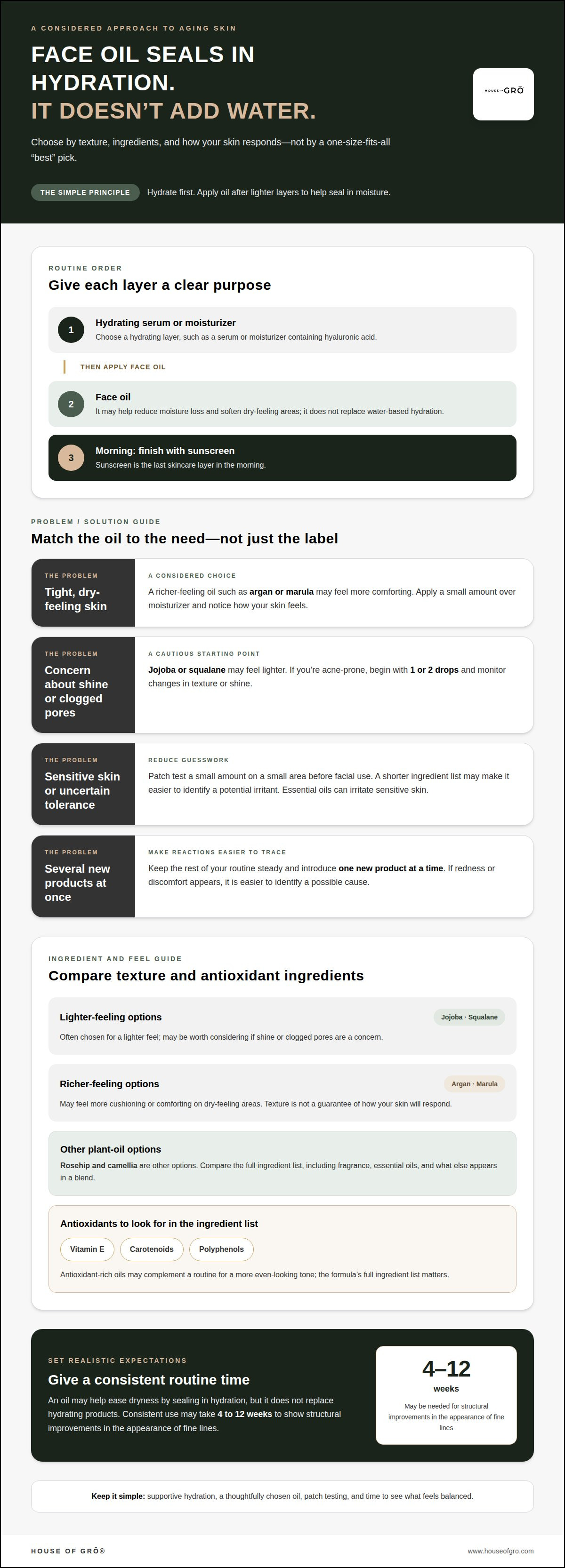
Face oils may soften dry-feeling areas and help reduce moisture loss as skin ages. They seal in hydration; they don’t add water. Pair one with a serum or moisturizer containing hyaluronic acid, then apply the oil. In the morning, finish with sunscreen as the last skincare layer. This sequence gives each step a clear purpose.
Antioxidant-focused formulas may feature vitamin E, carotenoids, or polyphenols. Check the ingredient list to see which oils and antioxidant components a formula contains. Jojoba and squalane are often chosen for a lighter feel, while argan and marula can feel richer. Rosehip and camellia offer other plant-oil options. The best fit depends on comfort and how your skin responds.
Can antioxidant face oils help with dryness, fine lines, or uneven skin tone? They may ease dryness by helping seal in hydration, while antioxidant-rich oils can complement a routine for a more even-looking tone. Consistent use may take 4 to 12 weeks to show structural improvements in the appearance of fine lines. An oil supports a routine; it doesn’t replace hydrating products.
For cost in the United States, compare the formula, ingredients, and intended use rather than assuming every antioxidant oil is priced alike. A simple single-oil formula and a blend with several featured ingredients may differ in cost. Since face oil is a product type sold here, this guide doesn’t quote a market price range.
Skin feel helps narrow the options. If your face feels tight after cleansing, a few drops of argan or marula may feel more comforting than a lighter-textured choice. If shine or clogged pores are concerns, try squalane or jojoba cautiously. For acne-prone skin, start with 1 or 2 drops and monitor changes in texture or shine.
What are the risks of irritation, allergies, or clogged pores from face oils? A formula may cause irritation or an allergic reaction, and some oils may feel too heavy or contribute to clogged pores. Essential oils can also irritate sensitive skin. Before applying one across your face, test a small amount on a small area and watch for a reaction.
Patch testing is especially useful when a formula contains essential oils or several fragrant botanicals. Test one new product at a time rather than introducing an oil alongside a new serum and moisturizer. That makes it easier to identify the cause if redness or discomfort appears. A calm, gradual routine gives you clearer feedback than layering several new products at once.
Age alone doesn’t determine suitability. Face-oil recommendations for mature skin may be intended for people aged 50 and older, but texture and tolerance still matter. Choose by the skin concern you want to address, whether dryness, fine lines, or uneven-looking tone, then observe how the formula fits into your routine.
2. Product ingredients and skin-type suitability
Start with your skin’s current needs, not a trend. Dry-feeling skin may prefer a more cushioning oil, while combination skin may suit a lighter texture applied only to tight areas. Compare jojoba oil and squalane for feel, and check whether a formula contains one oil or blends several ingredients.
Skin type isn’t fixed. As skin ages, changes in its lipid barrier can make it less able to hold moisture, so dryness and fine lines may become more noticeable. Face oil can help support the barrier by reducing moisture loss, but it doesn’t replace water-based hydration. Pair it with a moisturizer, then adjust the amount according to comfort and finish.
For dry or mature skin, look for a formula that feels nourishing without leaving an unwanted residue. Argan and marula oils may feel richer, while jojoba and squalane can feel lighter. These are differences in texture, not guarantees of how your skin will respond. Apply a small amount over moisturizer and notice whether your skin feels comfortable through the day or overnight.
Rosehip seed oil is a plant-derived option for a face-care routine. Consider where it appears in the ingredient list and what else the formula contains. A blend with fragrance or essential oils may feel different from a simpler formula. When comparing products for skin-barrier support, focus on the full ingredient list and your own tolerance, not just the name of one oil.
For oily or acne-prone skin, start with a small amount and observe changes in shine, texture, or clogged pores. For sensitive skin, a shorter ingredient list may make it easier to identify a potential irritant. Patch test new formulas, especially those containing essential oils. Introduce one product at a time so any reaction is easier to trace.
Retinol adds another consideration. If it’s already part of your skincare routine, avoid introducing a face oil and a new retinol product at the same time. Keep your existing steps steady, then add one formula and watch for irritation or persistent discomfort. This gradual approach helps you distinguish the oil’s effects from those of other ingredients.
To compare options, match the formula’s texture and ingredients to your skin type, then consider the rest of your routine. A product’s antioxidant ingredients may be appealing, but daily comfort matters too. For a botanical perspective on simplifying skincare choices, explore this botanical skincare approach alongside the ingredient details that matter to you.
3. Face oil product testing and expert recommendations
Look beyond a polished label when assessing a product. Start with the full ingredient list, noting the featured oils, added fragrance, and antioxidant ingredients. For example, compare a rosehip seed oil formula with a blend by checking what else appears alongside it. Marketing terms alone don’t show how a facial oil will feel on your skin.
For a fair personal trial, keep the rest of your routine steady. Introduce one new oil, use it as directed, and note whether it feels comfortable, absorbs as you prefer, or leaves persistent shine. Avoid starting a new serum or exfoliant at the same time. This simple comparison makes it easier to connect a change in your skin with the product you added.
A lower price alone doesn’t establish quality, and no single oil suits every skin type.
To identify a suitable option and avoid misleading claims, look for named ingredients and clear directions. A formula that highlights vitamin E or rosehip seed oil gives you more to assess than broad promises about “radiance” or “repair.” Treat dramatic claims cautiously, especially promises to erase fine lines or change the skin barrier quickly.
Texture is part of the test. A facial oil that absorbs comfortably on dry skin may feel heavy on combination skin. Apply it consistently within your existing routine and notice whether it layers well with moisturizer and sunscreen. If it pills, stays tacky, or leaves unwanted shine, those practical details matter as much as the ingredient story.
Keep a simple record of the product name, when you began, the amount used, and any visible irritation or changes in comfort. Avoid adding another new face product during the same trial. This isn’t a clinical test, but it can help you decide based on your own experience rather than packaging language.
Expert recommendations are most useful when they explain who a formula may suit and why. Look for specific discussion of skin type, texture, fragrance, and ingredient purpose rather than an unsupported “best for everyone” label. A suitable choice should make sense in your routine and feel comfortable alongside the products you already use.
Weigh the complete experience: ingredients, clarity of claims, skin feel, and how well the oil fits your routine. A thoughtful comparison may point toward a simple single-oil formula or a blend. When browsing over-the-counter options through retailers like More About Skin, evaluating ingredient profiles helps narrow down what works for your routine. Either way, let your skin’s response guide your choice, not the strength of the product’s promises.
4. Non-comedogenic and fragrance details
“Non-comedogenic” describes a formula intended to be less likely to clog pores. It doesn’t guarantee that every complexion will respond the same way. Skin type, amount applied, and the rest of your routine all affect how an oil feels. If you’re prone to congestion, try a small amount on an area where clogged pores commonly appear, then observe your skin before using it more broadly.
The oil is only part of the formula. A lightweight texture can still feel too rich on oily skin, while a richer oil may feel comfortable on dry areas. Ingredients such as fatty acids contribute to an oil’s texture and feel, but an ingredient name alone can’t predict whether your pores will clog. Consider the full formula and how much you apply.
Fragrance deserves special attention, especially for sensitive skin. Check the ingredient list for “fragrance” or “parfum,” as well as named aromatic ingredients such as lavender or citrus oils. Essential oils can contribute scent, but they may also irritate some people. A fragrance-free formula removes one possible source of sensitivity, though other ingredients may still not suit your skin.
Make testing more informative by changing one thing at a time. Apply the face oil as directed, keep your other skincare steps familiar, and note any redness, itching, or new congestion. If a reaction appears, stop using the new formula rather than adding more products to mask the discomfort. This approach helps distinguish a response to fragrance from one associated with another ingredient.
Application also affects the finish. Use a small amount over moisturizer, then let the formula settle before applying makeup. If foundation slips or separates, the oil may be too rich, too abundant, or not fully absorbed. Try using less or reserving it for evening. A smooth finish depends on the oil, the moisturizer underneath, and the makeup layered above.
For combination skin, apply oil only to drier areas instead of covering your entire face. For sensitive or easily congested skin, prioritize a short, readable ingredient list and avoid introducing several scented products together. Look for a formula that supports moisture without leaving persistent heaviness, irritation, or unwanted shine.
Use “non-comedogenic” as one selection clue, not the final verdict. Compare fragrance ingredients, texture, and where the oil fits in your routine, then pay attention to your own skin. An oil that feels comfortable under makeup for one person may not suit another. A gradual trial and a formula that feels pleasant in everyday use are better guides.
5. How do popular antioxidant face oils compare by ingredients and benefits?
Compare oils by source, ingredient profile, texture, and place in your routine. A single-ingredient oil offers a simpler label, while a blend may combine different textures and plant compounds. Neither format is automatically better. The key question is whether the ingredients suit your skin’s needs and feel comfortable with your other products.
Jojoba oil has a lighter feel for some people and may suit routines where a heavy finish is unwelcome. It is often chosen for its skin-conditioning qualities rather than as a standout antioxidant source. Squalane is also valued for a light, smooth finish. Check whether it comes from a plant source and what other ingredients the formula contains.
Argan and marula oils can feel richer, making them options to compare when skin feels dry. Their plant-derived fatty acids contribute to their conditioning feel. Rosehip seed oil is another popular choice in facial oils, often featured for its plant compounds and antioxidant profile. Compare the full ingredient list rather than assuming every product containing rosehip has the same composition.
- For a lighter finish: Compare jojoba or squalane formulas, then assess how they sit beneath moisturizer or makeup.
- For a richer feel: Look at argan or marula blends and consider whether your skin welcomes their texture.
- For a botanical blend: Review rosehip and other named plant oils, including any added fragrance.
Vitamin E is another ingredient to look for on labels. It may be part of an oil or added to a blend. Its presence doesn’t describe the whole product: the base oils, fragrance, and overall texture also shape the experience. A label that names featured ingredients offers a clearer basis for comparison than broad promises about glow.
Match the formula to your routine, not just its headline ingredient. If makeup tends to slip, a lighter texture may be easier to layer. If dry areas feel uncomfortable, a richer option may feel more suitable at night. Introduce one new oil at a time so you can tell which formula feels smooth and comfortable on your skin.
Think of the best antioxidant face oil as a personal match, not a universal winner. Compare the ingredient list, finish, and how the oil fits alongside your existing skincare. Explore botanical skincare options as you consider which kind of formula suits your daily ritual.
House of GRŌ®
House of GRŌ® offers a considered next step when you’re ready to bring botanical oils into your skincare routine. Its formulas feature adaptogenic mushrooms and organic botanicals, including wild-harvested Chaga from Northern Maine, a key antioxidant ingredient. Choose the option that suits your routine: At Dawn Rejuvenating Daytime Oil or After Dark Restorative Night Serum. Eye Detox Brightening Oil is another option for the eye area.
Rather than choosing by a broad “best” label, consider the ingredients and the role you want an oil to play. Explore House of GRŌ®’s skincare range to find a product that aligns with your preferences.
Make Your Next Skincare Choice With Intention
The best antioxidant face oil isn’t simply the one with the longest ingredient list. It’s a formula that fits thoughtfully into your routine and aligns with what you want from daily care. Let that guide your next step: choose one product to explore, give it space in your routine, and notice whether it feels comfortable and easy to maintain.
House of GRŌ® offers AT DAWN Rejuvenating Daytime Oil, AFTER DARK Restorative Night Serum, and TOUCH Hydrating Body Serum. Each has a distinct place in a personal care ritual. If you’re weighing which direction feels right for your skincare preferences, contact House of GRŌ® for help. A thoughtful choice can make everyday care feel more intentional.
Frequently Asked Questions
Is face oil good for aging skin?
Face oil can be a useful comfort step for aging skin that feels dry or less supple. It won’t replace hydration or reverse skin changes, but it can complement a routine built around those needs. If your cheeks feel dry while your forehead feels comfortable, for example, apply oil only to the drier areas. This tailored approach can make oil easier to incorporate without changing every step.
Can face oils replace moisturizers?
No. Face oils and moisturizers serve different roles in skincare. An oil can help reduce moisture loss, while a moisturizer provides a broader layer of hydration and conditioning. If your skin feels tight after cleansing, keep moisturizer in your routine and use oil as an additional step if it feels comfortable. A facial oil alone may not address the needs of dehydrated-feeling skin.
What is the healthiest oil for your face?
There isn’t one universally healthiest face oil. Jojoba, squalane, argan, rosehip, marula, and camellia each have a different texture and ingredient profile. The right choice depends on what your skin tolerates and how the formula fits your routine. Read the full ingredient list, including fragrance, and consider whether you prefer a simple single-oil product or a blend.
What are the best antioxidant face oils for different skin types?
The best antioxidant face oil for you depends on your skin’s needs and how the formula feels. Dry skin may prefer a richer texture, while combination skin may feel more comfortable with a lighter oil applied selectively. If your skin is acne-prone, begin with a small amount and watch for changes in shine or texture. Consider the full formula, not just its featured oil.
Which ingredients make a face oil antioxidant-rich and effective?
Vitamin E, carotenoids, and polyphenols are antioxidant components that may appear in face-oil formulas. Plant oils such as rosehip, argan, and camellia may also feature in antioxidant-focused blends. Check how the product identifies its ingredients and what else the formula contains. A featured botanical ingredient doesn’t reveal the complete composition or whether the texture suits your skin.
How should you apply antioxidant face oil in a skincare routine?
Apply face oil after water-based serums and moisturizer, following the product directions. In the morning, apply sunscreen after your skincare layers. To test an oil, use it on one area first, then notice how it sits beneath sunscreen or makeup. If it feels too heavy during the day, reserve it for evening instead.
Are antioxidant face oils safe for acne-prone or sensitive skin?
Some people with acne-prone or sensitive skin can use face oils, but the formula and amount matter. Start with a small application and avoid introducing other new skincare products at the same time. If a formula contains fragrance or essential oils, consider whether those ingredients suit your skin. Stop using a product if it causes persistent redness, itching, or discomfort.
A lower price alone doesn’t establish quality, and no single oil suits every skin type.