


A two step skincare routine can begin with a gentle cleanse followed by moisturizer. In the morning, use a moisturizer with broad-spectrum SPF 30 or higher, or apply sunscreen as the final step. At night, cleanse away the day’s buildup, then moisturize.
More products don’t automatically make a routine better. What matters is choosing steps that suit your skin and using them consistently. This guide shows how to build simple morning and evening routines, use products in the right order, and avoid common mistakes such as over-cleansing or adding too much at once. A few thoughtful essentials can make daily care feel calmer.
Key Takeaways
- Keep the foundation simple: cleanse, moisturize, and protect your skin during the day.
- Make sunscreen the final morning step, with broad-spectrum SPF 30 or higher.
- Use your evening cleanse to remove the day’s buildup before moisturizing.
- Apply products from lighter to heavier textures, and add extras gradually when there’s a clear reason.
- Notice how your skin responds and adjust the routine thoughtfully, rather than adding more steps at once.
Why a simple routine can be enough to start
Start with two essentials: cleanse, then moisturize. A simple routine makes it easier to notice how your skin responds before you add more products.
Keep a Beginner Routine Simple
Choose a gentle cleanser and moisturizer, then use them consistently. A dermatologist may suggest limiting a new routine to five products or fewer. If your skin is dry, look for a moisturizer that supports hydration; ceramides are one ingredient to consider. Avoid introducing several new formulas at once, since it can be harder to tell which ones suit your skin.
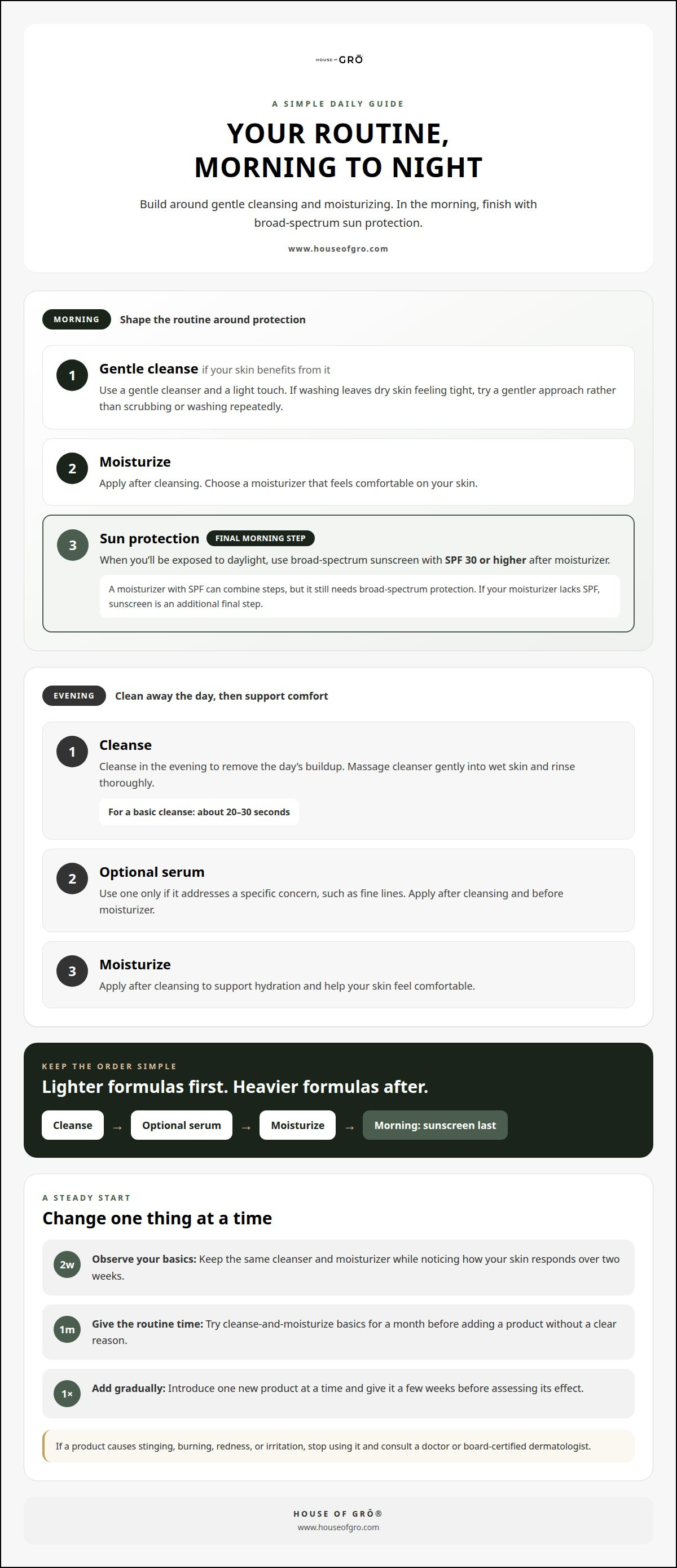
- Keep your initial routine steady. Use the same cleanser and moisturizer while observing your skin for two weeks. Notice whether cleansing leaves your face feeling tight and whether your moisturizer feels comfortable throughout the day. If a product causes stinging, burning, redness, or irritation, stop using it and consult a doctor or board-certified dermatologist.
- Give the basics time before adding another step. Try a simple cleanse-and-moisturize routine for a month before adding products without a clear reason. If you do add a product, introduce one at a time and give it a few weeks before assessing its effect. This makes changes easier to track and keeps your routine manageable.
Use Simple Skincare Shortcuts
Choose steps that fit naturally into your morning and evening instead of building a long sequence. A two-step skincare routine can make daily care feel more manageable. Check that each product has a distinct role, and avoid layering several formulas that serve the same purpose.
When your skin feels comfortable and the routine is easy to repeat, keep it steady for three to four weeks before assessing gradual changes. Consistency gives you a clearer starting point than switching products every few days.
Morning and evening routine differences
Include broad-spectrum sunscreen with SPF 30 or higher in your morning steps. Most people should cleanse once in the evening; a gentle cleanser can also suit morning use, while moisturizer can follow cleansing.
Decide Whether to Include Sunscreen
Make sun protection your final morning step when you’ll be exposed to daylight. Choose broad-spectrum sunscreen with SPF 30 or higher, and apply it after your moisturizer. If your two steps are cleanser and moisturizer, sunscreen needs its own place in the routine. A moisturizer with SPF may combine steps, but it still needs broad-spectrum protection.
Set Cleansing and Moisturizing Frequency
Cleanse in the evening to remove the day’s buildup, then moisturize. Depending on your skin type and how it feels, you can also use a gentle cleanser in the morning. Keep your routine consistent instead of cleansing more often whenever your face feels oily. The American Academy of Dermatology recommends a steady morning and nighttime routine once you’ve selected suitable products.
- Shape the morning around protection. Start with gentle cleansing if your skin benefits from it, then apply moisturizer and sunscreen. A two-step routine can mean cleanser followed by moisturizer with SPF, but check that the sun protection is broad-spectrum and SPF 30 or higher. If your moisturizer lacks SPF, sunscreen becomes an additional final step.
- Make your evening routine about cleansing and comfort. Use cleanser to remove the day’s buildup, then apply moisturizer. You can also consider a serum if it addresses a specific concern, such as fine lines. Keep the order simple: cleanse first, then apply lighter formulas before heavier ones.
- Choose a morning serum for its purpose, not out of habit. A serum can add a targeted step, but it isn’t essential to every routine. If you use one, apply it after cleansing and before moisturizer. Avoid introducing several serums at once; keeping other steps steady makes it easier to notice how your skin responds.
- Adjust your morning cleanse to your skin type. If washing leaves dry skin feeling tight, try a gentler approach rather than scrubbing or washing repeatedly. In the evening, cleanse to remove the day’s residue. Moisturize afterward to support hydration and help your skin feel comfortable.
- Keep everyday care consistent even when your schedule changes. On a quiet morning indoors, sunscreen still belongs in your routine when you’re exposed to daylight. At night, don’t skip cleansing after wearing makeup or spending a long day outdoors. A steady sequence is easier to repeat than a different set of products each day.
For a more considered daily ritual, explore skincare essentials that fit the steps you’re building.
Basic skincare routine steps
Build your routine around cleansing, moisturizing, and sun protection. Add a serum only when it serves a clear purpose, such as addressing a specific skin concern.
- Choose a gentle cleanser that won’t leave your skin feeling dry or tight. A daily facial cleanser should be non-drying and fragrance-free. Massage it into wet skin for about 20 to 30 seconds, then rinse thoroughly. Use a light touch around the eyes and avoid scrubbing, which can leave skin feeling uncomfortable. A simple cleanse is a practical first step in a manageable regimen.
- Apply facial moisturizer after cleansing to support hydration and comfort. Choose a non-comedogenic formula, especially if you’re concerned about clogged pores or breakouts. Your moisturizer should feel comfortable, not heavy or irritating. If your skin still feels tight after moisturizing, consider whether your cleanser is too drying before adding another product.
- Finish daytime care with broad-spectrum sunscreen at SPF 30 or higher. Apply it as the final step when you’ll be exposed to daylight. Sunscreen can be the second step in a minimalist morning routine if your moisturizer includes broad-spectrum SPF 30 or higher. Otherwise, use a separate sunscreen after moisturizer. The word “spectrum” matters: choose broad-spectrum protection rather than relying on an SPF number alone.
- Add a serum only if it addresses a specific need. A beginner routine might include cleanser, serum, moisturizer, and sunscreen, but you don’t need every step from the start. Apply serum after cleansing and before moisturizer. For example, if you want to address a particular concern, introduce one serum and keep the other steps unchanged. That makes it easier to notice how your skin responds.
- Keep the sequence steady and change one choice at a time. Cleanse, apply any serum, moisturize, then use sunscreen during daytime exposure. If your skin feels irritated, simplify your routine instead of layering on more formulas. A comfortable moisturizer and a cleanser that doesn’t leave your skin tight are useful signs to consider. Consistency helps you assess your routine without confusing the effects of several new products.
A two-step approach can stay practical: pair cleansing with daytime moisturizer that provides broad-spectrum SPF 30 or higher, then cleanse and moisturize at night. If your sunscreen is separate, treat it as the final daytime step rather than omitting sun protection to preserve a specific step count.
Common routine mistakes
Small changes can make a simple routine harder to assess. Avoid these five missteps so you can better notice how your skin responds.
There isn’t one combination of ingredients that suits every face. Avoid layering several active ingredients at once. Introduce one new product at a time and give it a few weeks before assessing its effect.
- Don’t cleanse too often. Washing more frequently doesn’t automatically make skin feel cleaner. One routine experiment began with washing the face three times a day, a useful reminder to review how often you cleanse. Most people should cleanse once in the evening to remove the day’s buildup. If cleansing leaves your face feeling tight, don’t add another wash without a clear reason.
- Use a light touch. Gently massage cleanser over wet skin, then rinse thoroughly. Scrubbing harder or longer isn’t a shortcut to a healthy complexion. For example, rubbing makeup around the eyes can irritate delicate skin. Use an oil-based cleanser to gently massage closed eyelids and lashes instead of pulling or scrubbing.
- Avoid changing several products at once. Introducing new ingredients all at once makes it difficult to identify which formula suits your skin. Add one product, keep the rest of your routine steady, and allow a few weeks before assessing its effect. An exfoliating acid can be an optional weekly addition, not a reason to start several active steps together.
- Don’t judge a formula by texture alone. A rich cream and a light gel feel different, but texture alone doesn’t show whether a product suits your needs. Choose a non-comedogenic facial moisturizer, especially if you’re concerned about clogged pores or breakouts. If dry skin feels tight after cleansing, reconsider your cleanser before adding multiple new ingredients.
- Respond to irritation instead of pushing through. Stinging, burning, redness, or irritation after using a product are reasons to stop and seek medical advice. Consult a doctor or board-certified dermatologist if these symptoms occur. Don’t add another product to mask the feeling; pause the newest step and note its name and when you used it.
Skipping daytime sun protection is another avoidable gap. Use broad-spectrum sunscreen with SPF 30 or higher as the final step when exposed to daylight. If your moisturizer includes SPF, check that it provides broad-spectrum protection. A steady routine makes it easier to spot changes than frequent product swaps.
Recommended routine order
Apply skincare from the lightest formula to the heaviest. In the morning, finish with sunscreen; at night, begin with cleansing.
- Cleanse before applying leave-on products. Start with a clean facial surface so makeup, oil, and daily residue don’t sit beneath later layers. In the evening, use an oil-based cleanser to help remove makeup, then rinse. If you use a water-based cleanser afterward, massage it gently into wet skin for 30-60 seconds. Avoid turning this order into repeated washing.
- Apply serum after cleansing. A serum generally comes before moisturizer because it is lighter in texture. Choose one for a specific concern rather than collecting ingredients without a purpose. For example, a hydration-focused serum may contain hyaluronic acid. Follow the product’s directions and introduce one new formula at a time, keeping other steps unchanged as you observe your skin.
- Apply moisturizer after lighter formulas. Spread facial moisturizer over your skin after cleansing and any serum. This order keeps your routine easy to follow, whether you use one leave-on product or several. If your skin feels dry or tight, consider your cleanser and moisturizer together before adding another active ingredient. A heavier cream generally follows a lighter serum in the same routine.
- Finish daytime care with sunscreen. Apply broad-spectrum SPF 30 or higher as the final step when exposed to daylight. If your moisturizer contains broad-spectrum sunscreen, it can combine moisturizing and sun protection. Otherwise, use a separate sunscreen after moisturizer. Don’t place a serum or cream over sunscreen, since that changes the intended order of application.
- Choose targeted ingredients deliberately. Salicylic acid is one example of an exfoliating ingredient, but it isn’t necessary for everyone. If you choose an exfoliating acid, keep it optional and use it once a week. Avoid introducing it alongside several other new formulas. This makes it easier to identify which product may affect your skin’s texture or other concerns.
- Adapt the sequence for a simple routine. A two-step skincare routine can mean cleansing, then moisturizing at night. In the morning, a moisturizer with broad-spectrum SPF may combine two functions. If you use a separate sunscreen, it remains the final daytime step, even if that makes the routine three products. Don’t sacrifice sun protection to keep the step count down.
Choose products that suit the order and needs of your routine. Explore skincare essentials for a considered approach to daily care.
House of GRŌ®
House of GRŌ® offers considered skincare essentials for a simpler daily ritual. At Dawn Rejuvenating Daytime Oil and After Dark Restorative Night Serum provide distinct daytime and evening options. Touch Hydrating Body Serum and Eye Detox Brightening Oil offer further ways to shape your personal care routine.
Choose products with a clear place in your morning or evening routine, rather than adding layers without purpose. A pared-back routine can still feel intentional, with each formula chosen for the moment it belongs in your day.
If you’d like to explore which House of GRŌ® offerings suit your routine, contact House of GRŌ®.
Let Your Routine Grow With You
A skincare ritual doesn’t have to stay fixed. Let your skin’s needs, the season, and the rhythm of your days guide thoughtful changes. Keep the foundation familiar, then add a step only when it has a clear purpose. That’s how a two-step skincare routine can stay simple while still feeling personal.
House of GRŌ® offers At Dawn Rejuvenating Daytime Oil, After Dark Restorative Night Serum, and Touch Hydrating Body Serum as distinct options for daily care. Choose what feels right for your routine without adding every product at once.
For a considered next step, contact House of GRŌ®. Keep your approach gentle, intentional, and open to change. Your daily ritual can evolve at its own pace.
Frequently Asked Questions
How to do it?
Start with cleanser and moisturizer, then add daytime sun protection. For a two-step skincare routine, choose products that fit your needs and keep the sequence steady. For example, cleanse at night, then moisturize. In the morning, a moisturizer with broad-spectrum SPF can combine hydration and sun protection. If you use a separate sunscreen, apply it as the final daytime step.
How to tailor your routine to your skin type?
Choose textures that feel comfortable and don’t leave your skin tight. Dry or dehydrated skin may suit a soap-free gel or moisturizing foam cleanser. Combination or oily skin can use a gentle face wash or foam. Mature skin may prefer a creamy cleansing lotion or gel. Notice how your skin feels and looks after each step, then adjust one product at a time.
What is the correct order of skincare for beginners?
Begin with cleansing, then apply any serum, moisturizer, and daytime sunscreen. A serum is optional, so a beginner can keep the evening sequence to cleanser followed by moisturizer. If you wear makeup, remove it during evening cleansing before applying leave-on products. A consistent order makes your routine easier to follow without adding steps that don’t address a clear concern.
What is the optimal simplified skin-care routine?
A practical foundation is cleansing and moisturizing, with broad-spectrum sunscreen during daytime exposure. In the morning, sunscreen can be part of your moisturizer or a separate final step. In the evening, cleanse to remove the day’s residue, then moisturize. Leave optional treatments out until you have a specific reason to include them. A streamlined routine works best when you can repeat it comfortably.
What are the two essential steps in a basic skincare routine?
The basic pair is cleansing and moisturizing. Cleansing removes surface residue, while moisturizer supports comfortable-feeling skin. Daytime care also needs broad-spectrum sunscreen with SPF 30 or higher when you’re exposed to daylight. If your moisturizer doesn’t provide it, sunscreen is an additional step. A two-step count shouldn’t mean leaving sun protection out of the morning routine.
How do you apply cleanser and moisturizer in the correct order?
Wet your face, gently massage cleanser over your skin, then rinse thoroughly. Pat your face dry and apply moisturizer. Use a light touch, especially around the eyes. If you wear makeup, use an oil-based cleanser to loosen it before rinsing. In the evening, this sequence prepares your skin for moisturizer without rubbing or scrubbing.
Is a two-step skincare routine effective for acne, dryness, or sensitive skin?
A simple routine can establish basic cleansing and moisturizing for different skin concerns, but it isn’t a specific acne treatment. For dry skin, a moisturizing cleanser and comfortable facial moisturizer can support a gentler routine. With sensitive skin, introduce products gradually and notice how the skin responds. If stinging, burning, redness, or irritation occurs, consult a doctor or board-certified dermatologist.
What are common skincare routine mistakes that can irritate skin?
Common missteps include washing too often, scrubbing, and introducing several new products together. For example, using an exfoliating acid alongside multiple unfamiliar formulas makes it harder to identify what irritates your skin. Cleanse gently and add products one at a time. If redness, burning, stinging, or irritation appears, stop using the product that triggered it and consult a doctor or board-certified dermatologist.