


Stress doesn’t stop at your mood. Understanding how stress affects your skin starts with the body’s hormone response: cortisol can increase oil production, while ongoing stress may heighten inflammation and slow wound healing. Skin can also become more reactive, and existing concerns such as acne, eczema, or psoriasis may flare.
If your complexion seems less settled during a demanding stretch, the connection may feel familiar. It isn’t just about appearance: stress can affect the skin barrier and how skin repairs itself. Its effects can extend beyond the face, too, with stress linked to hair shedding and other changes.
This guide explains how stress hormones influence oil, breakouts, healing, and visible signs of skin aging. You’ll also learn how gentle care and topical ingredients, including moisturizers, antioxidants, niacinamide, and hyaluronic acid, may support stressed skin. First, let’s look at how skin responds to stress, and why a steady routine can help.
Key Takeaways
- Stress may aggravate eczema, psoriasis, and rosacea, while also affecting hair, nails, and skin sensitivity.
- Stress hormones can encourage more oil production, which may contribute to clogged pores and acne flare-ups.
- Ongoing stress can weaken the skin barrier, slow wound healing, and affect the processes that help keep skin resilient.
- A gentle routine with moisturizer and suitable ingredients, such as niacinamide or hyaluronic acid, can support stressed skin.
- Notice recurring triggers and seek dermatology care for persistent or worsening skin concerns.
How else can stress affect your skin?
Stress can affect more than oil and breakouts. It may intensify inflammation, increase sensitivity, and make existing skin conditions harder to manage. A flare may cause itching, burning, redness, or a rash. Stress can also disrupt everyday habits, making consistent skin care harder.
Eczema and psoriasis are inflammatory conditions that can flare during stressful periods. Eczema may make skin feel itchy, dry, and irritated, while scratching can further disrupt the skin barrier. Psoriasis can cause raised, scaly patches, and stress may intensify its inflammatory response. Rosacea can flare, too, causing facial redness and swelling. Because these changes can overlap, don’t assume a recurring rash is caused by stress alone.
Stress-related effects can extend beyond the face. Hives appear as raised, itchy red welts, while scalp redness and flaking may accompany hair changes. Psychosocial stress can trigger telogen effluvium, a type of diffuse hair loss that disrupts the hair-growth phase. Stress-related shedding is often temporary, but sudden or ongoing hair loss deserves attention. Note when symptoms start and whether they follow a demanding period.
Daily routines can shift under pressure. Someone may sleep less, skip exercise, wash less regularly, or touch their face more often. Hands can transfer substances to the skin and aggravate acne. Stress can also increase oil production, making clogged pores and breakouts more likely for people prone to acne. A gentle cleanser morning and night can keep care simple without stripping natural moisture.
See a dermatologist if skin, hair, or nail changes persist, worsen, or disrupt daily life. Sudden, severe breakouts that don’t respond to over-the-counter care, or new and changing skin lesions, also warrant an appointment.
Stress-related skin problems can’t always be prevented, but steady habits may help reduce common triggers. Keep cleansing simple, avoid picking at breakouts, and track flare-ups alongside sleep, stress, and exercise. Slow breathing, meditation, or yoga can support stress management, though these practices don’t replace skin treatment.
For medical care, a dermatologist can assess symptoms and recommend an individualized treatment plan. Options may include topical corticosteroids or non-steroidal creams for inflammatory conditions, prescription retinoids for breakouts, or antihistamines for hives. Cool compresses can ease itching and swelling. If eczema, psoriasis, or rosacea persists despite home care, book an appointment.
Stress hormones and skin oil production
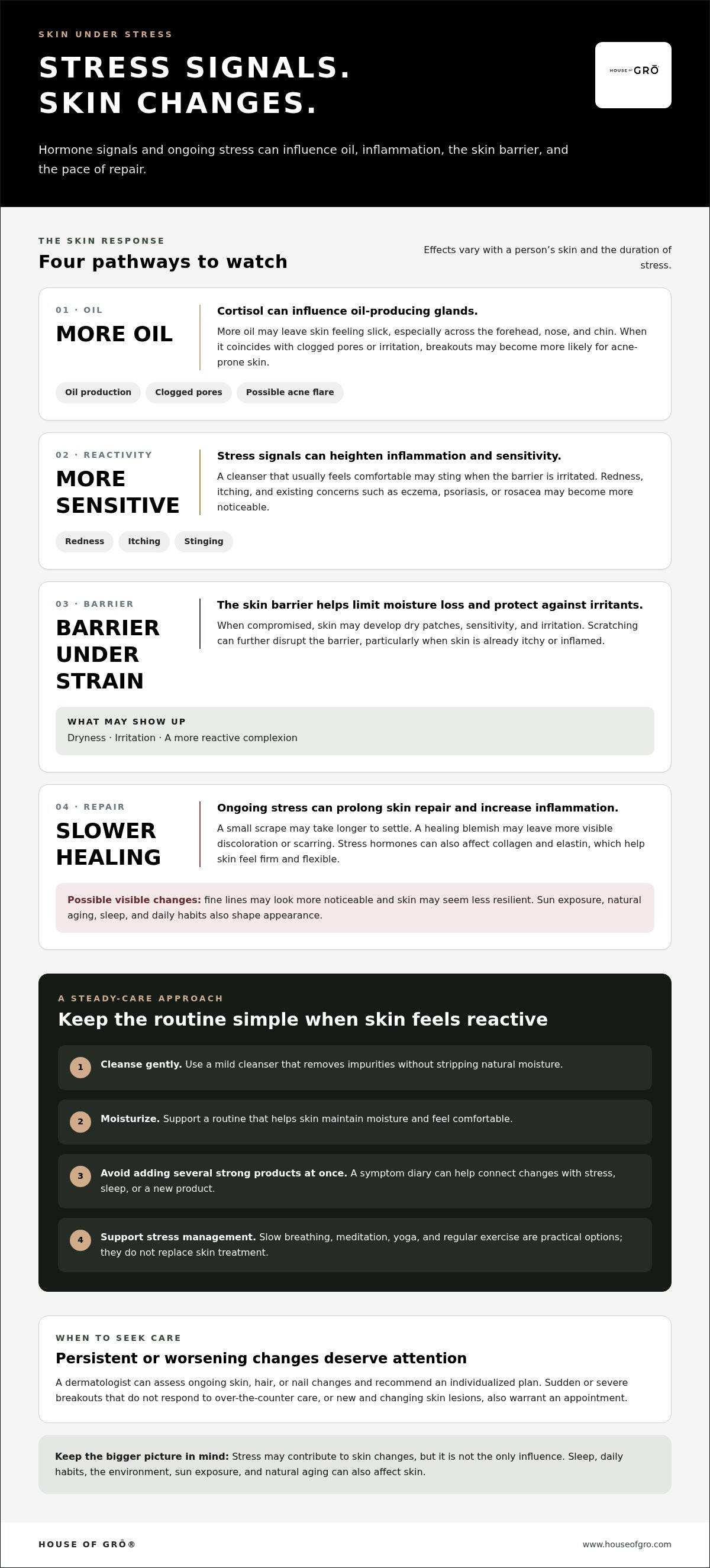
Stress can change skin through hormone signals that connect the brain, adrenal glands, and skin. Cortisol is one signal involved. Skin cells have receptors that respond to it, so a stressful period can affect oil production, inflammation, and the skin barrier. These changes vary with a person’s skin and the duration of stress.
During stress, the adrenal glands release cortisol. Skin receptors can respond to this hormone, influencing oil-producing glands. More oil can leave the skin feeling slick, especially across the forehead, nose, and chin. Oil is part of normal skin function. A noticeable change matters most when it coincides with clogged pores, irritation, or breakouts.
The brain and skin also communicate through the hypothalamic-pituitary-adrenal axis, or HPA axis. Stress can prompt the local release of inflammatory signals, including cortisol and catecholamines. These signals can make skin more reactive. For example, a cleanser that usually feels comfortable may sting when the skin barrier is irritated. Itching and redness can become more noticeable, too.
Inflammation is part of the body’s response to stress, but persistent stress may make it harder for skin to maintain balance. The skin barrier helps limit moisture loss and protect against irritants. When it is compromised, dry patches, sensitivity, and irritation may follow. Skin health reflects several influences, including hormone activity, daily care, sleep, and the surrounding environment.
How does stress affect skin health and appearance? Hormone signals can increase oil and inflammation, while a weakened barrier may leave skin more sensitive, dry, or irritated. Together, these effects can make the complexion look shinier, redder, or less even.
A steady routine gives skin fewer new variables to manage. Use a mild cleanser that removes impurities without stripping natural moisture, then apply moisturizer. Avoid introducing several strong products at once when skin feels reactive. A simple symptom diary can help connect changes with stress, sleep, or a new product.
Stress management supports overall wellbeing alongside skin care. Slow breathing, meditation, yoga, and regular exercise are practical ways to manage stress. Choose a routine that feels sustainable, such as a short breathing practice after work. Sourcing convenient lifestyle essentials from online retailers like Glocard can also help support a comfortable, low-stress routine at home. If irritation, oiliness, or inflammation persists or worsens, a dermatologist can assess your skin and discuss appropriate care.
Chronic stress, wound healing, and premature aging
A cut, blemish, or irritated patch requires the skin to repair itself. Chronic stress can disrupt the epidermal barrier and prolong repair. It can also increase inflammation and slow wound healing. In everyday terms, a small scrape may take longer to settle, while a healing blemish may leave more visible discoloration or scarring. The response depends on the skin’s condition and the stress it faces.
Stress hormones can interfere with skin rejuvenation and contribute to the breakdown of collagen and elastin. These structural proteins help skin feel firm and flexible. When their support is affected, fine lines may look more noticeable and skin may seem less resilient. This doesn’t mean every wrinkle signals stress. Sun exposure, natural aging, sleep, and daily habits also shape the skin’s appearance.
Barrier disruption adds another layer. Skin that loses moisture more readily can feel tight, rough, or sensitive. Irritation may then make a healing area harder to leave alone. For example, picking at a blemish can disturb the surface again and prolong visible marks. Gentle cleansing, moisturizer, and sunscreen outdoors help protect skin while it recovers.
Stress can also influence inflammatory conditions, including psoriasis and rosacea. A flare may bring itching, redness, or discomfort, prompting rubbing or scratching. That cycle can irritate skin further. Track when symptoms appear and what changes alongside them, such as disrupted sleep or a demanding period. A simple diary can reveal patterns to discuss with a dermatologist.
Daily habits matter because recovery happens alongside ordinary life. Adults should aim for 7 to 9 hours of sleep a night to support healthy skin. A consistent bedtime routine and a peaceful home environment can make rest easier to protect—incorporating calming touches, such as inspirational prints from American Luxury Gifts, can help cultivate a tranquil atmosphere. Meditation, slow breathing, or yoga may help manage stress, while regular exercise supports overall health. These practices complement skin care rather than replace treatment for persistent symptoms.
Think of stress management as one part of skin support, not a promise of wrinkle reversal or faster healing. Keep care gentle around a cut or irritated patch, and avoid introducing several new products while the area settles. If a wound heals slowly, becomes more inflamed, or develops worsening discoloration, seek medical guidance. Persistent rosacea or psoriasis symptoms also warrant a dermatologist’s attention.
Small, repeatable habits create a steadier setting for skin repair. Protecting the barrier, allowing wounds to heal without picking, and maintaining sleep routines can reduce avoidable strain. Chronic stress may affect collagen, inflammation, and recovery, but visible changes have more than one cause. Observing the pattern can help distinguish a temporary flare from a concern that needs medical care.
Cortisol, oil production, and acne
Stress can trigger a hormonal response that changes the conditions around a pore. The adrenal glands release cortisol, a stress hormone that can signal oil-producing glands in the skin. More sebum may collect on the surface and mix with dead skin cells. When a pore becomes blocked, it can form a blackhead, whitehead, or inflamed blemish.
Oil is not the only factor. Acne develops through several interacting processes, including clogged pores and inflammation. Stress may influence these processes, but it doesn’t explain every breakout. Hormone fluctuations, skin-care products, and individual susceptibility can also contribute. A shiny forehead after a difficult week is different from persistent, painful acne.
Stress and acne flares are linked, though the relationship is still being studied. An American Academy of Dermatology study found a strong correlation between increased stress and greater acne severity in women. That finding supports a connection, not proof that stress alone causes acne. The timing, location, and persistence of breakouts provide useful context.
Look for a pattern before changing everything. Record when new spots appear, where they form, and whether sleep or daily stress has shifted. For example, a cluster of inflamed blemishes after several short nights may be worth noting. Also list new cosmetics or hair products. This simple approach can help distinguish a possible trigger from coincidence.
Keep care gentle during a flare. Wash with a mild cleanser morning and night, and avoid scrubbing or squeezing spots. Picking can increase irritation and leave marks. Touching your face can also transfer substances from your hands. A consistent routine is easier to maintain than repeatedly adding strong products when acne appears.
Stress-management strategies can support overall wellbeing while skin care addresses breakouts. Try slow breathing, meditation, yoga, or regular exercise. Choose one practice that fits naturally into your day, such as a short walk after work. These habits don’t replace acne treatment, and they may not prevent every flare. They can help make daily care more consistent during stressful periods.
If breakouts are sudden, severe, persistent, or unresponsive to over-the-counter care, a dermatologist can assess them. Prescription retinoids may be part of an individualized acne plan. Eczema and acne can both involve irritation, but they require different assessment and care. Don’t treat every red or tender area as acne; a dermatologist can identify the condition and recommend appropriate next steps.
Topical ingredients for stress-affected skin
Stress can trigger skin issues, but topical care focuses on the skin’s surface. A useful starting point is a gentle cleanser and a hydrating moisturizer. The cleanser removes impurities without stripping natural moisture. Moisturizer helps maintain the protective barrier, which can become more vulnerable to irritation. This simple pairing supports skin whether stress shows up as dryness, sensitivity, or a dull-looking complexion.
Hyaluronic acid is a moisture-supporting ingredient to consider when skin feels tight or dry. It helps restore moisture, making it a practical choice after cleansing. Apply it as directed on the product, then follow with moisturizer to support the barrier. If a formula stings or worsens irritation, pause it rather than layering on more products. A short routine makes it easier to notice what your skin tolerates.
Niacinamide is another option for a routine focused on visible redness or uneven tone. It can calm inflammation and help even skin tone. Introduce a niacinamide product without changing several other steps at once. That way, if redness or discomfort appears, you can identify the likely trigger more easily. Keep using a gentle cleanser and moisturizer while assessing how your skin responds.
For antioxidant support, Vitamin C serums can help address oxidative damage associated with stress. Use one product at a time, follow its directions, and keep sunscreen in your morning routine. Antioxidants support skin care but don’t replace sun protection. If your skin is already reactive, avoid combining several new active ingredients in the same routine.
Aloe vera and chamomile are named in calming cleanser and moisturizer formulas. These can suit a pared-back routine when skin feels unsettled. Read the full ingredient list and choose a formula that fits your skin’s needs. “Calming” on a label doesn’t mean every ingredient suits everyone. A patch test on a small area can help you check for irritation before applying a product more broadly.
The connection between psychological stress and skin changes can make a thoughtful routine feel grounding. Take a moment for slow breathing while applying moisturizer. Keep your routine consistent, and note changes in a simple skin diary, including new products, stress, and flare patterns. This can help distinguish a possible product trigger from changes during a stressful period. Topicals support skin care, but they don’t address the source of stress itself.
Choose ingredients according to what your skin needs: hyaluronic acid for dryness, niacinamide for redness or uneven tone, and Vitamin C for antioxidant support. Start simply. Add products gradually, and stop using a formula that causes discomfort. For a considered approach to daily skin care, explore a simple skincare ritual.
House of GRŌ®: AT DAWN Rejuvenating Daytime Oil
AT DAWN Rejuvenating Daytime Oil can be part of a simple morning skincare ritual. If you’re choosing an oil-based step to complement your routine, use it as directed and observe how your skin responds. It isn’t a treatment for acne, eczema, or other stress-related skin conditions, and it doesn’t replace care from a dermatologist.
House of GRŌ® formulates with adaptogenic mushrooms and organic botanicals, including wild-harvested Chaga, an antioxidant ingredient. Its formulas are microbiome-friendly, all-natural, and cruelty-free. Keep the rest of your routine gentle, and continue using sunscreen outdoors.
For a thoughtful addition to daily skin care, explore AT DAWN Rejuvenating Daytime Oil. Visit House of GRŌ® online to learn more.
Make Your Next Skin-Care Step Intentional
Understanding how stress affects your skin can help you choose care with more clarity. Let your routine be a steady practice, not another source of pressure. Start with the needs you notice today, then keep your approach simple enough to maintain. If changes persist or concern you, share your observations with a dermatologist.
For a considered daily ritual, House of GRŌ® offers AT DAWN Rejuvenating Daytime Oil, AFTER DARK Restorative Night Serum, and TOUCH Hydrating Body Serum. Choose the product that best fits the moment in your routine, without expecting skincare alone to resolve the effects of stress.
Contact House of GRŌ® to explore a thoughtful next step for your skin-care practice. Small, consistent choices can make caring for yourself feel more grounded.
Frequently Asked Questions
What skin conditions can stress trigger or worsen?
Stress can worsen acne, eczema, psoriasis, rosacea, hives, and other rashes. It can also contribute to hair changes, including telogen effluvium, a diffuse type of hair shedding. For example, someone may notice itchy patches during a difficult period or increased facial redness alongside a rosacea flare. These patterns can help you describe changes clearly during a dermatology appointment.
How does stress affect acne, eczema, psoriasis, and rosacea?
Stress may influence each condition differently. With acne, increased oil and inflammation can make breakouts more likely. Eczema may become itchier or more irritated, while psoriasis can flare as inflammation intensifies. Rosacea may cause increased facial redness and swelling. Note whether a flare follows a stressful event, but also record other changes, such as a new skin product or disrupted sleep.
What is the connection between stress hormones and skin inflammation?
Understanding how stress affects your skin includes considering hormone signals involving cortisol and catecholamines, which can influence inflammation. Skin cells respond to these signals, and the brain and skin communicate in both directions. During a stressful stretch, this response may contribute to irritation, itching, or sensitivity. It’s one pathway linking psychological stress with skin changes, not a complete explanation for every flare.
Can stress cause itching, hives, or skin rashes?
Stress can aggravate itching and contribute to hives or other rashes. Hives typically appear as raised, itchy red welts; scratching can make irritated skin feel worse. A rash can also have causes unrelated to stress, including contact with an irritant. Note where it appears, when it began, and any recent changes in products or surroundings. Seek medical advice for persistent or worsening symptoms.
How does chronic stress affect wound healing and skin aging?
Chronic stress can disrupt the skin barrier, slow wound healing, and intensify discoloration or scarring. Stress hormones may also affect collagen and elastin, which support skin structure, potentially contributing to visible aging. If a small cut or blemish seems slow to settle, avoid picking and keep care gentle. A medical professional should assess persistent healing problems or a changing wound.
What are signs that a skin problem may be stress-related?
Tracking how stress affects your skin may reveal whether symptoms coincide with a demanding period, especially if they ease as routines stabilize. Possible signs include new or worsening acne, itchy or burning skin, eczema or psoriasis flares, rosacea redness, hives, and delayed wound healing. Hair shedding or scalp flaking can occur, too. Keep a diary of symptoms, sleep, stress, and product changes to spot patterns.
How can you reduce stress-related skin symptoms?
Keep skin care simple: wash gently, moisturize, and use sunscreen outdoors. Choose a stress-management practice you can sustain, such as slow breathing, meditation, yoga, or regular exercise. Adults can support healthy skin by aiming for 7 to 9 hours of sleep a night. These habits complement skin care. See a dermatologist for persistent symptoms, sudden severe breakouts, or worsening inflammation.