


The richest body moisturizer isn’t always the most comfortable. A non-greasy body serum is a leave-on formula designed to hydrate skin with a lighter feel than body butter or oil. It may suit anyone looking for a softer-feeling layer of moisture.
Texture matters: a product can feel nourishing without leaving a slick finish, though the experience depends on its formula and your skin. Whether a serum can replace lotion, or which ingredients support hydration, comes down to the formula and how you like to moisturize.
This guide compares body serums with lotions, butters, and oils, then explains which ingredients can support hydration and what to look for in a lightweight feel. You’ll leave with a clearer sense of which format fits your routine, and how to make moisturizing feel simple and intentional.
Key Takeaways
- Choose a body moisturizer by the finish and feel you prefer, not just its product label.
- Compare serums, lotions, butters, and oils by how they fit your skin’s hydration needs and daily routine.
- Learn what to look for in ingredients such as hyaluronic acid and niacinamide when seeking lightweight moisture.
- Test a small amount on your arm before applying a new body serum more widely.
- Use the texture and application cues in the guide to find a lighter-feeling formula that suits your routine.
Absorption and lightweight texture
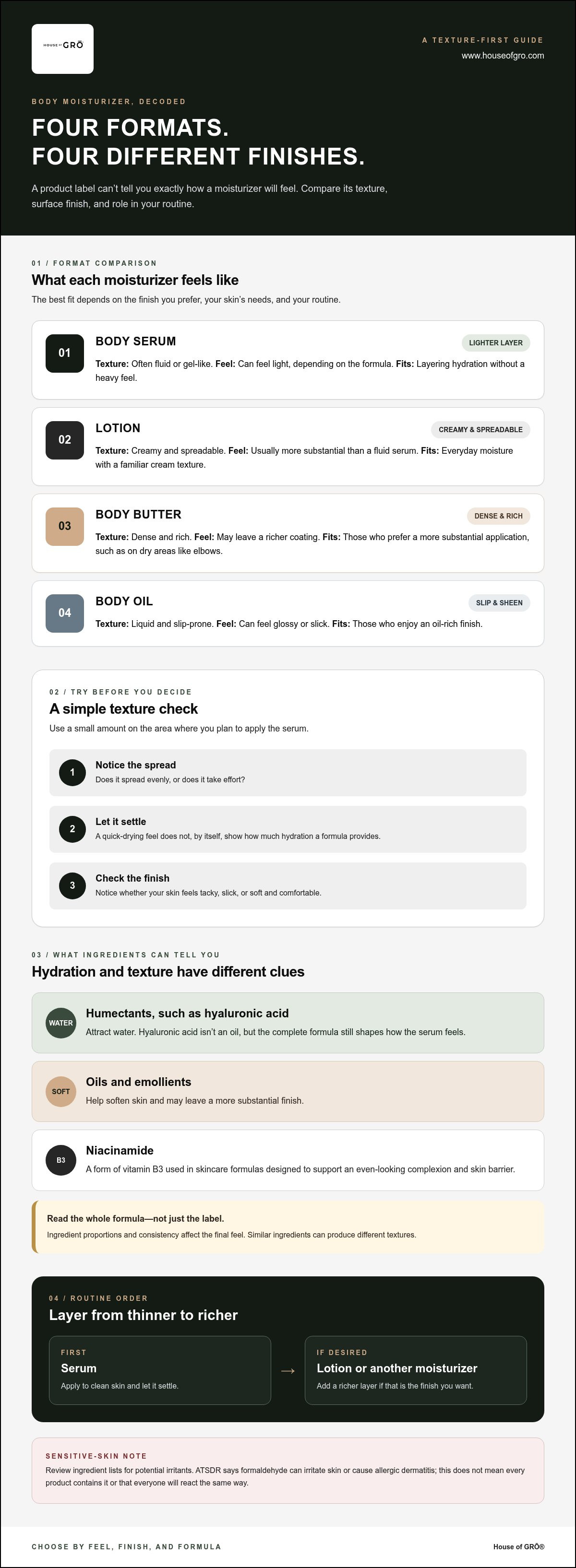
A serum’s texture comes from its formula, not its name alone. Some body serums feel fluid and spread easily; others contain richer oils that leave a more noticeable finish. To find a non-greasy body serum, look beyond the word “serum” and consider how it spreads, settles, and feels on your skin.
Absorption describes how a formula seems to settle into the skin. A quick-drying feel may come from a light consistency or ingredients that leave less residue on the surface. It doesn’t, by itself, show how much hydration the formula provides. A watery serum may feel light, while a richer formula may leave a protective, silky layer.
Judge texture with a simple application test. Smooth a small amount over one area, such as your forearm, and notice whether it spreads evenly or takes effort. Once it has settled, check how your skin feels. A tacky finish, slick film, or soft, comfortable feel can help you decide whether it suits your routine.
Ingredient roles can help explain these differences. Humectants such as hyaluronic acid attract water, while oils and emollients help soften skin and may leave a more substantial finish. The balance matters: formulas with similar ingredients can feel different because their consistency and ingredient proportions vary. TOUCH Hydrating Body Serum is an option if you’re considering a dedicated body-serum layer.
If you have sensitive skin, review the ingredient list for potential irritants. The Agency for Toxic Substances and Disease Registry (ATSDR) says formaldehyde can irritate skin or cause allergic dermatitis. This can inform ingredient awareness, but it doesn’t mean every product contains formaldehyde or that everyone will react in the same way.
| Option | Typical texture | Surface feel | Best fit |
|---|---|---|---|
| Body serum | Often fluid or gel-like | Can feel light, depending on formula | Layering hydration without a heavy feel |
| Lotion | Creamy and spreadable | Usually more substantial than a fluid serum | Everyday moisture with a familiar cream texture |
| Body butter | Dense and rich | May leave a richer coating | Those who prefer a more substantial application |
| Body oil | Liquid and slip-prone | Can feel glossy or slick | Those who enjoy an oil-rich finish |
Test a small amount on the area where you’ll use the serum, then compare its spread, settling, and finish before adding it to your routine.
Body serum benefits compared with lotions, butters, and oils
A body serum differs from lotion, butter, or oil. Its lighter consistency may make layering comfortable, while a richer moisturizer can leave a more substantial finish. The best fit depends on your skin’s needs, the texture you prefer, and the time you have for your routine.
Apply serum to clean skin and smooth it over the areas you want to moisturize. Let it settle, then apply lotion or another moisturizer if you want a richer layer. This order puts the thinner formula first and leaves lotion as the final layer.
Compared with lotion, a serum often feels more fluid and less creamy. Lotion can be a practical all-over choice for a familiar, balanced layer. Body butter is denser and may feel comfortable on dry areas such as elbows. Oil adds glide and a more noticeable surface sheen. No format is automatically better; the texture and finish differ.
Can body serums help with rough texture, dark spots, or firming? Their effects depend on the formula’s ingredients and the concern being addressed. A serum can be part of a targeted body-care routine, but no product type alone guarantees a change in skin texture, tone, or firmness.
Are body serums safe to use during pregnancy, and which ingredients require caution? Pregnancy calls for careful, ingredient-by-ingredient review, especially for concentrated active ingredients. Consult a prenatal healthcare professional about a formula before adding it to your routine.
Ingredient choice can make a serum feel purposeful, not just lightweight. For example, a formula featuring a vitamin or hydrating ingredient may suit someone seeking a focused layer under lotion. Read the ingredient list and consider what you want the product to do, rather than relying on “serum” or “natural” on the label.
- Choose serum when a fluid layer fits your routine or you want to apply a targeted formula before lotion.
- Choose lotion for an easy, creamy moisturizer across larger areas.
- Choose butter when you prefer a dense texture on areas like elbows.
- Choose oil when you enjoy glide and a more visible sheen.
Choose a format according to how you want your skin to feel after application. A non-greasy body serum can be a useful first layer, while lotion, butter, or oil can provide a richer finish.
Ingredients such as hyaluronic acid and niacinamide
Ingredient lists help explain why two body serums can feel different. Hyaluronic acid is a humectant, an ingredient used to attract water, while niacinamide is a form of vitamin B3 used in skincare formulas. Their presence can signal a hydration-focused or tone-conscious formula, but the full ingredient blend shapes the final texture and skin feeling.
Hyaluronic acid may suit a lightweight routine because it attracts water and isn’t an oil. Check where it appears in the ingredient list, then consider the rest of the formula. A fluid serum with hyaluronic acid may feel different from one that also contains richer oils or emollients.
Niacinamide is another ingredient to recognize by name. Formulators use it in products designed to support an even-looking complexion and skin barrier. Compared with a formula focused mainly on oils, a niacinamide serum may appeal if you want a targeted step alongside everyday body moisturizer. The ingredient alone doesn’t tell you how the complete product will feel.
What ingredients or fragrances should sensitive-skin users avoid in body serums? If fragrance has caused discomfort before, consider a fragrance-free formula and read the full ingredient list. The Agency for Toxic Substances and Disease Registry (ATSDR) says formaldehyde can irritate skin or cause allergic dermatitis, so you may want to avoid it if you have sensitive skin.
Consider the complete formula, not just one highlighted ingredient. A serum may combine hyaluronic acid with botanical extracts, oils, or fragrance, and each can affect its consistency and finish. If you prefer a lighter feel, a watery or gel-like formula may be more comfortable than one with a prominent oil blend.
Use these label-reading steps to compare options:
- Identify the goal. Look for hyaluronic acid when you want a water-attracting ingredient, or niacinamide for a formula focused on tone and barrier support.
- Review fragrance. Choose fragrance-free if scented skincare has bothered your skin before.
- Scan the full list. Notice oils and richer emollients that may change the finish, even when the featured ingredient is lightweight.
- Try a small area. Apply a little serum to one patch of skin and observe its feel before using it more broadly.
Ingredient names offer clues, but they don’t fully predict how a product will feel. A serum containing hyaluronic acid may still feel rich if its other ingredients create a heavier consistency. Compare the label with your texture preferences, then choose a formula that fits your body-care routine.
Product testing and expert recommendations
For dry or sensitive skin, look for a serum formulated for hydration with a finish you tolerate. If fragrance has bothered your skin, consider a fragrance-free formula and test a small amount on your arm first.
Packaging and ingredient lists matter, too. Compare the stated size, directions, and formula before choosing.
Tested Serum Picks
Product-tested picks are body serums assessed through hands-on use, rather than selected from ingredient claims alone. A useful comparison looks at spread, residue, hydration feel, and packaging. Clean body serums featured in comparisons are usually 4-5 fl oz, giving you a practical size reference without making bottle size a measure of performance.
For example, note whether a tester reports an even application or a tacky finish. These details help distinguish a quick-settling formula from one that leaves more slip. Apply the same criteria when reading a product test, then compare them with your own texture preferences.
Expert-Recommended Serum Picks
Expert recommendations can offer guidance, but a product still needs to suit your skin and routine. Dermatologists recommend testing a small amount of body serum on an arm before applying it more widely, which can help you notice a possible reaction.
Make the test practical: apply the product to a small area, follow its directions, and observe how your skin feels. Then assess whether it spreads easily and leaves a finish you like. Expert guidance can inform your choice, while your ingredient preferences and skin response help narrow it down.
Dry-Skin Serum Picks
For dry skin, prioritize hydration and a comfortable texture. Compare formulas for humectants such as hyaluronic acid, alongside emollient ingredients that soften skin. If your routine calls for a more substantial finish, you can follow a lightweight serum with a richer moisturizer.
For sensitive skin, fragrance-free options may be preferable if fragrance has caused discomfort. Review the complete ingredient list, not just highlighted ingredients, and follow the product’s directions. Testing a small amount on your arm is a measured first step before using a new formula over a larger area.
Packaging can make daily use easier, too. A pump may help dispense a consistent amount, while a bottle may require more careful handling. Choose a format that lets you apply the serum neatly, then judge the formula by its feel, spread, and place in your routine.
Use these criteria to compare options: test the texture on a small area, review the ingredients, and consider whether the serum layers comfortably with your moisturizer. The right choice is the formula and finish that suit your skincare priorities.
NBC Select staff tested more than 15 body serums for the story, adding hands-on comparisons of spread, residue, hydration feel, and packaging. These assessments can help shoppers compare texture and practicality alongside their own skin preferences.
Lightweight, non-greasy body serum textures
Texture matters when warmth makes a rich finish uncomfortable. For summer or humid weather, look for a lightweight serum with a fluid or gel-like consistency that spreads easily and doesn’t leave a slick film. Test a small amount on your arm and assess the finish before using it more widely.
There’s no single best formula for everyone or every climate. A water-based texture may feel more comfortable in humid conditions, while a formula with more oils may feel heavier. If dryness remains a concern, layer the serum under a moisturizer instead of choosing a texture that feels unpleasant on your skin.
Try this simple comparison when reading labels or testing formulas:
- Check the consistency. A runny or gel-like product may spread with less effort than a dense cream.
- Notice the finish. After application, check for tackiness, shine, or a comfortable skin feeling.
- Consider the target area. A lightweight serum may suit arms and legs, while dry elbows may need a richer moisturizer over it.
- Adjust the amount. Start with a small portion, then add more only if the skin still feels dry.
These steps help distinguish a comfortable finish from a product that only sounds lightweight on its packaging. Ingredients also affect texture. Humectants such as hyaluronic acid attract water, while oils and emollients can add slip or create a richer surface feel. The overall blend matters more than one featured ingredient.
In the United States, the cost of popular body serums varies with bottle size, ingredient blend, packaging, and brand positioning. Compare the amount in each container and the formula’s intended use when weighing options. An 8 oz bottle of body serum usually lasts 4-6 months, depending on use frequency, so how often you apply it can also affect how long a bottle serves your routine.
Treat the “non-greasy” label as a starting point, not a guarantee of how a product will feel. Two lightweight formulas can settle differently depending on their ingredients and how much you apply. Test each product in the conditions you expect to use it, such as after a shower before dressing for a warm day.
For an intentional body-care routine, explore lightweight body care options and consider how each formula’s texture fits your preferred finish.
For summer or humid weather, look for a fluid, water-based or gel-like body serum that spreads easily and feels comfortable rather than tacky or slick. Test a small amount before dressing in warm conditions, since the finish depends on the whole formula and how much you apply.
House of GRŌ®: AT DAWN Rejuvenating Daytime Oil
AT DAWN Rejuvenating Daytime Oil offers an oil-based option for readers who prefer that format in their daytime skincare routine. For body hydration in a serum format, TOUCH Hydrating Body Serum is a closer fit to this guide’s focus on lightweight body care. Choose the oil if you prefer an oil, or the body serum if you’re looking for a serum texture.
Let your preferred consistency guide your choice. Compare the product type with the finish and feel you want, rather than expecting an oil and serum to feel the same. A considered choice can make body care feel more personal and intentional.
For a closer look at these skincare offerings, visit House of GRŌ® online.
Choose a texture that feels right for your routine
Your body-care routine doesn’t need a fixed formula. Let comfort guide your choice, then notice which textures you reach for consistently. A non-greasy body serum may suit moments when you want a lighter-feeling layer, while another format may feel more at home in a slower evening routine.
House of GRŌ® offers TOUCH Hydrating Body Serum for body care, alongside AFTER DARK Restorative Night Serum and AT DAWN Rejuvenating Daytime Oil. Each has a distinct place in a considered skincare routine. Choose according to the product format and the experience you want from your daily practice.
If you’re ready to explore a body-care option that fits your preferences, contact House of GRŌ® for body care advice. Take the next step at your own pace, and make room for a routine that feels like yours.
Frequently Asked Questions
What is a Body Serum?
A body serum is a leave-on skincare formula made for the skin on your body. A non-greasy body serum may suit someone who wants a lighter-feeling layer in a routine, such as after washing their hands or showering. Check the label for its intended use and directions. The format can vary, so the product name alone won’t tell you how it will feel or how to apply it.
What is a non-greasy body serum, and how does it differ from body lotion or body oil?
A serum is a body-care formula, while lotion and oil are other product formats. Lotion tends to have a creamy consistency; oil has an oil-based texture and glide. Formulas vary, so compare the ingredient list and directions rather than relying on the product category alone. A small application can help you decide whether the finish fits your routine.
What ingredients make a body serum absorb quickly without feeling greasy?
Hyaluronic acid is a water-attracting humectant often used in lightweight formulas. The full blend shapes how a non-greasy body serum spreads and settles. Oils and emollients can create a richer surface feel, even when a formula includes a humectant. Compare ingredient lists, then try a small amount and notice whether the finish feels comfortable.
How long does body serum take to absorb, and how often should you use it?
How quickly a serum settles depends on its consistency, the amount applied, and how it feels on your skin. A thin layer of a fluid formula may settle differently from a generous amount of a richer one. Follow the product’s directions and apply it in a way that fits your routine. If layering moisturizer, let the serum settle first.
Which non-greasy body serums are best for dry or sensitive skin?
For dry or sensitive skin, choose a hydration-focused serum with a finish you tolerate. If fragrance has bothered your skin, consider a fragrance-free formula and test a small amount on your arm before wider use.
What are the best lightweight body serums for summer or humid weather?
A watery or gel-like serum may feel more comfortable if you want a lightweight layer. Test a small amount and notice how it spreads, settles, and feels on your skin.
How much do popular non-greasy body serums cost in the United States?
Prices for a quality non-greasy body serum typically range from fifteen to sixty dollars in the United States, depending on the brand, bottle size, and active ingredients. Luxury formulations or specialized botanical blends from brands like House of GRŌ® may sit at the higher end of that spectrum, while mass-market options are generally more budget-friendly.