


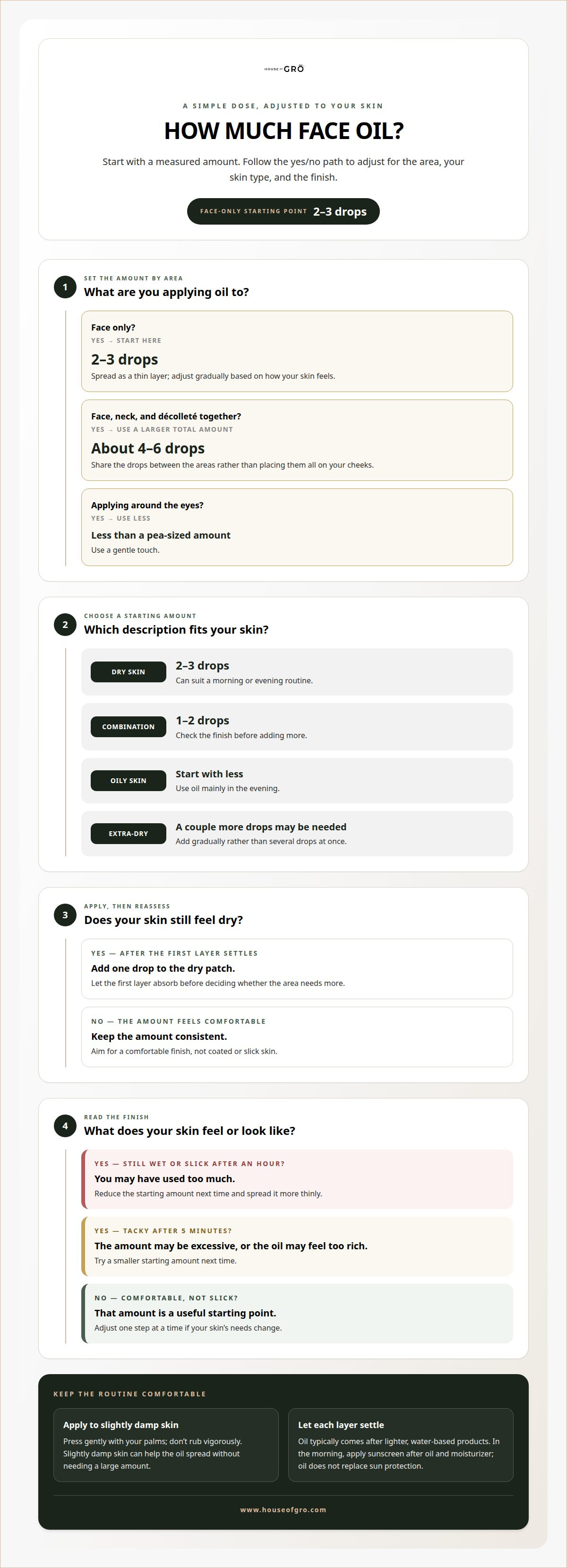
A small amount of face oil can be enough. The question “how much face oil should I use?” has a simple starting point: 2 or 3 drops for your face. Adjust from there according to how your skin feels.
When skin feels dry, it can be tempting to apply more oil or skip it if your routine already has several steps. If you’re wondering “how much face oil should I use?” start with a small amount, then consider how your skin feels and what else you’re applying.
Learn how to press face oil onto slightly damp skin, layer it with moisturizer and sunscreen, and adjust the amount to your routine. A few considered changes can make this step feel simple and comfortable.
Key Takeaways
- Apply face oil to slightly damp skin with a light pressing motion for an even, comfortable layer.
- Begin with a small amount, then adjust based on your skin’s feel and the oil’s texture.
- Layer oil thoughtfully with moisturizer, foundation, and daytime sunscreen to keep your routine comfortable.
- Oily or combination skin can adapt face oil use by choosing a lighter texture and adjusting when it’s applied.
- Explore daytime and nighttime oil options to find a simple fit for your routine.
How Do You Apply Face Oil Correctly?
Yes, you can use face oil around the eyes. Apply less than a pea-sized amount with a gentle touch. Follow these steps to apply oil to clean, slightly damp skin and layer it with the rest of your skincare routine.
-
Start with clean, damp skin
Cleanse first, then use toner if it’s part of your routine. Apply face oil when your skin is slightly damp, not wet, so it spreads easily. If you’ve applied a water-based serum, let it settle before adding oil. Slightly damp skin can help the oil feel comfortable without requiring a large amount. Don’t apply it over makeup or onto skin that still has cleanser on it.
-
Apply oil to the face and neck
Warm the oil between your palms for a few seconds, then press it gently onto your face and neck. Start at the lower face and move upward, working from the center outward. Use a light touch around the eyes, where less than a pea-sized amount is enough. For the face, neck, and décolleté together, use about 4 to 6 drops per application. Let the oil settle rather than rubbing vigorously.
- Use your palms to spread the oil in a thin, even layer. Press from your chin toward your cheeks, across your forehead, then down your neck. This helps prevent oil from pooling around your nose, hairline, or jaw. If an area still feels dry, let the first layer settle before deciding whether to add more. Aim for a comfortable finish, not slick skin.
- Apply face oil after cleansing, toner, and water-based serums. Follow with moisturizer if you use one. Oil typically comes later in a skincare routine, after lighter, water-based products. In the evening, it can be your final skincare step. In the morning, apply sunscreen after the oil and moisturizer. Give each layer time to settle before adding the next.
- Let the oil settle before applying sunscreen. Wait a couple of minutes, then apply sunscreen as the final morning step. Face oil doesn’t replace sun protection. The American Academy of Dermatology advises applying moisturizing products while skin is still damp. Keep the oil layer light beneath sunscreen, especially if you plan to wear foundation, and let your skincare settle before applying makeup.
Recommended amount of face oil
Start with a light layer, then adjust for your skin and the area you’re treating. A few measured drops make it easier to tell whether your skin feels comfortable or overly slick.
-
Determine the amount by skin type
Begin with 2 or 3 drops for your face, then pay attention to the finish. For dry skin, 2 to 3 drops can suit a morning or evening routine. Combination skin may need 1 to 2 drops, while oily skin can start with less and use oil mainly in the evening. Extra-dry skin may need a couple more drops. Adjust gradually rather than adding several drops at once.
-
Account for the face, neck, and décolleté
Use about 4 to 6 drops when covering your face, neck, and décolleté together. That larger area needs more oil than the face alone, so spread the drops between the areas rather than placing them all on your cheeks. If you’re treating only your face, keep to the smaller starting amount. The aim is a thin layer across each area, not a visibly wet finish.
- Use the dropper as a guide, not as a reason to apply more. For your face, start with one drop on each cheek and one on your forehead, then spread the oil evenly. If the texture feels rich or your skin is already moisturized, begin with less. Face oil should leave your skin comfortable, not coated or slick.
- Check the finish after applying. If your skin still looks wet or feels slick an hour later, you may have used too much. A tacky feel after 5 minutes can also suggest that the amount was excessive or the oil feels too rich for your routine. Next time, reduce the starting amount and spread it more thinly. Don’t add extra drops simply because the skin feels dry before the first layer settles.
- Adjust one step at a time. If your skin feels comfortable after the smaller amount, keep it consistent; if a dry area still needs attention, add one drop to that patch after the first layer absorbs. Keep track of whether you’re applying oil to damp skin or dry skin, since the surface can affect how readily it spreads. For a measured starting point, explore an oil-led skincare routine and choose an amount that suits your skin type.
Mixing face oil with moisturizer or foundation
Choose whether to layer or blend based on the finish you want. Keep face oil separate from your moisturizer and makeup so you can control the amount each time.
- Apply face oil and moisturizer in separate layers when you want control over each step. A common approach is to press oil onto your skin, let it settle for a few minutes, then smooth moisturizer over it. This keeps the cream’s texture unchanged and makes it easier to control how much you apply. Use this sequence if you want both products in a measured routine.
- Consider the order of your routine and how each layer feels. Some routines place oil after moisturizer as a final skincare layer; others apply oil first, then cream a few minutes later. Try the order that feels comfortable with your products. Wait until the first layer no longer feels wet or moves across your skin before applying the next.
- Blend face oil with moisturizer in your palm only if you want a simpler, combined application. Mix the products just before applying them, not inside the moisturizer bottle. Adding oil to the bottle can change the cream’s texture and make the amount harder to control. Start with a small amount of each, then spread the mixture evenly.
- For makeup, apply face oil before foundation and let it settle first. Too much oil can leave a slick surface that makes foundation move instead of settling evenly. Use a light layer and give your skincare time to absorb. If foundation slips or separates, try less oil next time or apply the products in separate layers. Don’t add oil directly to your foundation bottle, as it can change the formula.
- Change one part of your routine at a time. If moisturizer feels heavy over oil, try applying cream first on one occasion, then compare it with oil followed by cream on another. Keep the rest of your routine steady, including your foundation, so you can tell which order feels better. In the morning, apply sunscreen as the final protective step after your skincare has settled.
Can Oily or Acne-Prone Skin Use Facial Oil?
Oily or acne-prone skin can include face oil in its routine. Start with a light amount and choose a texture that feels comfortable. For a facial roller or gua sha, apply enough oil for the tool to glide without tugging. Add a little more only if it drags.
- Start with a small amount and assess the finish. For oily skin without makeup, begin with 1 drop in the morning; oily or combination skin that leans oily may prefer skipping daytime oil and using a small amount in the evening. If the surface feels slick, reduce the next application. The aim is a thin layer, not a glossy coating.
- For combination skin, consider a lighter texture. Squalane, grapeseed, and jojoba oils are examples to consider when some areas feel oily and others dry. Apply a modest amount where needed rather than covering your whole face equally. For example, use less on your forehead and more on dry-feeling cheeks, then notice how the finish feels.
- If you’re acne-prone, look for face oils described as non-comedogenic. Neemseed, hemp seed, and turmeric root are examples mentioned for this skin concern. Ingredients matter, but so does your skin’s response. Introduce one facial oil at a time so you can tell how it feels within your existing routine.
- Press oil on gently rather than massaging vigorously. A facial roller or gua sha should move smoothly across your skin without tugging. Begin with a thin layer, then add a little more only where the tool catches. Too much oil can make your skin slippery and movements harder to control.
- Use your combination skin as a guide for where to apply oil. If your cheeks feel dry but your T-zone becomes shiny, apply oil selectively instead of using the same amount everywhere. A lightweight option such as jojoba or squalane may suit areas that need a softer finish. Start with a small amount, then adjust according to how each area feels.
- Notice how your skin responds after each use. If a concentrated formula feels heavy, reduce the amount or save it for evening. Discontinue use if irritation occurs. If you’re new to facial oil or have very sensitive skin, patch test before applying it across your face. Keep your routine simple while you assess your skin’s response.
Can You Use Face Oil in the Morning?
Yes. Face oil can be part of a morning or evening routine, depending on your skin’s needs and the other products you use.
A bottle’s daily-use lifespan depends on its size and how many drops you apply each time. Use facial oil within 6 months of opening, and follow the product’s use instructions.
- Choose morning or evening based on how the oil fits into your routine. You can use facial oil once or twice a day, but daily application isn’t essential for everyone. If it feels comfortable under your daytime products, use it in the morning. If it feels too rich beneath sunscreen or makeup, reserve it for evening.
- Apply morning products in a measured order. Use moisturizer, then a light layer of face oil if that suits your routine. Let the oil settle before applying sunscreen. Face oil doesn’t replace sun protection, and sunscreen remains the final morning skincare step. If you wear makeup, let your skincare settle before applying foundation.
- Wait a couple of minutes between applying face oil and sunscreen. This gives the oil time to settle before you add the next layer. Apply sunscreen gently and evenly rather than rubbing it vigorously over freshly applied oil. If your makeup slips, try using less oil or moving it to your evening routine.
- Use evening application as a quieter option. After cleansing and other water-based products, apply face oil as one of the last skincare steps. If you also use moisturizer, choose an order that feels comfortable and let each layer settle. Allow 20 to 30 minutes before bed so the oil has time to absorb instead of transferring quickly onto your pillow.
- Adjust how often you apply oil based on the finish you prefer. Start with once-daily use, then consider a second application only if the first feels comfortable. Oily or combination skin that tends to be oily may do better without daytime face oil, using a small amount at night instead. Dry skin may find morning and evening use more comfortable.
- Build a simple evening ritual around the product you choose. For example, use AFTER DARK Restorative Night Serum as an evening skincare step, then keep the rest of your routine familiar. A consistent routine makes it easier to notice whether facial oils feel comfortable in the morning, at night, or once daily. Explore an evening skincare ritual and shape your oil use around the time of day that suits you.
How long a bottle lasts depends on its size and how many drops you use each day. Use the oil within six months of opening.
House of GRŌ®
House of GRŌ® offers facial oils and serums for daytime and evening routines. If you’re refining how much oil to use, start small and notice how your skin feels as you layer it. At Dawn Rejuvenating Daytime Oil and After Dark Restorative Night Serum suit different parts of the day. Eye Detox Brightening Oil is another facial-care option, while Touch Hydrating Body Serum is for body care.
Choose the format that fits the step you want to add, start with a light application, and adjust to the finish your skin prefers. Explore House of GRŌ®’s skincare products to find an option for your routine.
Make Your Routine Feel Like Your Own
A useful skincare routine responds to your day rather than a fixed ideal. Notice whether your skin feels comfortable under makeup, whether your evening routine feels balanced, and whether you enjoy the texture enough to use it consistently. These cues can help you decide how much face oil to use and where it fits in your routine.
Let your routine evolve gradually. Seasonal changes, a different moisturizer, or a shift in how your skin feels may call for a lighter application or a different time of day. Make one simple adjustment at a time and notice how it feels. A thoughtful ritual comes from paying attention, not adding more steps. Even a brief pause after applying skincare can help you assess each layer.
If you’re ready to shape a face-oil routine around your preferences, contact House of GRŌ®. Choose a pace that feels natural, stay attentive to your skin, and let each application become a quiet moment of care.
Frequently Asked Questions
Why does my face oil leave my skin greasy instead of glowing?
A greasy finish often means the layer is too heavy for your skin or routine. If skin still looks wet or feels slick an hour after application, reduce the amount next time. A tacky feel after 5 minutes can also signal that you used too much or the formula feels too rich. Try applying less to slightly damp skin, then let it settle before adding other products.
Does face oil go on before or after moisturizer?
For one approach to layering, apply oil first and allow a few minutes for it to settle before smoothing on moisturizer. Other routines place oil after moisturizer as a final layer. Choose the order that feels comfortable with your products, and let each layer settle before adding the next. If you apply makeup afterward, notice whether your skin feels slick. Adjust the amount or layering order if your foundation moves.
How Many Drops of Face Oil Should You Use?
Start with 2 or 3 drops for your face, then adjust gradually. Three to four drops can cover the entire face, but the oil’s texture and your skin’s feel affect how much you need. If you’re new to facial oil, begin at the lower end and spread it thinly. Add more only when the first layer has settled and your skin still feels dry.
How many drops of facial oil should I use?
For face-only application, begin with 2 or 3 drops. A simple dropper pattern is one drop on each cheek and one on the forehead, then distribute it across the face. Use less if the oil feels rich or your skin already feels moisturized. If you’re applying oil to your neck and décolleté too, allow for the larger area and adjust the total amount.
Is Face oil suitable for oily and combination skin?
Yes, oily and combination skin can use facial oil with a restrained approach. Oily skin can start with 1 drop in the morning if you aren’t wearing makeup, while skin that leans oily may prefer evening use. For combination skin, lighter options such as squalane, grapeseed, or jojoba may suit areas that feel less dry. Introduce one oil at a time to observe your skin’s response.
Should You Press or Rub In Face Oil?
Press face oil gently onto your skin instead of rubbing vigorously. Warm it between your palms, then distribute it with light, steady pressure. If you’re massaging upward, start at the lower face and move from the center outward. For a roller or gua sha, use enough oil for the tool to glide without tugging, adding a little more only where your skin catches.
How many drops of face oil should I use per application?
For one face application, start with 2 or 3 drops. Use the skin’s finish to guide any change: a comfortable, thin layer is different from skin that remains wet or slick. If only one dry patch needs extra care, add a single drop to that spot after the first layer absorbs. This avoids increasing the amount across your entire face unnecessarily.
Should face oil go before or after moisturizer?
If you use both, apply face oil and let it settle for a few minutes before applying moisturizer. Another approach is to apply oil after moisturizer. Notice how the layers feel together rather than mixing products in their containers. Keep the products separate until application, and don’t add oil directly to a moisturizer bottle, as it can change the formula.