


Firming serums can help improve the look and feel of skin, but results take consistency. When a formula works by supporting changes beneath the surface, visible results may take about 8-12 weeks. The best serum for sagging skin is one that suits your skin’s needs and includes ingredients you can use comfortably.
It’s natural to want a serum that feels effective without making your routine complicated. Ingredient names alone don’t tell the whole story: texture, sensitivity, wrinkle concerns, and how you plan to use a serum all matter.
This guide explains what firming serums can and can’t do, how to compare common ingredients, and what to consider if your skin is dry, oily, or easily irritated. You’ll also find a practical way to weigh product features and prices, so you can choose with more clarity and make skincare a considered daily practice.
Key Takeaways
- Firming serums may improve the look of skin over time, but visible changes can take about 8-12 weeks of consistent use.
- Match a serum’s texture and hydrating qualities to your skin’s needs, especially if it’s dry, oily, acne-prone or sensitive.
- Compare ingredients by the concern they address, rather than assuming a longer ingredient list means a better formula.
- Consider whether your main concern is fine lines, deeper wrinkles or loss of firmness when choosing a serum and building a routine.
- Weigh product features against your routine and priorities to make a considered choice, without relying on price alone.
1. Do anti-aging serums really work?
Anti-aging serums can improve the appearance of fine lines, especially when their formulas address hydration and skin texture. Peptides, retinol, hyaluronic acid, and vitamin C are common serum ingredients. Their presence alone doesn’t establish how well a product suits your skin or concern.
A serum can make skin look smoother, but it can’t meaningfully tighten loose skin the way a procedure can. Think of topical care as support for surface appearance, not a substitute for a clinical approach to pronounced laxity; for readers curious about professional treatments like skin boosters, industry resources from Skin Candy outline how practitioner-grade options work deeper within the skin.
Peptides are short chains of amino acids used in skincare formulas. A peptide serum may be worth considering when fine lines and a less firm appearance are your main concerns. Compare the ingredient list and the formula’s overall purpose rather than choosing based on the word “peptide” alone.
Growth-factor serums are another category marketed for visible signs of aging. Formulas may pair growth factors with peptides, but those ingredient names don’t guarantee a lifting effect. Look at the specific concern the product addresses, such as fine lines or dryness, and keep expectations focused on visible skin appearance.
Combining peptides with retinol brings together ingredients commonly found in anti-aging serums. Retinol is often selected for wrinkle-focused routines, while peptides may appear in formulas aimed at firmness. A combination isn’t automatically more suitable than either ingredient alone. Consider how the full formula fits your skin and routine.
Retinol or retinaldehyde serums may improve the appearance of firmness and fine lines with consistent use. Visible changes from skincare that stimulates change below the surface may take about 8-12 weeks, so assess the routine over that period rather than expecting an overnight lift.
For a practical comparison, look beyond a single featured active. A hydrating formula may make fine lines less noticeable when dryness contributes to their appearance. Antioxidants, including vitamin C, are also common in serums aimed at aging concerns. Texture and the ingredients you can use consistently matter as much as the headline claim.
Use a simple evaluation step: choose a formula for your primary concern, follow its directions, and observe changes in the same area over time. For example, track whether forehead lines or cheek texture look different after 8-12 weeks. A serum is a measured addition to skincare, not an instant tightening treatment.
2. Choosing serums by skin needs and sensitivity
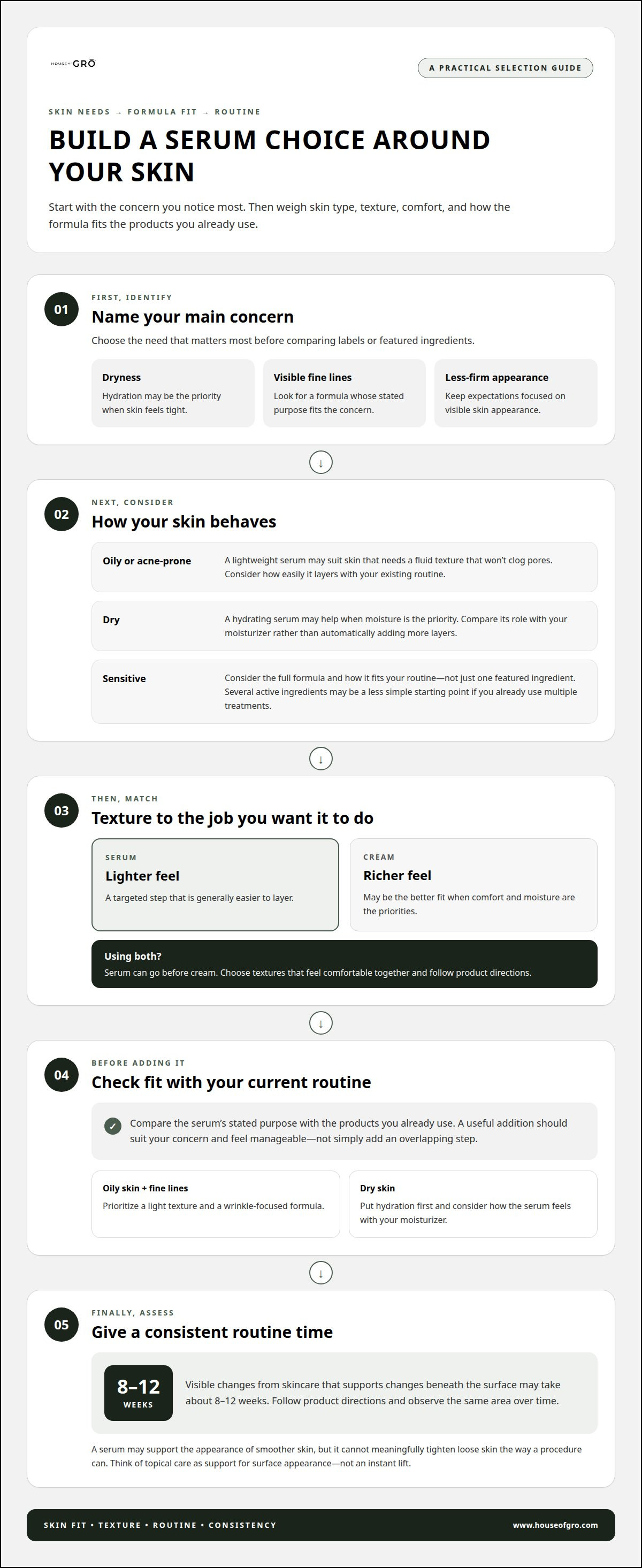
Start with the skin concern you notice most, then consider texture and comfort. Oily or acne-prone skin may suit a lightweight serum that won’t clog pores. Dry skin may benefit from a hydrating formula that helps lock in moisture. These needs call for different textures, even when both products promise a smoother appearance. Choosing the best serum for sagging skin also means finding a formula that fits your skin type.
For oily or acne-prone skin, consider whether the serum feels light enough to layer into your existing routine. A rich, heavy-feeling formula may be less comfortable than a fluid one. For example, if your usual moisturizer already feels substantial, a lightweight serum can add a step without the same dense finish. Read product claims closely.
Dryness can make skin feel tight and fine lines more noticeable. A hydrating serum is one option when moisture is the priority. Compare its purpose with your moisturizer: the serum can provide hydration, while the cream can add a more substantial layer. If both feel heavy together, adjust their textures rather than adding more layers.
Sensitive skin calls for a considered approach to the full formula. Look beyond a single featured ingredient, such as vitamin C, and consider how the product is meant to fit into your routine. A serum that combines several active ingredients may not be the simplest starting point for a routine already containing multiple treatments. Choose based on your skin’s comfort and main concern.
Serum or cream? A serum generally has a lighter texture, while a cream feels richer. Choose a serum when you want a targeted, easy-to-layer step. Choose a cream when comfort and moisture are the priorities. Some routines can include both, with serum applied before cream, but the best serum for sagging skin should still suit your preferences and follow the product directions.
Use a simple selection process. First, name your main concern, such as dryness or visible fine lines. Next, consider whether your skin tends to feel oily, dry, or sensitive. Then compare the formula’s texture and stated purpose with the products already in your routine. This makes it easier to distinguish a useful addition from an overlapping step.
For example, someone with oily skin and fine lines might prioritize a light texture and a wrinkle-focused formula. Someone with dry skin may put hydration first. Keep your skin’s needs at the center of a calm, considered routine.
3. Ingredients to look for in firming serums
Compare active ingredients by the concerns they address, not by how potent the label sounds. Peptides, retinol, hyaluronic acid, and vitamin C commonly appear in face-firming formulas. Clinical evidence depends on the finished product, the outcome measured, and how the formula was tested. Ingredient names alone can’t establish which serum performs best.
For sagging skin, think of topical ingredients as support for visible texture and firmness, not as a way to lift loose tissue. Retinol is common in wrinkle-focused skincare, while peptides are used in formulas targeting fine lines and firmness. Neither ingredient name alone proves a serum will meaningfully tighten skin.
Vitamin C and peptides may support a routine focused on a firmer-looking appearance, while growth-factor formulas offer another approach. The facts here don’t establish that vitamin C, peptides, or growth factors reverse sagging. Compare the product’s stated purpose and full formula rather than treating a featured active as proof of clinical results.
For hydration and temporary plumping, look for ingredients such as hyaluronic acid. This points to moisture as part of the formula’s purpose, rather than structural lifting. Glycerin is another familiar humectant in skincare. When dry skin makes fine lines more visible, a hydrating serum can complement a moisturizer.
Crepey texture can reflect dryness, so consider hydration before adding several potent actives. Niacinamide is another ingredient used in skincare formulas; assess its role alongside the other listed ingredients. A serum with niacinamide and hydrating components may suit a routine focused on texture and moisture, but it isn’t a substitute for treatment aimed at pronounced skin laxity.
Retinol and other active ingredients can cause irritation, dryness, or stinging, particularly when a formula doesn’t suit your skin or routine. A product’s strength, frequency of use, and combination with other actives all affect comfort. Introduce one new active at a time, follow its directions, and pause use if irritation develops. Don’t layer multiple potent products simply to accelerate results.
Whether retinol is suitable during pregnancy or breastfeeding depends on the specific ingredients, not a serum’s “firming” label. That label doesn’t establish safety for either period. Review the full ingredient list and product directions before choosing a formula, especially one featuring active ingredients such as retinol.
Use a practical comparison: identify your concern, note the active ingredients, then assess hydration and texture. For example, a retinol formula may appeal for wrinkle concerns, while hyaluronic acid may better match a moisture-focused routine. Visible changes from skincare that stimulates change below the surface may take about 8-12 weeks. Track the appearance of skin consistently rather than judging a formula after a few applications.
Retinol is used in wrinkle-focused skincare, peptides in formulas for fine lines and firmness, and hyaluronic acid for hydration and temporary plumping; vitamin C and growth factors offer other approaches. The information here doesn’t support ranking specific serums: clinical evidence depends on the finished formula and how it was tested.
No ingredient is established here as the best for sagging skin. Topical ingredients may support visible texture and firmness, but the facts provided don’t show that they lift loose tissue or reverse sagging.
4. Anti-aging serums and wrinkle concerns
Wrinkle concerns vary by area and appearance. Fine lines around the eyes, forehead creases, and softer jawline contours don’t all call for the same approach. Collagen loss begins naturally at about age 25, and Dr. Jennifer Levine says patients over 40 typically begin developing fine lines and deeper-set wrinkles. These age markers offer context, not a personal diagnosis.
For fine lines, consider what makes them more noticeable. Dryness can emphasize surface texture, while repeated facial movement can make expression lines more visible. A lightweight, hydrating serum may suit skin that feels tight. A formula featuring retinol or peptides may better match a routine focused on wrinkles. Choose according to your skin type and the concern you want to address.
For sagging, keep the distinction clear: a serum may improve skin’s appearance, but it doesn’t provide the same effect as a procedure for loose skin. The facts here don’t support naming one serum as the best-rated across the United States. Ratings alone also don’t show whether a formula suits your skin or addresses your concern.
Starting a wrinkle-focused routine in your 20s to early 30s is one approach described in anti-aging skincare. The timing depends on your concerns and routine, not age alone. If your main goal is smoother-looking skin, prioritize a formula suited to fine lines. If laxity is the central concern, recognize the limits of topical care before choosing a product.
Application matters. Begin with a gentle cleanser, then pat your face dry. Apply a pea-sized amount of serum across your face and neck, using upward and outward motions. After it absorbs, apply moisturizer to help lock in hydration. These steps give a lightweight formula a clear place in your routine without unnecessary layers.
Retinol adds a daytime consideration: use sunscreen with at least SPF 30 when using retinol. Follow the product directions and keep the rest of your routine simple, especially when introducing a new serum. Consistent use for at least a month is recommended, and visible changes may take two to three months. Give the formula time before judging its effect on fine lines or complexion.
To assess progress, note one concern before starting, such as forehead lines or uneven texture. Revisit the same area after a month, then again over the following months. A consistent comparison is more useful than switching products after a few applications. Aim for a routine that fits your skin type and supports a smoother appearance, not an instant lift.
5. Serum prices and product features
Price is one factor in comparing serums, not proof of performance. A higher price doesn’t automatically mean a formula will improve firmness or suit your complexion. Start by matching the product’s stated purpose to your concern, then review its ingredients, package size, texture, and directions. These details help explain what you’re paying for without treating a premium label as evidence.
Compare products on equal terms. Read the package size and recommended amount per application, then consider how often the directions call for use. For example, a serum used as a small step before moisturizer may fit your routine differently from a product intended to replace another layer. Clear directions make it easier to judge whether a formula is practical for regular use.
Ingredient lists help you judge whether a formula aligns with your goal. Hyaluronic acid points toward hydration, while a product that mentions dark spots addresses a different concern from one focused on elasticity. Neither claim alone tells you how well the serum will deliver results. Look at the full formula and avoid choosing solely for one featured ingredient.
Texture is another useful feature. A lightweight serum may layer more easily beneath moisturizer, while a richer formula may feel more comfortable when skin feels dry. Consider how the product works with your existing skincare. If your moisturizer already feels rich, for example, a lighter serum could make your routine feel less heavy.
Packaging and directions matter for everyday use. Look for an ingredient list you can read and instructions that explain when and how to apply the product. A pump or dropper can make dispensing more controlled, but the format alone doesn’t show whether the formula matches your concern. Choose a format that feels easy to use consistently.
Before buying, use a simple comparison checklist:
- Purpose: Does the product focus on firmness, hydration, wrinkles, or dark spots?
- Formula: Do the listed ingredients suit your skin and routine?
- Use: Are the directions and texture easy to incorporate?
- Value: Can you compare package size and recommended use alongside the listed price?
This approach keeps price in context. A serum may be poor value for your needs if it targets dark spots while your priority is elasticity. Likewise, a formula with a suitable purpose may be difficult to use if its texture conflicts with your moisturizer or routine. A considered choice balances the product’s stated focus with practical features.
For a more intentional routine, explore skincare formulated for daily use and consider which product features matter most to your skin.
House of GRŌ®: AFTER DARK Restorative Night Serum
AFTER DARK Restorative Night Serum is a nighttime option for a routine centered on restorative skincare. House of GRŌ® formulates its products with adaptogenic mushrooms and organic botanicals, including wild-harvested Chaga from Northern Maine, a key antioxidant ingredient. The formulas are microbiome-friendly, all-natural, and cruelty-free.
Consider After Dark Restorative Night Serum when you want a serum as part of your evening ritual, rather than expecting an instant lift. A topical product can complement consistent skincare, but it shouldn’t be presented as a substitute for procedures that address pronounced loose skin. Choose according to your skin’s needs and the role you want a night serum to play.
For questions about whether AFTER DARK fits your routine, contact House of GRŌ®.
Make your next skincare step intentional
The best serum for sagging skin is a personal choice shaped by your priorities, comfort, and the role a formula can play in your routine. Keep your next step simple: focus on the skin concern you most want to address, and choose care you can use consistently. Skincare works best as a considered practice, not a race toward quick change.
House of GRŌ® offers AT DAWN Rejuvenating Daytime Oil, AFTER DARK Restorative Night Serum, and TOUCH Hydrating Body Serum. Each offers a different way to shape a daily ritual around your preferences. For guidance on finding a fitting place for skincare in your routine, contact House of GRŌ® for skincare advice.
Choose gently. Build a routine that feels like yours.
Frequently Asked Questions
Do anti-aging serums really work?
Anti-aging serums may improve the appearance of some skin concerns, but results depend on the formula and the concern you want to address. Match the formula to the change you want to see. For example, if your complexion looks dull but feels comfortable, choose for that concern rather than adding a richer moisturizer. Keep your routine steady, and assess your skin under similar lighting so daily variation doesn’t shape your judgment.
What is the typical price range for effective skin-firming serums?
There isn’t one reliable price range that defines an effective firming serum. Cost varies with the formula, package size, and how the product is intended to fit into a routine. Compare products by their stated purpose, ingredient list, amount, and directions instead of assuming a higher price means better results. A serum that targets a different concern may be poor value, even if its feature list sounds impressive.
How should you apply a firming serum, and what products should you pair it with?
Use the serum according to its label, then pair it with products that support your routine rather than duplicate its purpose. A moisturizer can complement a serum when skin needs added hydration. If you use retinol, include daytime sunscreen with at least SPF 30. Avoid layering several products with overlapping active ingredients at once. That makes it easier to identify which products suit your skin and which may be contributing to discomfort.
How can you choose a firming serum for sensitive, dry, or mature skin?
For sensitive skin, choose a simple formula and introduce it without changing several routine steps at once. Dry skin may benefit from a hydrating serum that helps lock in moisture. For mature skin, start with the concern you most want to address, such as fine lines, dryness, or uneven texture. Then consider texture and how comfortably the product fits alongside your moisturizer and other skincare.
How do popular firming serums compare by active ingredients and clinical evidence?
Retinol is commonly used in wrinkle-focused routines, peptides in formulas for fine lines and firmness, and hyaluronic acid for hydration; vitamin C is also common in anti-aging serums. Clinical evidence depends on the finished product, the outcome measured, and how it was tested, so ingredient names alone don’t show which serum performs best.