


Rubbing can make puffy eyes look and feel worse. If you’re wondering how to get rid of puffy eyes from crying, start with a gentler approach: soothe the area with a clean, cool compress, keep your hands away, and give your eyes time to settle.
It’s understandable to want the swelling gone quickly, especially when it feels hard to hide. After crying, increased blood flow and fluid around the eyes can create temporary puffiness. Because the skin there is delicate, even mild swelling can be noticeable. A cool compress may help you feel more comfortable, while rubbing or applying irritating products can add to the discomfort.
This guide explains why crying can leave eyes puffy and outlines a simple routine for easing the look and feel of swelling. You’ll learn how to use a cool compress safely, what to avoid, and why skincare is an optional cosmetic step, not a remedy for swelling. You’ll also find signs, including persistent or painful swelling and vision changes, that call for medical advice.
Key Takeaways
- Temporary puffiness after crying is common. Increased blood flow and fluid around the eyes can make the area look fuller or flushed.
- For how to get rid of puffy eyes from crying, keep care gentle: use a clean, cool compress and avoid rubbing or applying ice directly.
- A short, simple routine can help you settle the eye area before getting ready or resting, without adding unnecessary steps.
- Skincare can be a calming ritual, but it shouldn’t be treated as a remedy for swelling or eye symptoms.
- Seek medical advice for eye pain, vision changes, marked one-sided swelling, or concerning discharge.
Why Do Eyes Look Puffy After Crying?
Temporary puffiness after crying is common. The area around your eyes may look fuller, flushed, or slightly swollen, even when nothing else feels wrong. The medical phrase periorbital puffiness describes visible swelling in the tissues around the eyes. It describes an appearance, not a diagnosis. After crying, shifts in fluid and increased blood flow may contribute to puffiness, while rubbing can add surface irritation.
The skin around the eyelids is delicate, so even a modest change can be noticeable. Tears, repeated wiping, and the physical effort of crying may leave the area looking different than usual. The amount of swelling varies from person to person and may be affected by how long or intensely you cried, skin sensitivity, allergies, or poor sleep.
What changes around the eyes when you cry?
Crying can increase blood flow to the face and contribute to temporary fluid collecting in the tissues around the eyes. The result may be puffiness or redness, especially on the soft skin of the eyelids. Rubbing can make the area feel more irritated and look more flushed. Visible swelling alone is different from eye pain, unusual discharge, or a change in vision, which shouldn’t be assumed to be ordinary effects of crying.
There’s no single pattern. One person may notice swelling mainly beneath the eyes; another may see puffy eyelids or redness. Tears running over the skin and repeated wiping can also leave the area feeling sensitive. If you’re looking up how to get rid of puffy eyes from crying, set a realistic goal: ease discomfort and avoid adding irritation, rather than expecting every eye area to look the same.
How long can puffy eyes from crying last?
There isn’t one reliable timeline that applies to everyone. Puffiness may be more noticeable after prolonged or intense crying, and it can look different depending on individual sensitivity, rubbing, sleep, or allergies. It may gradually settle as the body returns to its usual balance, but there’s no precise hour or guaranteed result to expect.
Gentle care can help the area feel calmer while you wait, but it may not remove all visible swelling at once. Notice whether the puffiness is easing and whether anything beyond appearance is changing. Swelling that persists, worsens, or comes with pain, discharge, or vision changes deserves more attention than a familiar, temporary puffy look after tears.
What Causes Crying-Related Puffiness Around the Eyes?
Tears are part of the explanation, but they aren’t the whole story. The lacrimal glands, located above the outer corners of the eyes, produce tears that spread across the eye’s surface and drain through small openings near the inner corners. During emotional crying, increased tear flow, facial blood flow, and fluid collecting in the tissues around the eyes may combine to make the eyelids look temporarily swollen. The contribution of each factor can vary.
Crying can temporarily change the appearance of the eyelids as tears, increased blood flow, and fluid in nearby tissue make the eye area look puffy or flushed. A change in appearance after crying may be temporary, but that doesn’t explain every kind of eye swelling.
Tears, fluid, and the delicate eyelid area
The eyelids and the skin around them are soft, thin tissues. A small amount of extra fluid can therefore be more visible there than in areas with firmer, thicker skin. When the tear drainage system is handling more fluid than usual, some may spill over the cheeks, while changes in nearby tissues can contribute to a fuller look. This doesn’t mean tears simply “soak” into the eyelids or that everyone will swell in the same way.
Other influences can affect what you see. An allergy may cause itching or watering, lack of sleep can make the eye area look more tired, and individual sensitivity can shape how noticeable redness or puffiness becomes. These factors may overlap with crying, but appearance alone can’t identify the cause. Don’t assume every swollen eye is from tears, particularly if the swelling is new, persistent, or accompanied by other symptoms.
Why rubbing can make the area look more irritated
Wiping tears away is instinctive, especially when your eyes feel wet or uncomfortable. Repeated rubbing adds friction to delicate skin and can increase redness, sensitivity, or irritation. It may make puffiness look more pronounced, but it isn’t the only possible contributor. There’s no need to blame yourself for rubbing. Switch to gentle dabbing with a clean tissue, then let the area rest.
As you consider how to get rid of puffy eyes from crying, keep the goal modest: reduce extra irritation while your body settles. If you enjoy skincare as part of that pause, explore House of GRŌ® skincare rituals as cosmetic care, not as treatment for swelling or eye symptoms.
In brief, tears and temporary changes in blood flow and nearby fluid can affect how the eyelids look. Rubbing, sleep, allergies, and personal sensitivity may also influence the appearance.
Which Quick Remedies May Help Puffy Eyes, and Which Should You Avoid?
The most practical immediate care is simple and low-friction. A cool compress may feel soothing, while rest gives the eye area a chance to settle. Neither guarantees that puffiness will disappear immediately. If you're searching for how to get rid of puffy eyes from crying, focus on comfort and avoid steps that could irritate delicate skin.
Can a cool compress soothe puffy eyes?
A clean cloth dampened with cool water can offer temporary comfort. Close your eyes and rest the cloth lightly over them. Don’t press on your eyelids or use direct ice. Remove the cloth if it feels painfully cold or uncomfortable, and re-wet it as needed so it stays cool, not icy.
Rest can also be a reasonable choice, especially if your eyes feel tired. Try not to rub or repeatedly check the swelling in a mirror. These steps may help the area feel calmer; they won’t instantly remove fluid or treat another cause of swelling.
Which common quick fixes deserve caution?
Cucumber slices or tea bags may feel cool, but that doesn’t make them proven treatments for crying-related puffiness. If you try a chilled item, keep it clean and comfortably cool, and stop if it stings or irritates your skin. Avoid placing unverified substances near your eyes, including harsh skincare or creams not intended for that area.
Cold spoons and other chilled items should never feel painfully cold against the skin. Don’t rub them over the eyelids or press them into the eyes. Cosmetic oils and eye products may be part of a skincare ritual, but they shouldn’t be relied on to treat swelling or eye symptoms. After immediate comfort steps, an optional cosmetic step such as gentle eye-area skincare can remain just that: skincare.
Use this comparison to set realistic expectations:
| Option | What it may offer | Practical caution |
|---|---|---|
| Clean, cool compress | Temporary soothing and a calmer feel | Use a clean cloth; place it gently, without pressure or direct ice. |
| Rest | A low-effort pause while the eye area settles | It may not make visible puffiness disappear right away. |
| Cucumber or tea bags | A cool sensation for some people | They aren’t established treatments; keep them clean and stop if irritation starts. |
| Rubbing, harsh products, or painful cold | No reliable reason to expect better results | These may add irritation or discomfort. Avoid them. |
Choose the gentlest option that feels comfortable. If swelling comes with pain, vision changes, or other concerning symptoms, don’t rely on home remedies alone.
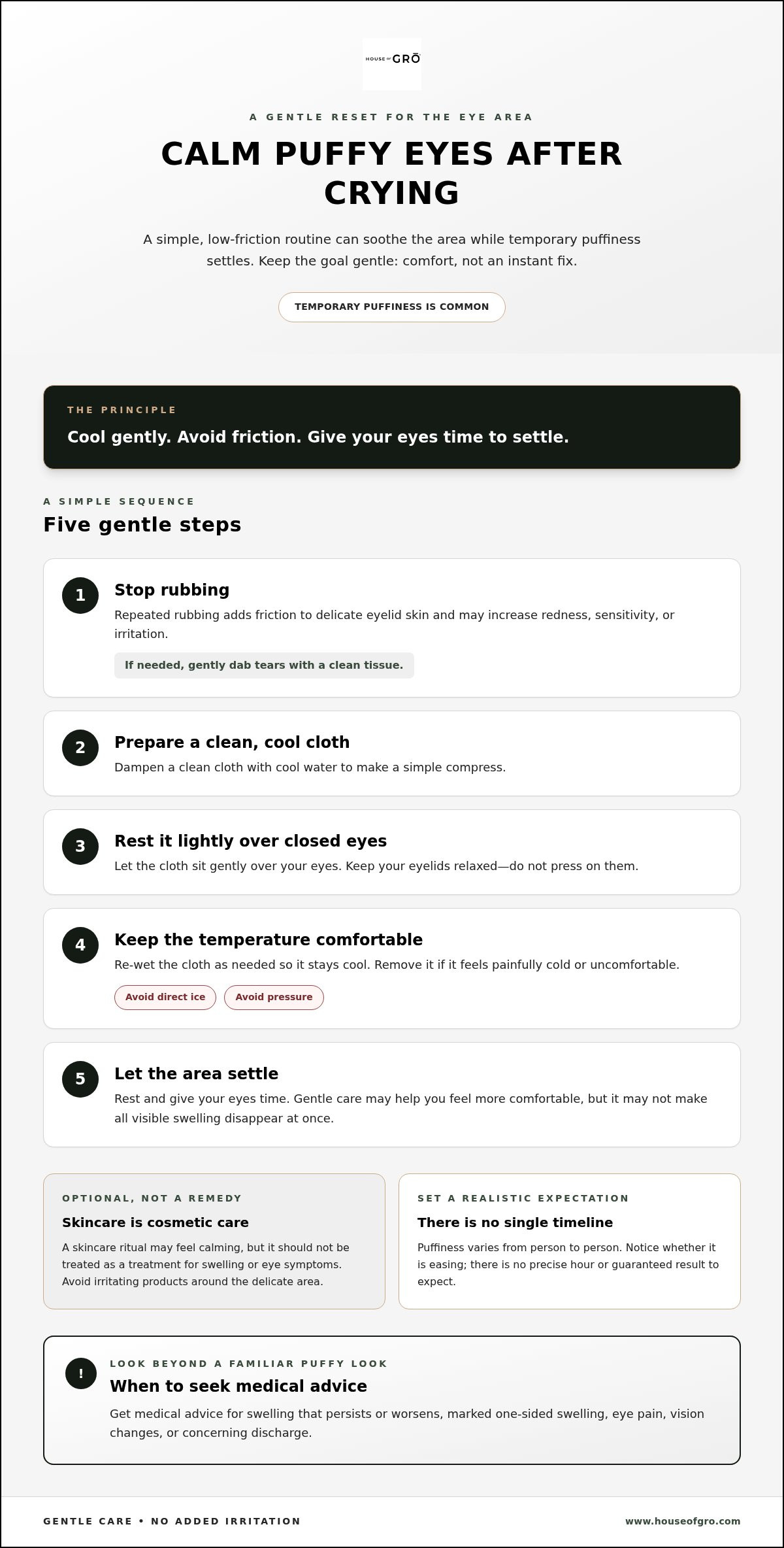
How to Calm Puffy Eyes from Crying: A Gentle Step-by-Step Routine
If you’re wondering how to get rid of puffy eyes from crying, keep the next steps simple. The aim is to soothe the area and avoid adding irritation, not to force swelling away instantly. This routine can fit into a short pause before getting ready or settling down to rest.
A simple routine for the first few minutes
Move gently and let comfort guide you. If any step stings, feels too cold, or makes irritation worse, stop and give your eyes a break.
- Wash your hands. Clean hands help limit the transfer of dirt or skincare residue when you touch near your eyes.
- Stop rubbing. If tears are still running, gently dab them from your cheeks with a clean tissue. Avoid wiping across your eyelids.
- Use a cool compress. Dampen a clean, soft cloth with cool water, close your eyes, and lay it lightly over them. Don’t press on the lids or apply ice directly.
- Pause and let the area settle. Remove the cloth if it feels uncomfortable. Afterward, rest without rubbing or repeatedly touching your eyes.
There’s no need to keep adding steps. A clean compress and a quiet pause are enough for a gentle start. They may help the area feel more comfortable, but they can’t guarantee that visible puffiness will disappear right away.
Care for the eye area as it settles
While your eyes feel sensitive, consider skipping eye makeup and fragranced or active skincare around the lids. If you wear contact lenses and they feel uncomfortable, remove them and follow your usual lens-care instructions. Don’t put skincare oils or other products into the eye; use any cosmetic only as directed for its intended application area.
Keep the rest of your routine calm, too. Avoid introducing a new product while the area is irritated, and don’t use makeup to cover symptoms that are painful or unusual. For broader principles on keeping a routine gentle, this guide to skincare for sensitive skin may help you think through what to simplify.
Once the immediate discomfort has eased, skincare can be a considered cosmetic ritual rather than a treatment for swelling. Explore House of GRŌ® skincare as you shape a routine that feels gentle and uncomplicated.
When Puffy Eyes Need More Than a Skincare Ritual
A little puffiness after crying can be temporary. But swelling that is painful, pronounced on one side, persistent, or getting worse deserves attention beyond a home-care routine. Skincare can be a comforting personal practice, not a way to assess or treat an eye problem.
Signs that should prompt medical advice
Pay attention to symptoms as well as appearance. Seek medical advice if swelling comes with eye pain, a change in vision, concerning discharge, or marked swelling on one side. These signs don’t identify a cause on their own, but they’re different from puffiness alone after crying and shouldn’t be covered up with cosmetics or treated only with skincare.
- Eye pain or vision changes: Get medical advice promptly, especially if symptoms begin suddenly or feel severe.
- Marked one-sided swelling: Seek advice if one eye or the area around it is notably more swollen than the other.
- Concerning discharge: Don’t assume discharge is simply from tears, particularly if it continues or occurs with pain or redness.
- Persistent or worsening swelling: If puffiness doesn’t settle, keeps returning, or becomes more pronounced, speak with a healthcare professional.
Sudden, severe eye symptoms call for urgent medical evaluation. If you’re unsure whether what you’re experiencing is severe, choose medical guidance over another compress or product. A routine for how to get rid of puffy eyes from crying is meant for temporary puffiness, not unexplained or worsening symptoms.
A gentle skincare step after the immediate discomfort passes
Once your eyes feel comfortable and no concerning symptoms are present, you can return to a simple skincare routine if you wish. Keep it optional. Choose familiar products, follow their directions, and avoid applying anything inside the eye or to skin that still feels irritated. If a product stings or causes discomfort, stop using it.
EYE DETOX brightening oil is an optional cosmetic skincare step, not a treatment for swelling, pain, discharge, or vision changes. Follow its product directions and use it only as intended. If symptoms are present, set the skincare ritual aside and focus on getting appropriate medical advice.
For a broader perspective on gentle routines, the microbiome skincare guide explores skincare as an intentional practice. Keep that practice secondary to comfort and symptom awareness. Explore House of GRŌ® skincare when you’re ready to return to cosmetic care.
Make Your Next Step a Gentle One
Let comfort lead. If your eyes still feel sensitive, give them space before returning to makeup or skincare. If they feel settled, you can choose a familiar cosmetic ritual that feels calm and uncomplicated. Skincare can support a moment of care, but it isn’t a treatment for persistent swelling or eye symptoms.
Understanding how to get rid of puffy eyes from crying also means knowing when not to treat the moment as a skincare concern. Pay attention to how your eyes feel, not only what you see. If something seems unusual or concerning, make medical advice your next step.
House of GRŌ® is family-owned and operated by founders Irina Gottesman and Sam Kandhorov, with skincare rooted in botanicals and adaptogenic mushrooms. Explore that considered approach when you’re ready to return to your routine.
Explore House of GRŌ® skincare and choose care that feels thoughtful, gentle, and your own.
Frequently Asked Questions
How long do puffy eyes from crying usually last?
There’s no fixed recovery window. The time it takes for puffiness to ease can vary with how intensely you cried, your sensitivity, and factors such as sleep or allergies. If you’re figuring out how to get rid of puffy eyes from crying, a gentle routine may improve comfort while your eyes settle. Swelling that persists, worsens, or appears without a clear reason deserves medical advice rather than more home remedies.
Does putting ice directly on puffy eyes help?
Direct ice isn’t a good choice for the delicate eye area. It can feel painfully cold, and pressing it against closed eyelids adds unnecessary pressure. Instead, wet a clean, soft cloth with cool water and rest it lightly over closed eyes. Remove it if you notice stinging, numbness, or discomfort. The aim is a soothing sensation, not intense cold or a forced, immediate change in appearance.
Can crying make your eyes dry or irritated afterward?
Your eyes may feel irritated or simply different after crying, but ongoing discomfort can have more than one cause. Give them a break from rubbing, eye makeup, and unfamiliar products, and notice whether the feeling improves. If irritation continues after the crying has stopped, or you have pain or changes in vision, seek medical advice. Don’t assume persistent symptoms are just a normal after-effect of tears.
Are tea bags or cucumber slices proven ways to reduce puffy eyes?
Chilled tea bags or cucumber slices may feel refreshing to some people, but they shouldn’t be treated as proven ways to reduce crying-related swelling. Anything placed near your eyes should be clean and should not cause stinging, itching, or redness. Skip these remedies if your skin or eyes feel sensitive. A clean cloth dampened with cool water is a simpler option with fewer ingredients or residues to consider.
Should I wear contact lenses when my eyes are puffy after crying?
Let comfort guide you, and follow the care instructions for your lenses. If they feel scratchy, uncomfortable, or difficult to tolerate, remove them with clean hands and don’t put them back in until your eyes feel comfortable. Use your usual lens-care routine rather than rinsing lenses with water. Pain, ongoing irritation, or vision changes call for medical advice, not simply switching lens brands or wearing glasses for longer.
When should I see a doctor for swollen eyes after crying?
Seek medical advice for eye pain, vision changes, concerning discharge, pronounced swelling on one side, or swelling that persists or worsens. These symptoms shouldn’t be assumed to come from crying alone. Sudden, severe symptoms need urgent medical evaluation. If you’re uncertain about the severity, contact a healthcare professional promptly for guidance. Avoid trying to mask concerning changes with makeup or relying on skincare while you wait.