


More skincare isn’t always the answer. When dryness, tightness, redness, or stinging appear, adding another active can make the discomfort worse. If you’re wondering how to heal a compromised skin barrier, a gentler first step is often to reduce irritation rather than build a more elaborate routine.
It makes sense to feel uncertain about what to pause and what to keep, especially when advice points in different directions. A compromised barrier can have several possible triggers, from over-exfoliation and harsh cleansing to environmental stressors. Noticing what changed can help you make more considered choices, though symptoms alone can’t identify the cause.
This guide covers possible signs and triggers, ways to simplify your routine, and when ongoing symptoms may warrant professional advice. The aim is practical, cautious care, not a diagnosis or a promise of quick results.
© 2024 House of GRŌ® All Rights Reserved.
Key Takeaways
- Learn which signs may point to a stressed skin barrier, without treating symptoms as a diagnosis.
- Understand how everyday skincare habits and environmental factors may contribute to discomfort.
- Explore how to heal a compromised skin barrier by simplifying your routine rather than layering on multiple new products.
- Review recently added or potentially irritating steps and consider which ones to pause while your skin feels sensitive.
- Know when persistent or worsening symptoms may call for professional advice.
How to Tell If Your Skin Barrier May Be Compromised
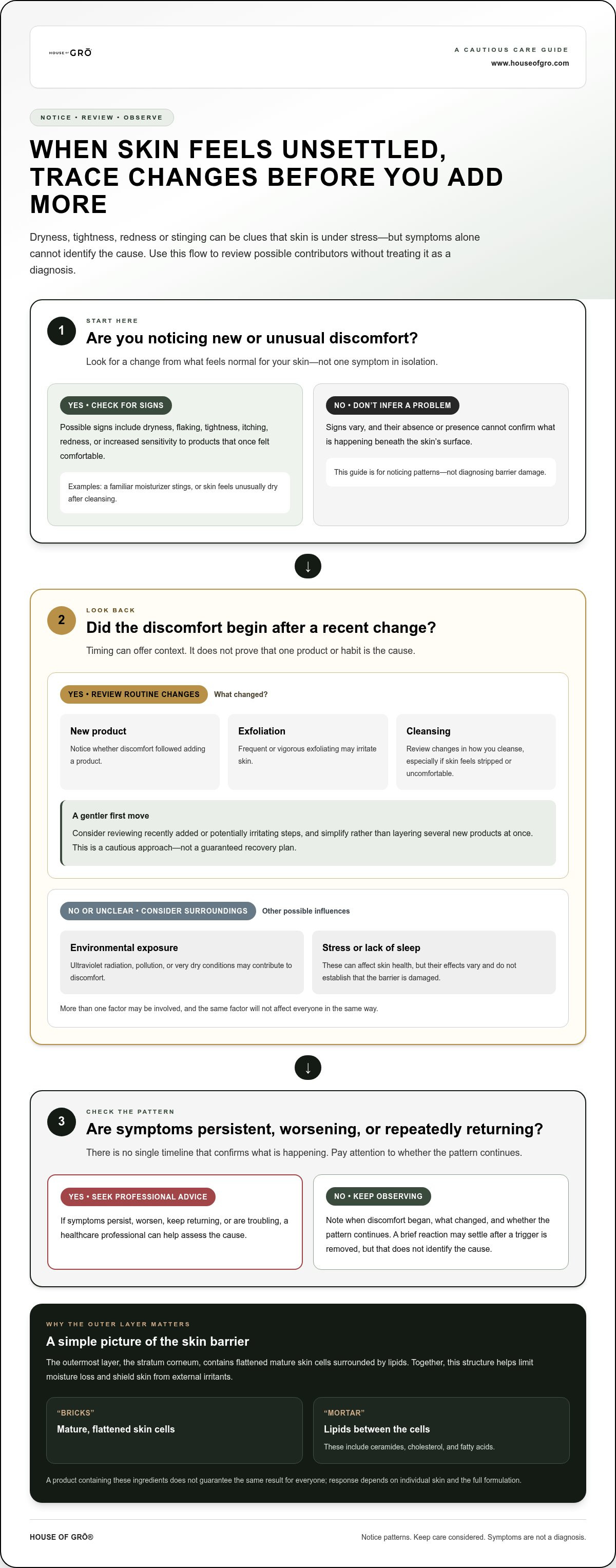
Dryness that feels hard to soothe, stinging during a familiar routine, or a sudden sense of tightness can be unsettling. These experiences may prompt the question of how to heal a compromised skin barrier. They can be clues that your skin is under stress, but they don’t identify the cause. Similar symptoms can arise for different reasons, so note what has changed without rushing to label it.
What does a compromised skin barrier feel like?
Possible signs include dryness, flaking, tightness, itching, redness, or increased sensitivity to products that once felt comfortable. You might notice a moisturizer stinging or your skin feeling unusually dry after cleansing. These signs aren’t proof of barrier damage. Redness and breakouts can have other causes, and not everyone with a stressed barrier experiences the same symptoms.
Consider when the discomfort began. Did it follow a new product, a change in cleansing or exfoliating habits, or exposure to weather that leaves your skin feeling dry? A brief reaction may settle after a trigger is removed, while symptoms that persist, worsen, or keep returning deserve more attention. There’s no single timeline that confirms what’s happening. If symptoms are troubling or ongoing, a healthcare professional can help assess the cause.
What the skin barrier does
The skin barrier is the outer protective layer of skin that helps limit moisture loss and shield the body from external irritants. Its outermost part, the stratum corneum, is made of flattened, mature skin cells surrounded by lipids. Picture bricks held together by mortar: the cells form the bricks, while lipids help fill the spaces between them. This simple model describes a key part of skin barrier function.
When this outer layer is functioning well, it helps maintain a balance between keeping water in and limiting contact with potential irritants. If its structure is disrupted, skin may lose moisture more readily and feel less comfortable. That doesn’t mean every instance of dryness or sensitivity signals damage. Skin responds to many influences, and symptoms alone can’t show exactly what’s happening beneath the surface.
The barrier is also part of a broader skin environment. If you’re curious about how the skin’s microbial community fits into conversations about balance, explore microbiome skincare and skin balance. The key point is to notice discomfort without trying to diagnose it. Track the pattern, consider recent changes, and seek professional guidance if the problem persists or gets worse.
2024 House of GRO® All Rights Reserved.
What Can Weaken the Skin Barrier, and Why?
Skin can respond to changes in routine or surroundings, but there isn’t one universal trigger. A product or habit that feels comfortable for one person may irritate another. If you’re exploring how to heal a compromised skin barrier, treat recent changes as possibilities to investigate, not proof of a single cause.
How skincare habits may contribute
Exfoliation removes some surface buildup, but frequent or vigorous exfoliating may irritate skin and interfere with the outer layer’s normal condition. Cleansing that leaves skin feeling stripped or uncomfortable may also be worth reviewing. A cleanser’s effect depends on how it’s used and on the person’s skin, so the label alone doesn’t tell the whole story.
Look for patterns rather than assuming a particular ingredient is always to blame. Did discomfort begin after adding a product, exfoliating more often, or changing how you cleanse? The timing can help you reflect on possible contributors. Other influences may include exposure to ultraviolet radiation, pollution, or very dry conditions. Stress and lack of sleep can also affect skin health, though their effects vary and don’t establish that the barrier is damaged.
More than one factor may be involved. For example, skin exposed to dry air may feel less comfortable after a cleansing routine that already leaves it tight. That combination won’t affect everyone in the same way. Keep your observations simple: note what changed, when you noticed discomfort, and whether the pattern continues. This context may be useful if you seek professional advice.
How barrier structure relates to skin comfort
The outermost layer of the epidermis is called the stratum corneum. It contains corneocytes, which are mature, flattened skin cells, surrounded by lipids. Imagine a brick wall: the corneocytes are the bricks, while the lipids between them act like mortar. These lipids include ceramides, cholesterol, and fatty acids. Together, this structure helps the skin retain moisture and offers protection from external irritants.
A well-functioning skin barrier helps hold moisture in while limiting exposure to external irritants. If the outer layer is disrupted, water can escape more readily, and the skin may feel dry or sensitive. But skin comfort depends on more than one structure or ingredient. A product containing ceramides, cholesterol, or fatty acids doesn’t guarantee a particular result for everyone. Response depends on individual skin and the full formulation.
A quieter routine can make it easier to observe how your skin responds without layering several new products at once. If you’re seeking skincare rooted in an intentional approach, explore HOUSE OF GRŌ® skincare.
2024 House of GRO® All Rights Reserved.
What Helps, and What Can Make Barrier Repair Harder?
When skin feels unsettled, the urge to add a new serum, balm, and mask is understandable. Yet a longer routine can make it harder to tell what your skin tolerates. If you’re considering how to heal a compromised skin barrier, start by reviewing your current steps. Reducing avoidable irritation can be a sensible first move, though it isn’t a cure or a guaranteed recovery plan.
Should you add more products or simplify?
Review what changed before adding anything new. A recent product, more frequent exfoliation, or a different cleansing habit may be relevant. Consider pausing a step that seems to trigger discomfort, where appropriate, while keeping familiar steps that feel comfortable. This cautious approach can make patterns easier to notice. It isn’t a fixed protocol, and what feels suitable varies from person to person.
Introducing several products at once creates more variables. If irritation follows, it may be difficult to identify which change played a part. A single new product can also cause a reaction, so adding items gradually makes your observations clearer. No one product guarantees barrier recovery, and general skincare guidance can’t determine the cause of an individual’s symptoms.
| Potentially helpful habit | Habit that may irritate |
|---|---|
| Keep the routine familiar and uncomplicated while you observe your skin. | Add several new products together, making reactions harder to trace. |
| Notice which steps feel comfortable and which seem linked to discomfort. | Continue a step that repeatedly leaves skin feeling uncomfortable without reassessing it. |
| Make changes thoughtfully, one at a time where possible. | Assume a popular product or ingredient will suit everyone. |
Use the comparison as a guide for reflection, not a prescription. It doesn’t mean you must stop every active product or follow a particular routine. Skin needs differ, and symptoms may have causes unrelated to skincare. Avoid making a long-term change based only on a general article.
When should you seek professional advice?
Consider speaking with a qualified clinician if symptoms are persistent, severe, worsening, or interfering with daily comfort. A clinician can assess possible causes beyond routine choices and advise on appropriate next steps. Dryness, redness, itching, or stinging can occur for different reasons, and a skincare routine alone may not address them.
There’s no universal number of days that determines when to seek help. Consider the pattern and level of discomfort. If you’re concerned, professional advice is more useful than adding products in search of a guaranteed timeline. Skincare can be part of a considered daily practice, but it shouldn’t be presented as a medical treatment or a promise of barrier repair.
2024 House of GRO® All Rights Reserved.
How to Simplify Your Skincare Routine While Your Skin Feels Sensitive
A routine reset doesn’t need to mean starting over. If you’re asking how to heal a compromised skin barrier, begin by reviewing what you already use, then make thoughtful choices rather than changing everything at once. A simpler routine can make it easier to notice what feels comfortable. It isn’t a cure, a fixed protocol, or a guarantee of recovery.
A gentle routine reset
Start with an inventory. Write down your current products and note anything you’ve added, removed, or used differently since your skin began feeling sensitive. Include cleansing, exfoliating, and other steps, not just leave-on products. This gives you a practical record to review without assuming any one item is responsible.
Next, consider which steps seem potentially irritating or unnecessary for you right now. Does a recent change line up with a change in comfort? Rather than introducing several new products or changing multiple steps together, keep familiar steps steady where they feel comfortable and adjust cautiously. If you use a prescribed skincare treatment, speak with the clinician who recommended it before changing how you use it.
There’s no universal list of products everyone must stop or keep. Skin needs differ, and a general guide can’t tell you what’s right for your individual situation. The aim is a more considered routine, not a bare-minimum rule. For adjacent guidance, explore this overview of skincare for sensitive skin.
How to observe changes without overreacting
Give your observations a simple structure. In a notebook or phone note, record what you used, any recent routine changes, and how your skin felt or looked. You might note tightness, visible redness, flaking, or whether a step felt comfortable. Keep entries brief. The purpose is to identify patterns over time, not scrutinize every small fluctuation or assign a diagnosis.
A change in comfort doesn’t establish its cause, and a journal can’t replace professional assessment. Avoid adding a new product every time you notice a change; doing so can make it harder to understand what may be affecting your skin. There’s no guaranteed recovery timeline. Let your experience guide your next questions, rather than expecting a particular result by a set date.
If symptoms persist, worsen, or cause concern, seek advice from a qualified healthcare professional. They can assess possible causes and help determine appropriate next steps. A thoughtful routine can support daily care, but it isn’t a substitute for diagnosis or treatment when those are needed.
Choose skincare with intention, not pressure to add more. Explore HOUSE OF GRŌ® skincare as one way to discover a considered approach to daily skincare.
2024 House of GRO® All Rights Reserved.
Choosing a Thoughtful Skincare Approach as Your Skin Recovers
As your skin feels more comfortable, it can be tempting to look for a product that promises a quick fix. A steadier approach is to choose skincare for the role it can reasonably play: part of a personal care routine, not a diagnosis or medical treatment. Products can’t guarantee barrier repair, and a label alone can’t tell you how your skin will respond.
How to assess skincare claims thoughtfully
Look for clear, specific product information. Understand what a product is, how the brand describes it, and what claims are being made. Be cautious of language that promises to heal a condition, repair every barrier, or work for everyone. Those claims go beyond a thoughtful cosmetic skincare description. Even familiar ingredients may suit one person and not another, and an ingredient’s presence alone doesn’t predict an individual outcome.
Keep your own experience in view. If your skin feels sensitive, consider whether a product or routine change seems connected to discomfort. Don’t rely on a marketing promise to explain persistent or worsening symptoms. A qualified healthcare professional can assess possible causes and advise on care when symptoms concern you. Skincare can support a daily ritual, but it shouldn’t replace professional assessment or treatment when needed.
Care can feel considered without being complicated. HOUSE OF GRŌ® is a mushroom-powered skincare brand rooted in family wellness traditions. The brand describes its formulas as microbiome-friendly. That positioning reflects its skincare perspective; it isn’t a promise that a formula will treat sensitivity or suit everyone.
An intentional skincare ritual, without promises
At Dawn Rejuvenating Daytime Oil is one of the brand’s daytime skincare offerings, priced at $160.00 and rated 4.9/5 from 84 reviews. It is a cosmetic product within a personal routine, not a treatment for a compromised barrier. No product should be assumed to restore skin or deliver a particular result. Let clear product details and your own experience inform your choices, and keep expectations grounded.
A routine can be meaningful without becoming elaborate. Choose changes with care, give yourself space to notice how your skin responds, and avoid chasing a guaranteed timeline. For a related perspective on evening care as a ritual, explore the restorative night skincare regimen.
If you’d like to explore the brand’s approach to intentional skincare, Explore House of GRŌ®.
2024 House of GRO® All Rights Reserved.
Choose a Gentle Next Step
Learning how to heal a compromised skin barrier isn’t about finding a perfect routine or rushing toward a promised result. It’s about making considered choices, giving your skin room to respond, and seeking professional guidance if concerns continue. Your next step can be simple and personal.
For skincare that brings intention to a daily ritual, HOUSE OF GRŌ® draws on three generations of family wellness practices. At Dawn Rejuvenating Daytime Oil is one offering in its skincare range, priced at $160.00 and rated 4.9/5 from 84 reviews. A customer rating reflects reviewers’ experiences, not a medical outcome or a promise that a product will suit everyone.
Explore the brand’s approach to thoughtful skincare at your own pace. Explore House of GRŌ®. Keep your care gentle, your expectations grounded, and take the next step that feels right for you.
2024 House of GRO® All Rights Reserved.
Frequently Asked Questions
How long does it take to heal a compromised skin barrier?
There’s no reliable timetable for how to heal a compromised skin barrier because the cause and severity of symptoms differ. Mild discomfort linked to a temporary irritant may ease after exposure stops, while ongoing symptoms may have another cause and need assessment. Avoid judging progress by a fixed number of days. If your skin isn’t improving or it’s getting worse, consult a healthcare professional.
Can a compromised skin barrier heal on its own?
Sometimes skin may feel better after a temporary source of irritation is removed, but improvement isn’t guaranteed. Persistent dryness, sensitivity, or redness can have causes beyond a skincare routine, including skin conditions that need professional care. If symptoms keep returning, don’t rely on self-care alone to identify the reason. A clinician can assess your skin and help determine appropriate next steps.
Is redness always a sign of a damaged skin barrier?
No. Redness can occur for many reasons, including temporary flushing, irritation, or an underlying skin condition. Its appearance alone can’t confirm barrier damage. Notice whether it follows a particular exposure or comes with other changes, but don’t use that pattern to diagnose yourself. Seek professional advice if redness is persistent, worsening, painful, or otherwise concerning.
Can over-exfoliating compromise your skin barrier?
Yes, frequent or vigorous exfoliation may irritate the skin and disrupt the outer protective layer. This doesn’t mean exfoliation will affect everyone in the same way; individual tolerance and the method used matter. If your skin feels increasingly uncomfortable after exfoliating, consider the timing as useful context. Avoid escalating exfoliation in an attempt to quickly improve texture, and seek advice if symptoms persist.
What should I stop using when my skin barrier feels irritated?
There isn’t a universal list of products everyone should stop. Review what you introduced or changed before the irritation began, and consider pausing a nonessential step that seems linked to discomfort. Don’t stop a prescribed treatment without discussing it with the clinician who recommended it. If you’re unsure what to keep, a dermatologist or other qualified clinician can help assess your situation.
Can a compromised skin barrier become permanent?
Temporary irritation doesn’t automatically mean permanent damage. Skin may become more comfortable when a contributing trigger is addressed, but recurring or ongoing symptoms can reflect a different issue that needs assessment. Symptoms alone can’t show whether a concern is temporary or part of a longer-term condition. Seek professional guidance if it continues, returns often, or affects daily comfort.
When should I see a dermatologist about a compromised skin barrier?
Consider seeing a dermatologist if symptoms persist, worsen, feel severe, or interfere with sleep or everyday activities. Professional assessment is also sensible if you can’t identify a likely trigger or several routine changes haven’t helped. A dermatologist can consider causes beyond skincare and recommend appropriate care. If symptoms feel urgent or you’re unsure where to start, contact a healthcare professional for guidance.