


What if your skincare routine became simpler as your skin’s needs changed? A skincare routine for 50s plus doesn’t need to mean a crowded shelf or a battle against natural changes. Skin may feel drier or more sensitive, and conflicting advice can make even the first step feel complicated.
It’s understandable to want products that feel comfortable and a routine you can keep up with. Changes in your skin aren’t problems to fix. A few thoughtful steps, chosen for your needs, can make daily care feel more settled and personal.
This guide walks you through a gentle morning and evening routine, from cleansing and hydration to daytime sun protection. You’ll learn how to assess optional ingredients, simplify without losing the essentials, and introduce changes gradually so you can notice how your skin responds. The aim is not more steps. It’s a calm, consistent practice shaped around comfort.
Key Takeaways
- Build a skincare routine for 50s plus around your skin’s comfort and needs, not age-based rules or a crowded shelf.
- Keep morning and evening steps simple, following a practical order from cleansing to daytime sun protection.
- Choose ingredients by their intended role and your personal tolerance; no single option suits everyone.
- If dryness or sensitivity appears, pause recently introduced products and adjust gradually rather than adding more layers.
- Make daily care a steady ritual, with botanical, microbiome-friendly formulas as one option to explore.
Skincare Routine for 50s Plus: What Changes and What Still Matters
Your skin doesn’t follow a birthday checklist. After 50, some people notice more dryness, sensitivity, or visible texture; others find their skin feels much as it always has. A skincare routine for 50s plus should respond to what you notice, not assume that everyone of the same age needs identical products or steps.
A balanced skincare routine for adults over 50 is a small set of repeatable steps that keeps skin comfortable, moisturized, and protected during the day. Think of it as a guide, not a prescription. The right routine can be simple enough to maintain and flexible enough to adjust when your skin’s needs change.
Gentle cleansing, moisturization, and daytime sun protection are useful foundations. Optional serums can be chosen for personal preference and tolerance, rather than added because an age-focused checklist says they belong. These principles are part of general skincare practices, but the details are personal.
Why skin may feel different after 50
Over time, skin may produce less oil and feel drier or more delicate. Fine lines, uneven texture, or a tight feeling after cleansing may also become more noticeable. These shifts aren’t universal, and they don’t mean your skin is damaged or needs to be corrected.
Age is only one part of the picture. Health, climate, indoor heating, sun exposure, daily habits, and your skin history can all shape how your skin feels. A product that once felt comfortable may not suit you in every season. Notice your own experience instead of comparing your skin with someone else’s or chasing a promised ideal.
A simple routine beats an age-based checklist
Start with the essentials, then consider whether anything else would genuinely make your routine work better for you. A short sequence makes it easier to notice how each step feels without turning skincare into a complicated project.
- Cleanse gently. Choose a cleanser that leaves skin comfortable, not tight or stripped.
- Moisturize. Use a moisturizer that helps ease dryness and feels pleasant on your skin.
- Protect by day. Apply sunscreen to exposed skin as part of daytime care.
A serum is optional. If you want to try one, choose it for a clear personal reason, such as adding a step you enjoy, and introduce it separately from other new products. Keep the rest of your routine familiar while you see how your skin feels. Changing one thing at a time makes it easier to identify what suits you. Your routine can stay steady without being fixed: simple foundations, thoughtful adjustments, and no obligation to use every product marketed for your age.
How to Build a Gentle Morning and Evening Skincare Routine
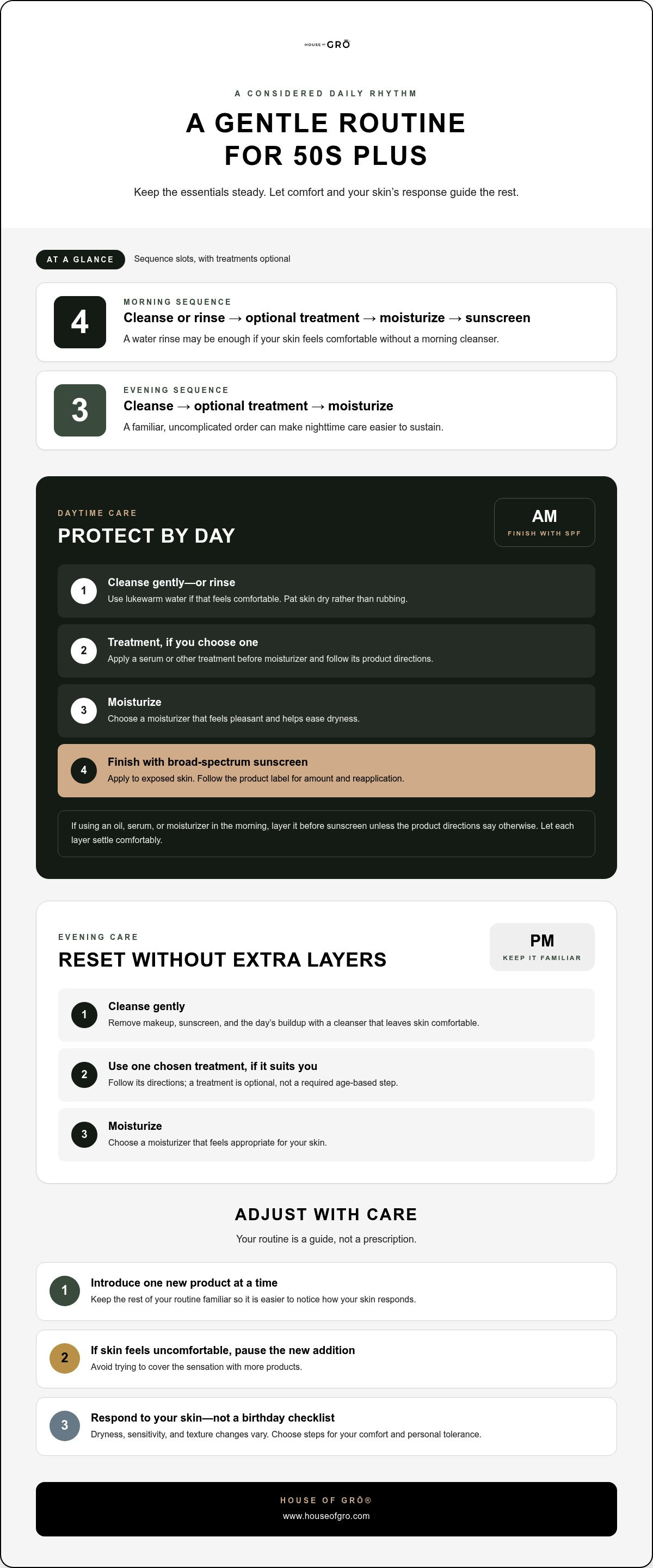
A useful routine has a clear rhythm, not a long sequence. In general, cleanse first, apply any chosen treatment according to its directions, moisturize, then finish with sunscreen in the morning. This order gives each step a place while leaving room to adjust for your skin’s comfort and the specific products you use.
Essential daytime skincare steps are to cleanse gently, apply an optional treatment, moisturize, and finish with broad-spectrum sunscreen. If your skin feels comfortable with a water rinse in the morning, you may not need to use a cleanser twice a day. Let how your skin feels guide that choice.
A calm morning routine for 50s plus
Begin with a gentle cleanse or a lukewarm water rinse. Pat your skin dry rather than rubbing. If you choose a serum or another treatment, apply it before moisturizer and follow the product label. Keep this step optional; a routine can work without an active ingredient just because it’s marketed for mature skin.
Finish with broad-spectrum sunscreen on exposed skin. Follow its label for how much to apply and when to reapply. If you use an oil, serum, or moisturizer in the morning, layer it before sunscreen unless the product directions say otherwise. Let each layer settle comfortably before moving on.
A restorative evening routine without unnecessary layers
In the evening, gently remove makeup, sunscreen, and the day’s buildup with a cleanser that leaves your skin comfortable. Apply one chosen treatment, if it suits your routine, then use a moisturizer that feels appropriate for your skin. A familiar, uncomplicated sequence can make nighttime care easier to sustain.
House of GRŌ’s AFTER DARK Restorative Night Serum can be an optional part of an evening ritual. Follow its current product directions, and avoid combining it with several newly introduced products at once. For a closer look at nighttime skincare, explore this restorative night skin care regimen.
Product order is a helpful starting point, not a reason to layer everything you own. If you try a new serum, keep the rest of your routine familiar so you can notice how your skin responds. Introduce one new product at a time, and follow its directions for frequency and application. If your skin becomes uncomfortable, pause the new addition rather than covering the sensation with more products.
A daytime oil such as AT DAWN Rejuvenating Daytime Oil may be an optional addition before sunscreen, guided by its product directions and your preference. House of GRŌ’s botanical, adaptogenic mushroom, and microbiome-friendly formulations are another approach to explore as you shape a routine that feels considered and easy to return to. Visit House of GRŌ to learn more about its skincare.
Which Skincare Ingredients and Claims Deserve a Closer Look?
Ingredient lists can make skincare feel more complicated than it needs to be. For a skincare routine for 50s plus, start with the role a product is meant to play, then consider whether its texture and use feel comfortable. No ingredient category is universally best, and a longer list doesn’t automatically make a product more suitable.
Moisturizers, antioxidants, and botanical oils
Moisturizers help skin feel soft and comfortable, and can support the skin barrier by helping reduce moisture loss. Sunscreen has a different role: broad-spectrum sunscreen helps protect exposed skin from ultraviolet radiation. These are complementary basics, not interchangeable steps.
Antioxidants are a broad group of ingredients used in skincare formulas. Their presence can be a useful point of comparison, but the word alone doesn’t tell you exactly what a product will do for your skin. Look at the full formula and the product’s specific, realistic claims rather than treating one ingredient as a guaranteed result.
Botanical oils are another optional category. Their texture may feel nourishing to one person and too rich for another. Personal tolerance matters more than whether an ingredient sounds natural or appears in a product marketed for mature skin. House of GRŌ describes its formulas as botanical and microbiome-friendly; its microbiome skincare guide offers related context on that approach.
How to assess anti-aging language with care
Product language can blend a cosmetic promise with broader claims about health. Appearance-focused descriptions might refer to a product’s feel or how skin looks. Claims to treat a medical condition are different, and a cosmetic product shouldn’t be treated as a substitute for medical care. Be cautious of wording that promises to erase wrinkles, reverse aging, or deliver a guaranteed transformation.
A considered label gives you something more useful than a sweeping promise: clear ingredients and a specific explanation of the product’s intended cosmetic role. Use this quick check before adding a product:
- Identify its purpose. Is it intended to moisturize, add an optional treatment step, or provide sun protection?
- Read the ingredient list. Notice ingredients you already know don’t suit you, and don’t assume that a highlighted ingredient tells the whole story.
- Consider comfort. Think about the product’s texture and how your skin feels after use.
- Keep expectations measured. Prefer clear descriptions over claims that sound absolute or medical.
More active ingredients don’t necessarily mean better care. A product may be unsuitable if it leaves your skin uncomfortable, even if its claims sound impressive. Keep the rest of your routine familiar when trying something new, so it’s easier to notice how your skin responds. Choose for purpose and comfort, not pressure to use every ingredient that’s trending.
How to Adapt Your Skincare Routine for Dryness or Sensitivity
If your skin starts to feel dry, tight, or reactive, resist the urge to add several soothing products at once. More layers can make it harder to tell what’s helping and what may be contributing to discomfort. Instead, pause recently introduced products, return to familiar steps, and give your skin a chance to settle. Your skincare routine for 50s plus can change with your comfort without needing a complete overhaul.
A gentle way to introduce a new product
Keep the rest of your routine steady while you try something new. Introduce only one product at a time, follow its label directions, and use a small test area first when the directions recommend it. Notice how your skin feels during and after use. If you change several products together, it’s much harder to identify which one your skin is responding to.
A thoughtful product trial: choose one product, read its directions, test as directed, keep other steps familiar, and pay attention to comfort.
- Choose one change. Avoid starting a new cleanser, serum, and moisturizer at the same time.
- Follow the label. Use the product only as directed, including any instructions for testing on a small area.
- Notice your skin. Pay attention to whether it feels comfortable or develops new irritation.
- Pause if discomfort appears. Stop the recently introduced product rather than layering more on top.
This gradual method won’t tell you exactly why a reaction has occurred, but it can help you avoid adding extra variables while you assess how your skin feels. Keep notes if useful: the product you tried, when you started, and any changes you noticed. That simple record can help you describe your experience if you seek advice.
When to simplify and when to seek advice
If your skin feels overwhelmed, temporarily pare your routine back to familiar, comfortable essentials. Set aside optional treatments and avoid experimenting with multiple new formulas while you’re unsure how your skin is responding. Keep daytime sun protection in your routine if you can use it comfortably, and follow product directions.
Skincare can’t diagnose the cause of a rash or ongoing irritation. An article also can’t assess a spot that looks different or is changing. If symptoms are severe, persistent, or changing, or if something worries you, seek advice from a qualified healthcare professional. That’s a more reliable next step than trying to treat an unexplained concern with additional products.
Gentle care is not about finding a perfect formula. It’s about making measured choices, noticing comfort, and knowing when to pause. House of GRŌ’s botanical skincare is one option to consider as part of a thoughtful routine. You can learn about House of GRŌ skincare while keeping your choices grounded in what feels right for you.
Make Your 50s Plus Skincare Routine an Intentional Daily Ritual
Skincare can be a moment of care, not a project to correct your face. Keep the steps that feel comfortable and useful. A gentle cleanse, moisturizer, and daytime sun protection can form a steady foundation; optional products can be added when they suit your preferences. Consistency doesn’t mean following a rigid checklist. It means choosing a routine you’re glad to return to.
Make the practice easy to live with. Set products where you’ll use them, keep the order simple, and take a moment to notice how your skin feels. Some mornings, you may want only the essentials. On other days, an additional step may feel welcome. Your skincare routine for 50s plus can adapt without becoming a measure of how well you’re aging.
House of GRŌ® brings together organic botanicals, adaptogenic mushrooms, and microbiome-friendly formulas. Wild-harvested Chaga from Northern Maine is a key antioxidant ingredient in the brand’s approach. These details may appeal if you’re drawn to botanical skincare, but they aren’t a promise that a formula will reverse age-related changes. For more context on the skin microbiome, the microbiome skincare guide explores the subject in greater depth.
A considered daytime ritual with AT DAWN
AT DAWN Rejuvenating Daytime Oil may be an optional part of a mindful morning routine if an oil suits your skin and preferences. Think of it as a chosen moment in your care, not a required step or a route to guaranteed age-related results. Follow the current product label for how to use it and what to expect. Keep sunscreen as a separate daytime protection step.
Let comfort guide your decision. If adding an oil makes your routine feel pleasant and fits your preferences, it may earn a place. If it doesn’t feel right, your routine remains complete without it. A thoughtful ritual leaves space for personal choice.
An evening ritual with AFTER DARK
AFTER DARK Restorative Night Serum can be an optional evening companion after cleansing. It doesn’t need to turn nighttime care into a longer sequence. Follow its current product directions, and keep other steps familiar if you’re introducing it for the first time. The intention is a settled close to the day, not an expectation that a serum will change your skin overnight.
Choose products for their place in your life as much as their place on a shelf. House of GRŌ’s botanical, adaptogenic mushroom, and microbiome-friendly approach may appeal if those values resonate with you. Explore House of GRŌ skincare as you shape a routine that feels personal, unhurried, and comfortable to return to.
Let Your Routine Grow With You
Your skincare routine for 50s plus can be a practice that changes as you do. Keep what feels comfortable, let go of what doesn’t, and give new choices time before making another change. The aim isn’t to pursue a fixed idea of perfect skin. It’s to make room for care that feels steady, personal, and kind.
That spirit is part of House of GRŌ®, founded by siblings Irina Gottesman and Sam Kandhorov. Their approach brings organic botanicals and adaptogenic mushrooms into microbiome-friendly skincare, with wild-harvested Chaga from Northern Maine as a key antioxidant ingredient. Consider these details as you decide which values matter in your own daily ritual.
When you’re ready to explore a botanical approach to skincare, shop House of GRŌ® skincare. Start with a simple step and choose products that fit the routine you want to return to.
Frequently Asked Questions
What is a good skincare routine for someone over 50?
A good skincare routine for 50s plus is one you can maintain without discomfort. Let your skin’s daily feel guide small choices: if it feels comfortable after waking, a water rinse may be enough, while makeup or sunscreen at night calls for cleansing. If you’re adjusting products, jot down what you changed and when. That can help you spot patterns without adding more steps or guessing which product made a difference.
Should I use retinol in my 50s?
Retinol is optional, not a requirement for skin in your 50s. If you’re considering it, look at the product’s strength and directions, and avoid starting several active products at once. Some people experience irritation, particularly when they’re new to retinol. If you have a skin condition, use prescription products, or aren’t sure whether it’s suitable for you, ask a qualified healthcare professional for personalized guidance.
Can I use facial oil and moisturizer together?
Yes, some routines can include both, but the best order depends on the formulas and their directions. For example, if you’re already comfortable with your moisturizer and want to try a facial oil, add only the oil and observe how your skin feels before making another change. Oil doesn’t replace sunscreen. If the combination feels heavy or uncomfortable, remove the optional layer and keep the steps that suit you.
How often should I exfoliate mature skin?
There isn’t one exfoliation schedule that works for everyone. If you choose to use an exfoliant, read its label and begin conservatively rather than pairing it with other new treatments. A rough or tight feeling isn’t a reason to exfoliate more. Pause if irritation continues, and seek qualified healthcare advice if you have an ongoing skin concern or aren’t sure whether exfoliation is appropriate for you.
Is sunscreen still important after 50?
Yes. Broad-spectrum sunscreen remains useful for exposed skin, including on days spent mostly outdoors or near bright windows. Follow the product label for application and reapplication, and use shade or protective clothing as additional ways to limit sun exposure. Sunscreen is a practical protection step, not a guarantee against every visible change in skin. Choose a formula you’re comfortable applying so it’s easier to make it part of the day.
What should I do if my skin becomes more sensitive?
If new discomfort appears after a product change, pause the product you introduced most recently and avoid testing several replacements at once. Return to familiar products that have felt comfortable, and note when symptoms began and what you were using. Don’t try to diagnose a rash or changing spot through skincare advice. Persistent or severe irritation, or a change that concerns you, deserves guidance from a qualified healthcare professional.
Do I need separate morning and night skincare routines?
No. You can use many of the same comfortable basics at both times, then adapt for the purpose of each routine. For example, keep sunscreen in daytime care and make evening cleansing the priority if you wore makeup. If you’re tired, a shorter evening routine is more practical than skipping care because the full sequence feels demanding. Optional treatments can remain occasional choices, not daily obligations.