


What if skincare could support your confidence without asking your skin to look perfect? A thoughtful skincare to boost confidence routine starts with comfort, not correction. It can offer a steady moment of care, even on days when visible skin concerns make you feel self-conscious.
It’s understandable to wonder which steps are worthwhile. Skincare can help you care for your skin, but it can’t guarantee a particular appearance or define your worth. Confidence is personal. A gentle, manageable routine may simply help you feel more at ease in your own skin.
This guide covers simple daily steps, realistic expectations, and ways to choose products carefully. You’ll also find guidance on when a concern may call for personalized advice from a dermatologist. There’s no pressure to do more. Start with what feels right for you.
Key Takeaways
- Skincare to boost confidence can begin with comfort and personal choice, not pressure to achieve perfect-looking skin.
- A simple routine can create a steady moment of self-care; learn how the skin barrier and microbiome fit into the picture.
- Set realistic expectations by focusing on how a routine feels and avoiding promises of guaranteed results.
- Build your routine gradually: consider your needs, choose gentle basics, and pay attention to how your skin responds.
- Explore how House of GRŌ®’s adaptogenic mushroom and organic botanical focus may bring intention to daily care, while checking current product labels for suitability and ingredients.
How skincare can support confidence without defining your worth
Visible skin concerns or physical discomfort can affect how someone feels day to day. You might find yourself more aware of your skin during a conversation, or simply want a routine that leaves it feeling comfortable. Those responses are personal. They don’t mean you should feel ashamed, and they don’t make your skin a measure of your character or worth.
Confidence-supportive skincare is guided by comfort, choice, and a routine you can manage. It doesn’t require pursuing a particular look. The field of Psychodermatology considers connections between skin and emotional experience. That doesn’t mean a skincare product can resolve emotional challenges or guarantee a change in how you feel.
Why skin comfort can affect how you feel
Skin is part of your everyday experience. Dryness, sensitivity, breakouts, or other visible concerns may draw your attention, affect which products or clothing you prefer, or make you more conscious of your appearance. The effect varies from person to person. Skin tones, textures, ages, and preferences are diverse, and no single standard of “good skin” fits everyone.
Comfort can be a meaningful goal on its own. You might prefer fewer products, a lighter texture, or a routine that doesn’t irritate your skin. The aim isn’t to hide every mark or change your natural features. It’s to make choices that feel considerate and right for you.
What skincare can, and cannot, do for confidence
A consistent routine can offer a small sense of agency: you choose what to use and make space for a quiet pause in your day. That experience may feel grounding, but the ritual itself doesn’t guarantee better skin health or mental health. Products also can’t promise clear skin, social approval, or lasting self-esteem. Your confidence can exist alongside concerns you’re still figuring out.
If a skin concern is persistent, painful, or worrying, consider seeking personalized advice from a dermatologist. A professional can help you understand your options and whether a product or approach suits your needs.
A useful definition: Healthy skin habits are choices made to support skin comfort; appearance-based self-esteem makes your worth depend on how your skin looks. Skincare to boost confidence should support the first, never demand the second.
How a gentle skincare ritual supports skin comfort and self-care
A routine can give the day a gentle rhythm. Washing your face in the morning or applying moisturizer before bed creates a small pause to check in with yourself. That structure may feel grounding, but the ritual alone can’t guarantee healthier skin. Products, skin needs, and personal responses differ. Let comfort and consistency guide your choices, not pressure to collect more products or pursue a flawless finish.
Skin care also sits within a wider relationship between the skin and daily experience. The American Academy of Family Physicians discusses the mind and skin connection, a reminder that skin concerns can have more than one dimension. A routine can be a thoughtful act of care, not a substitute for professional guidance or a promise to change how your skin looks.
The skin barrier, microbiome, and everyday comfort
The skin barrier is the outer layer that helps limit moisture loss and protect against external irritants. The skin microbiome is a community of microorganisms that live on the skin. Both are part of a complex, individual environment. No single product can rebalance or repair everyone’s skin, so pay attention to how your own skin responds. For a deeper introduction, explore this microbiome skincare guide.
Why small, repeatable rituals can feel more supportive
A brief morning routine might mean cleansing and applying products you already know your skin tolerates. In the evening, a few unhurried steps can mark a transition out of the day. Notice whether a product feels comfortable, whether you enjoy using it, and whether the routine fits your life. Those observations are more useful than chasing perfection or adding steps for their own sake.
Keep changes simple. Introduce products gradually, follow label directions, and pause use if a product causes discomfort. If you’re curious about creating an evening rhythm, this optional night skin care regimen offers another perspective. A considered approach to skincare to boost confidence starts with care that feels sustainable to you.
House of GRŌ® takes an adaptogenic mushroom and organic botanical approach to daily care. If you’d like to explore the brand, learn about House of GRŌ® skincare, and check current product labels to assess ingredients and suitability for your skin.
Skincare confidence myths: realistic expectations without pressure
Skincare marketing can make confidence sound like a finish line: follow the right routine, achieve clearer-looking skin, and feel good about yourself. Real life is less certain. Skin changes for many reasons, products work differently for different people, and no particular appearance is a requirement for comfort or belonging.
No skincare product can guarantee confidence or a specific skin outcome. A realistic benefit may be simpler: a product feels comfortable, fits your preferences, or makes a daily routine easier to maintain. That can be worthwhile without expecting a product to transform your appearance or change how others respond to you.
Does clearer-looking skin automatically mean more confidence?
Not automatically. Some people feel more at ease when a skin concern settles; others may not connect their confidence to appearance in the same way. Neither response is more valid. You don’t have to pursue clearer skin to earn social comfort, and you don’t need to change features you’re content with.
Instead of comparing your skin with edited images or someone else’s progress, choose a personal measure of success. Perhaps your routine feels pleasant, your skin feels comfortable, or you’ve found products you can use without unnecessary complexity. Your goals are yours to set.
When skincare concerns deserve professional guidance
Product results and ingredient tolerance vary. A formula that suits one person may not suit another, so read current labels, follow directions, and consider your own sensitivities and preferences. Be cautious of claims that promise fast, universal, or guaranteed results. More steps or stronger products aren’t automatically a better fit.
If irritation persists, symptoms are painful, or a concern is worsening, consider consulting a qualified dermatologist. They can offer advice based on your individual skin rather than a generalized product promise. Skincare isn’t a replacement for professional care.
Appearance worries can also become difficult to carry. If concern about your skin significantly affects daily life, consider speaking with an appropriate health professional. You deserve support that takes both your skin and your wellbeing seriously. A thoughtful approach to skincare to boost confidence leaves room for care, uncertainty, and self-acceptance, without making any one outcome a condition for feeling worthy.
How to build a confidence-supporting skincare routine
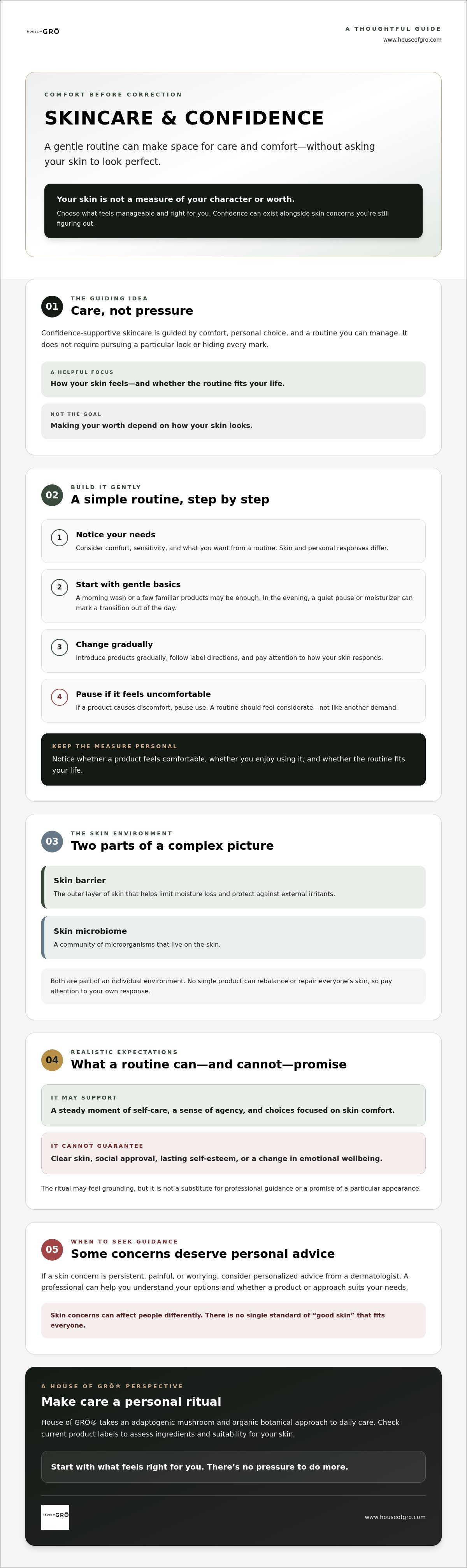
A supportive routine doesn’t need to be elaborate. Start by identifying what you want from it: perhaps less tightness, a comfortable way to cleanse, or a few calm minutes before the day begins. Then choose familiar, gentle basics that suit your preferences and budget. Skincare to boost confidence should feel manageable, not like another standard you have to meet.
A simple morning routine that leaves room to breathe
Consider a gentle cleanse or a water rinse, depending on what feels suitable for your skin. Add moisturizer if you need it, then use a broad-spectrum sunscreen according to its label directions. The right routine can vary with your skin and circumstances, so treat these as starting points, not a prescription.
If you’re interested in an oil, House of GRŌ®’s AT DAWN Rejuvenating Daytime Oil is one optional product to consider. Check its current label for ingredients, directions, and suitability, and follow its guidance on where it fits in your routine. An extra step is only useful if it feels right for you.
A calm evening routine and thoughtful product changes
In the evening, gently cleanse to remove the day’s buildup, then use a familiar moisturizer if it suits your skin. If you’re considering something new, introduce one product at a time. That makes it easier to notice how your skin responds. Stop using a product if it causes discomfort, and seek qualified advice for persistent or concerning reactions.
If sensitivity is part of your experience, this skincare for sensitive skin guide offers additional reading. For personalized guidance, consider speaking with a dermatologist, especially if you’re unsure how to care for ongoing irritation.
- Gentle: Choose steps that feel comfortable.
- Consistent: Keep a rhythm you can maintain.
- Personal: Let your needs and preferences shape the routine.
- Realistic: Make space for adjustment; perfect skin isn’t the goal.
If a routine feels uncomfortable, expensive, or hard to keep up with, simplify it. Return to the basics you tolerate and reconsider additions one by one. For a closer look at House of GRŌ®’s skincare offerings, explore the brand’s products and review current product labels before choosing.
Make skincare a personal ritual with House of GRŌ®
After considering what makes a routine comfortable and realistic, you may want to choose products that make everyday care feel more intentional. House of GRŌ® is one option. The New York-founded skincare brand focuses on adaptogenic mushrooms and organic botanicals. That ingredient philosophy may appeal to readers who enjoy a considered approach to daily care, but it isn’t a promise of a particular skin result or a measure of how confident you should feel.
House of GRŌ® was founded in 2020 by siblings Irina Gottesman and Sam Kandhorov. That family-founded story offers context about the brand, not proof of product efficacy. As with any skincare choice, check current product labeling and decide whether the ingredients and directions suit your preferences.
A considered daytime step with AT DAWN
AT DAWN Rejuvenating Daytime Oil is House of GRŌ®’s priority offering. A daytime oil may be one optional part of a routine, but its place depends on the product’s current directions and your skin’s needs. Check the label for ingredients and use instructions before deciding whether to add it. Don’t assume that a product is suitable for every skin type or that it treats a skin concern.
Application can be a quiet moment in the morning: a pause to follow the directions and notice how the product feels. That’s enough. The oil isn’t a requirement for confident skin, and it can’t promise a change in self-esteem. If a product doesn’t feel comfortable or fit your routine, it’s reasonable to leave it out.
Choose a routine that feels like your own
A thoughtful routine is personal. Keep the steps that feel comfortable, manageable, and worth returning to. If a new product interests you, review its label and introduce it with care, rather than changing several parts of your routine at once. If you have ongoing concerns or aren’t sure what’s suitable, a dermatologist can offer guidance based on your individual needs.
Skincare to boost confidence doesn’t have to mean striving for a different appearance. It can mean choosing care that respects your preferences and gives you a small, intentional pause in the day. House of GRŌ®’s botanical and adaptogenic mushroom focus may be one way to explore that ritual, without pressure to add more than feels right.
Explore House of GRŌ® and review current product details to see whether a considered daytime step belongs in your routine.
Carry your routine forward with care
Skincare to boost confidence doesn’t need to promise a new you. Let it begin with skin comfort, a few manageable steps, and choices that reflect what feels right for you. A routine can offer a mindful pause, but your worth has never depended on a particular complexion or result.
If you’re exploring products, House of GRŌ® is a New York-founded brand established in 2020 by siblings Irina Gottesman and Sam Kandhorov. Its priority offering is AT DAWN Rejuvenating Daytime Oil. The brand identifies wild-harvested Chaga from Northern Maine as a key antioxidant ingredient; check current product labeling for ingredients and directions before use.
Choose only what suits your preferences and routine. There’s no need to rush, add more, or pursue perfection. Explore House of GRŌ® as one possible place to discover intentional daily care. Your next step can be simple, personal, and entirely your own.
Frequently Asked Questions
Can skincare really boost confidence?
Skincare may support confidence by helping you care for comfort and creating a steady personal ritual, but it can’t promise a change in self-image or appearance. A skincare to boost confidence approach starts with needs you can identify, such as dryness or sensitivity, and products that feel comfortable. Your skin doesn’t need to meet an ideal for you to feel at ease.
What is a good skincare routine for beginners?
A good beginner routine can stay simple: cleanse gently or rinse in the morning, use moisturizer if your skin needs it, and apply broad-spectrum sunscreen according to its label directions. In the evening, cleanse gently and moisturize if suitable. Choose products based on your needs and introduce changes gradually. You don’t need several serums or a long sequence. Follow product labels and seek professional guidance if concerns persist.
Can a skincare routine improve self-esteem?
A skincare routine may offer a sense of structure and a small moment of self-care, which some people find reassuring. That doesn’t mean a routine can create lasting self-esteem or address every source of insecurity. Measure success by whether your steps feel comfortable and manageable, not by comparing your skin with someone else’s. If worries about appearance affect daily life, consider talking with a suitable health professional.
How long does it take to feel more confident about your skin?
There’s no set timeline for feeling more confident about your skin. Your experience may shift with comfort, changing concerns, personal circumstances, or how you relate to your appearance. Skincare results also vary, and products can’t guarantee a particular outcome by a certain date. Give yourself room to notice what feels suitable without treating each day as a test. If concerns persist or worsen, seek qualified guidance.
Can skincare products make sensitive skin worse?
Yes, a skincare product can cause discomfort or irritation, and tolerance varies from person to person. Check the ingredient list and directions, introduce one new product at a time, and pay attention to how your skin responds. If a product causes irritation, stop using it. For persistent, painful, or worsening symptoms, consult a qualified dermatologist rather than trying to solve the concern by adding more products.
Should I see a dermatologist for skin concerns affecting my confidence?
Consider seeing a qualified dermatologist if a skin concern is persistent, painful, worsening, or difficult to manage. A dermatologist can assess your individual needs and discuss appropriate options. If worries about your appearance significantly affect your daily life, you may also want to speak with an appropriate health professional. Seeking support is a personal choice, not a sign that your skin or feelings are something to be ashamed of.
Does an expensive skincare routine work better?
Not necessarily. A higher price doesn’t guarantee that a product will suit your skin or deliver the outcome you want. Focus instead on your needs, the ingredients and directions listed on the label, and whether each step feels comfortable and sustainable. A simpler routine may be a better fit than a collection of products. For ongoing concerns, a dermatologist can help you consider options tailored to you.