


What if the best skincare choice isn’t the most expensive one? Justifying expensive skincare can feel difficult when polished marketing, unfamiliar ingredient lists, and premium packaging compete for attention. A higher price may reflect a brand’s choices, but it doesn’t guarantee a better fit for your skin or routine.
It’s reasonable to expect more from a premium purchase than an attractive bottle. You want to understand what’s in the formula, why it’s there, and whether the product suits your priorities and the rituals you already enjoy. A useful measure of value is how thoughtfully a formula fits your needs and daily life, not prestige alone.
This guide offers practical criteria for assessing formula information, personal fit, and ease of use before you buy. A brand’s sourcing story can help you understand its approach, but it isn’t proof of performance. AT DAWN Rejuvenating Daytime Oil, for example, features wild-harvested Chaga from Northern Maine. Consider that detail alongside the product’s role and your own priorities. Spend with intention, not assumption.
Key Takeaways
- Price alone can’t tell you whether a skincare product offers value. Assess its formula information, personal fit, and use experience.
- When justifying expensive skincare, start with a specific need and evaluate the full formula rather than judging by one ingredient.
- Compare premium and affordable products using the same criteria, including routine compatibility and the support behind product claims.
- Use a simple checklist before buying, and consider adding one product at a time instead of changing your whole routine.
- House of GRŌ®’s botanical approach offers one example of the choices to consider when deciding what matters in a skincare purchase.
What does expensive skincare promise, and what does the price actually tell you?
Premium skincare can appeal through thoughtful packaging, a distinctive ingredient story, or a sense of care built into a daily ritual. It can also be difficult to evaluate. A polished presentation tells you how a product is positioned, not whether its formula suits your skin, preferences, or routine.
For a considered purchase, look beyond the price tag. Value depends on the formula information, your personal fit, and the experience of using the product consistently. A thoughtfully made formula may still not match what you want from skincare. An elegant texture or scent may enhance your ritual, but it isn’t proof of performance.
Skincare value is the balance of a product’s formula, clarity, personal fit, and use experience. Price alone doesn’t prove results. This is a useful starting point for justifying expensive skincare. It shifts the question from “Is this premium?” to “Does this make sense for me?”
Why do some skincare products cost more?
A product’s price can reflect choices about ingredients, formula development and production, packaging, and brand positioning. Sourcing and presentation may also be part of the brand’s story. These factors can help explain what sits behind a product, but they don’t establish that its formula is more effective or appropriate for every person.
Does a higher price mean better skincare?
No. Price by itself isn’t evidence of better personal results. It may reflect choices in formulation or presentation, but whether a product suits you is a separate question. Look for clear information about the formula and its claims, then consider whether the product’s stated role makes sense within your routine.
Keep the distinction simple: price is a cost; fit is personal. A premium product may be worth considering if its formula and use experience match what you value. A lower-priced product may suit you better if it meets the same priorities. Neither price point settles the question on its own.
Start with what matters to you. Are you looking for a particular texture, a clear ingredient story, or a product with a defined place in your existing routine? Does the brand explain its choices in language you understand? Would you enjoy using it regularly? These questions make the decision more grounded than prestige alone.
The aim isn’t to spend less or more by default. It’s to understand what you’re paying for and decide whether those qualities matter to you. Next, assess the formula and your personal fit without letting a single ingredient or an impressive claim decide for you.
How to evaluate expensive skincare: a practical formula-and-fit framework
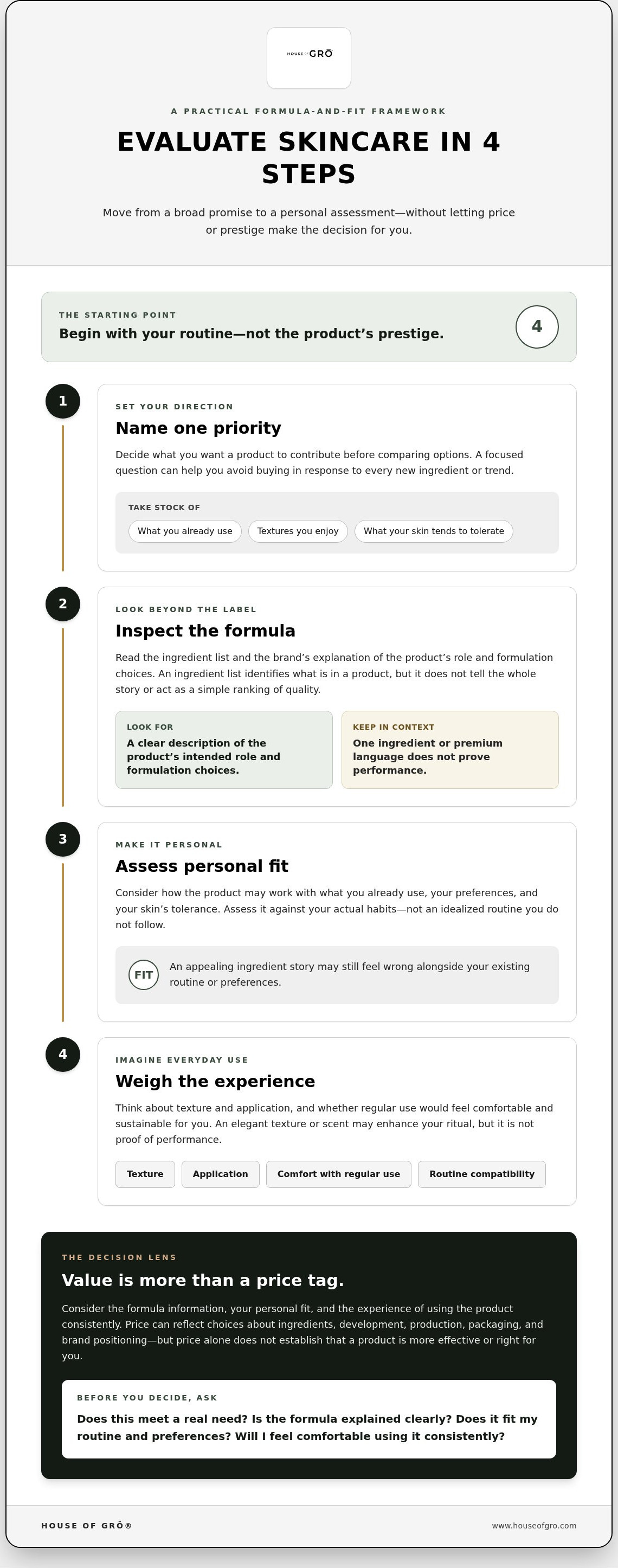
A clear decision starts with your routine, not the product’s prestige. Use this sequence to move from a broad promise to a personal assessment:
- Name one priority. Decide what you want a product to contribute instead of buying in response to every new ingredient or trend.
- Inspect the formula. Read the ingredient list and the brand’s explanation of the product’s role and formulation choices.
- Assess personal fit. Consider how it may work with the products you already use, your preferences, and your skin’s tolerance.
- Weigh the experience. Think about texture and application, and whether regular use would feel comfortable and sustainable for you.
Start with the need your routine is meant to address
Choose one priority before comparing products. A focused question, such as “Does this fit the kind of routine I want to maintain?” can help you avoid trend-driven decisions. Take stock of what you already use, which textures you enjoy, and what your skin tends to tolerate. If microbiome care is a priority, a thoughtful microbiome skincare guide can offer useful context.
Fit is personal. A product may have an appealing ingredient story yet feel wrong alongside your existing routine or preferences. Consider how it would fit your actual habits, not an idealized routine you don’t follow.
Read the formula and claims with care
An ingredient list identifies what’s in a product, but it doesn’t tell the whole story. It isn’t a simple ranking of quality, and one ingredient shouldn’t determine your decision. Look for a clear description of the product’s intended role and the brand’s formulation choices. Botanical, natural, or premium language may describe positioning, but it doesn’t prove performance.
Separate specific, understandable information from broad or absolute promises. Does a claim explain what the product is intended to do, or rely mainly on words such as “miracle” or “perfect”? For context on the U.S. cosmetics framework, the FDA’s cosmetics regulation information outlines the role of the Modernization of Cosmetics Regulation Act. A regulatory framework is useful context, but it doesn’t establish that a particular product is right for you.
Before purchasing, ask: Does this meet a real need? Is the formula explained clearly? Does it fit my routine and preferences? Will I feel comfortable using it consistently? If an answer is uncertain, pause and gather more information rather than letting price or presentation decide. This is a practical way of justifying expensive skincare without assuming a higher cost means a better personal match.
For an example of a botanical-focused approach, explore House of GRŌ® skincare and consider how its products align with your priorities.
Expensive skincare versus affordable skincare: compare value, not status
A fair comparison starts with the product, not the category on its label. Premium skincare may offer thoughtful design or a distinctive sourcing story. A more affordable product may have a clear purpose and fit neatly into a routine. Either can be transparent or vague, enjoyable or inconvenient, well matched or unsuitable. A long ingredient list doesn’t automatically mean a more complete formula, and luxury branding doesn’t establish stronger support for a product’s claims.
Use the same questions for both products. The table is a guide to what to look for, not a rule that premium or affordable skincare always performs a certain way.
| Comparison point | What to assess in either price range |
|---|---|
| Formula transparency | Are ingredients and the product’s intended role described clearly, without relying on impressive but vague language? |
| Routine fit | Does the product have a useful place alongside what you already use and prefer? |
| Use experience | Do the texture, application, and overall ritual feel comfortable enough for you to use as intended? |
| Available evidence | Are product claims explained with relevant support, or presented mainly as broad promises? |
A premium formula may offer clear information but feel impractical for your routine. An affordable option may be easy to understand and pleasant to use, while another product at the same price point may offer little clarity. Compare individual products by their formula information, routine fit, use experience, and support for their claims. Price categories alone can’t tell you which is the better choice for you.
What can premium skincare offer beyond the formula?
Value can include more than the formula. Sourcing, design, sensory details, and a brand’s stated values may contribute to the experience of using a product. House of GRŌ® highlights wild-harvested Chaga from Northern Maine as part of its ingredient story. That provenance may matter to shoppers who value botanical sourcing and transparency. It remains distinct from proof of a particular skin outcome.
When might a simpler or less expensive option be enough?
A straightforward product can be a considered choice if its role is clear and it suits your routine. You may value ease, familiar textures, or fewer steps more than elaborate packaging or a detailed sourcing story. For someone with an active lifestyle, practical grooming essentials like a vegan beard oil for runners will offer far more genuine value than a generic luxury serum. There’s no need to pay for features or a sensory experience that don’t matter to you. The useful question is whether the product’s qualities match your priorities, not whether its price signals status.
This makes the comparison more personal and practical. If two products seem to meet the same need, consider which one explains its purpose more clearly and feels more compatible with your everyday habits. A premium purchase may feel worthwhile when its additional qualities matter to you. A simpler option may make just as much sense when it meets your priorities without the extras. Neither choice is automatically superior.
A calm decision guide: decide whether a premium product belongs in your routine
A considered purchase doesn’t require a complete routine reset. Start with the product in front of you and a few honest questions. This keeps the decision grounded in your needs instead of pressure to add more steps or follow a trend.
Questions to ask before adding a premium product
- Need: Does its stated purpose connect to a real priority in my routine?
- Clarity: Can I understand the product information and ingredient story well enough to make an informed choice?
- Compatibility: Does it seem appropriate for the routine and preferences I already have?
- Comfort: Would I value what this product offers without assuming a guaranteed outcome?
If you’re unsure, pause before buying. A product doesn’t need to answer every skincare question. It needs a clear place in the routine you actually want to follow. Evaluating one addition at a time also makes it easier to notice whether it fits your habits, rather than changing several things at once.
How to assess the experience after purchase
Let your own experience guide the decision. Notice whether the product feels comfortable to use and fits naturally into your routine. Follow the product’s directions, and avoid adding several new products at once if you want to understand your personal response. If irritation occurs, pause use. These observations can help you decide whether the product feels like a considered addition, without relying on a promised timeline or assumed result.
If sensitivity is one of your concerns, look for guidance on approaching skincare choices with care. A routine should feel considered, not like a test of how much your skin can tolerate.
This is also a useful moment to reconsider what value means to you. A product may appeal because of its formula, clear information, or the experience of incorporating it into a daily ritual. Those are personal reasons to value a purchase. They’re separate from proof of efficacy and don’t guarantee a particular outcome.
Explore a considered skincare ritual
AT DAWN Rejuvenating Daytime Oil is one House of GRŌ® product to consider as you assess what might fit your routine. Think about its stated purpose and whether a daytime oil suits your preferences. An intentional moment of care can be part of the experience, alongside formula clarity and personal fit. It isn’t, on its own, evidence of performance.
Justifying expensive skincare can be simpler when you define your criteria first. If House of GRŌ®’s approach to a considered skincare ritual aligns with yours, explore House of GRŌ® as you decide what belongs in your routine.
House of GRŌ®: a considered approach to premium skincare
House of GRŌ® is a New York-based skincare brand founded in 2020 by siblings Irina Gottesman and Sam Kandhorov. Its perspective brings family wellness traditions into conversation with modern scientific innovation. This story offers context for considering premium skincare: it can help explain a brand’s perspective and choices, but it isn’t proof of performance.
The brand’s formulas are microbiome-friendly, all-natural, and cruelty-free, and feature botanical ingredients, including wild-harvested Chaga from Northern Maine. These qualities and sourcing details may matter to shoppers who value ingredient transparency, botanical approaches, or knowing where ingredients come from. Their relevance depends on your own priorities.
What the House of GRŌ® story contributes to the value conversation
Sourcing and formulation philosophy can help you understand what a brand chooses to emphasize. House of GRŌ®’s Northern Maine Chaga story gives a specific point of reference for its botanical approach. If you’re curious about the ingredient itself, a Chaga benefits guide can offer further context. As with any ingredient story, provenance and interest in a botanical don’t establish what a finished product will do for your skin.
That distinction keeps the evaluation grounded. A sourcing story can make a product more meaningful to you without replacing a careful look at its formula, stated role, and fit with your preferences. Family wellness traditions and contemporary innovation may shape a brand’s perspective. They’re useful context, not a promise of a particular result.
Choose a product with intention, not pressure
Return to the questions developed throughout this guide: Does the product address a genuine priority? Is its purpose understandable? Does it make sense within your routine? Do you feel comfortable with the purchase without assuming a guaranteed outcome? Those criteria are more useful than prestige alone when justifying expensive skincare.
AT DAWN Rejuvenating Daytime Oil and AFTER DARK Restorative Night Serum are two House of GRŌ® products to consider through that lens. Assess each on its own, including its stated purpose and whether it suits your routine. A brand story or premium position doesn’t mean you need to overhaul your existing habits.
Value can include formula choices, ingredient clarity, and the pleasure of a considered ritual. It remains individual. A product’s story may resonate, but the final question is whether its stated purpose and place feel right for you. Take time to explore the approach and make a deliberate choice without pressure to buy or expect a specific result.
Explore House of GRŌ® skincare and consider which products, if any, align with your routine and priorities.
Make your next skincare choice with quiet confidence
Your next step doesn’t need to be a new routine. Let a product earn its place through a clear purpose and a fit that feels right for you. Before purchasing, name what you hope to add to your daily care, then give yourself room to decide without letting a premium label rush the choice. That’s a grounded way of justifying expensive skincare: choose with intention, not the expectation that a higher price must deliver more.
A thoughtful ritual can be valuable in its own right. House of GRŌ® brings together its focus on microbiome-friendly formulas and organic botanicals, with wild-harvested Chaga mushrooms from Northern Maine among its highlighted ingredients. These details offer a window into the brand’s approach, while your own priorities remain the measure of personal fit.
If that philosophy speaks to you, explore House of GRŌ® and its skincare collection. Choose at your own pace, and let your routine reflect what matters to you.
Frequently Asked Questions
Is expensive skincare better than drugstore skincare?
Not automatically. A higher price doesn’t tell you whether a formula suits your skin or meets your needs. If you’re choosing a cleanser, for example, compare its stated purpose and ingredients with what you’re looking for instead of assuming upscale packaging makes it a better match. Consider how the product fits your preferences and routine. The right choice is the one that fits your priorities, whatever its price category.
Can affordable skincare work as well as luxury skincare?
Yes, an affordable product can be a good choice if its purpose, formula, and use fit what you need. If you want a straightforward moisturizer and find an option you understand and enjoy using, paying more for a different texture or presentation may not add meaningful value for you. Identify the qualities you’ll appreciate, then compare products by those qualities rather than assuming price predicts usefulness.
How can I tell whether a premium skincare product is worth it?
Consider whether you’d still choose it if the packaging and prestige were set aside. Justifying expensive skincare is easier when you can name a quality that matters to you, such as a clearly explained formula or a texture you prefer. Check whether you already own something with the same role. If the product duplicates an item you like and doesn’t add a meaningful difference to your routine, the extra expense may not feel worthwhile.
Does a higher price mean a skincare product has better ingredients?
No. Price doesn’t reveal which ingredients are present, how they’re combined, or why they’re included. Products at different price points may use ingredients that serve similar purposes. Read the product information instead of treating price as a shortcut. If a brand highlights a particular ingredient, look for an explanation of its role in that specific formula, not just a compelling ingredient story.
What should I look for on a skincare ingredient list?
Start by checking for ingredients you know you prefer to avoid, then see whether the brand explains the product’s intended role in plain language. If you have a known sensitivity, check whether a relevant ingredient appears and follow the label’s directions. An ingredient list can help you identify what’s included, but it may not explain why the formula was designed that way or how it will feel on your skin. Context matters.
How long should I try a skincare product before deciding whether it suits me?
There isn’t one timeframe that applies to every product or person. Follow the product’s directions and pay attention to how it feels during use rather than relying on a fixed number of days. Introducing one new product at a time can make it easier to identify what you’re responding to. If irritation occurs, stop using it. For persistent or concerning reactions, seek advice from a qualified health professional.
Is luxury skincare worth it if I have sensitive skin?
Luxury skincare isn’t automatically a better or worse fit for sensitive skin. Look closely at the ingredient information and consider your known triggers, including ingredients or fragrances you’ve reacted to before. Terms like “natural” or “premium” don’t guarantee that a product will suit you. If you’ve had recurring reactions or aren’t sure what to avoid, a dermatologist can help you make choices with greater confidence.